

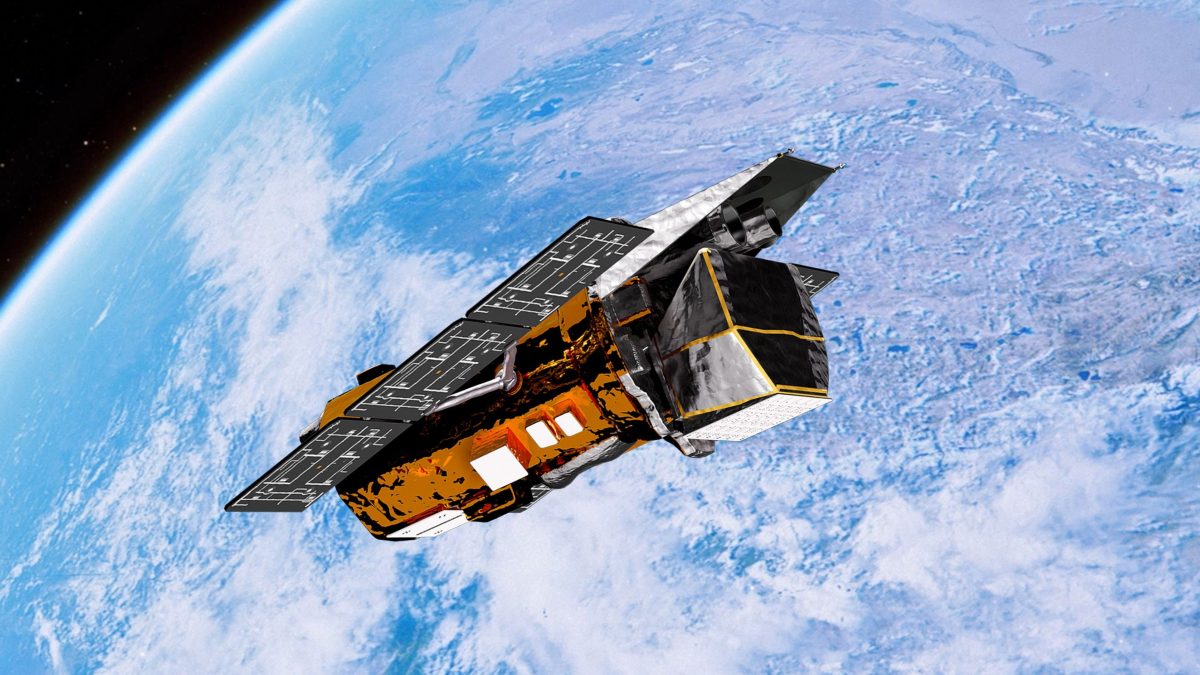
On November 4 at 14:39 Kyiv time, a space observatory re-entered Earth’s atmosphere over the northern part of the Indonesian island of Sumatra. For nearly 22 years, astronomers had used it to observe the universe’s most powerful explosions just minutes after they began. Its onboard instruments remained operational until the end. However, its orbit had been gradually declining for years, and heightened solar activity caused the rarefied gas at that altitude to expand, sharply increasing the observatory’s deceleration. This summer, a robot designed and built in just nine months was launched in an attempt to rescue it, but the mission failed. Astronomers are now left without an instrument for which no replacement exists.
A supernova at the moment of its explosion
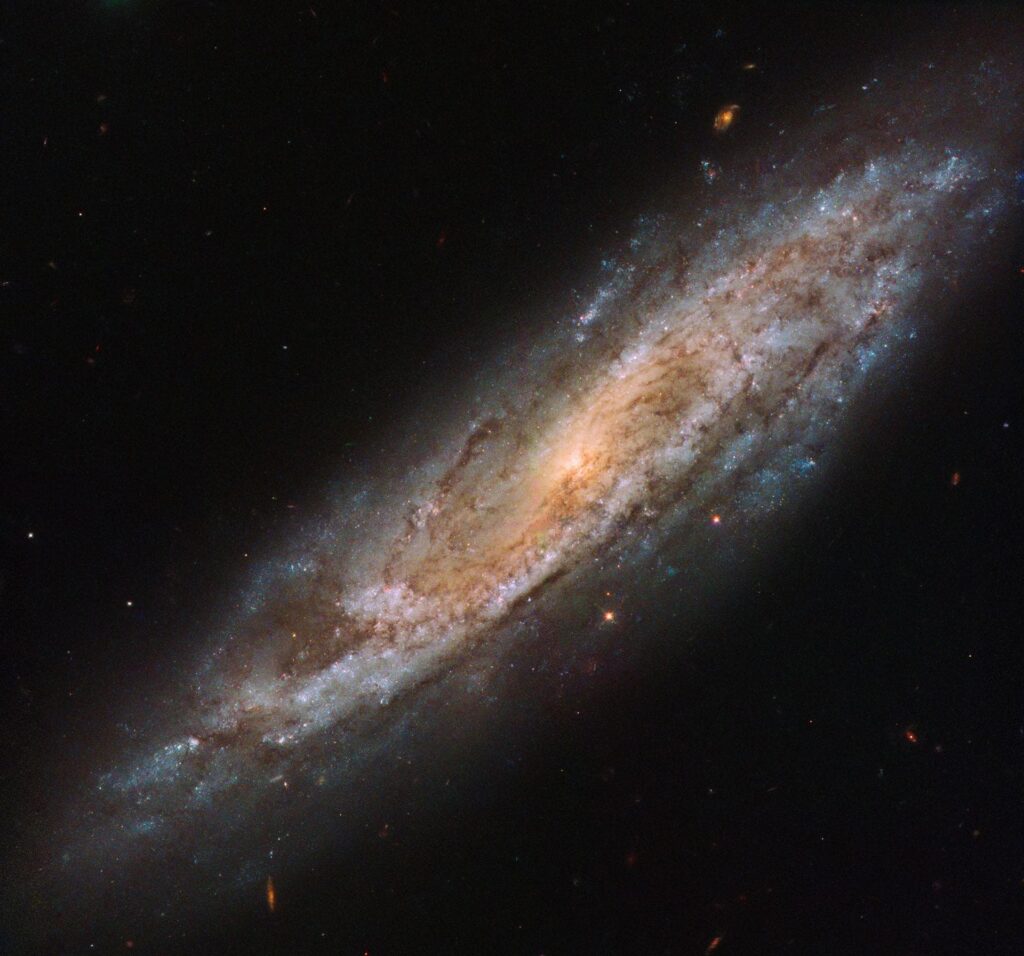
On January 9, 2008, researcher Alicia Soderberg of Princeton University used the Swift space observatory to monitor a supernova that had erupted several weeks earlier in the galaxy NGC 2770, located 90 million light-years away. Suddenly, a bright X-ray source appeared in another part of the same galaxy — one that had not been visible in previous images. This marked the beginning of another star’s explosion; for the first time, it was possible to observe the event from its very beginning rather than weeks later.
Toward the end of a massive star’s life, when the supply of elements required for thermonuclear reactions in its core is exhausted, these reactions can no longer provide the star with energy. The core becomes unstable and rapidly collapses under its own gravity. This collapse generates a shock wave that travels outward. Nearly forty years ago, theorists calculated that a brief X-ray burst should occur when the wave reaches the star’s surface. However, because it is impossible to predict in advance which star will explode or when, no such burst has yet been observed.
On this occasion, the event was detected by chance while the observatory was pointed toward that region of the sky. Swift’s design made the subsequent observations possible. Equipped with several instruments, the observatory tracked the supernova — named SN 2008D — from its earliest moments in both X-ray and ultraviolet wavelengths. It was then repointed toward the event daily to monitor the explosion’s progression.
This instrument was developed to observe gamma-ray bursts, the most powerful explosions in the universe. The shortest bursts last only a fraction of a second, followed by an afterglow that fades rapidly. Before Swift, data collection on a newly detected burst did not begin until approximately eight hours later.
A video commemorating Swift’s first decade of operation highlights the phenomena observed by the observatory and their durations, which range from a fraction of a second to several months. Source: YouTube, NASA Goddard
The observatory was launched on November 20, 2004, with an anticipated operational lifespan of two years. When radiation from a burst reached the gamma-ray detector, the spacecraft automatically reoriented itself toward the source, and data collection began within two minutes. By comparison, the Hubble Space Telescope requires one or two days to complete a similar reorientation. This rapid response inspired the name Swift, which refers to one of the fastest birds. The observatory’s full name, the Neil Gehrels Swift Observatory, also honors Neil Gehrels, the mission’s first principal investigator. For nearly 22 years, the observatory remained one of astronomers’ most important tools for rapidly detecting cosmic explosions and observing their aftermath, until it reentered Earth’s atmosphere.
From neutron star mergers to the most distant explosions
Over the past 22 years, Swift has detected approximately 2,000 gamma-ray bursts and more than 1,400 supernovae, and the data collected has been used to produce about 7,000 scientific papers. But the observatory’s value lies not in quantity. It has made it possible to observe events that previously faded away before observations even began.
Swift documented one of the most significant events of this kind just six months after its launch. Short gamma-ray bursts last up to two seconds, and their afterglows are typically so faint and brief that, for more than three decades, astronomers could neither pinpoint the sources with sufficient accuracy nor determine the nature of these explosions. In 2005, Swift detected the X-ray afterglow of a short gamma-ray burst for the first time.
These bursts are designated by the English abbreviation GRB, followed by the date. Accordingly, the burst that occurred on May 9, 2005, was named GRB 050509B. It lasted only 30 milliseconds. X-ray observations, however, began 62 seconds later, and the faint afterglow was detected before it faded.
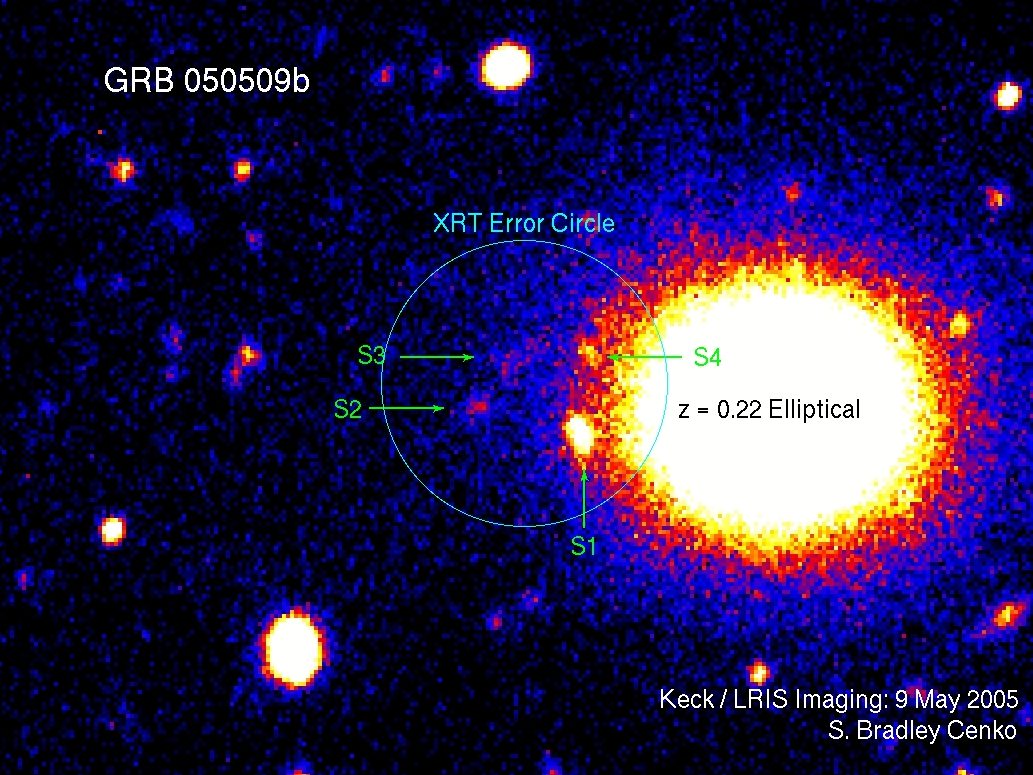
The burst was found to have occurred near an elliptical galaxy in which star formation had ceased long ago. Because massive stars explode within only a few million years, virtually none remain in such a galaxy. However, binary neutron stars — ultra-dense remnants of ancient supernovae — may persist there. Over time, the two stars in such a system can merge. This observation provided the first compelling evidence that short gamma-ray bursts occur when neutron stars merge with one another or with black holes.
The animation illustrates how two neutron stars, influenced by gravitational waves, move toward one another and merge. Jets of matter ejected at nearly the speed of light generate a brief gamma-ray burst, followed by emissions in X-ray and visible-light wavelengths. Source: YouTube, NASA Goddard.
Rapid response is equally important for the most distant bursts. The farther away a burst is, the fainter its afterglow; without a prompt response, these events may easily be missed. The radiation from the GRB 090423 burst, recorded in April 2009, traveled 13.1 billion years to reach Earth, making it one of the most distant objects ever observed. It began its journey long before the Sun and Earth existed, and such bursts therefore reveal explosions from when the universe was very young.
It also required the capability to revisit the same target repeatedly. In 2023, researchers using Swift observed a black hole with a mass equivalent to 200,000 Suns, which a star approaches every few weeks. During each encounter, the black hole’s gravity strips material equivalent to approximately three Earths from the star. Some of this material falls into the black hole, heats to millions of degrees, and generates a powerful X-ray flare. Regular observations have shown that the star is not destroyed at once, but is gradually consumed with each successive approach.
Why did a fully operational observatory collapse?
It might appear that a spacecraft with functioning instruments could remain in orbit for an extended period. However, gas in the upper layers of the atmosphere, which extend to an altitude of several hundred kilometers, impeded its motion. Although space is generally perceived as empty, matter is present at that altitude, albeit at an extremely low density. The observatory traveled through this region at nearly 8 km/s, and even the sparse gas particles gradually slowed it down.
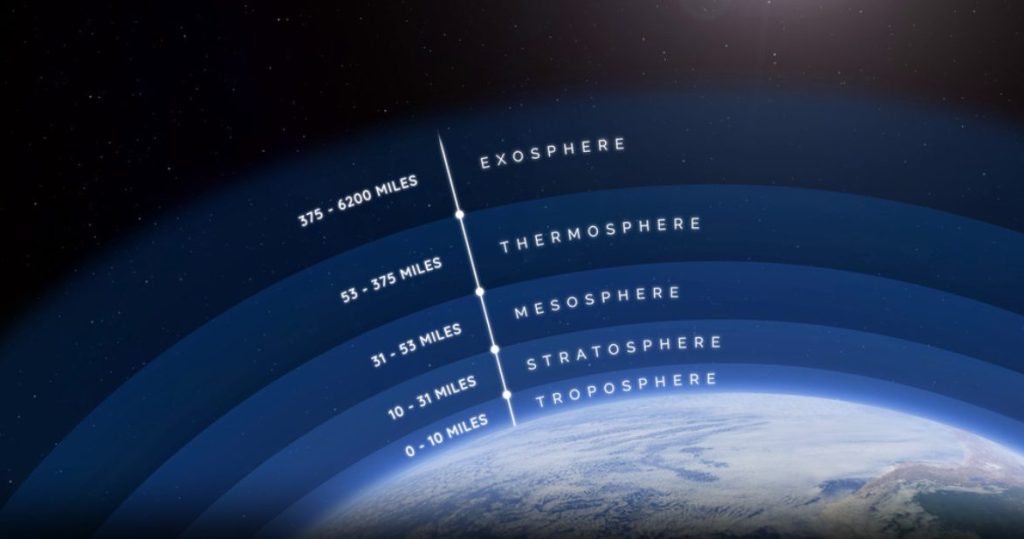
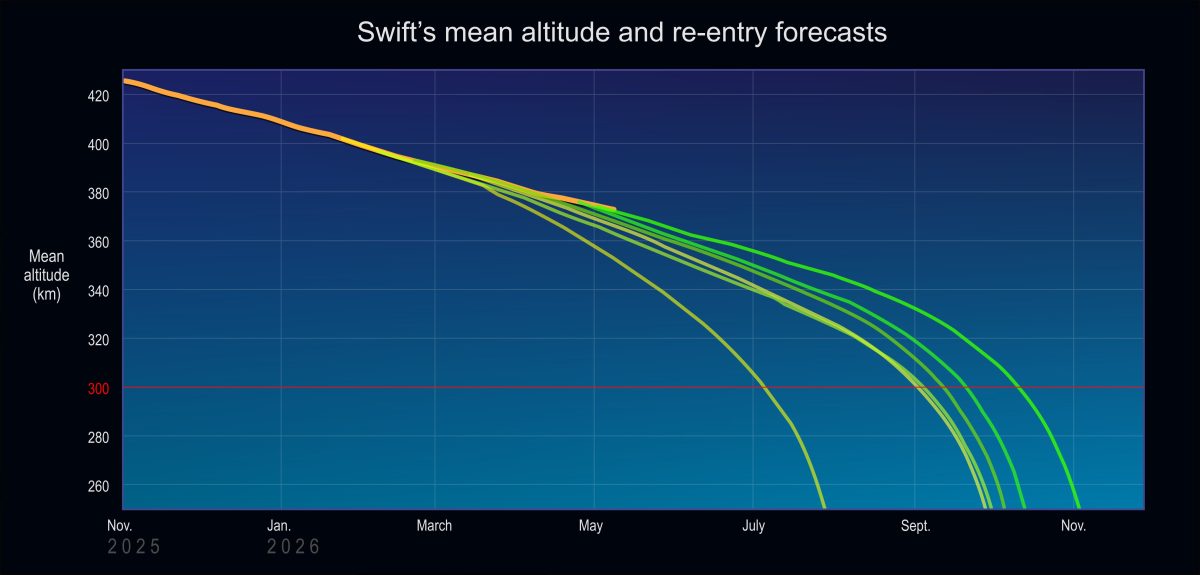
As its speed decreased, the spacecraft descended to lower altitudes, where the atmosphere is denser, causing further deceleration. Over two decades, Swift’s altitude declined from 600 km to 360 km. The observatory was not equipped with engines to raise its altitude.
The situation deteriorated considerably as a result of solar activity. The peak of the Sun’s 11-year activity cycle in 2024 proved significantly more intense than forecast. During solar flares and eruptions, the upper layers of Earth’s atmosphere heat up and expand, increasing atmospheric density at the altitude where Swift was operating. In early 2026, NASA temporarily suspended scientific observations and reoriented the observatory to minimize drag.
Credit: NASA’s Goddard Space Flight Center / Michael Shoemaker and Francis Reddy
The course correction provided only a limited amount of additional time. According to NASA’s calculations, raising the observatory above 300 km would have been considerably more difficult, and it was projected to cross that threshold in October. Consequently, only a few months remained to save it.
The rescuer was unable to manage the situation
The only way to save Swift would have been to send another spacecraft to approach the observatory in orbit, capture it, and move it to a higher altitude. However, Swift’s design did not permit this. Its hull had no docking ports, and, unlike Hubble, it had never been visited by a repair spacecraft.
In September 2025, NASA awarded a $30 million contract to Katalyst Space Technologies, an Arizona-based company, and provided it with nine months to construct such a rescue spacecraft. This would mark the first attempt to capture a scientific satellite that was not designed to accommodate such an encounter.
The new device was named Link. It was approximately the size of a kitchen refrigerator, weighed approximately 400 kilograms, and was equipped with three robotic arms. The manipulators were designed to retrieve components from the Swift spacecraft’s body that had previously been used for maintenance on Earth. The plan was then to gradually raise the observatory from 360 to 600 kilometers over a period of two months using ion engines.
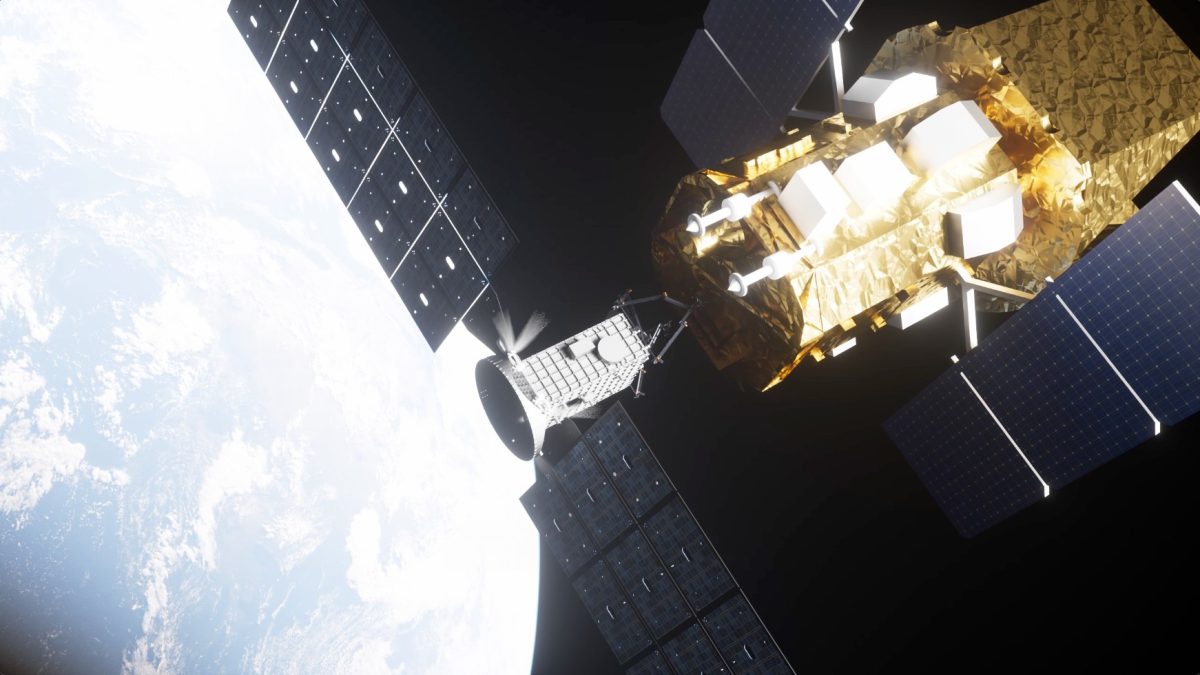
Link was launched on July 3 from Kwajalein Atoll in the Pacific Ocean aboard a Pegasus XL rocket, which was released from an L-1011 Stargazer aircraft at an altitude of approximately 12 kilometers. During the first three weeks, operations proceeded according to plan. However, on July 25, two of the three gyroscopes responsible for orientation failed. The cold-gas thrusters also experienced a partial failure, and Link immediately began rotating around several axes.
They were able to reduce the spin but could not fully restore the spacecraft’s orientation, even after updating the software. Without precise control, capturing Swift was impossible, and only a very limited amount of fuel remained for further attempts.
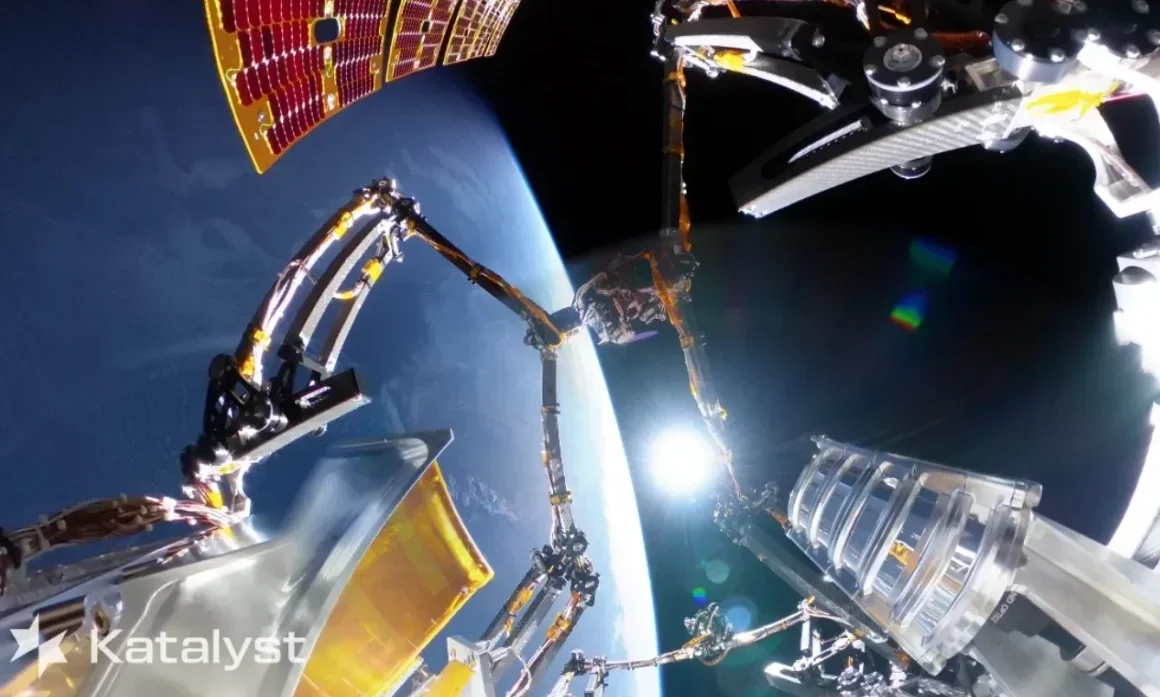
The mission was canceled on August 19; however, Link was still brought within 12 to 15 kilometers of Swift, and a series of images of the observatory was captured from aboard the spacecraft. “This isn’t the outcome we were aiming for, but it doesn’t change why this mission was worth attempting.” NASA Administrator Jared Isaacman made this comment regarding the cancellation. In late September, on the 85th day of the flight, Link entered the atmosphere and burned up.
The final orbit
After the rescue mission was called off, scientific observations were partially resumed to maximize the use of the observatory’s remaining time in orbit. The observatory continued operating until the second half of October. By the end of the month, Swift’s altitude had fallen below 275 kilometers. On November 4 at 2:39 p.m. Kyiv time, the observatory reentered Earth’s atmosphere over the northern part of Sumatra. The spacecraft disintegrated during reentry, and witnesses in neighboring Malaysia observed its descent. Although most of the structure was expected to burn up, the mission’s principal investigator, Brad Senk, stated that tungsten components and parts of the mirrors may have survived. It remains unknown whether any debris reached the surface, and no injuries have been reported. Before the reentry, NASA estimated the probability of debris injuring someone at approximately 1 in 2,100.
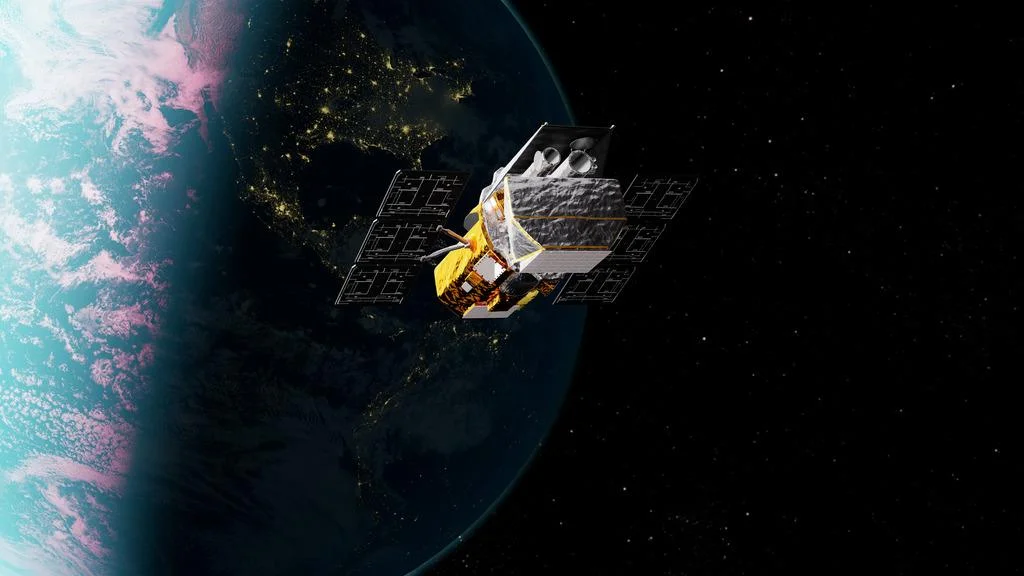
Another loss is substantially more significant. Each day, the observatory received an average of five requests from researchers for urgent pointing. NASA has no active or planned telescope capable of observing the same wavelength ranges and responding as quickly to sudden events, and no funding is currently available for a replacement for Swift. With Swift’s loss, astronomers have lost the ability to observe cosmic explosions from their earliest moments — a capability that a single spacecraft had provided for nearly 22 years.
It is now Hubble’s turn. The telescope has descended to approximately 470 kilometers, and NASA is already contacting private companies to explore proposals for raising it to a higher orbit. Unlike Swift, Hubble was equipped with a specialized in-orbit capture device during the shuttle’s final visit in 2009. The Swift rescue team had to determine which parts of the spacecraft could be grasped, whereas Hubble’s capture point had been planned in advance.
