

27 November marks the 325th anniversary of the birth of the Swedish physicist and astronomer Anders Celsius. His name is primarily associated with the world’s most widely used temperature scale. However, he devoted most of his life to other areas of research.
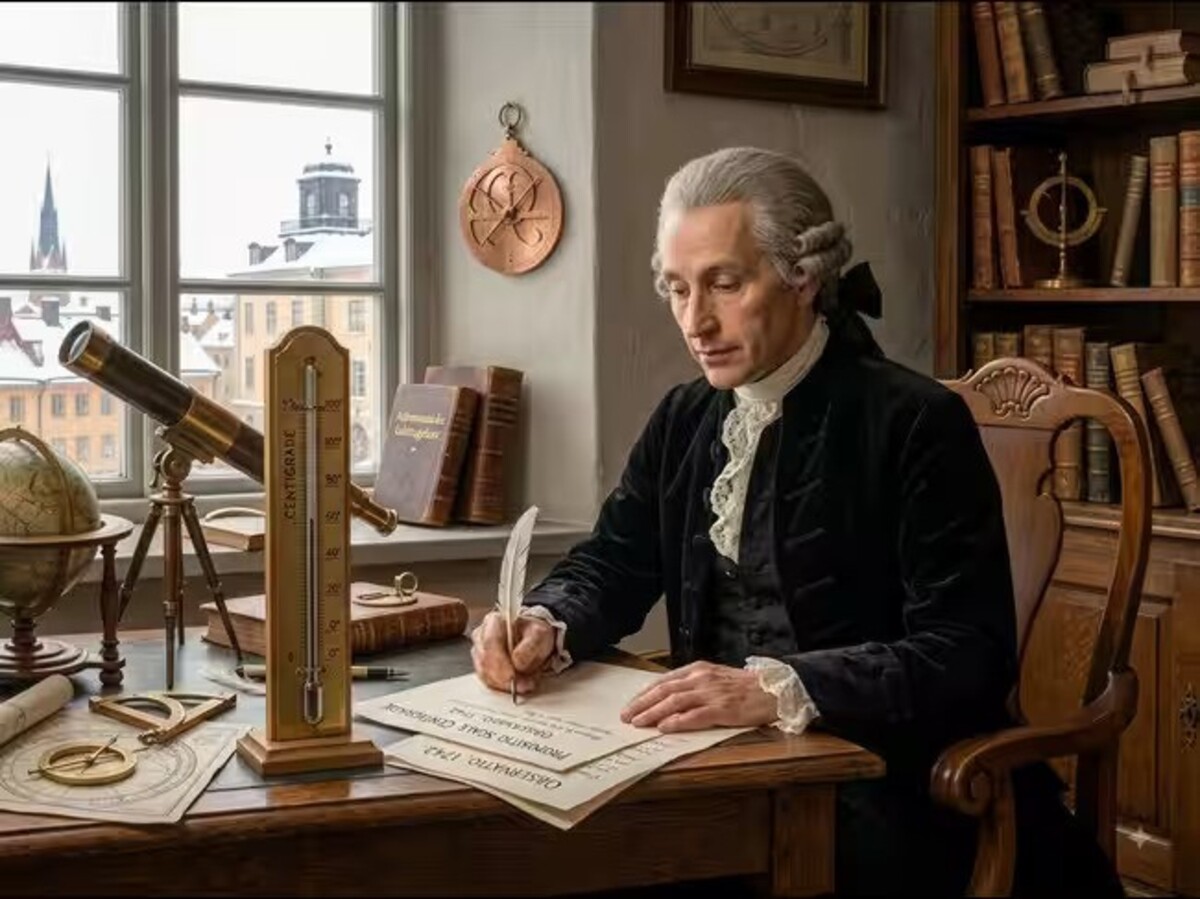
An astronomer from a family of astronomers
Anders Celsius was born on 27 November 1701 in the Swedish city of Uppsala. His name is primarily associated with a temperature scale on which the freezing point of water is set at 0° and its boiling point at 100°. The scientist himself would probably have been rather surprised by this state of affairs.
Unlike many scientists who came from peasant, merchant, or aristocratic families, Anders was a second-generation scientist. His grandfather, Magnus Celsius, began his career as a pastor, but his fascination with astronomy and botany eventually prompted him to abandon this occupation and pursue science. He became a professor and later rector of Uppsala University. Of his three sons, Johan became a poet, Olof gained recognition as a botanist, theologian, and Orientalist, while Nils chose a career in astronomy. It was Nils who was Anders’s father.
An intellectual class was rapidly emerging across Europe, and Sweden was gradually becoming one of the centres of scientific activity. However, science had yet to be organized at the national level.
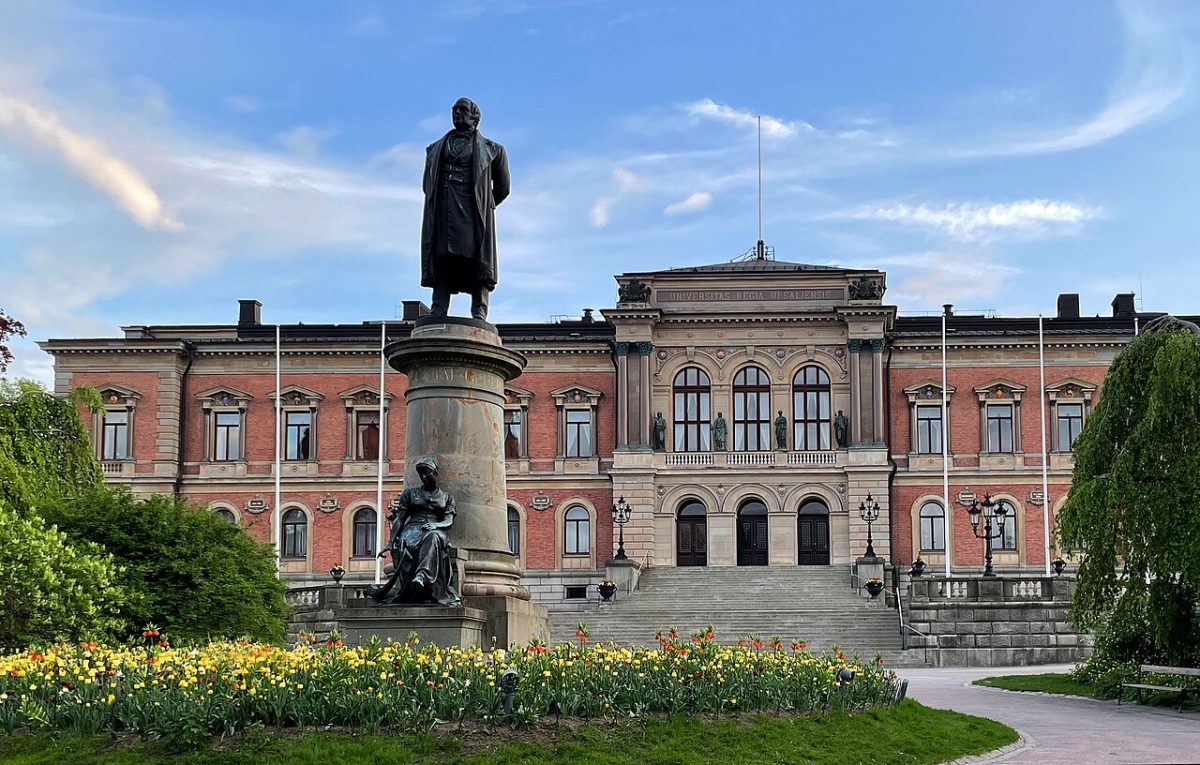
Sweden had other concerns: it was at war with Russia. The war, which spanned Anders’s entire childhood and adolescence, ultimately ended in defeat for Sweden. Nevertheless, Uppsala and its university became one of the principal centres for the development of an organized scientific community, with the Celsius family at the heart of this process.
It was here that the Uppsala Scientific Society was established in 1710. It resembled more of a club for people with shared interests and could hardly be compared with England’s Royal Society, which was already fully active at the time.
Anders Celsius demonstrated an aptitude for mathematics from an early age, so he found studying at the university where his father was a professor relatively easy. After completing his studies in 1725, he became secretary of the Uppsala Scientific Society, a position he held until his death.
The aurora and the length of a meridian
Celsius’s earliest scientific studies focused on measuring the Earth’s magnetic field. Together with his assistant, Olof Hiorter, he also devoted considerable time to observing weather conditions and celestial bodies. This led to their first major scientific achievement.
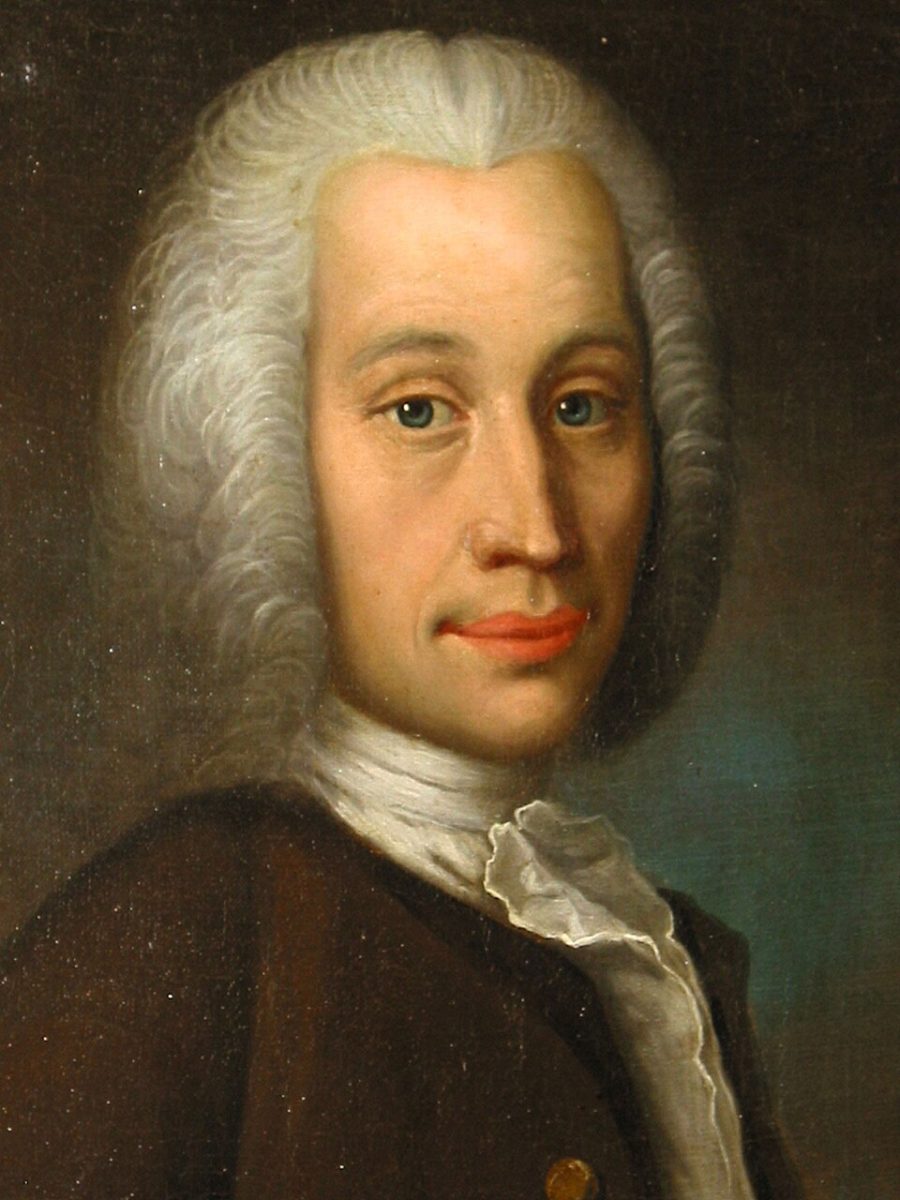
The scientists observed the aurora on numerous occasions and eventually noticed that its appearance was consistently accompanied by significant anomalies in compass behaviour. Celsius thus became the first person to suggest that the underlying cause of this atmospheric phenomenon was associated with the Earth’s magnetic field, although he was unable to establish the precise mechanism behind this connection.
In 1730, Anders Celsius published a paper describing a new method for determining the distance between the Earth and the Sun. That same year, he became a professor at Uppsala University. A quiet academic life seemed to lie ahead of him. Instead, Celsius embarked on a journey lasting several years, visiting scientific centres across Europe – in Germany, Italy, and France.
There, he presented his own research and became acquainted with local scientists. In particular, in 1733, he published a collection in Nuremberg documenting 316 observations of auroras made between 1716 and 1732.
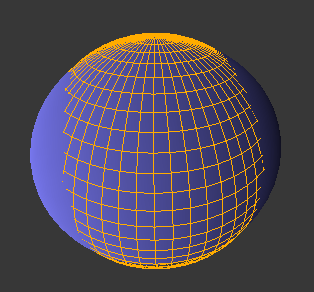
In 1736, while in Paris, he became involved in one of the greatest scientific debates of his time. People were only just becoming accustomed to the idea that the Earth was a sphere when astronomers announced that it was actually an ellipsoid – a solid formed by rotating a curve about an axis. Such a shape closely resembles a sphere, yet differs slightly from it.
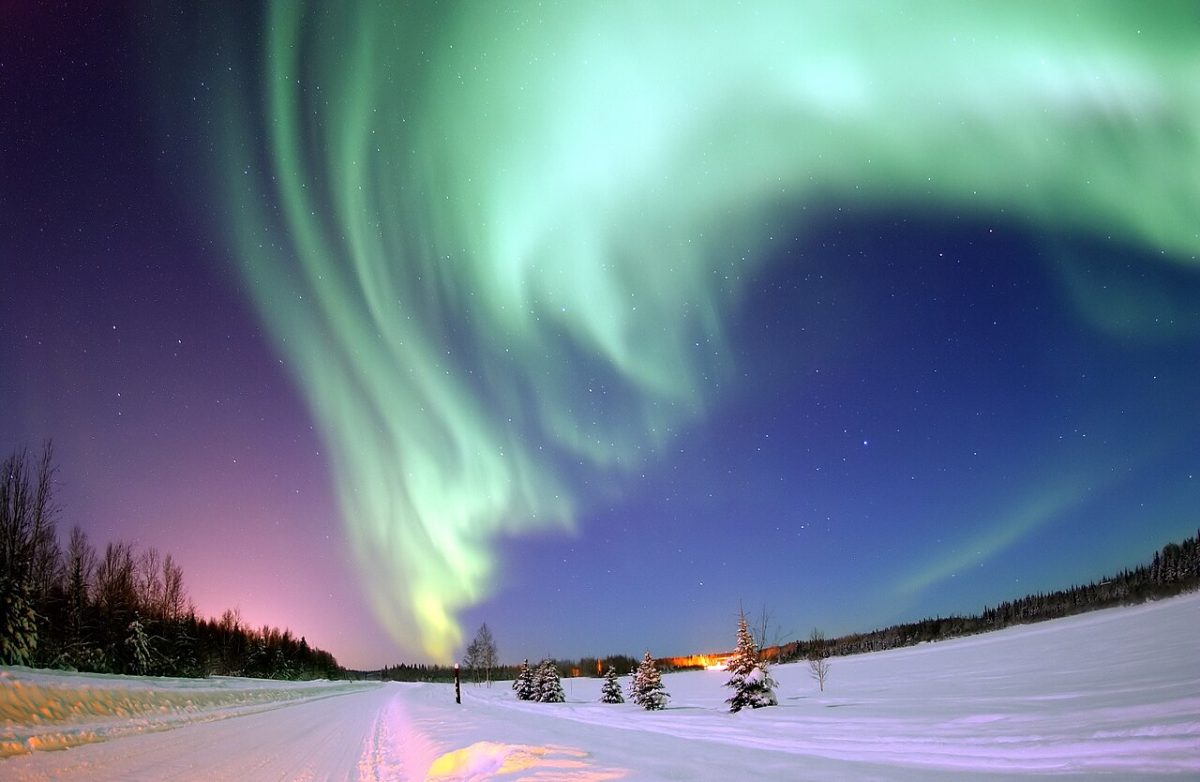
In Celsius’s time, the debate centred on whether this ellipsoid was flattened at the poles or, conversely, elongated. The Cassini family of astronomers advocated the latter view. They were opposed by Isaac Newton and the French astronomer Pierre Louis Moreau de Maupertuis. It was Maupertuis whom the Swedish astronomer met during his travels across Europe.
The dispute could be resolved through field research. One group of researchers was to measure the length of one degree of a meridian near the equator, while another was to repeat the measurements as close to the pole as possible.
This was precisely what Maupertuis decided to do. His colleagues travelled to Ecuador and Peru, where such measurements were easier to carry out. However, the polar regions of our planet remained inaccessible, and the harsh environment of Lapland in northern Sweden proved to be the best alternative. The French researcher travelled there, accompanied by Celsius himself.
The scientists successfully completed all their research and returned to Paris without difficulty. Maupertuis proved to be right: the Earth was indeed flattened at the poles. Celsius’s active participation in the expedition earned him recognition throughout Europe.
Academic activities and the temperature scale
Celsius returned to Uppsala at the height of his fame and at a particularly opportune moment. The Swedish government had just taken an interest in science, and Celsius used his influence to finally bring the idea of the Royal Swedish Academy of Sciences to fruition. The academy began its activities in 1739.
He was aided in this endeavour by a quality not particularly common among scientists: he had numerous acquaintances across different fields of knowledge. Among his friends was the renowned naturalist Carl Linnaeus, the very man who developed the modern system of nomenclature for animals and plants. An astronomical observatory was also established in Uppsala in 1741, with Celsius becoming its first director.
In the early 1740s, Celsius became interested in a new subject: the temperature scale. Thermometers had already been invented, but debates continued over how they should be calibrated – where zero should be placed and what interval should correspond to one degree. These debates are discussed in the article ‘Gabriel Fahrenheit: Which thermometer scale is better?’.
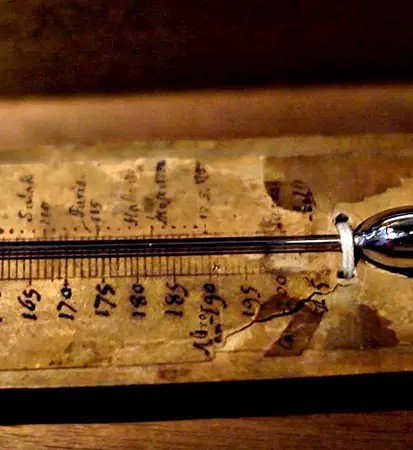
Anders Celsius proposed his own version, based on his observation that the melting point of water remained virtually unchanged under different conditions, whereas its boiling point depended on atmospheric pressure. It is commonly said that we still use the scale he devised, but this is not entirely accurate.
On Celsius’s original scale, 0° corresponded to the boiling point of water at sea level, while 100° represented its freezing point. In principle, there is nothing to prevent a scale from being calibrated in this way, but all other thermometer inventors adopted the opposite approach, making the Swedish astronomer’s decision seem rather peculiar to us today. However, there were reasons behind it.
Sweden is a relatively cool country with a predominantly maritime climate. If the freezing point of water is set at zero, thermometer readings fluctuate around this mark for much of the year, sometimes falling a few degrees below it and sometimes rising above it. Assigning the 100° mark to the freezing point was therefore a perfectly practical idea, as it helped avoid confusion between positive and negative values.
Meanwhile, Celsius’s health was deteriorating. He suffered from tuberculosis and died in April 1744, before reaching his 43rd birthday. After his death, Linnaeus and other friends of the scientist ‘reversed’ his scale. The reason was that it had become so popular that it was being used far beyond Sweden and not merely for describing weather conditions.
In addition to the temperature scale, an asteroid, an ESA mission, and streets in several Swedish cities have been named in honour of the scientist.
