

Forty-four-year-old Canadian Space Agency (CSA) astronaut Joshua Kutryk experienced one of the most important moments of his life while in Earth’s orbit. While working aboard the International Space Station (ISS) — an orbital laboratory the size of a football field that completes one full orbit around the planet approximately every 90 minutes at an altitude of about 400 km — his wife, Heather, gave birth to their third child in Houston.
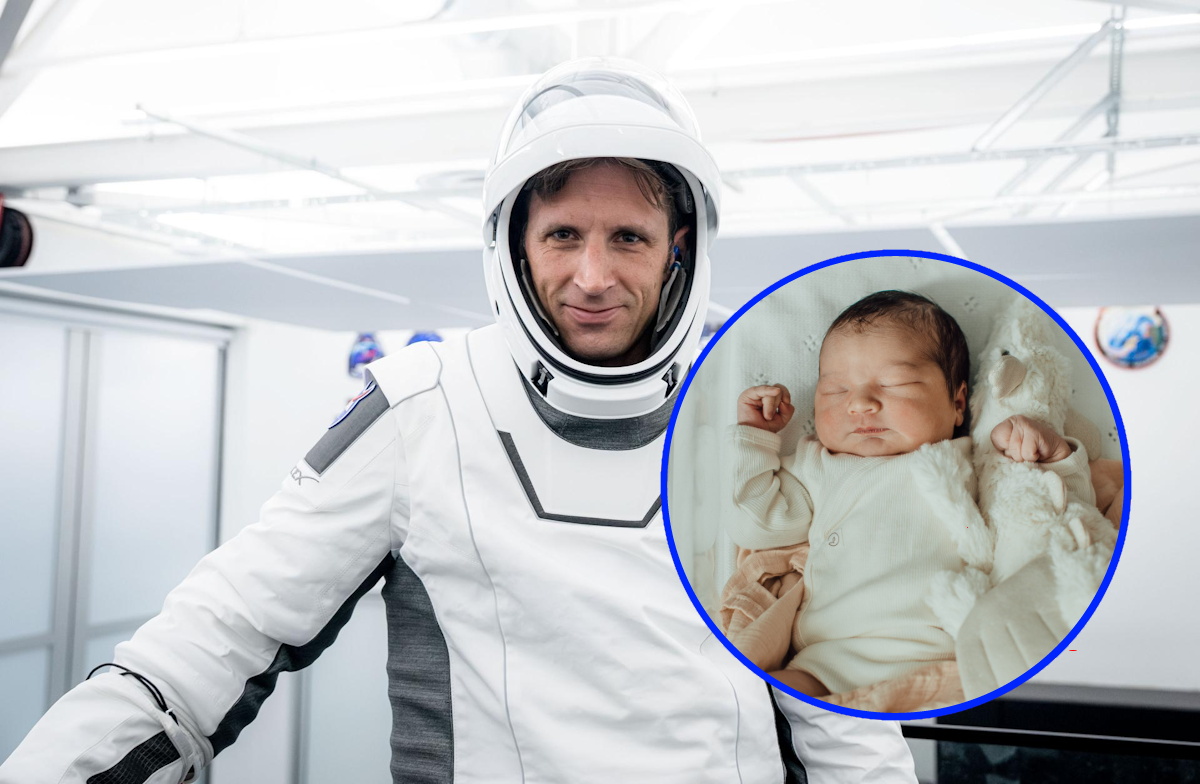
According to an announcement by the Canadian Space Agency on November 24, both mother and baby are doing well, and the father was able to share in the joy of his daughter’s birth directly from space.
“Even with the distance between us, we feel an incredible connection as we welcome our new little star,” the couple shared.
At home, the newborn is already surrounded by the care of her older siblings — seven-year-old Peter and five-year-old Anna, who have happily taken on the roles of big brother and big sister.
Shortly after the birth, Heather revealed the girl’s name on Instagram — Katherine Grace Kutryk. According to her, the name means “pure blessing,” and their daughter has lived up to it completely from her very first days.
The baby’s middle name, Grace, is a touching tribute to her father’s space expedition. SpaceX gives each crewed capsule its own name, just like seagoing vessels, and it was the Grace spacecraft that carried Joshua Kutryk and his three crewmates to the ISS on October 1. “A little piece of her father’s journey will now forever be part of her own story,” Heather wrote.
For the astronaut himself, being separated from his family before launch was a difficult ordeal. Before the launch of the Grace capsule, he admitted on social media platform X that leaving his wife, two children, and another child “on the way” on Earth was the hardest decision of his life.
Kutryk has currently completed only eight weeks of his planned six-month mission, so he will not be able to hold little Katherine Grace in person for the first time until next spring, when the crew returns to Earth.
Previously, we explained why NASA strictly prohibits female astronauts from becoming pregnant in space.
Based on material from Today
