

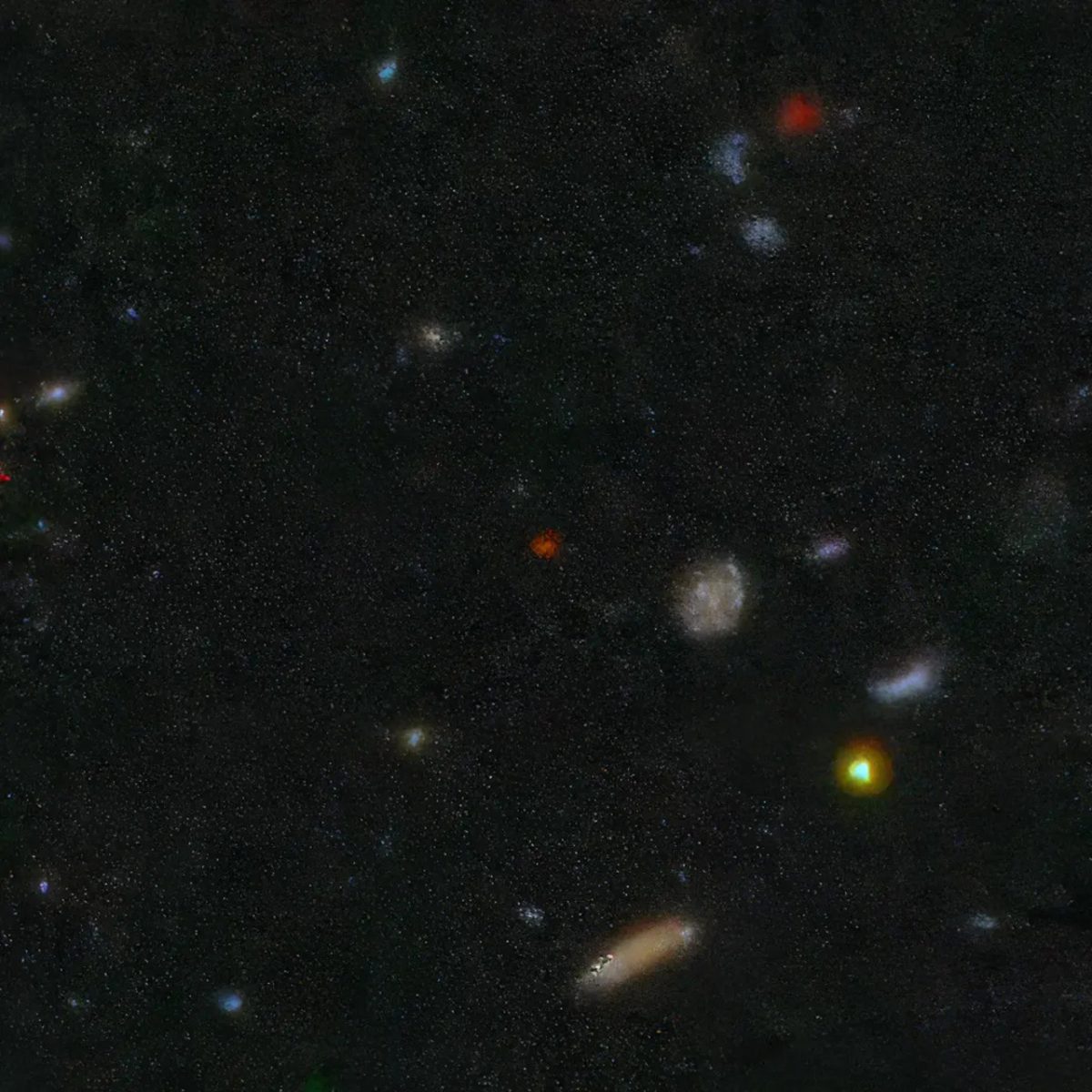
The most distant quasar ever discovered has been found in data from the European space telescope Euclid. We see it as it was when the Universe was only 630 million years old, or one-twentieth of its current age. The black hole at its center was already so massive that its growth is difficult to reconcile with models of how the first black holes formed.
A New Distance Record
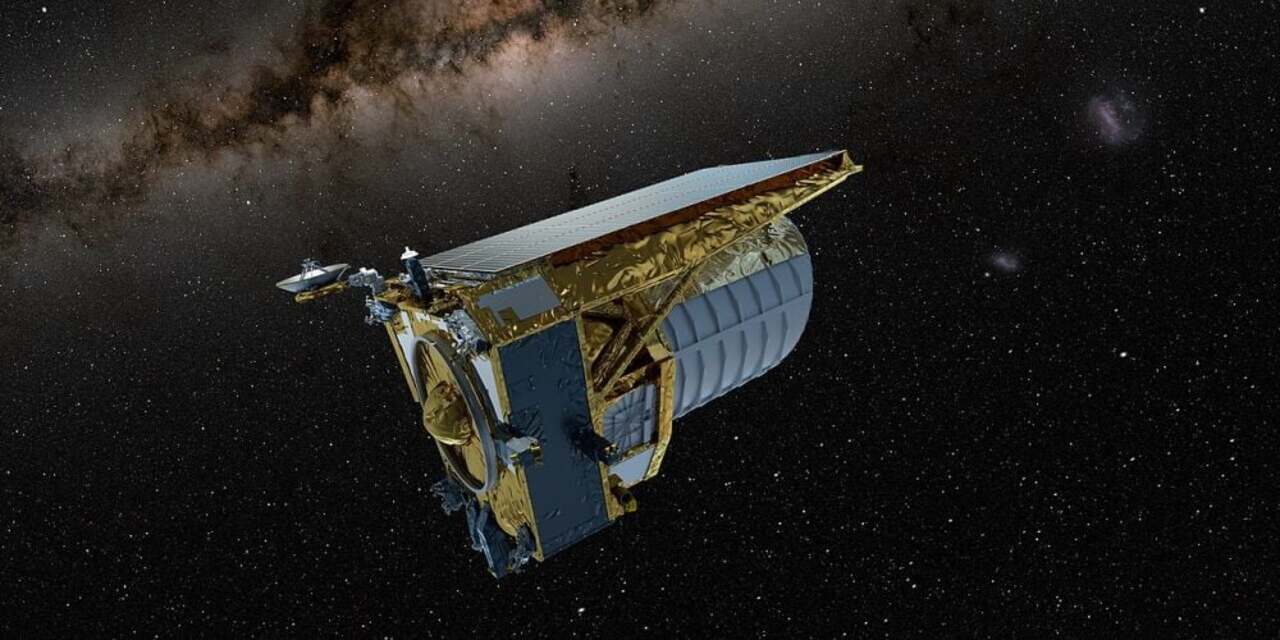
The Euclid telescope, launched by ESA in 2023, studies dark matter and dark energy. However, its infrared images cover enormous areas of the sky, so they also capture some of the most ancient quasars. These are active galactic nuclei in which a supermassive black hole consumes gas, while the heated matter around it shines more brightly than all the stars in the galaxy combined.
The quasar J1504+6252 was identified among millions of objects imaged over 18 months. Its redshift is 8.13. Because of the expansion of the Universe, the wavelengths of radiation stretch, and the longer it travels toward us, the greater the stretching. For J1504+6252, the journey took approximately 13.1 billion years, making it the first quasar discovered beyond the redshift threshold of 8. The new quasar is 40 million years older than the previous record-holder, which was also discovered using Euclid just a few months ago. This difference represents approximately 6% of the Universe’s age at that time, and the farther back in time we look, the less time there is for such black holes to grow.
Images reveal only candidates, while the distance is determined definitively through their spectra. Therefore, the quasar was also observed using the Keck Observatory, the Large Binocular Telescope, Hubble, and James Webb. The results have been published in the peer-reviewed journal Astronomy & Astrophysics, and the quasar has received the unofficial name “Dún Aonghasa,” after the prehistoric cliff fort on the Irish island of Inishmore.
The Mystery of Rapid Growth
The mass of the black hole in quasar J1504+6252 raises the most questions. According to James Webb data, it reaches 360 million solar masses. A black hole cannot consume matter at just any rate. Gas falling toward it heats up and emits radiation, and the pressure of this radiation slows the inflow. When the radiation pressure balances gravity, growth reaches what is known as the Eddington limit.
According to ESA, at the moment we are observing, the black hole was consuming matter relatively slowly. At this rate, it could not have accumulated its current mass, meaning it must have grown earlier during short periods of very rapid growth.
A NASA animation comparing the sizes of ten supermassive black holes, from a black hole with a mass of 100,000 Suns in a dwarf galaxy to TON 618, with a mass of more than 60 billion Suns. Credit: NASA’s Goddard Space Flight Center
Even at the Eddington limit, under standard assumptions, a black hole’s mass doubles approximately every 30 million years. To grow from a seed with a mass of 100 Suns — the remnant of one of the first stars — to 360 million solar masses would require about 22 doublings, or nearly 700 million years. Yet the first stars appeared only 100 or 200 million years after the Big Bang. Therefore, astrophysicists are also considering heavy seeds weighing tens of thousands of solar masses, which could have formed directly through the collapse of gas clouds, or growth beyond the Eddington limit. These hypotheses belong to the broader context of the field, rather than to the findings of the new study.
A Year and a Half of Quasar Searches
Quasars at such distances are rare and can be found only through very wide surveys of the sky. Over a year and a half, 31 ancient quasars have already been discovered in Euclid’s data. Twelve of them are new and lie beyond the redshift threshold of 7, more than doubling the number of known objects at such distances. Previous surveys took 15 years to reach this threshold.
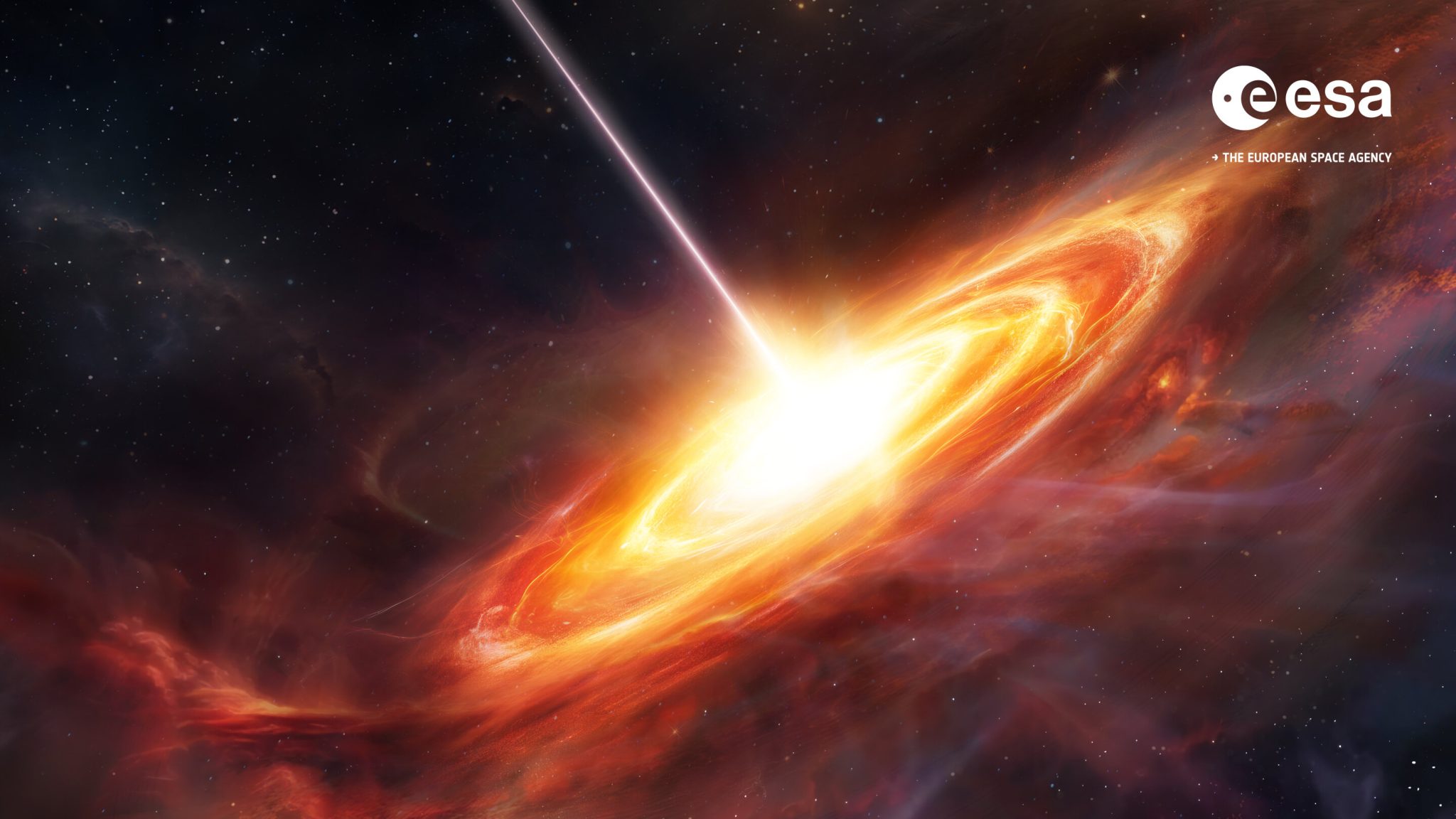
Distant quasars are also important because their radiation passes through neutral hydrogen that filled the young Universe before the epoch of reionization. The traces of this gas in their spectra reveal how the first stars and galaxies gradually ionized their surroundings.
Over the entire Euclid survey, only a few dozen quasars beyond a redshift of 8 are expected to be found. If the masses of their black holes are measured in the same way as for J1504+6252, scientists will find out whether such massive black holes at the dawn of the Universe were the norm or a rare exception.
