

Carbon released into space along with lava from Hawaiian volcanoes may originate in the Earth’s metallic core itself and carry a chemical record of our planet’s formation. A new study, published in the journal Proceedings of the National Academy of Sciences, suggests that carbon-rich meteorites delivered enormous amounts of this element to the young Earth, laying the foundation for the eventual emergence of life.
A team of scientists led by Yves Moussallam, an associate research scientist at Columbia University and the Lamont-Doherty Earth Observatory, analyzed volcanic rocks from two Hawaiian systems — Kīlauea and the Tantalus rift zone — which are supplied by magma from different parts of the mantle. Samples from the Tantalus rift showed carbon isotope values ranging from -5 to -7 per mil, which is entirely typical of the Earth’s mantle. In contrast, rocks from Kīlauea revealed a much heavier signature of around -1 per mil, which had previously been observed extremely rarely. According to Mussallam, this striking difference indicates an input from another reservoir — most likely directly from the planet’s core, although this remains to be conclusively proven.
The Journey from the Core to the Surface
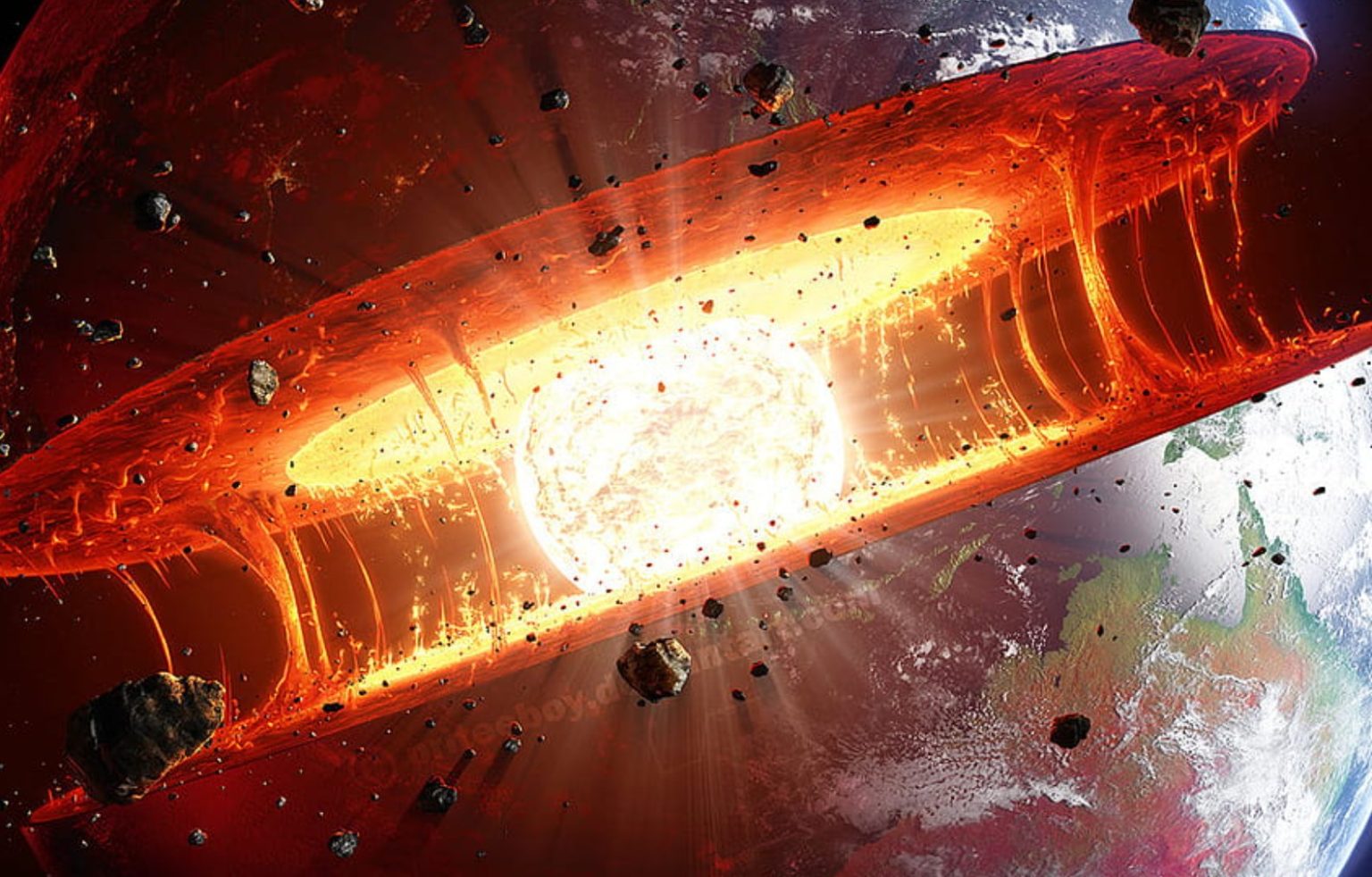
The Earth’s mantle extends approximately 2,900 km beneath the crust, firmly separating the surface from the molten metallic core. Scientists have long suspected that the main reserves of carbon on our planet are hidden there, but accessing them directly is impossible. However, geophysical models show that material from the liquid outer core can seep into the lower mantle and rise upward along with mantle plumes — enormous columns of hot rock. As these flows approach the crust, they partially melt and feed volcanoes. Kīlauea is believed to receive magma from the central part of such a plume, which originates near the core-mantle boundary itself, while Tantalus reflects its outer layers.
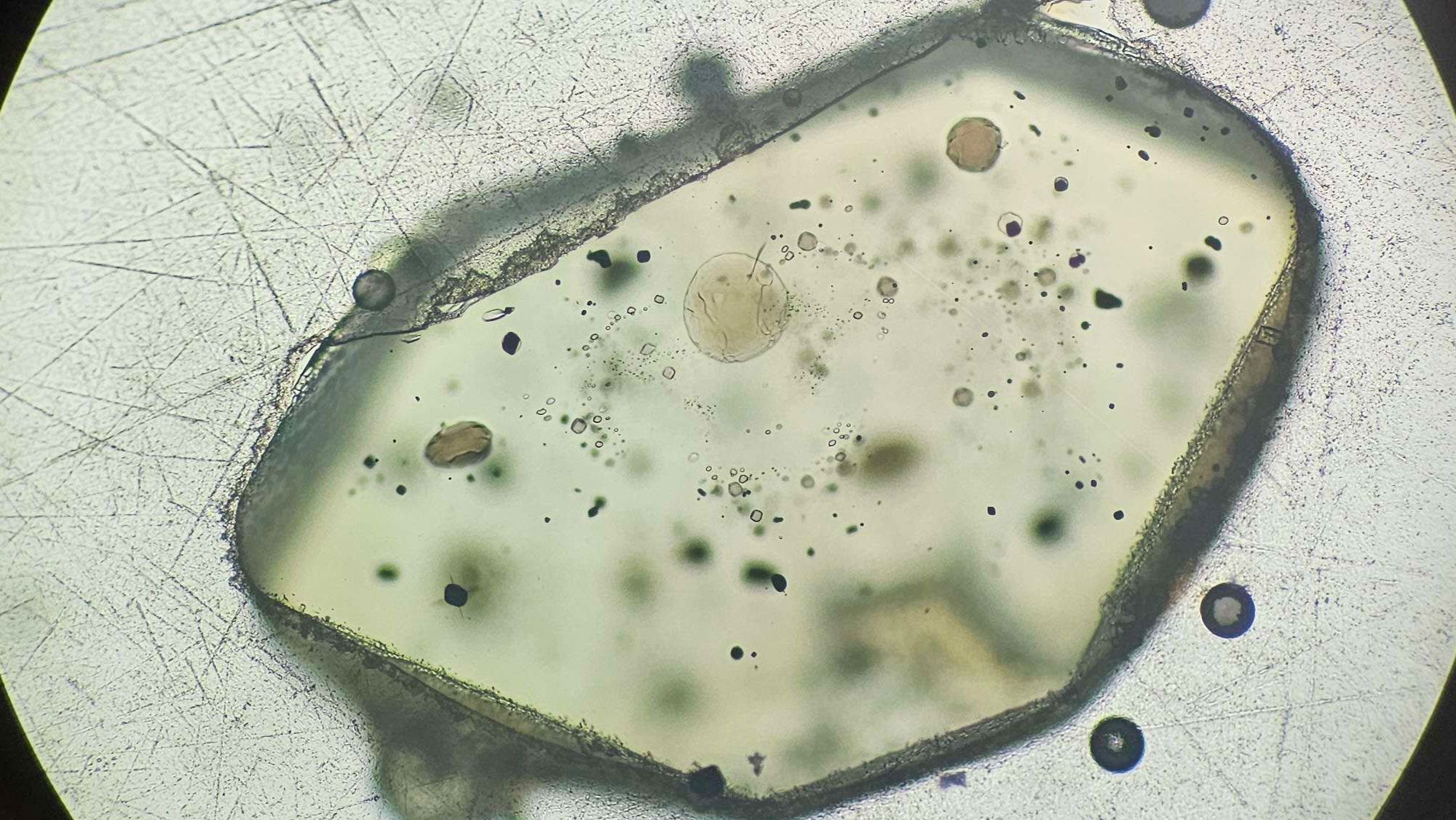
To investigate the original composition of the magma, Mussallam’s team used a cutting-edge method for measuring carbon isotopes in microscopic capsules of solidified melt. As magma cools, growing crystals trap tiny droplets of molten rock before dissolved gases have time to escape. These sealed inclusions preserve carbon dioxide in its original form — the researcher himself calls them “fossils of magma.”
Meteorite Building Blocks
Geochemists compared the resulting data with analyses of ancient meteorites, since the carbon in the core should reflect the composition of the “building blocks” from which Earth formed. The closest match was found in carbonaceous chondrites — a carbon-rich class of meteorites that formed in the cold outer regions of the early Solar System.
Chondrites contain the oldest surviving material, more than 4.5 billion years old, from which all the terrestrial planets were essentially assembled. Scientists divide them into non-carbonaceous chondrites (from the inner Solar System) and carbonaceous chondrites (from more distant orbits), and debate over the contribution of each group to Earth’s mass is still ongoing.
The authors suggest that carbonaceous chondrites bombarded Earth at a relatively late stage of its formation, when the planet had already accumulated enough mass to retain the carbon delivered from space rather than lose it into space. Some of this element sank into the metallic core, later seeped into the mantle, and eventually erupted onto the surface through volcanoes, becoming part of the atmosphere and biosphere.
Although new measurements are needed to conclusively confirm this scenario, the idea itself is astonishing: the carbon atoms that make up our bodies today once arrived on ancient meteorites, became trapped in the Earth’s scorching iron core, and eventually emerged into the light through Hawaiian craters.
Previously, we reported on how the Earth’s core changed shape.
Based on material from scitechdaily.com
