

On 20 November, the world was shaken by news that Levent Alpoge, a mathematician working at Anthropic, had reportedly used the Claude artificial intelligence system to prove the Riemann hypothesis, one of the most important mathematical conjectures of our time. Debate continues over whether he has actually succeeded, however. Even the statement of the conjecture is difficult to understand, let alone a proof that appears to stretch beyond the limits of human comprehension.
Number theory
The Riemann hypothesis, one of the seven Millennium Prize Problems, has been proved, and someone is now due a million dollars. Or perhaps not. Everything about it is extraordinarily difficult to understand, including its formulation. Even Levent Alpoge, who presented the proof, does not fully understand it, having obtained it with the help of Claude. We can make sense of all this, but we must begin not with large language models, but with number theory.
Imagine counting sheep: one, two, three, four… The numbers can increase indefinitely, but they are always positive whole numbers. They are familiar to us and are therefore called natural numbers.
However, numbers also extend in the opposite direction from zero: −1, −2, −3… Together with the positive whole numbers, they form the set of integers. This set is also infinite, but it is part of an even larger infinite set comprising all possible positive and negative fractions with non-zero denominators.
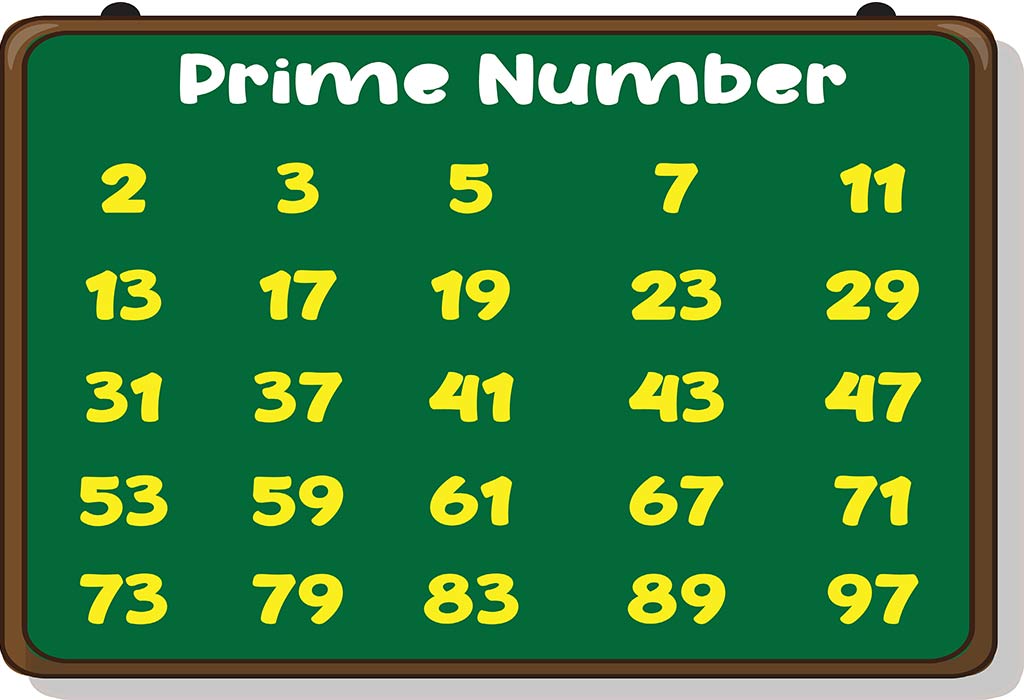
Prime numbers occupy a special place among integers: the only integers by which they can be divided to obtain another integer are themselves and one. All other choices yield fractions.
The ancient Greek mathematician Euclid demonstrated two remarkable properties of prime numbers. First, although there are fewer of them than integers, there are infinitely many. Whether we move along the number line in the positive or negative direction, we will never reach a point beyond which there are no more primes.
The second property concerns numbers that are not prime. Whatever they may be, they can always be expressed as a product of prime factors – and in only one possible way.
In effect, then, the entire infinite set of integers consists of primes and their products. Does this not sound like a fundamental law? Yet prime numbers turned out to be anything but simple. The further we move from zero, the larger the gaps between them become.
It seemed that there ought to be some relationship describing how these gaps increase, but none was apparent. Consider 2, 3, 5, 7, 11, 13, 17, 19, 23, 29, 31, 37, 41, 43, 47 – the gaps vary erratically, and this continues no matter how far we travel along the number line. There is a persistent feeling that a solution must exist, yet the primes continue to confound mathematicians.

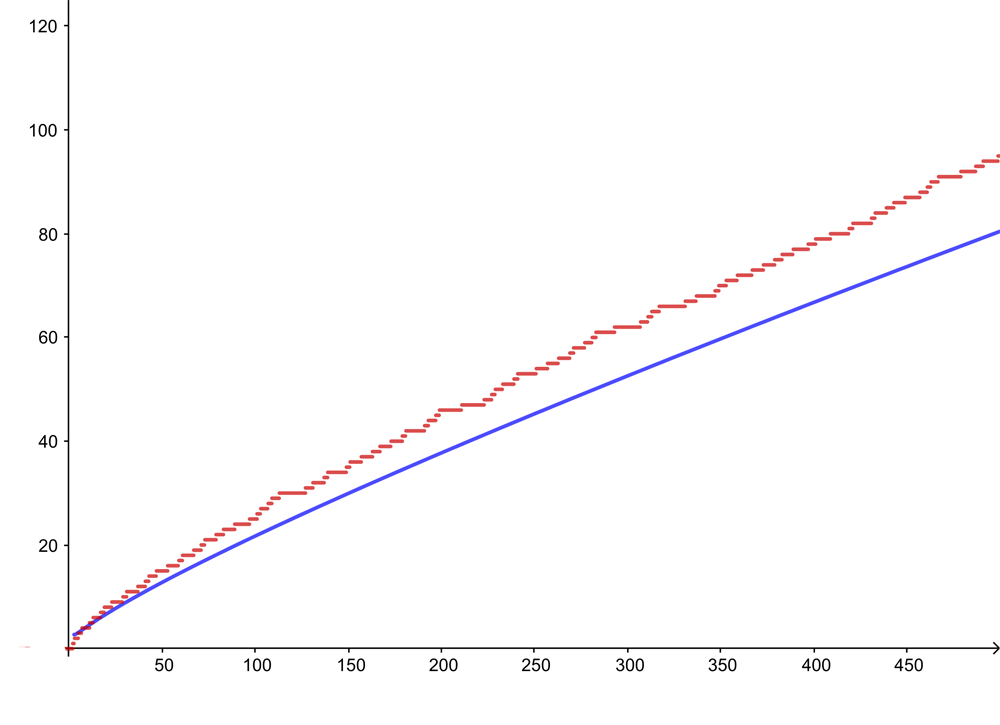
It turned out that there is a formula that approximately describes the number of primes within a given interval on the number line. The curve representing their proportion among all integers approaches zero elegantly, without ever reaching it.
The problem was that mathematicians knew the formula did not accurately describe the situation near zero. Consequently, anywhere along the curve, the gap between two primes could differ from the value obtained by dividing the number of integers in an interval by the number of primes predicted by this relationship. This became known as the problem of the smoothness of the prime distribution function and the great nightmare of the branch of mathematics later known as number theory. Many believed there was simply no way to determine this smoothness.
The Riemann hypothesis
Centuries passed. During this time, mathematicians realized that the set of rational numbers was not the largest possible set, since there were also, for example, zero and the infinity supposedly obtained by dividing any number by it. These were described as irrational numbers. Yet even they were not the ultimate abstraction, as some calculations began to yield square roots of negative numbers, something that had previously seemed unimaginable.
This led to the invention of imaginary numbers, including the imaginary unit – the square root of −1. From there, it was only a short step to complex numbers, expressed in the form a + ib, where a and b are rational numbers, and i is the imaginary unit. Here, a is called the real part of the complex number, while the term following the plus sign is the imaginary part.
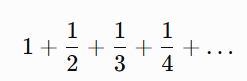
The next step was taken by Leonhard Euler in the 18th century. He was working in an entirely different branch of mathematics, studying series. A series is an infinite sum of terms forming a particular sequence.
Euler began with one of the simplest examples, in which each successive term is half the preceding one: 1 + 1/2 + 1/4 + 1/8 + … . Its sum, according to this account, is infinite. He then decided to investigate what would happen if each denominator were raised to a certain power s, and found that when s was an integer, the series had a finite sum.
Euler then drew on the fundamental theorem of arithmetic and concluded that each denominator could be represented as a sum of prime numbers raised to the power s. He eventually obtained a series whose terms were expressions with prime numbers raised to the power s in their denominators.
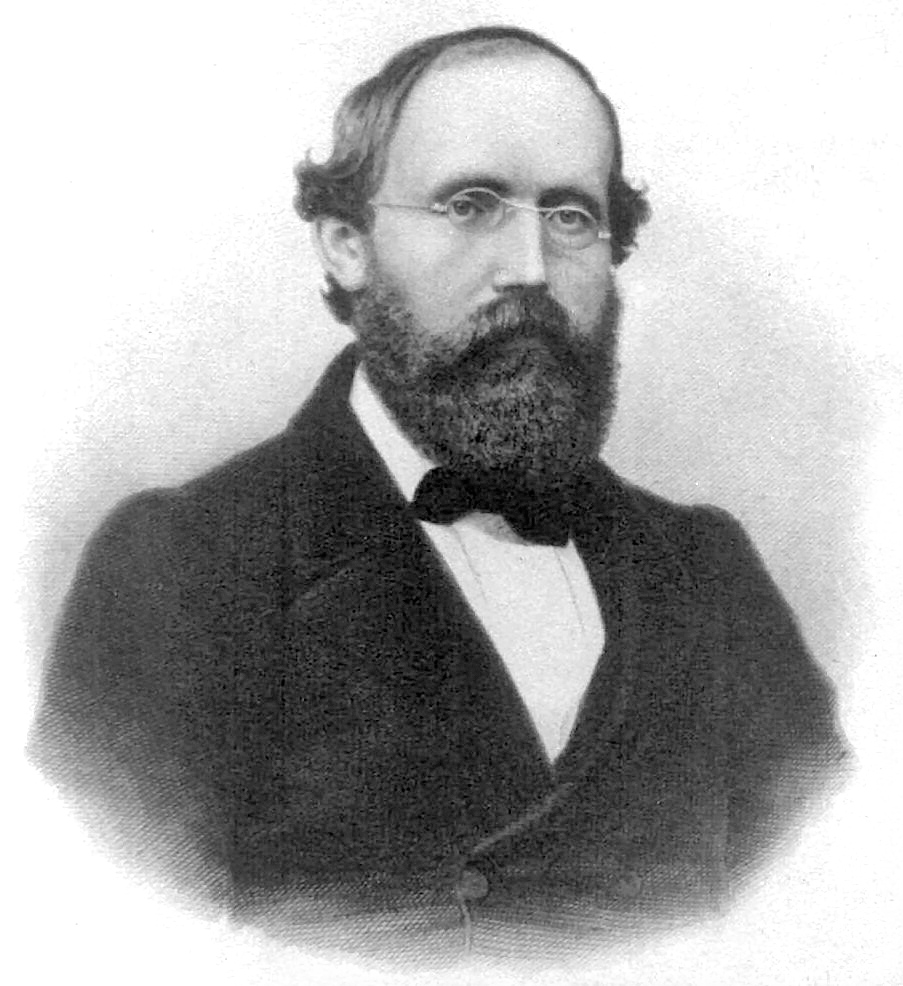
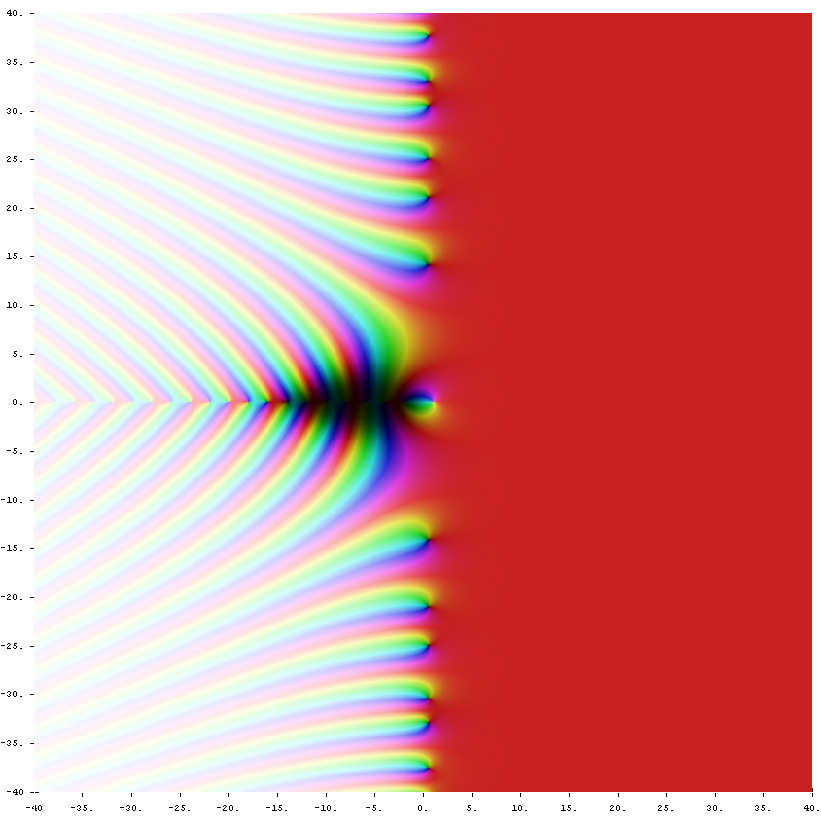
Mathematicians realized that the key to determining the smoothness of the function describing the proportion of primes must lie somewhere here, and began investigating such constructions. In 1859, Bernhard Riemann proposed a version of Euler’s series in which s was a complex number. The article describes an intriguing property: if the series is summed up to a certain number and yields zero, that number will be prime. This expression is known as the Riemann zeta function.
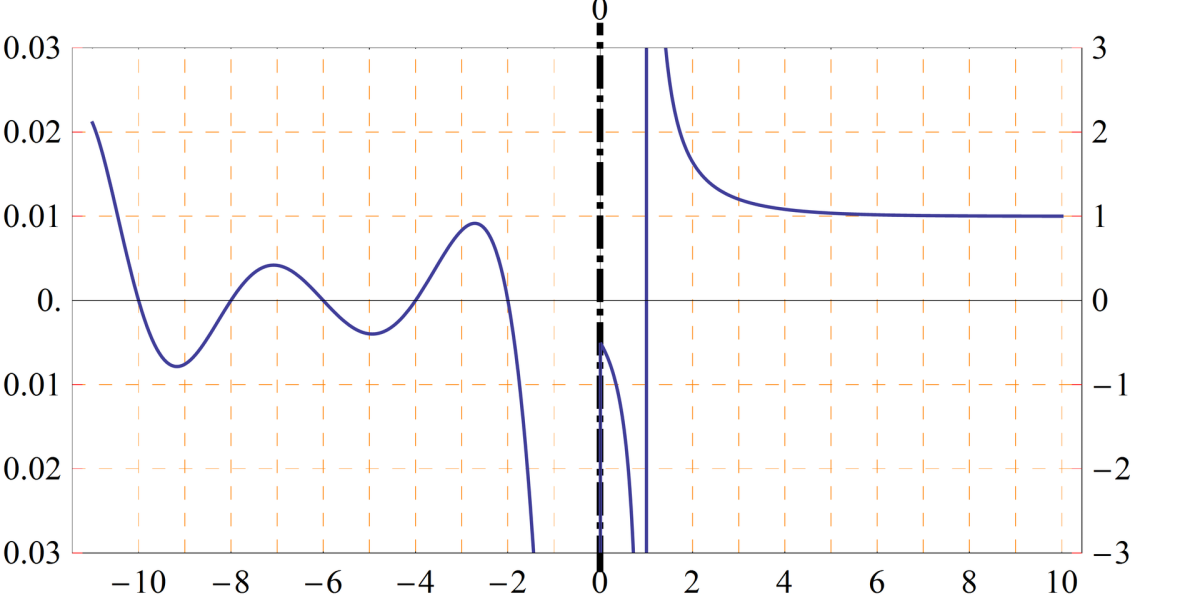
But under what circumstances is this possible? The first obvious case is when the imaginary part of s is zero. These zeros are called trivial zeros, and they are all negative even integers: −2, −4, −6, and so on. But can the zeta function vanish when the imaginary part is non-zero?
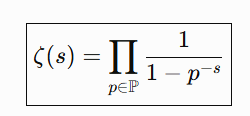
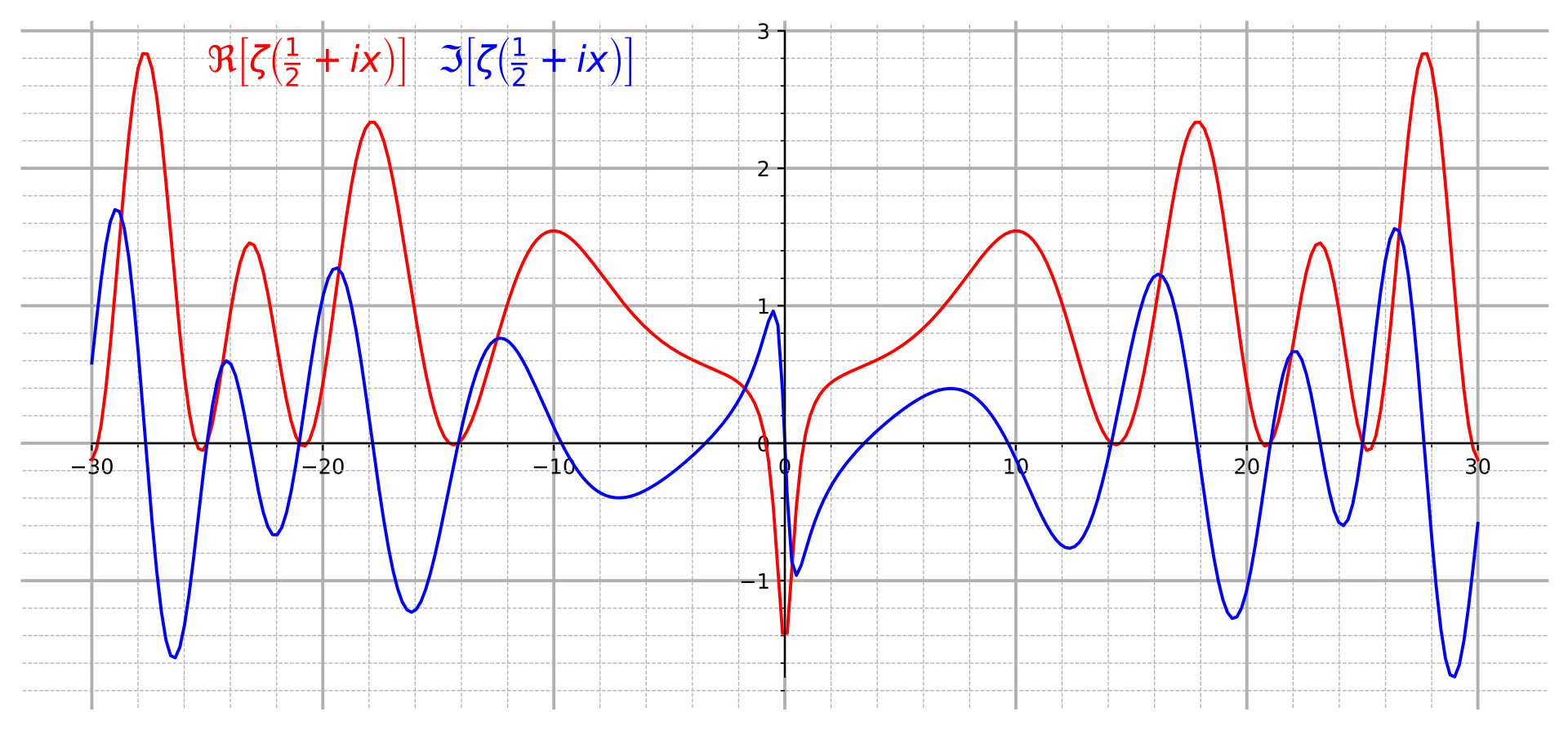
Such solutions are called non-trivial zeros. They are of enormous interest to mathematicians because they can offer insight into how far the intervals between primes in a given region deviate from a perfectly smooth curve.
The problem is that the values of a and b for which this occurs are not known in general. Based on the distribution of primes near zero, Bernhard Riemann conjectured that the real part of s must equal ½ for every non-trivial zero of the zeta function. For the past 167 years, mathematicians around the world have been trying to prove this.
The reason for this attention is not merely that a proof would bring us much closer to understanding how these deceptively simple numbers are distributed along the number line. It soon became clear that the validity of numerous other mathematical statements depended on whether Riemann was right. His hypothesis is therefore included in all the best-known collections of unsolved mathematical problems and is recognized as one of the most difficult in each of them.
It is also closely connected with cryptography, since modern encryption methods are largely based on the inability to predict whether a number is prime without directly testing it.
AI and the Riemann hypothesis
An interesting question arises here. Why not simply look for counterexamples – non-trivial zeros whose real part is not ½? Mathematicians have been searching for them since the hypothesis was published, and enlisted computers as soon as they became available. Not a single counterexample has been found, even though some of the most powerful machines ever built were already being used for this task before the era of large language models.
Analytical methods, however, also failed to produce a proof. Once again, prime numbers taunted mathematicians by refusing to obey any simple law. Many began to believe that the Riemann hypothesis could not be proved at all, at least with the mathematical tools available.
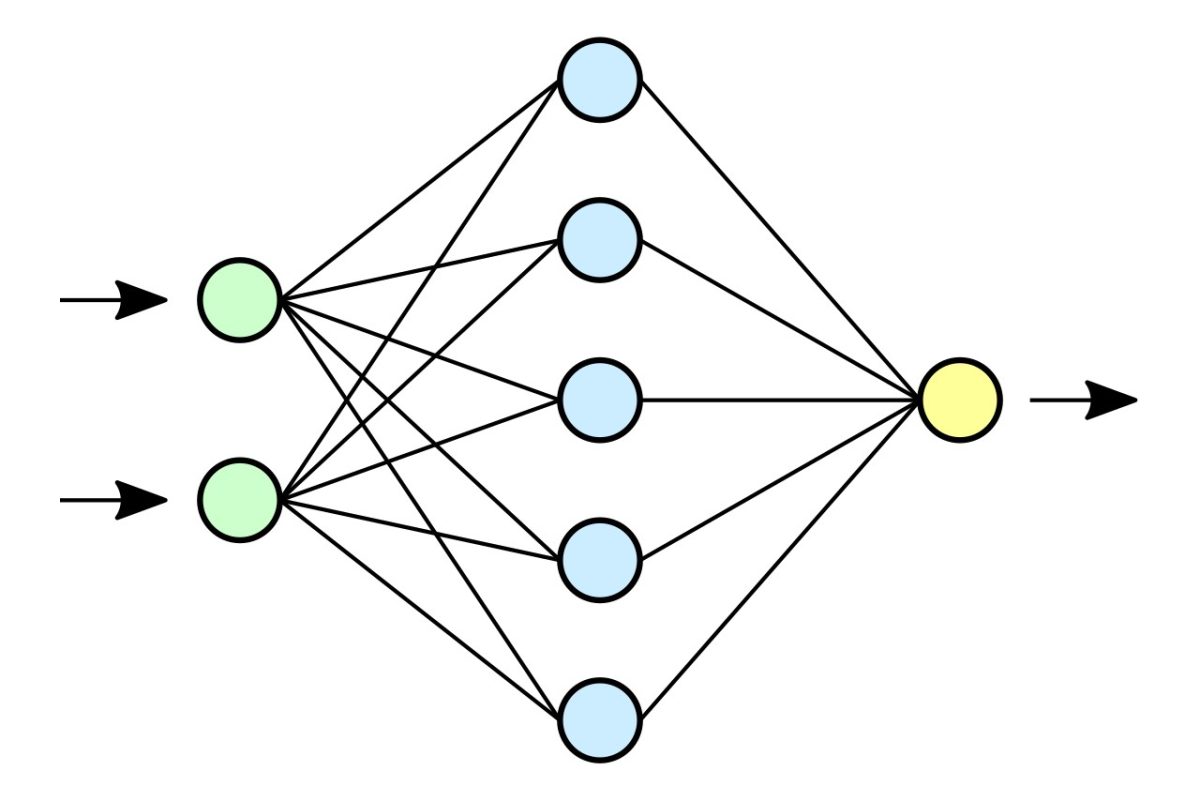
Meanwhile, neural networks were developing as a distinct type of computing system. In brief, the idea is based on replicating the structure of the human brain. Layers of simulated neurons process information, attempting to classify it while retaining what they have learnt about their decisions and how accurate those decisions were.
Artificial neural networks began to be used in science decades ago. Large language models, which are now commonly referred to as artificial intelligence, essentially represent a new stage in their development, at which they have finally become suitable for direct interaction with people in natural language.
Their success stems from training based on the statistical analysis of formal symbolic systems. These include natural languages as well as programming languages. It is hardly surprising that AI systems learnt to generate code from text prompts relatively easily.
Of all the sciences, mathematics has the most formalized symbolic system. Some even regard it not as a science, but as the language spoken by all the other sciences. Mathematicians have developed a specialized programming language called Lean, which translates theoretical mathematical constructions into code that can be automatically checked for errors.
A few years ago, those familiar with science and AI were therefore already predicting that large language models might achieve their greatest success in solving outstanding mathematical problems. As early as last year, researchers began publishing papers in which new solutions had been found using neural networks. Initially, this prompted a barrage of accusations that such papers were rubbish, distracting researchers from genuine work and generating unwarranted sensationalism.
Gradually, however, it became apparent that some of these papers did contain important results, and that their proportion was increasing. Anthropic, with its Claude language model, achieved particular success in this respect.
Mathematicians gradually began accepting this new reality, and in late summer 2026 they reportedly urged Anthropic to publish everything it had. The company agreed and, in September, reportedly released around 4,000 papers, many of which had no human interpretation at all. Researchers began examining them and found much of interest.
Among the findings were hints that a proof of the Riemann hypothesis might be close. Those working directly on the problem were therefore already somewhat prepared for its possible appearance.
So has the Riemann hypothesis been proved, and who proved it?
Describing the announcement of 20 November as the publication of an AI-generated proof of the Riemann hypothesis is not entirely accurate. The published derivation was reportedly generated by a previously unreleased version of Claude, but it was obtained by a particular mathematician – Levent Alpoge.
Alpoge was born in Türkiye but studied in the United States. He completed his doctorate in number theory at the age of 28 and published several papers in the field before the era of large language models. He is therefore far from a newcomer to the subject.
It is important to understand that large language models respond to prompts, and the results depend on how those prompts are formulated. If you simply ask AI for a proof, it will most likely tell you that it cannot provide one. Someone needs to ask the right questions, and a professional mathematician with extensive experience of interacting with AI is particularly well suited to the task.
Alpoge has already published work carried out with AI, and the latest announcement is the result not only of Claude’s capabilities as a system, but also of Alpoge’s work as a mathematician. What remains to be established is whether he and the large language model have actually proved what they set out to prove. He has previously published proofs of various theorems. Errors have been found in some of them, although not always critical ones. Others have remained unrefuted for several months.
The Riemann hypothesis presents a particularly difficult problem. The purported proof reportedly contains around 17 million lines of Lean code. Checking it manually within a short period is practically impossible. Yet this language was specifically designed to allow complex proofs to be checked automatically.
The purported proof of the Riemann hypothesis has reportedly passed this verification several times. The machine found no errors. Human mathematicians are now examining it, but the task is far from straightforward: in the form of a conventional scientific paper, it is said to occupy 250,000 pages, a stack of paper as tall as a five-storey building. Reading it would clearly take many months. Meanwhile, a partial and highly simplified account of the proof, running to ‘only’ 167 pages, is also said to have appeared.
In the meantime, mathematicians reportedly identified circular reasoning in the proof produced by Claude – a construction that relies on the Riemann hypothesis itself. This could potentially invalidate the entire proof. Alternatively, it might not, if the final proof does not actually depend on that construction. The investigation therefore continues.
It is therefore more accurate to say that there are currently several candidate proofs of the Riemann hypothesis, as a couple of other people reportedly published their own versions shortly after Alpoge. All this is intertwined with social debates about the role of humans, particularly mathematicians, in the age of AI. Some have once again begun arguing that researchers and specialists are no longer needed because neural networks can do everything.
Opponents of this view have responded by arguing that AI cannot perform any task properly. In their view, the Lean code could be correct two hundred times over, and there would still be no proof, because anything produced using AI is 100 per cent nonsense.
Others believe that a proof cannot possibly occupy 17 million lines of code, since any idea should fit into half a page of text at most. Anything longer is nonsense. Alongside them are those convinced that nobody without at least a master’s degree in mathematics should even be entitled to discuss the Riemann hypothesis.
All this raises the question of what constitutes a ‘simple explanation’. On the one hand, some explanations clearly cannot fit on half a page or even a whole page. On the other, the very notion of simplicity depends heavily on how deeply a person understands complicated things. And nothing illustrates this complicated problem quite like prime numbers.
