

The most powerful version of Europe’s Ariane 6 rocket delivered another 36 Amazon Leo satellites into low Earth orbit during its latest launch. This network will provide high-speed internet services from space, including in areas beyond the reach of terrestrial networks, and will become an alternative to Starlink. Regular launches for a major commercial customer also strengthen Europe’s independent access to space, as the continent until recently relied primarily on American rockets.
Tenth Successful Flight
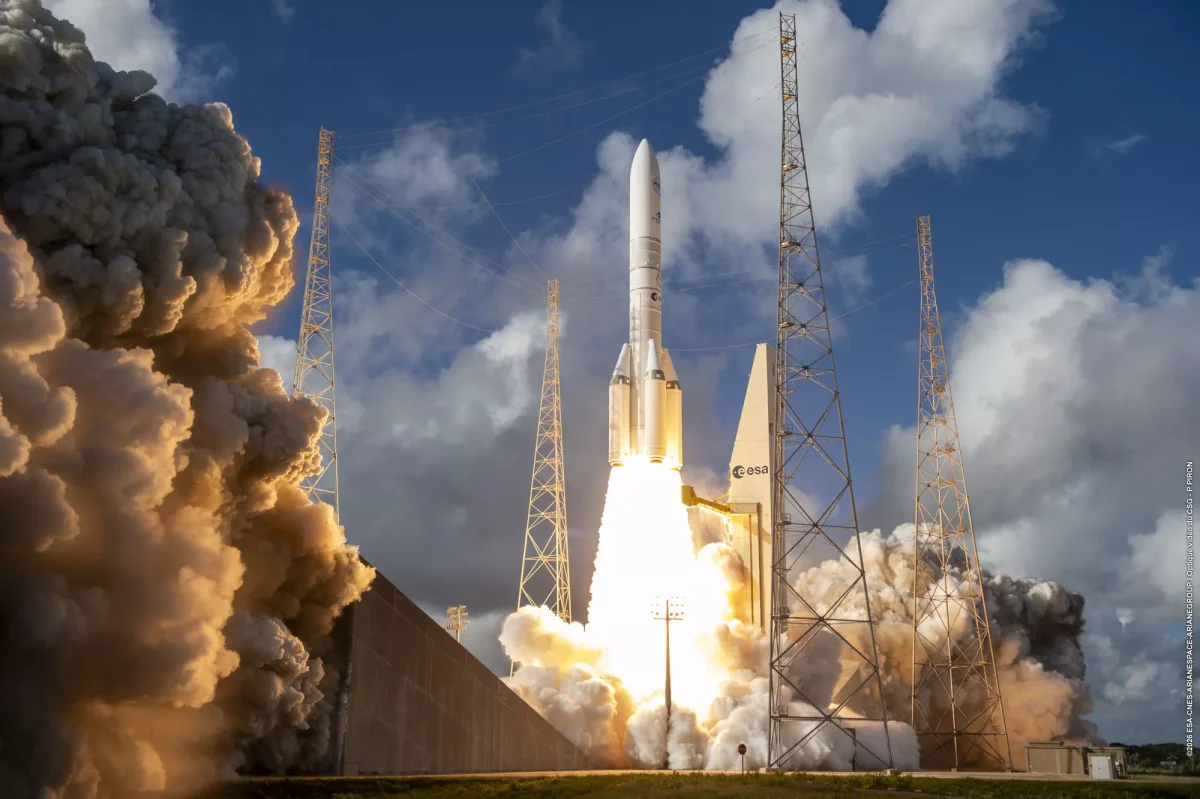
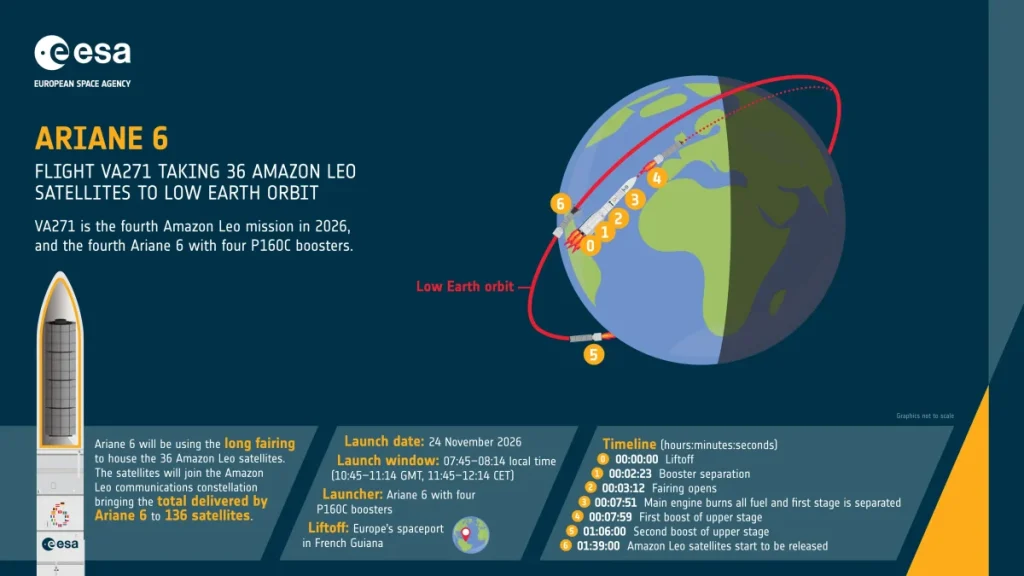
The rocket lifted off on November 24, 2026, at 8:14 am local time from the Guiana Space Centre. Two hours after liftoff, the last of the 36 satellites separated from the upper stage at an altitude of approximately 460 kilometers, and the spacecraft will subsequently be raised to their operational orbits. As Arianespace reported, this was the tenth flight of Ariane 6, and all ten have been successful. In less than ten months, the company has launched 136 satellites for Amazon.
Broadcast of the tenth Ariane 6 flight, during which 36 Amazon Leo satellites were delivered into low Earth orbit. Source: ESA
This time, Ariane 6 flew in the Ariane 64 configuration with four solid-fuel boosters, and for the second time, these were the new P160C boosters. Each holds 156 tonnes of propellant, 14 tonnes more than its predecessor, the P120C. As a result, the Ariane 64’s payload capacity to low Earth orbit reached approximately 22 tonnes, an increase of about two tonnes.
A Customer for 24 Launches
In 2022, Amazon ordered 18 Ariane 6 launches from Arianespace, and in September 2026, it added another six. The contract now covers 24 missions, and the current launch was the fourth of them.
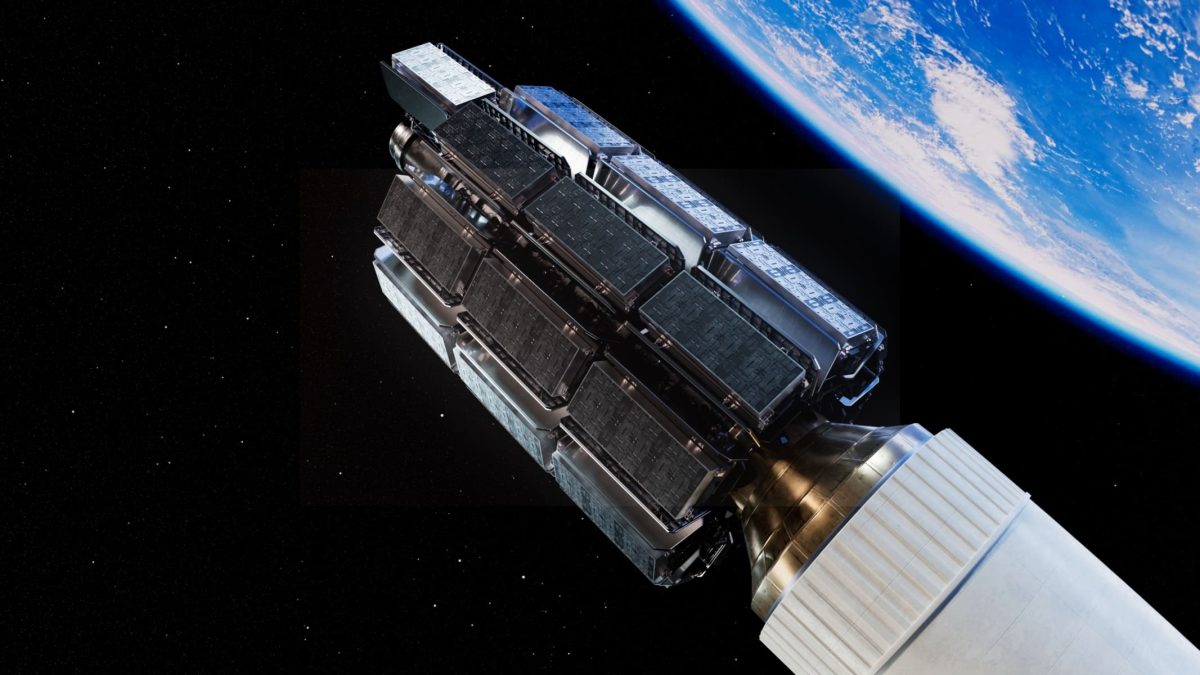
The European rocket is also important to Amazon because of problems with other launch vehicles. Just a few days earlier, an accident involving the Vulcan rocket occurred, a vehicle on which the company was also counting, while the launch dates for the service had already been postponed. The Amazon Leo network is still operating in test mode for corporate customers, so each new batch of satellites brings its full commercial launch closer.
Less Dependence on SpaceX
Europe bridged the gap between Ariane 5 and Ariane 6 using American rockets. The Euclid space telescope in 2023 and the Hera mission spacecraft in 2024 had to be launched on SpaceX’s Falcon 9. Now, ESA explicitly links every Ariane 6 flight to strengthening Europe’s independent access to space. ESA Director of Space Transportation Géraldine Naja called the launch “a powerful demonstration of the capabilities Europe now has.”

The reliability of Ariane 6 also matters for European satellite communications. The EU’s secure IRIS² network is scheduled to begin launching in 2029 on European rockets, and it is being considered as an alternative to Starlink for government needs. For Ukraine, where military communications still rely on Starlink, the pace of Ariane 6 launches affects how quickly a European replacement for American satellite internet will become available.
The next step is up to the manufacturers. ArianeGroup CEO Christophe Bruno stated that the company will focus on increasing production to carry out next year’s launches. Meanwhile, Arianespace emphasizes that Ariane 6 is ready to deploy future European satellite constellations as well.
