

The launch of Amazon’s satellite internet service, promised for mid-2026, has still not taken place. The reason given is that some of the spacecraft have not yet reached their operational orbits. Without this, the network will lack sufficient capacity and coverage. A launch date for the service has not yet been announced.
The July Milestone
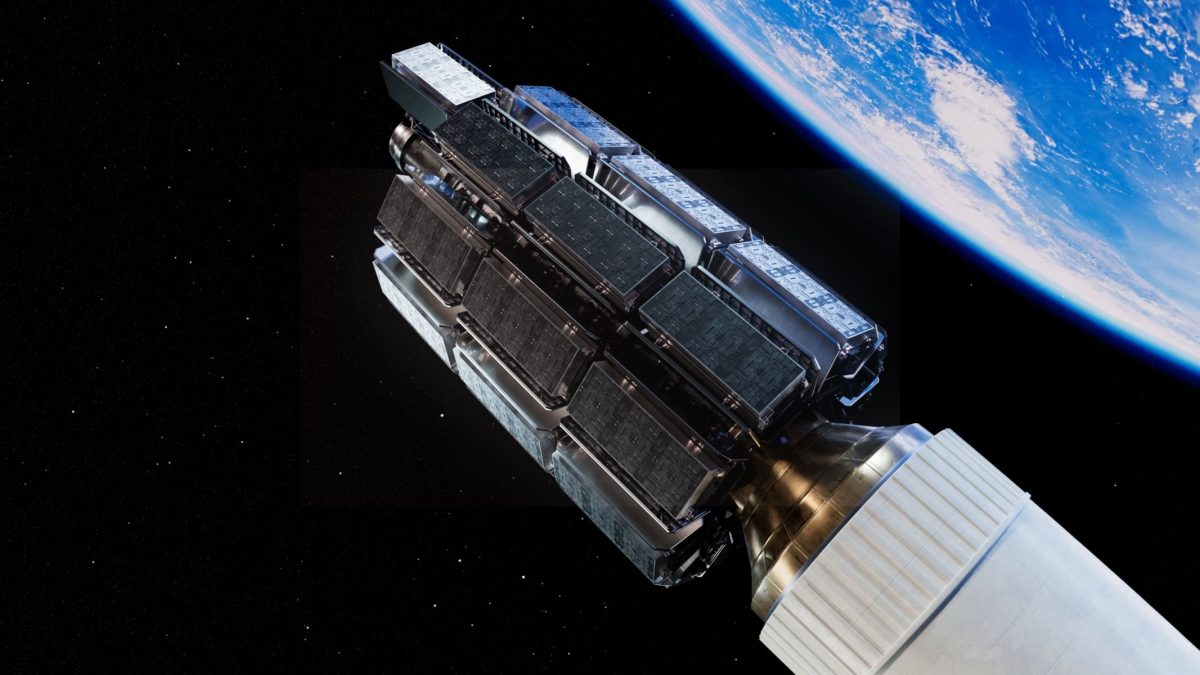
In July, another 29 Leo satellites were placed into orbit. As PCMag notes, the total number of spacecraft in space reached 396. Amazon Leo Vice President Chris Weber said at the time that this was enough to provide an initial level of service.
However, reaching space does not mean being ready for operation. Each spacecraft must climb to an altitude of about 600 kilometers, from where it will transmit signals to users on the ground. It is this stage that has been delayed.
An Independent Astronomer’s Count
Tracking data from astronomer Jonathan McDowell show a different picture. Only 299 spacecraft have reached their planned altitude. Another 78 are changing position, descending or climbing toward the required level.
Another group of 14 satellites is moving near the operational orbits. According to Jonathan McDowell’s estimate, most of the operational spacecraft will reach their target altitudes by November, although some will take longer.
The astronomer suggests that the company’s procedures may involve lengthy preliminary testing. A similar situation exists with its competitor, since Starlink satellites also often take months to reach the required altitude.
Waiting for Rockets
Amazon has not announced dates for new launches. The previous launch took place two months ago. Since then, the constellation has not received any new satellites.
The company confirmed that United Launch Alliance is preparing another batch for launch aboard the heavy-lift Vulcan Centaur rocket. Another set of spacecraft has already arrived in French Guiana for a separate mission with Arianespace.
Falling Behind the Competitor
Compared with Starlink, the Leo system looks modest. SpaceX currently has about 10,000 spacecraft operating in orbit, roughly 33 times more than the 299 Leo satellites that have already reached their designated altitude. Satellite industry analyst Carlos Placido expects the service initially to cover only certain regions or specific latitudes because of the sparse network.
The first generation of Leo is planned to include 3,232 satellites, but even at full deployment it will not cover the polar regions. The next version of the system, already approved by regulators, will add capacity and expand geographic coverage.
For Ukraine, the arrival of a second operator would have practical significance because Starlink remains essentially the only communication option for frontline areas and critical infrastructure. At the same time, Carlos Placido’s comments about limited latitude coverage mean that Ukrainian users may not receive an alternative at launch.
Pricing and Closed Beta
Network testing is still being conducted in a closed mode, involving employees and some corporate customers. Amazon has not announced pricing, although it has hinted at terms competitive with Starlink.
The company says it will share news in the near future. Starlink, meanwhile, already has more than 13 million subscribers worldwide.
