

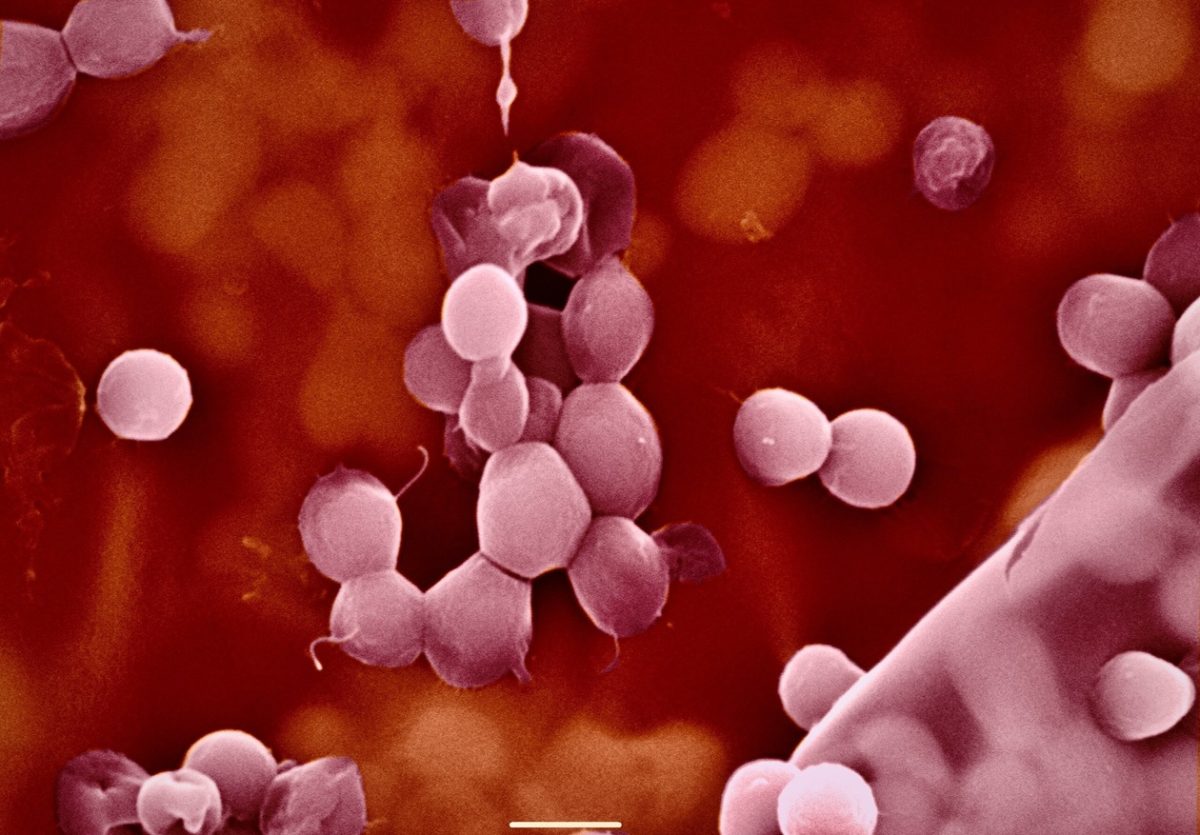
U.S. researchers have conducted a new study examining whether terrestrial bacteria can survive under Martian conditions. The experiment lasted 160 days and showed that, during this period, the microorganisms not only survived but also formed dense organic films on surfaces.
Microorganisms on Mars
According to phys.org, researchers at the University of Florida conducted a new experiment growing microorganisms under conditions resembling those on Mars. They showed that, under certain circumstances, terrestrial bacteria could potentially colonize the Red Planet.
Experiments exposing various terrestrial microorganisms to the cold, dry conditions of Mars have been underway for years. Scientists want to know whether they can survive with almost no water, no oxygen, and temperatures well below zero degrees Celsius.
Mars has no life of its own, but numerous experiments suggest that terrestrial life would not die there immediately. At least some organisms could survive, because they are far from identical. Some require very specific, mild conditions, while others survive in environments that would kill 99% of life on our planet.
What the Experiment Revealed
This time, researchers were interested in the survival of Haloferax volcanii. This extremophile tolerates a wide range of temperatures and thrives in extremely salty environments. However, as the paper published in Applied and Environmental Microbiology explains, this was not the main difference between this study and earlier research.
The key distinction was that the experiment lasted 160 Earth days rather than just a few days, as previous experiments had. So many generations of microorganisms pass during that time that researchers can assess not only their ability to survive but also their capacity to adapt and begin colonizing a new environment.
The experiment revealed not only living microorganisms but also thick microbial biofilms, suggesting that they could potentially begin spreading on the Red Planet under real-world conditions. However, there are some concerns about the conditions used. The experiment was conducted at approximately 21°C—a daytime temperature that occurs on Mars in summer, while nighttime temperatures are almost always much lower.
The same applies to highly saline solutions. They regularly flow down Martian slopes but do not form the permanent bodies of water simulated in the experiment. Nutrient availability presents a similar issue: the researchers clearly supplied more nutrients than are actually available on Mars. So this does not suggest that terrestrial bacteria could rapidly take over Mars. It does, however, indicate that under favorable conditions they could not only grow there but also actively spread.
