

NASA has announced the development of a new experimental aircraft, designated the X-70 Fractal. In its announcement, the agency called the project “a new beginning for aeronautics,” as the aircraft is being designed as a highly maneuverable test platform capable of rapid reconfiguration.

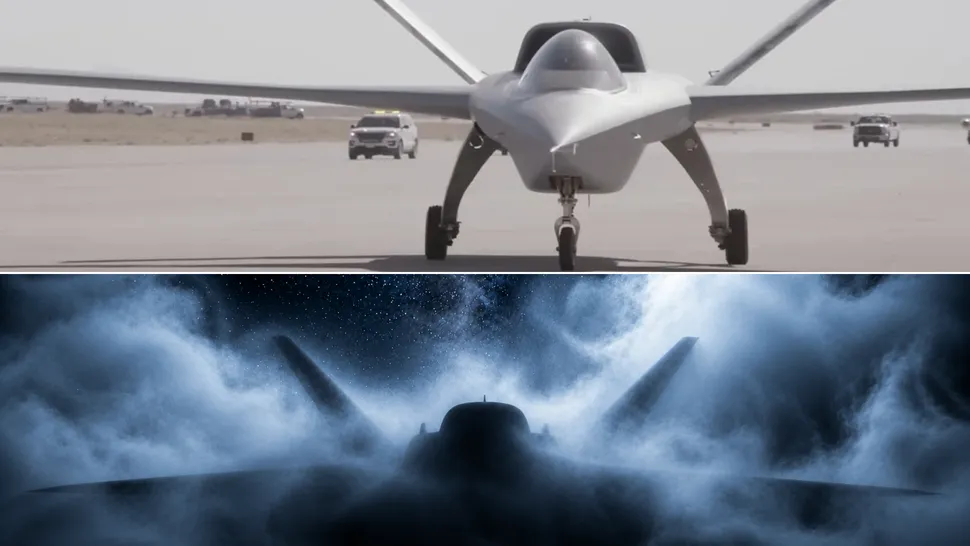
Alongside the announcement, the agency released artificially generated concept art showing two canted vertical tail fins emerging from thick clouds of smoke. Although the aircraft’s final appearance remains a secret, the tail silhouette bears a distant resemblance to those of the F-22 Raptor and F/A-18 Super Hornet fighters.
A Building Set for the Sky
The X-70 Fractal’s defining feature is its modular architecture. Engineers will be able to quickly replace both internal components and external airframe elements. This will allow them to test a wide variety of flight-control systems and explore levels of maneuverability never previously demonstrated by crewed aircraft.
“The X-70 Fractal gives NASA a crewed, high-performance platform for testing advanced control systems and other cutting-edge technologies in real flight. This is why people come to NASA: to build, to learn, and, most importantly, to fly,” said NASA Administrator Jared Isaacman.
According to NASA, the aircraft’s first test flight is expected within the next two years.
Technical Specifications
According to the released information, the X-70 Fractal will have the following performance specifications:
- Cruising speed: Mach 0.75.
- Service ceiling: up to 13.7 kilometers.
- Range: more than 2,777 kilometers.
- Takeoff weight: approximately 4,535 kilograms.
The aircraft will be able to carry up to 900 kilograms of experimental equipment. The ability to mount scientific instruments both inside the fuselage and on external hardpoints opens up extensive opportunities for practical research into aerodynamics and new materials.
In weight and overall dimensions, the X-70 is similar to the Model 437 Vanguard experimental aircraft developed by Scaled Composites and Northrop Grumman. The published concept reinforces the resemblance between their silhouettes.
The X-Plane Family
The new Fractal will add to the rich legacy of American experimental aircraft. NASA’s previous X-plane, the supersonic X-59, has been conducting test flights for more than a year. Its defining feature is the distinctive geometry of its elongated nose, which has no forward-facing windshield. This shape suppresses shock waves when breaking the sound barrier, making flight above Mach 1 virtually silent for people on the ground.
Private companies and military organizations are pursuing similar goals in parallel. Boom Supersonic is testing its X-1 aircraft, the defense research agency DARPA is pursuing the CRANE project, and Boeing is developing the next-generation F-47 fighter. The X-70 Fractal, however, is intended to become NASA’s primary platform for testing adaptable flight technologies for the future.
Previously, we reported on how the supersonic XB-1 aircraft reached a speed of 2,700 kilometers per hour.
Based on material from NASA
