

Stars at the center of the Milky Way have been photographed in detail using Hubble. The same region of the sky will soon be studied by the new Roman telescope in a search for exoplanets. When the light from one of these stars temporarily brightens due to the gravitational influence of a planet or another object passing in front of it, astronomers will compare the new data with Hubble images to determine more precisely what caused the brightening.
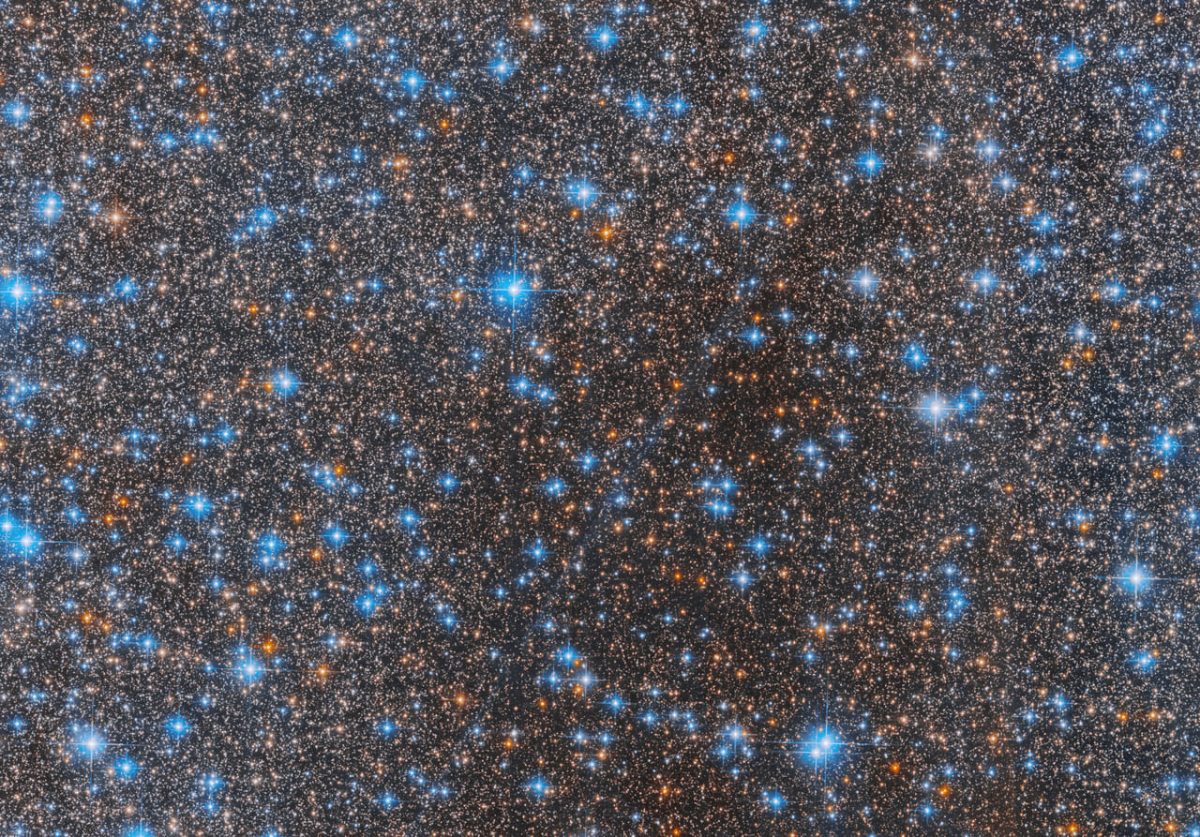
A Star Field Ahead of the Survey
The new images were released by NASA on November 25, 2026. They are part of a survey of the Milky Way’s bulge, a dense, spherical concentration of stars surrounding the center of our Galaxy. The survey covers 1.1 square degrees of the sky, approximately the equivalent of five and a half full Moon disks, and largely overlaps with the region that will be studied using Roman.
The bulge is suitable for searching for planets because of its high density. It contains almost a quarter of the Galaxy’s stellar mass, and its stars are so closely packed that one occasionally passes in front of another. The gravity of the nearer object then focuses the light of the distant star like a lens, causing its brightness to increase temporarily. This effect is called gravitational microlensing.
If a planet orbits the lensing star, an additional brief brightening appears in the light curve. A free-floating planet, meanwhile, produces a separate event lasting anywhere from several hours to a day or two. This is how astronomers discover planets that cannot be detected using other methods because they are too far from Earth or do not have a parent star at all.
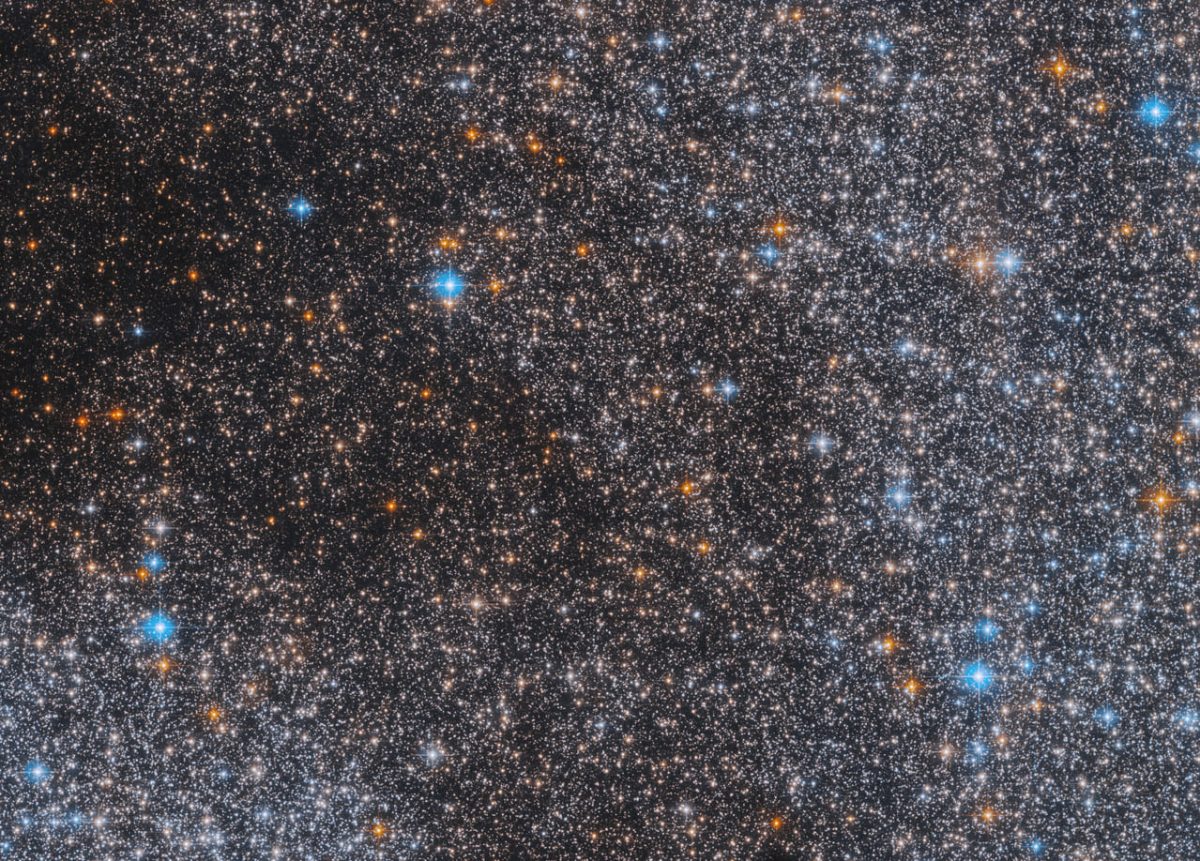
The survey has been conducted since spring 2025 by a team led by Sean Terry from the University of Maryland, College Park, and NASA’s Goddard Space Flight Center. Its first results have already been published in the peer-reviewed journal The Astrophysical Journal Letters. The fields were imaged in the red visible and near-infrared ranges, to which Roman is also sensitive. Thanks to Hubble’s high resolution, the images make it possible to measure the brightness, age, chemical composition, and motion of individual stars. By comparing these measurements with future Roman data, astronomers will be able to estimate the masses of discovered planets.
Why Previous Measurements Matter
Astronomers can learn relatively little from a microlensing event alone. The lensing star and the distant star almost overlap in the sky, so their light blends into a single point. Changes in brightness usually make it possible to determine only the mass ratio between the planet and its parent star, not their actual masses.
To determine these masses, it is necessary to know how much light the lensing star emits. If the brightness and color of the stars in that part of the sky are already known, along with the direction and speed of their motion, it becomes easier to determine what proportion of the light belongs to the lensing star. Its mass can then be estimated from its brightness, and the planet’s mass can be calculated using the mass ratio.
How the Nancy Grace Roman Space Telescope differs from Hubble and James Webb, and how it will be used to search for exoplanets. Source: Universe Space Tech
What Roman Will Search For
The events requiring these measurements will begin to be recorded after the launch of Roman, which took place on August 30, 2026, aboard a Falcon Heavy rocket. The bulge survey will last for six seasons of 72 days each. During each season, a region covering approximately 1.7 square degrees, or eight and a half full Moon disks, will be photographed every 12 minutes to avoid missing brief events caused by planets.
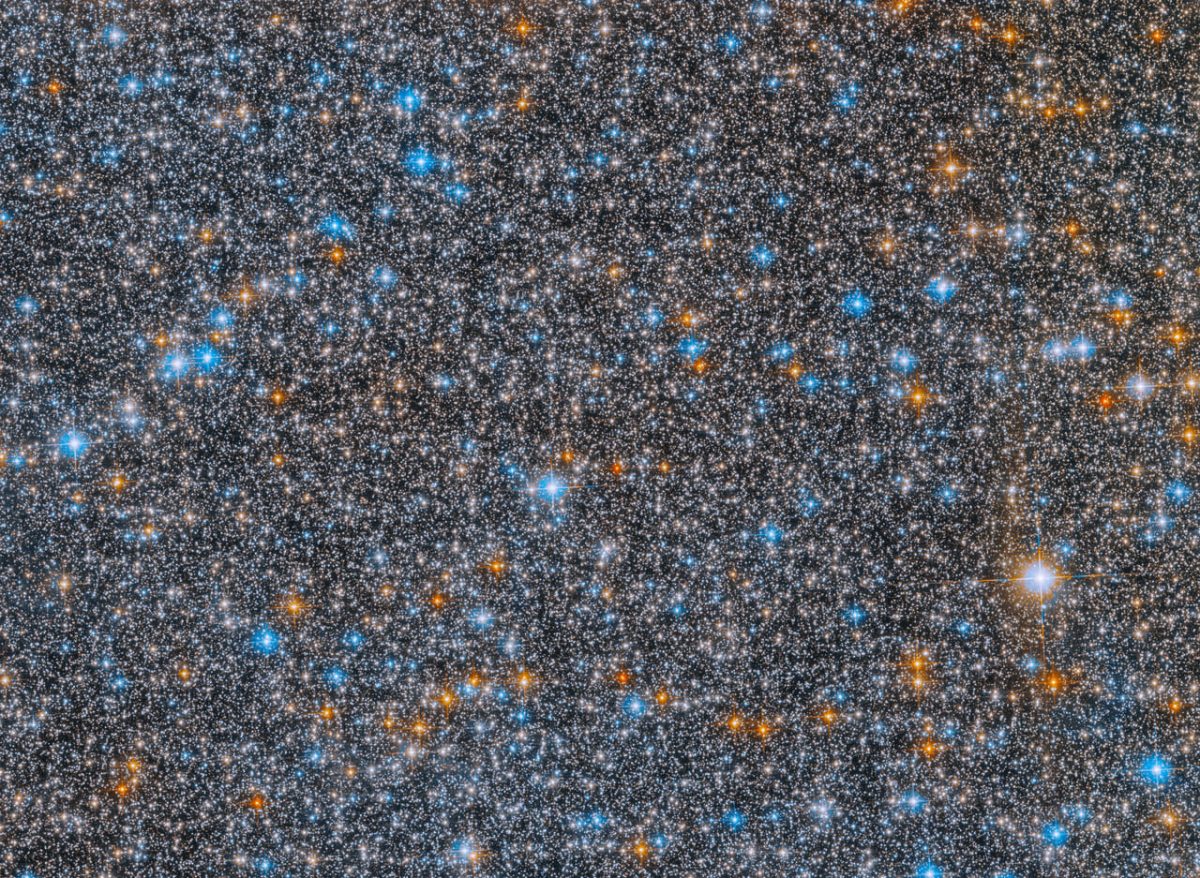
Among the expected discoveries are hundreds of free-floating planets, as well as previously unknown isolated neutron stars and black holes. Measurements of stellar motion from Hubble will also be useful in searching for dark matter. The data from the Hubble survey are already publicly available in the Mikulski Archive for Space Telescopes, so any astronomy research team can work with them.
