

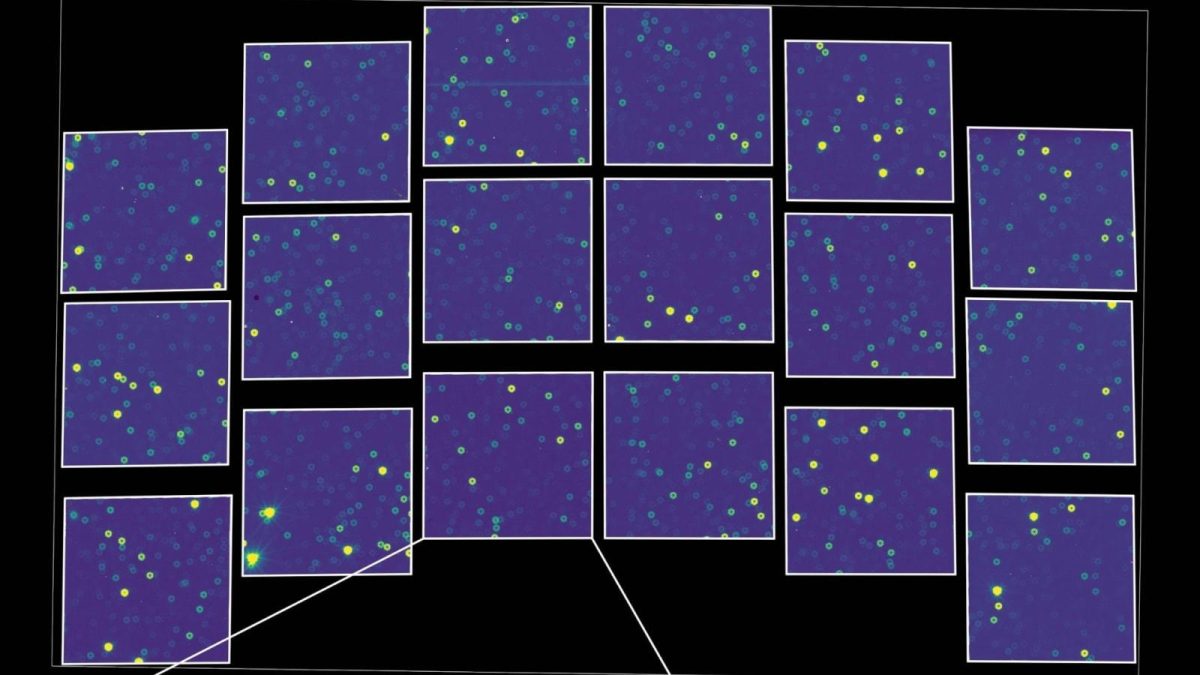
In the first test image captured by NASA’s new Nancy Grace Roman Space Telescope, the stars appear as unusual, blurry “donuts.” At first glance, this may suggest a problem with the optics. However, this is precisely the result engineers anticipated: the telescope’s main camera has already captured starlight in space, even though its detectors had not yet been focused when the test was conducted.
Once the guidance system and optics have been fully calibrated, these rings should resolve into sharp points. The first full-scale scientific images from Roman are expected in early 2027. At that time, astronomers will have access to an instrument capable of capturing an area of the sky approximately 100 times larger than Hubble’s in a single image, while maintaining comparable angular resolution.
Roman was not designed to replace Hubble or James Webb. Its primary advantage lies in its scale. The telescope is intended to study hundreds of millions of galaxies, search for exoplanets, map the distribution of dark matter, and advance our understanding of dark energy — the component believed to drive the accelerated expansion of the universe.
Roman is already working in space
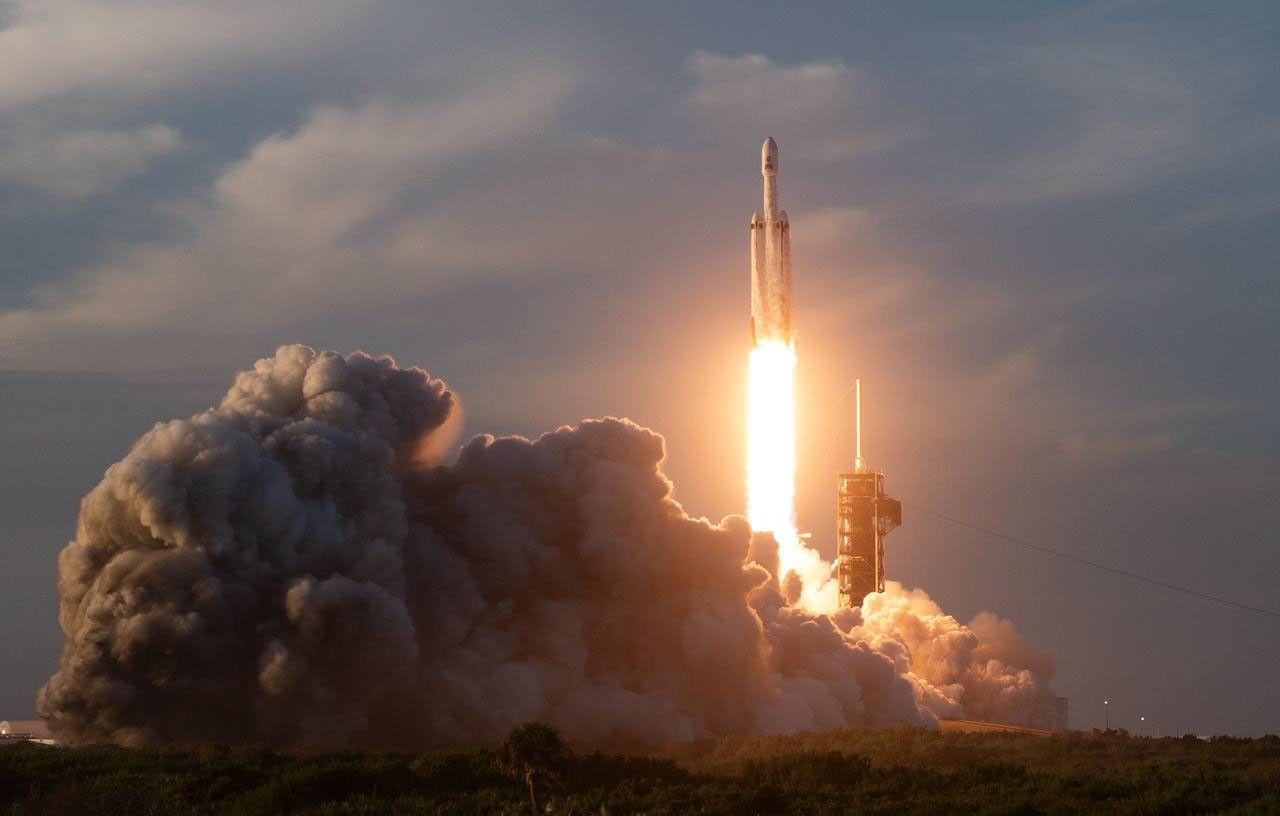
The Nancy Grace Roman Space Telescope’s journey began on August 30, 2026. At 7:26 a.m. Eastern Time, a Falcon Heavy rocket lifted off from the Kennedy Space Center in Florida. Approximately 30 minutes later, the telescope separated from the upper stage and continued its flight independently. Shortly after separation, the solar array deployed, providing power to the spacecraft and helping protect it from heat. The telescope then entered its commissioning phase, a lengthy process involving the testing, activation, and calibration of all systems.
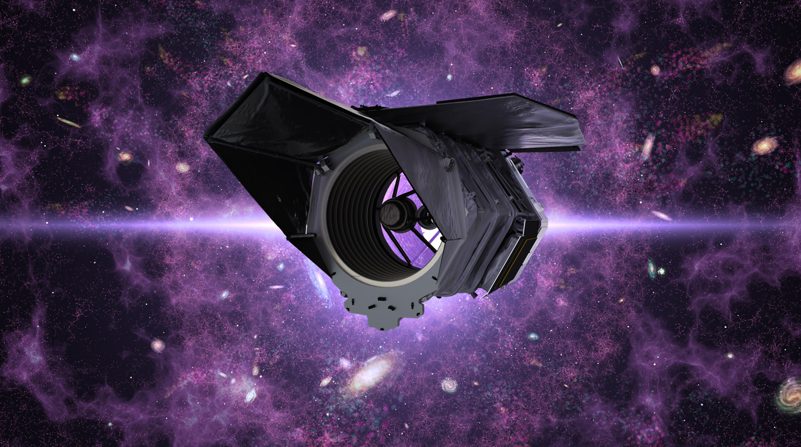
On August 31, Roman performed its first trajectory correction and deployed a highly directional antenna designed to transmit substantial amounts of data to Earth. The following day, the protective shield covering the optical system was opened. Subsequently, engineers activated the experimental coronagraph, which is designed to enable direct observations of exoplanets and circumstellar disks.
The Wide Field Instrument, the spacecraft’s primary 300-megapixel infrared camera, was brought online in stages. Initially, it was maintained at a relatively warm temperature to eliminate any residual water and volatile substances. It was then cooled to approximately –183 °C, and all 18 infrared detectors were activated. The first blurry images of stars emerged during these tests.
Why is Roman flying to the L2 point?
The telescope is traveling toward the second Lagrange point of the Sun-Earth system, known as L2. This point is located approximately 1.5 million km from Earth, in the direction opposite the Sun. The James Webb Space Telescope is already operating in this region. Roman will not remain stationary directly at L2; instead, it will follow a wide orbit around the region while orbiting the Sun alongside Earth.
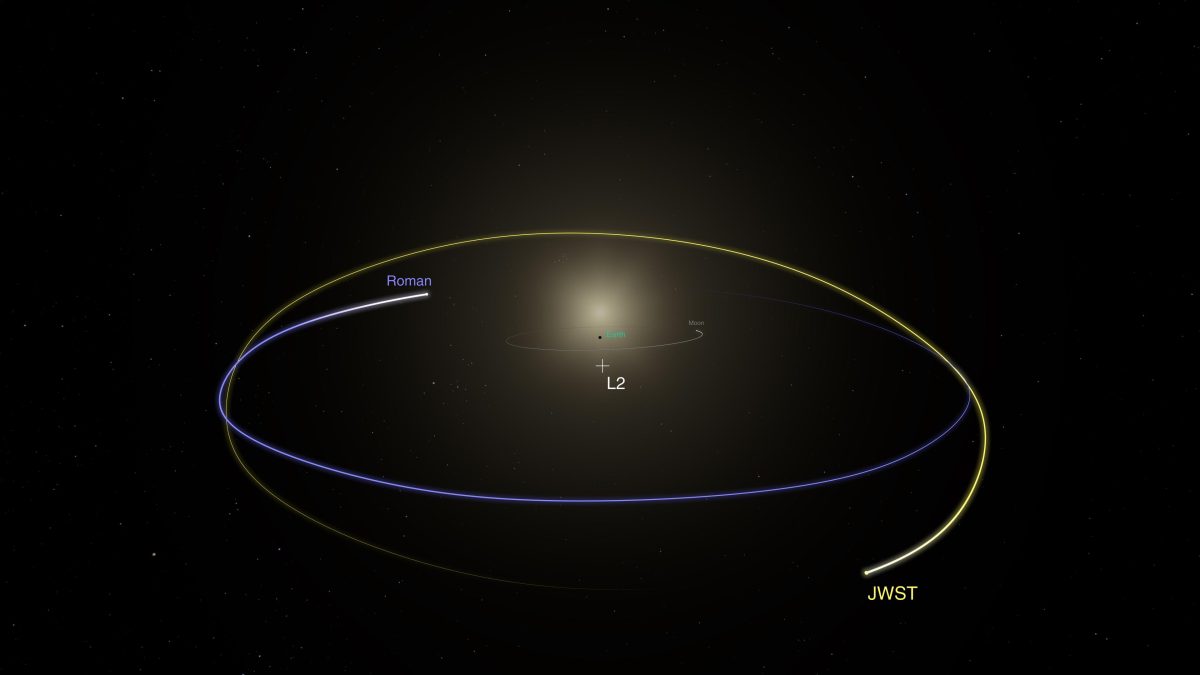
Source: NASA
This location provides highly favorable conditions for astronomical observations. The Sun, Earth, and Moon will almost always be positioned on the same side of the telescope, enabling protective structures to block a substantial proportion of their light and heat. This will help maintain the optical system at a cool and thermally stable temperature, a critical requirement for infrared observations.
At the same time, Earth will minimally obstruct the view of the sky, and Roman will require only occasional minor adjustments to maintain its desired orbit. It is expected to reach an orbit near L2 approximately 100 days after launch, in early December 2026. Subsequently, focusing, calibration, and final checks will be conducted.
Neither a new Hubble nor a successor to the James Webb Space Telescope
The existence of the Hubble and James Webb Space Telescopes naturally raises the question: Why does NASA require another large space telescope? This distinction can be explained most clearly through a photograph. Imagine a vast city at night.
Hubble is capable of observing its surroundings in extraordinary detail. It operates in the visible, ultraviolet, and near-infrared wavelengths and allows us to study individual stars, nebulae, galaxies, and other objects.
The James Webb Space Telescope may be compared to a more powerful instrument focused on a specific region of this city. Its 6.5-meter primary mirror and operation primarily in the infrared spectrum enable it to detect extremely faint radiation. This capability supports the study of very distant galaxies, star-formation processes, and the atmospheres of certain exoplanets.
Roman will operate differently. It functions more like a space-based panoramic camera: rather than continuously observing a small section of the sky, it can rapidly create wide-angle, highly detailed maps.

Its primary mirror has a diameter of 2.4 meters, nearly the same as Hubble’s. Consequently, in the infrared spectrum, Roman will have an angular resolution comparable to Hubble’s, while its field of view will be approximately 100 times larger. A single image will cover an area of the sky larger than the visible disk of the full Moon. According to NASA estimates, this combination of high resolution and a wide field of view will enable Roman to conduct large-scale sky surveys approximately 1,000 times faster than Hubble.
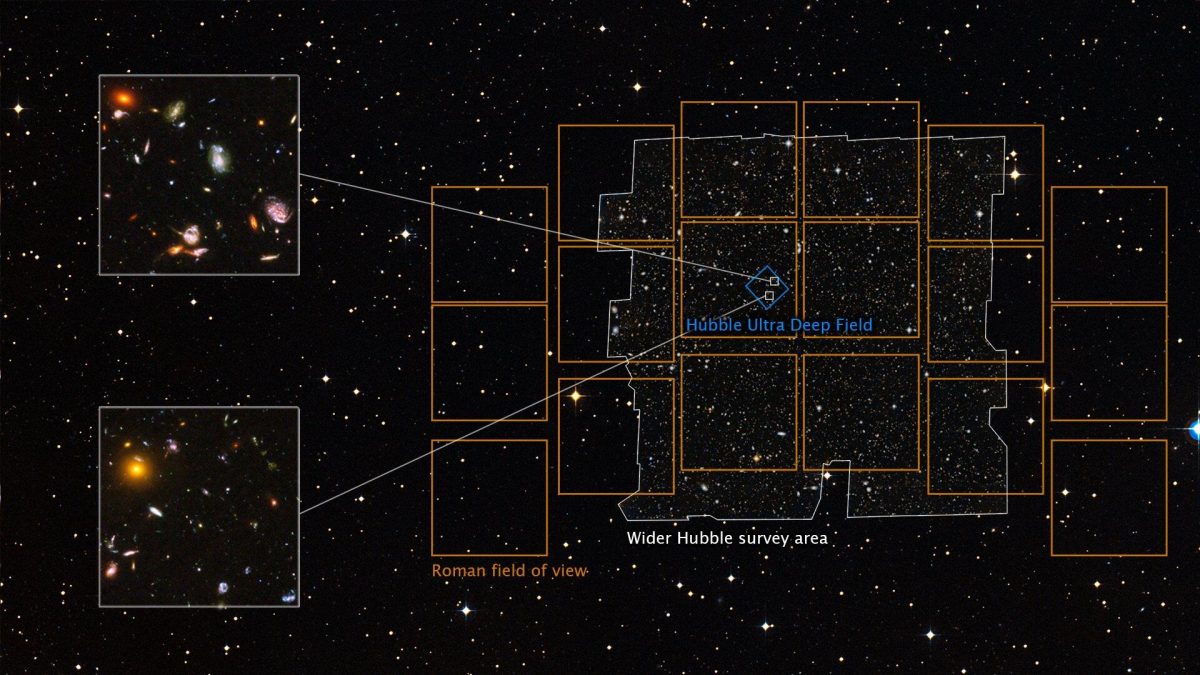
Therefore, the missions of the two telescopes are fundamentally different. Webb can study a specific distant galaxy in detail. Roman, by contrast, can investigate the behavior of hundreds of millions of galaxies simultaneously. This complementary approach could be particularly effective: Roman will identify a vast number of compelling objects and rare events, after which Hubble or Webb can study the most promising candidates in detail.
Why was the telescope named after Nancy Grace Roman?
The telescope’s name has a symbolic connection to Hubble. Nancy Grace Roman worked as an astronomer at a time when it was considerably more difficult for women to pursue careers in science. In 1959, following a lecture by chemist Harold Urey, NASA employee John Clark asked her whether she knew anyone who could establish a space astronomy program at the newly formed space agency. Roman interpreted this as an invitation directed to her, applied for the position, and joined NASA. She became the first director of the astronomy program and the first woman to hold an executive position at the agency.
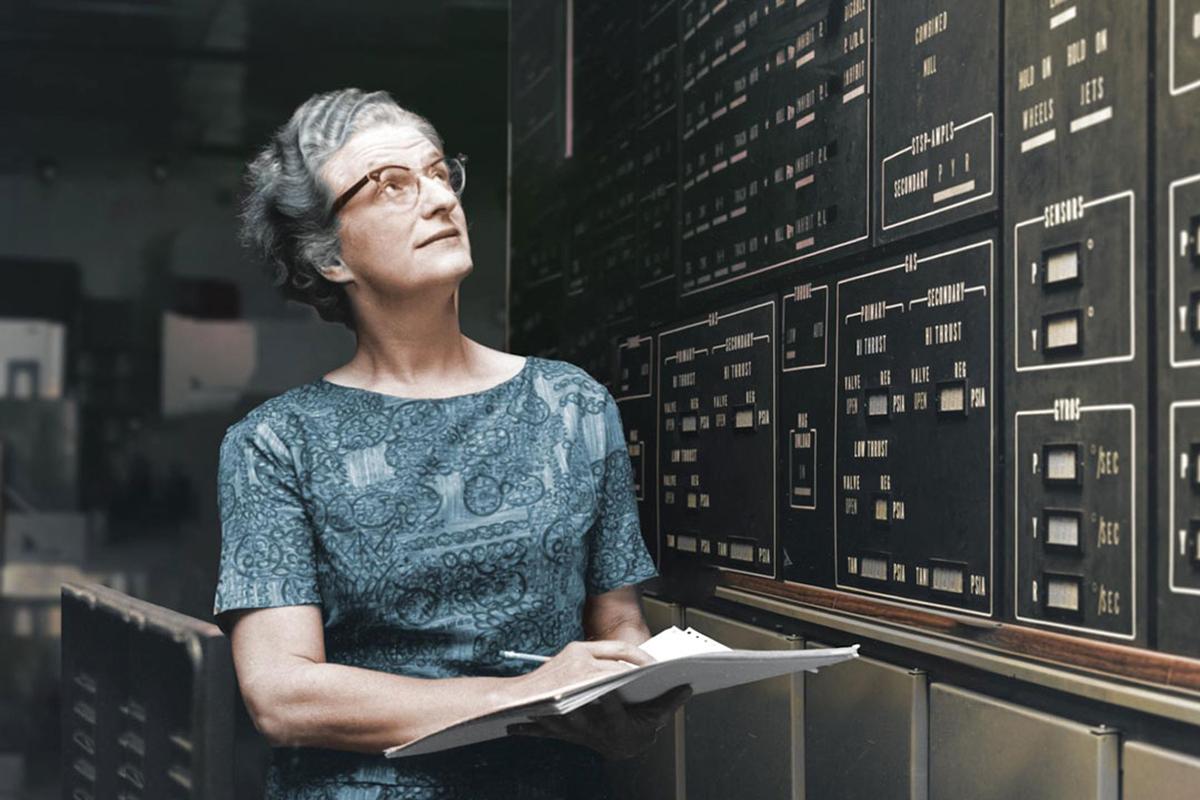
Over the following years, Roman persuaded the scientific community, agency leadership, and the U.S. Congress of the need to construct a large space telescope. This initiative ultimately led to the Hubble Space Telescope, and Roman herself came to be known by the unofficial nickname “the mother of Hubble.”
It is particularly significant that she later identified the study of dark energy as one of the most intriguing results of Hubble’s work. Now, the telescope named in her honor is poised to make investigating this mystery one of its primary missions.
A telescope for the Dark Universe
The ordinary matter that constitutes stars, planets, gas clouds, and ourselves accounts for only approximately 5% of the universe’s composition. Dark matter comprises approximately 27%, while dark energy accounts for a further 68%. Consequently, approximately 95% of the universe consists of components whose nature remains unknown.
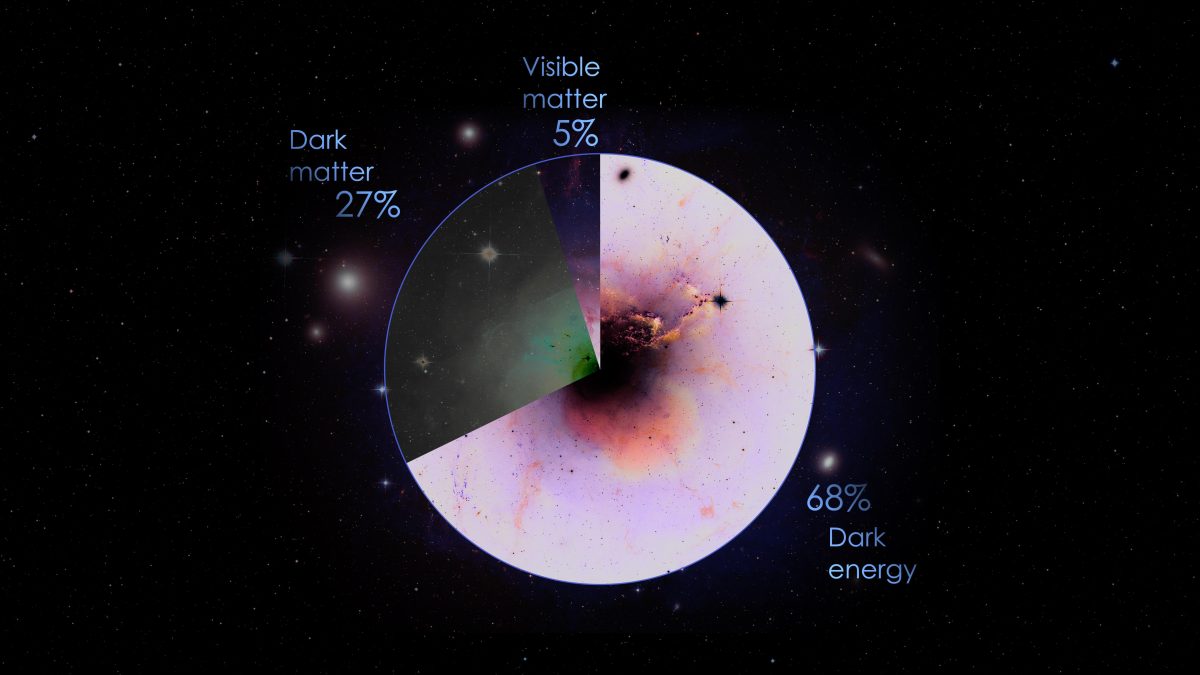
Despite their similar names, dark matter and dark energy represent fundamentally distinct concepts.
Dark matter does not emit light; rather, its presence is inferred through its gravitational effects. Its distribution has played a significant role in the formation of galaxies, galaxy clusters, and the large-scale cosmic web.
Dark energy refers to an unknown component or phenomenon believed to drive the accelerated expansion of the universe. To date, it remains uncertain whether dark energy is a distinct form of energy or whether our understanding of gravity must be revised to account for these observations. Roman will investigate this question using several independent methods.
Weak gravitational lensing
Mass warps spacetime and alters the path of light. If a substantial amount of matter lies between us and a distant galaxy, its gravity slightly distorts the galaxy’s image.
Detecting this effect in a single object is exceptionally challenging. However, by precisely measuring the shapes of hundreds of millions of galaxies, the cumulative impact of these small distortions can be used to construct a map of the mass distribution.
In this manner, distant galaxies effectively serve as an extensive network of cosmic “sensors” that can be used to study the distribution of invisible dark matter.
Baryon acoustic oscillations
In the early Universe, pressure waves — cosmic counterparts to sound waves — propagated through hot plasma. As the Universe cooled, their characteristic scale left an imprint on the subsequent distribution of galaxies. This imprint can serve as a cosmic ruler.
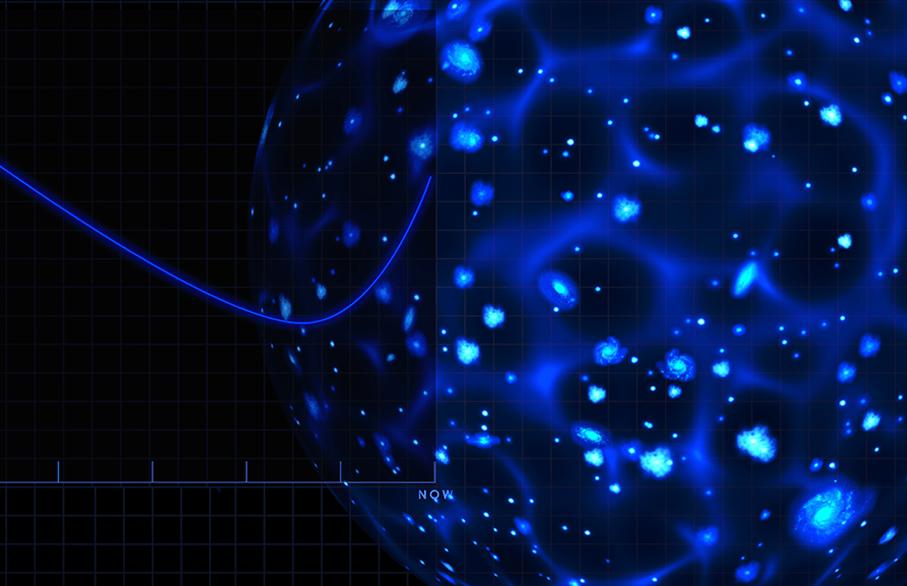
By comparing its scale across different eras, astronomers can reconstruct the history of the universe’s expansion and assess how dark energy has behaved over time.
Type Ia supernovae
Type Ia supernovae will provide an additional tool. They can function as cosmic beacons: by knowing the characteristic luminosity of these explosions and comparing it with their apparent brightness to an observer, we can determine their distances.
Roman is expected to observe thousands of such supernovae across a range of distances. This will enable scientists to study different eras in cosmic history and track changes in the rate of the universe’s expansion.
Roman’s particular value will lie in its capacity to compare the results of different methods. If weak gravitational lensing, baryon acoustic oscillations, and supernovae yield a consistent picture, this will substantially strengthen cosmological models. However, if the results begin to contradict one another, this may indicate gaps in our current understanding of the universe.
A census of the planets within the Milky Way
Roman will study not only the largest structures in the universe but also conduct a comprehensive search for planets. Gravitational microlensing will play a significant role in this effort. When a foreground star passes nearly directly in front of a more distant star, its gravity bends and magnifies the light from the background object.
If a planet orbits a lens star, it produces an additional characteristic deviation in the light curve. The planet itself may not be directly visible; its presence is revealed through its gravitational influence.
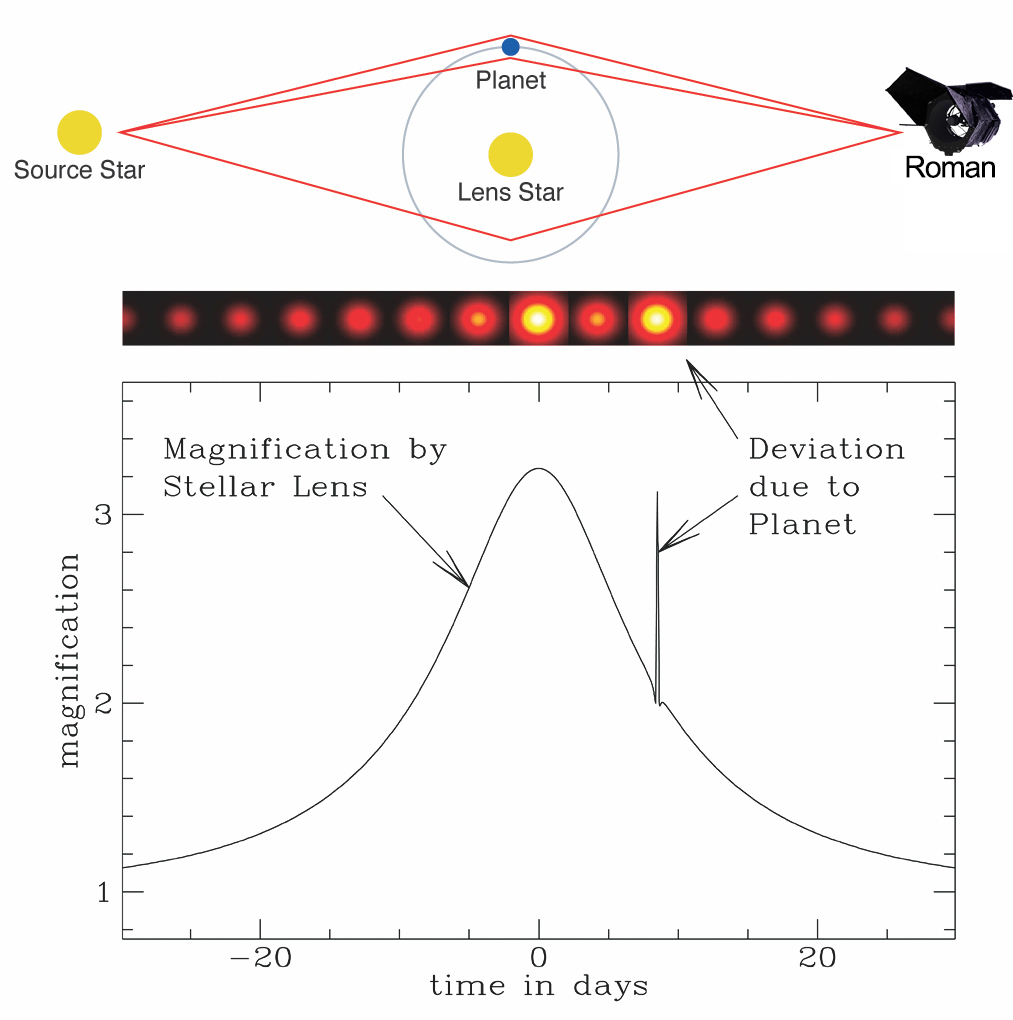
Roman will regularly observe hundreds of millions of stars toward the Milky Way’s galactic bulge. NASA expects the microlensing method to lead to the discovery of more than a thousand exoplanets, particularly those in wide orbits, which are more difficult to detect using the transit method. In addition, Roman will search for rogue planets — worlds that do not orbit a star but instead drift freely through the Galaxy.
A total of up to 100,000 planets are included in the transit data
These same observations can produce another significant result. When a planet passes in front of a star, it briefly obscures a portion of the star’s light. If these small reductions in brightness occur at regular intervals, they may indicate the presence of a planet. The Kepler and TESS missions, in particular, were designed to use this transit method.
Because Roman will frequently measure the brightness of a very large number of stars, models suggest that its data may reveal approximately 100,000 transiting planets. This figure is a projection rather than a guaranteed outcome; nevertheless, even approaching this number would make Roman one of the most productive instruments for exoplanet searches.
To observe the planet directly
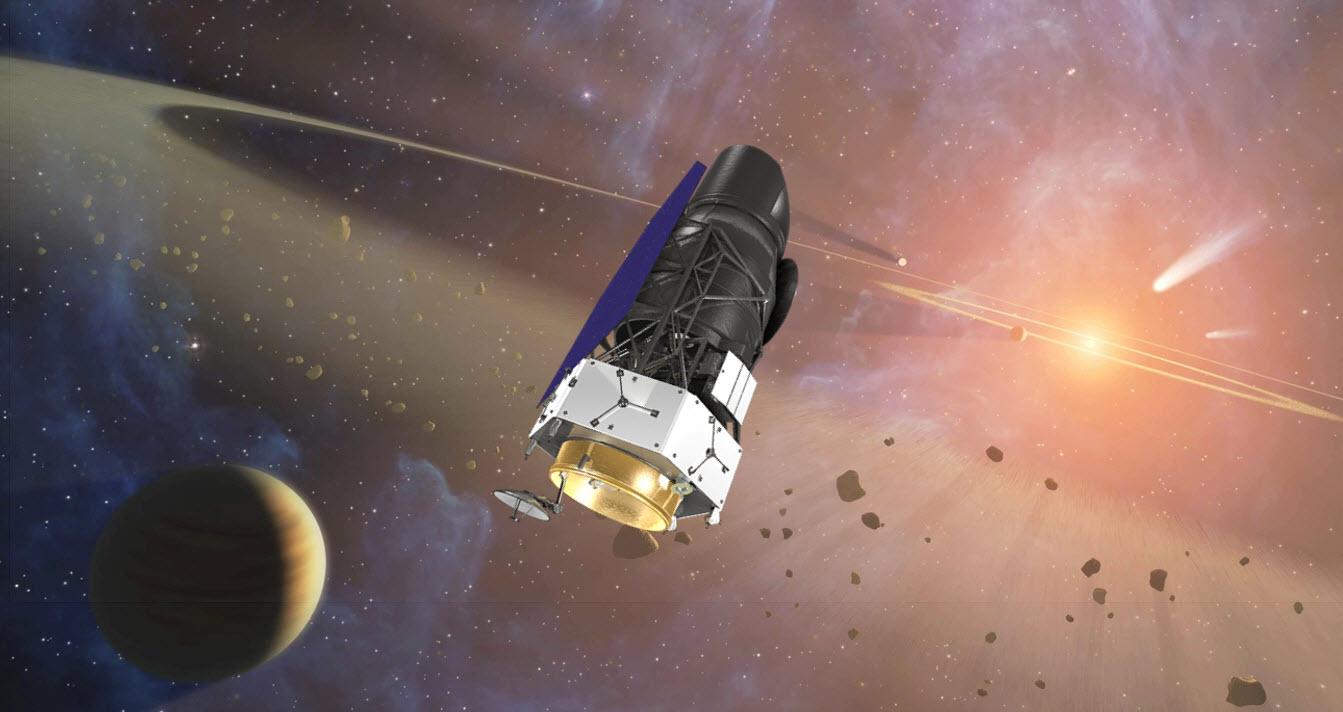
Roman will attempt to observe some of these worlds directly. To facilitate this, the telescope is equipped with an experimental coronagraph — a device designed to block a star’s bright light in an effort to detect a much fainter object nearby.
The primary targets will be large gas giants comparable in size to Jupiter, orbiting relatively nearby Sun-like stars. Roman will also observe circumstellar dust disks.
At the same time, we should not expect Roman to capture images of Earth-like planets, as the contrast between such a planet and its star is too great. Roman’s coronagraph serves a different primary purpose: to test high-contrast observation technologies that could help future generations of telescopes directly image potentially Earth-like worlds.
Three approaches to observing the universe
Dark matter, dark energy, galaxies, supernovae, exoplanets, and free-floating planets may appear to comprise a set of fields with little in common. In fact, several large surveys will account for a significant portion of the Roman mission’s scientific program.
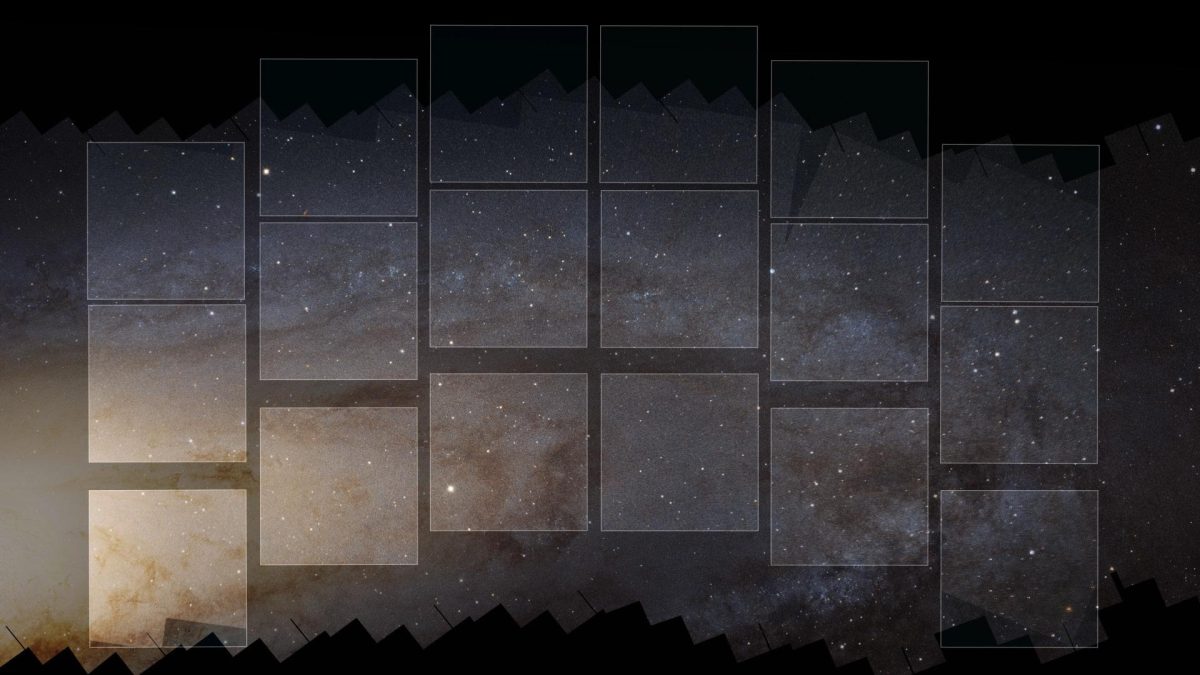
The first can be broadly described as a map of the universe. Roman will conduct a large-scale survey covering approximately 12% of the sky, determining the positions, shapes, and other characteristics of hundreds of millions of galaxies. Using these data, astronomers will be able to create three-dimensional maps of the universe’s large-scale structure and study dark matter and the history of cosmic expansion.
The second is a distinctive film about the universe. Roman will revisit the same regions of the sky approximately every five days over a two-year period. This will enable researchers to monitor changes in the sky over time, including supernova explosions, variations in active galaxies, the aftermath of neutron star mergers, and other short-lived phenomena.
The third focus is an examination of the Milky Way’s central region. The telescope will frequently observe hundreds of millions of stars in this area, approximately once every 12 to 15 minutes. These data will be analyzed to identify exoplanets, transits, variable stars, and even isolated black holes.
The telescope used to make serendipitous discoveries
One of Roman’s most notable features is that its data will not remain exclusively in the hands of the mission team; they will be accessible to scientists worldwide. Consequently, the same image may support dozens of distinct studies. Some astronomers will examine it for evidence of dark matter, while others will search for distant galaxies, supernovae, or brown dwarfs.
Researchers may discover an object or phenomenon that is not included in the mission’s current plans. This is precisely why Roman should be regarded as more than a tool for answering questions that have already been formulated. In fact, it will create a vast archive of high-quality observations of the sky that researchers can consult for many years to come.
It is entirely possible that the most compelling object ever discovered in the Roman data has not yet been included on any list of scientific targets.
1.4 TB of data per day
This scale of observations also entails a substantial volume of information. As of the end of September 2026, ground stations operated by NASA in New Mexico, ESA in Australia, and JAXA in Japan had demonstrated their ability to receive data from Roman at speeds of up to 500 Mbit/s.
Once it commences full-scale scientific operations, the telescope is expected to transmit approximately 1.4 TB of data per day, representing the largest daily data volume among NASA’s astrophysics missions to date.
Is it genuinely possible for Roman to work for 22 years?
Even before full-scale scientific observations commenced, the Roman Space Telescope received an unexpected benefit. The fuel supply had initially been calculated to support a five-year primary mission, with the possibility of an extension of approximately five years. However, the Falcon Heavy placed the spacecraft into orbit with such precision that the fuel required for trajectory corrections was substantially lower than anticipated.
The initial maneuver was executed with an accuracy exceeding 99%. Whereas the calculations allowed for approximately 200 kg of fuel, only about 18 kg were required. Furthermore, the completed telescope was lighter than the conservative design limit, allowing additional fuel to be loaded into its tanks before launch.
According to NASA’s current estimates, the fuel supply could support at least 22 years of scientific operations. Once it reaches L2, the primary fuel consumption will be attributable to small maneuvers to maintain its orbit, which are expected to occur approximately every 28 days. However, the key word here is “potentially.”
This does not guarantee that Roman will operate for 22 years. Fuel is only one of the spacecraft’s resources; detectors, electronics, mechanisms, orientation systems, and other components will also deteriorate over time in space. Accordingly, it is more precise to state that the fuel supply could last at least 22 years, while Roman’s primary mission was originally designed to last approximately five years, with the possibility of an extension.
Not the most profound insight, but the broadest
Roman will not have the largest mirror among space telescopes. It will not replace Hubble, nor will it serve as a new version of the James Webb Space Telescope. Nor should we expect it to capture the first image of an Earth-like planet.
Its principal strength lies in its scale.
Rather than studying a single distant object, astronomers will examine hundreds of millions of galaxies. Rather than focusing on a few planetary systems, they will conduct a statistical survey of a vast number of worlds in the Milky Way. And rather than relying on individual deep-sky images, they will have access to an extensive archive of observations to revisit over time.
The Hubble Space Telescope has enabled us to observe the universe in remarkable detail, while the James Webb Space Telescope has allowed us to explore much deeper into the infrared universe.
Roman has a different task: to conduct a comprehensive census of the universe, encompassing solitary planets drifting through the Milky Way without a host star, the invisible dark matter that forms the cosmic web, and the mysterious dark energy associated with the universe’s future evolution. Roman has already opened its eyes — Why N…
This survey begins in a notably modest manner: with 18 infrared detectors, several hundred indistinct stars, and a single frame in which nearly everything remains out of focus.
Roman has already opened his eyes. What will he see once his vision comes into focus?
The initial images captured by NASA’s new telescope resemble unusual rings of light more than conventional photographs of space. However, they are made possible by technology that will enable us to observe the universe on a scale previously inaccessible to astronomers.
Would you like to see how it will operate in practice? Our video depicts the launch of Roman, compares its capabilities with those of Hubble and James Webb, and uses visual animations to explain how the telescope will search for invisible planets and study dark matter.
