

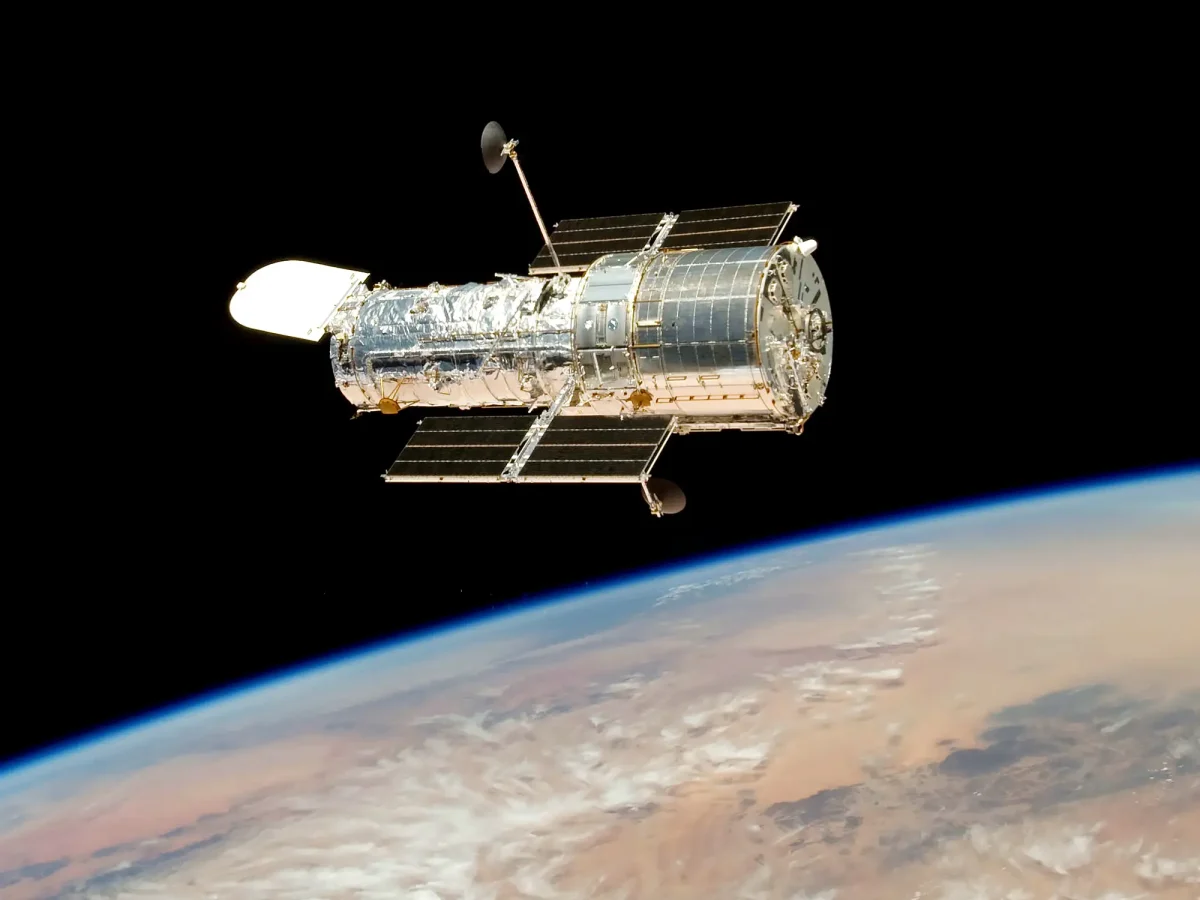
The Hubble Space Telescope is slowly losing altitude and, without outside help, will reenter the atmosphere as early as the next decade. For the second time in four years, NASA has asked private companies to propose ways to raise the observatory’s orbit, upgrade it, or safely deorbit it. The agency has not yet allocated funding for such a mission, making this more of a test of whether the spacecraft-servicing market is ready to take it on.
A Slow Descent
Hubble has no propulsion system of its own, so its orbit was last raised in 2002 during a visit by the space shuttle Columbia. Since then, the observatory has descended from 583 to approximately 470 kilometers. In 1997, Leonid Kadenyuk, independent Ukraine’s first astronaut, flew aboard Columbia. In February 2003, the shuttle broke apart during its return to Earth.
Drag from the thin upper atmosphere lowers the orbit, and its strength depends on solar activity, so there is no precise reentry date. NASA estimates a 10% probability of atmospheric reentry by September 2032, rising to 50% by December 2033.
A Request Without Guarantees
NASA’s announcement outlines three options. A company could raise the telescope to an altitude of at least 600 kilometers or upgrade it, with either mission required to take place before 2032 without damaging Hubble. The third option involves directing the observatory into the atmosphere in a controlled manner so that debris falls into an uninhabited area of the ocean.
The contractor would provide the rocket, servicing spacecraft, flight operations, and, if necessary, a crew. Responses are being accepted until November 30. Raising Hubble to 600 kilometers would likely keep it in orbit for at least another 25 years.
A Second Attempt
NASA issued a similar request in 2022 and received eight responses. That same year, Jared Isaacman, then a private astronaut, offered to cover most of the cost of a crewed mission aboard a Dragon spacecraft.
The agency rejected the idea in 2024. Mark Clampin, then director of NASA’s Astrophysics Division, described Isaacman and SpaceX’s plans as speculative concepts, according to Ars Technica.
Isaacman has since become NASA’s administrator. A crewed mission is now unlikely because SpaceX plans to end Crew Dragon flights by 2030. Isaacman therefore expects companies to propose robotic solutions that do not require human participation.
The Lesson of Swift
The spacecraft-servicing market has grown considerably over the past four years. Northrop Grumman and DARPA launched a robotic servicing satellite this year, while startups Astroscale and Starfish Space hold demonstration mission contracts with the U.S. Space Force and NASA.
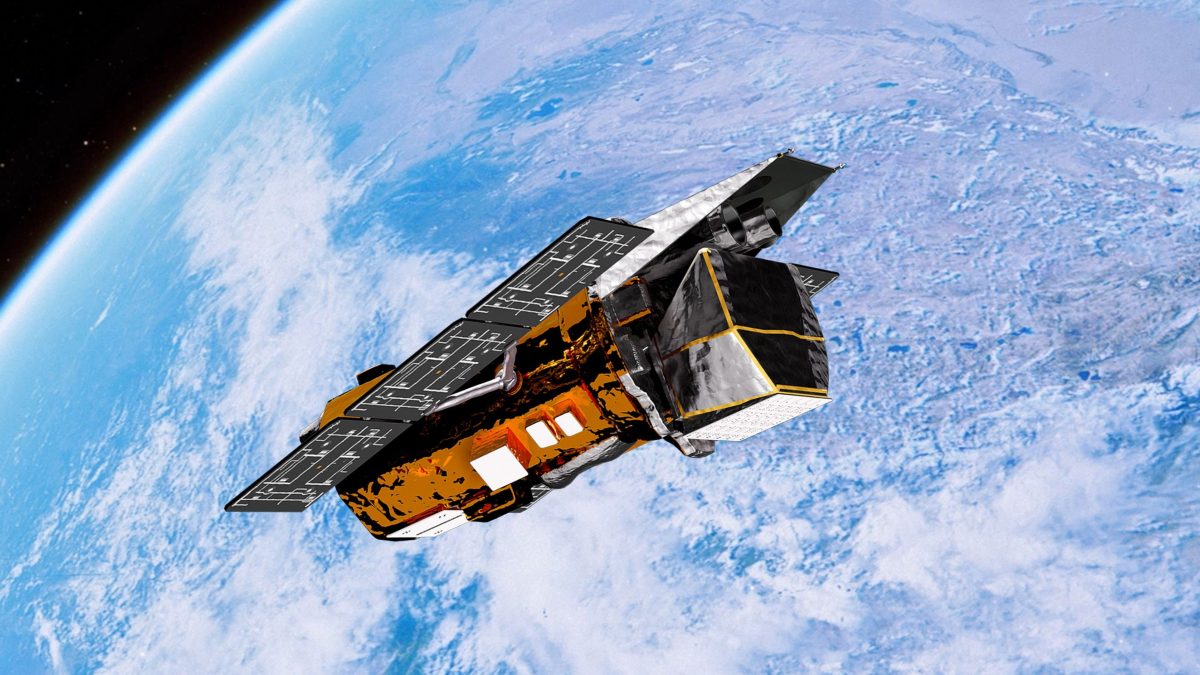
The story of the smaller Swift telescope illustrates the cost of such work. Last year, NASA gave Katalyst Space Technologies $30 million and nine months to save it. The servicing spacecraft launched on time, but power and attitude-control failures forced the team to halt its approach 10 kilometers from the target. According to TNW, Swift itself will reenter the atmosphere in the coming days, with the latest forecasts placing reentry before November 6.
Hubble presents a more difficult task because it weighs about 11 metric tons, compared with Swift’s one and a half. Raising the heavier telescope requires more fuel, so the mission’s budget would likely exceed the Katalyst contract.
Why Save Hubble?
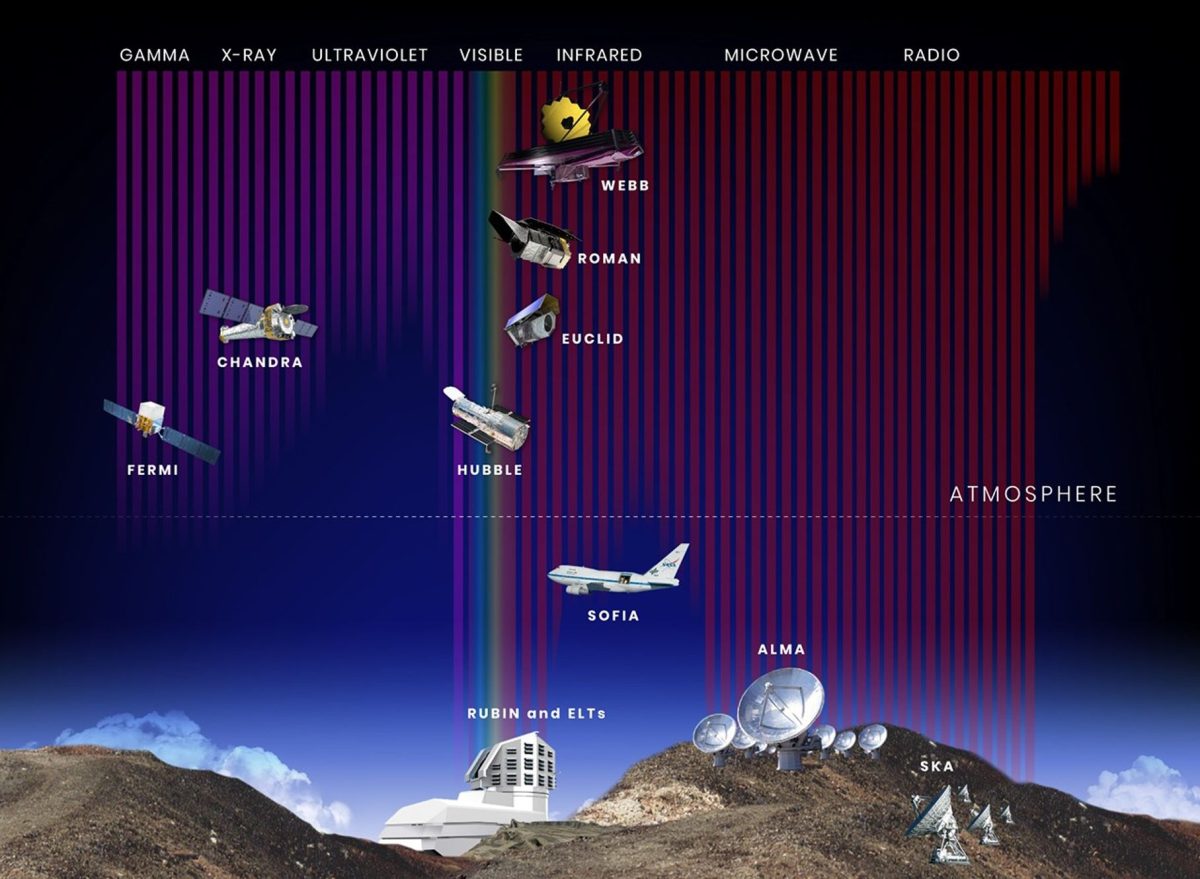
Hubble observes at visible and ultraviolet wavelengths, while James Webb and Nancy Grace Roman operate primarily in the infrared. A better instrument for Hubble’s wavelength ranges will not arrive before the 2040s, when NASA plans to launch the Habitable Worlds Observatory.
Contractors may benefit from the soft capture mechanism that astronauts installed on the telescope during the final shuttle visit in 2009. It makes docking a servicing spacecraft with Hubble easier.
