

Humanity has never had more powerful tools for space exploration. The Hubble Space Telescope has revealed remarkable details of distant galaxies, the James Webb Space Telescope has enabled us to observe the early universe, and the upcoming Nancy Grace Roman Space Telescope mission is set to produce one of the most comprehensive maps of the cosmos. Given these advances, what more could astronomers possibly need?
Indeed, the most significant discoveries may still lie ahead. NASA, ESA, and other space agencies are developing a new generation of observatories designed to search for life on other planets, investigate previously unexplored regions of space, and look back toward the earliest moments of the universe.
Why are even the most powerful telescopes insufficient?
On August 30, 2026, NASA launched the Nancy Grace Roman Space Telescope. Its primary mission extends beyond capturing striking images of distant galaxies; it is designed to survey the universe on an unprecedented scale. With its wide field of view, the telescope will be able to observe hundreds of millions of galaxies, search for exoplanets, and study the distribution of dark matter.
However, even Roman, James Webb, and Hubble, collectively, cannot answer all of astronomy’s fundamental questions.
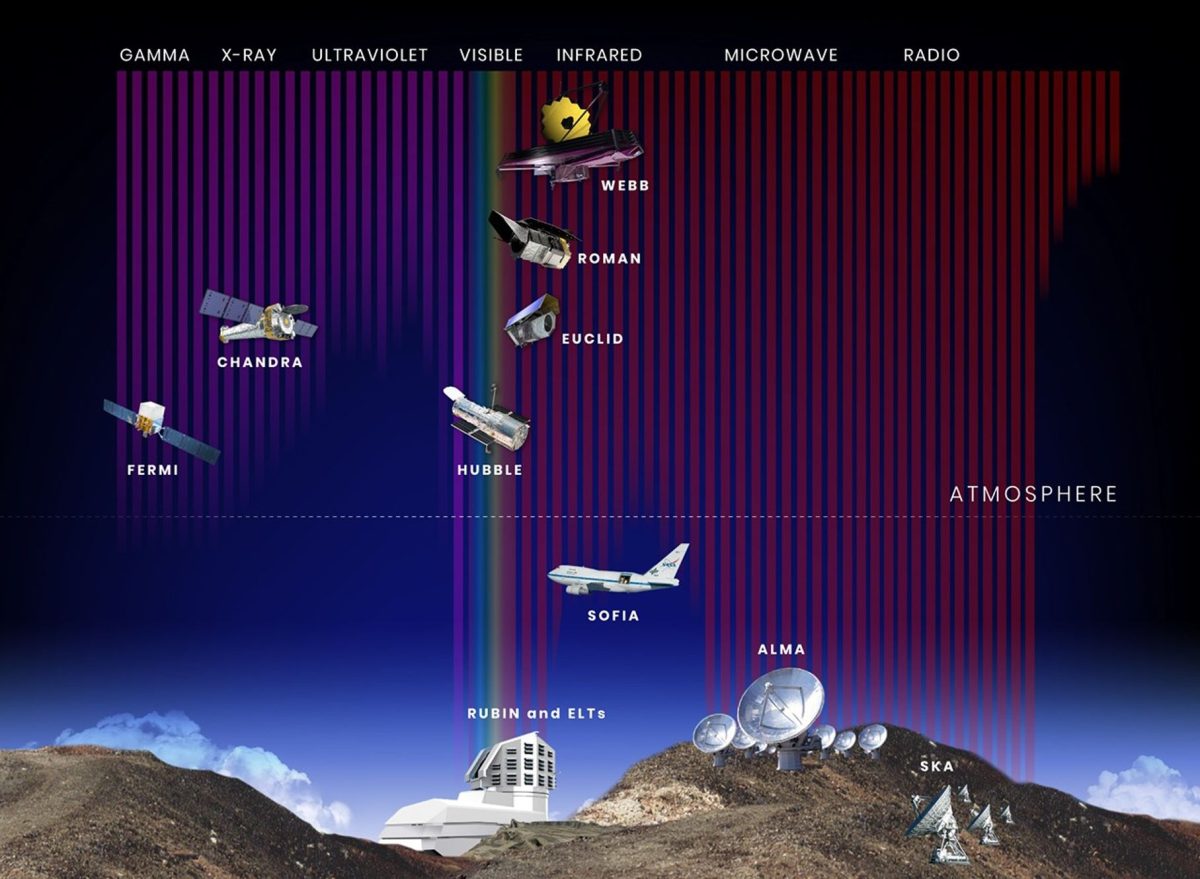
The issue is not solely the size of the mirrors or the sensitivity of the cameras. The universe emits information across various bands of the electromagnetic spectrum, while the human eye can perceive only a limited portion of it: visible light. Infrared telescopes can detect cooler objects and observe through some cosmic dust; ultraviolet telescopes can study hot stars; and X-ray telescopes can observe extremely high-energy processes near black holes.
Each of these instruments has inherent physical limitations. Accordingly, the next stage in the development of astronomy will depend less on creating a single, universal, ultra-powerful telescope and more on establishing an integrated network of specialized observatories.
The first major challenge facing this system is connected to a question that has captivated humanity for millennia: Are we alone in the universe?
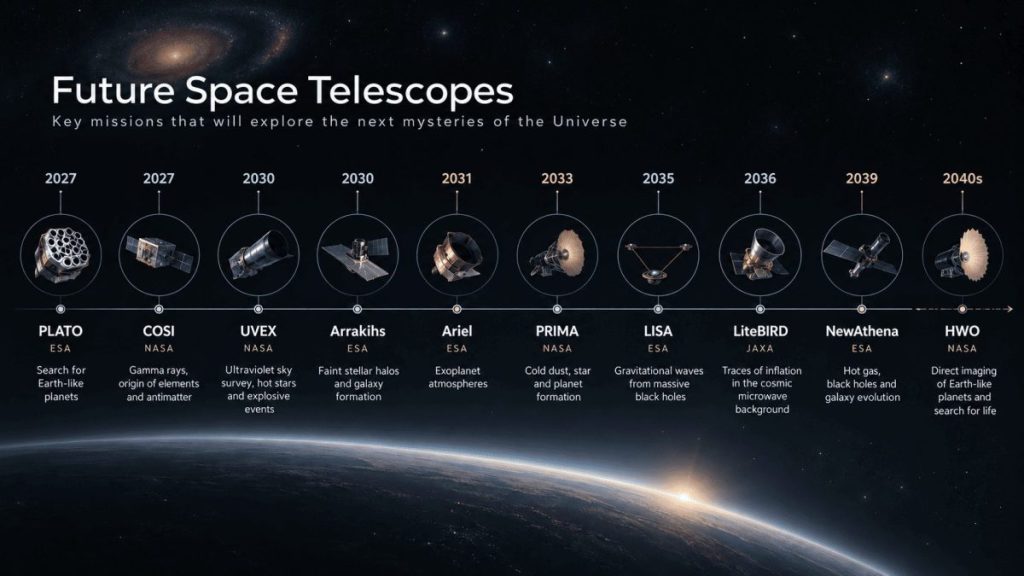
PLATO: The Search for Earth-Like Planets [2027]
Astronomers have now identified thousands of planets beyond the Solar System. However, most differ substantially from Earth. Many are gas giants, extremely hot worlds, or planets that orbit very close to their stars. Identifying a genuinely Earth-like planet is considerably more challenging.
One of the most effective methods for detecting exoplanets is the transit method. When a planet passes in front of its star, it blocks a small fraction of the star’s light. A telescope can detect a brief decrease in brightness, which may indicate the presence of a planet. However, Earth blocks only about 0.0084% of the Sun’s light. This illustrates the precision required to measure the brightness of a distant star and detect such a subtle change.
A further challenge is that Earth completes one orbit around the Sun each year. To reliably detect a comparable planet, it is best to observe several of its transits, which requires monitoring the same star for years. The European Space Agency developed the PLATO telescope specifically for this purpose, and it is scheduled to launch in March 2027.
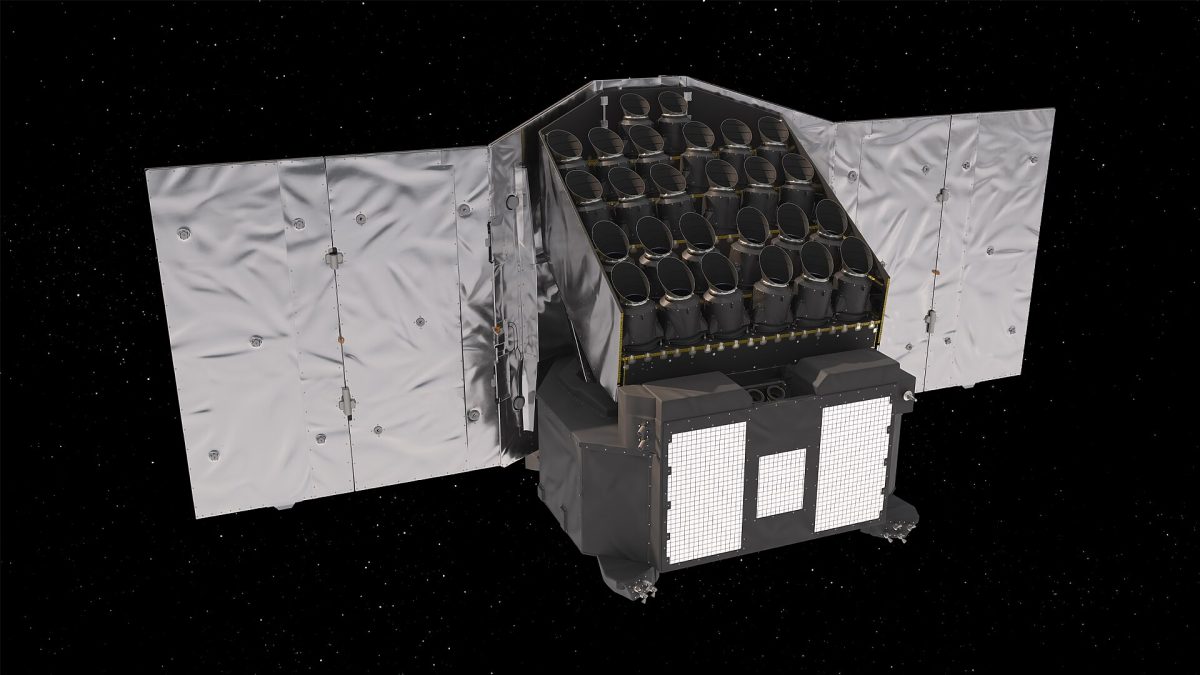
Unlike traditional telescopes equipped with a single primary camera, PLATO will utilize 26 separate cameras. Together, these cameras will observe a vast number of stars, monitoring them for characteristic changes in brightness. However, the mission’s objectives extend beyond the discovery of planets. PLATO will also study the subtle fluctuations within the stars themselves. By analyzing these oscillations, astronomers will be able to determine the stars’ sizes, masses, and ages with greater accuracy. In combination with ground-based observations, this information will help assess the properties of the discovered planets.
As a result, we will gain not only a list of new worlds but also a substantially clearer understanding of how frequently rocky planets form around Sun-like stars.
This raises the following question: Even if we identify a planet the size of Earth, how can we determine whether it is habitable?
Ariel: What Are the Atmospheres of Other Worlds Composed Of? [2031]
Two planets may be nearly identical in size yet exhibit markedly different surface conditions. The Solar System provides a clear example: Earth and Venus are similar in size, but Venus’s dense atmosphere generates an exceptionally strong greenhouse effect. Consequently, its surface temperature is significantly higher than Earth’s.
Therefore, understanding the planet’s dimensions alone is insufficient; its atmosphere must also be studied. To this end, ESA is developing the Ariel space telescope, which is currently scheduled to launch in 2031.
Source: ESA
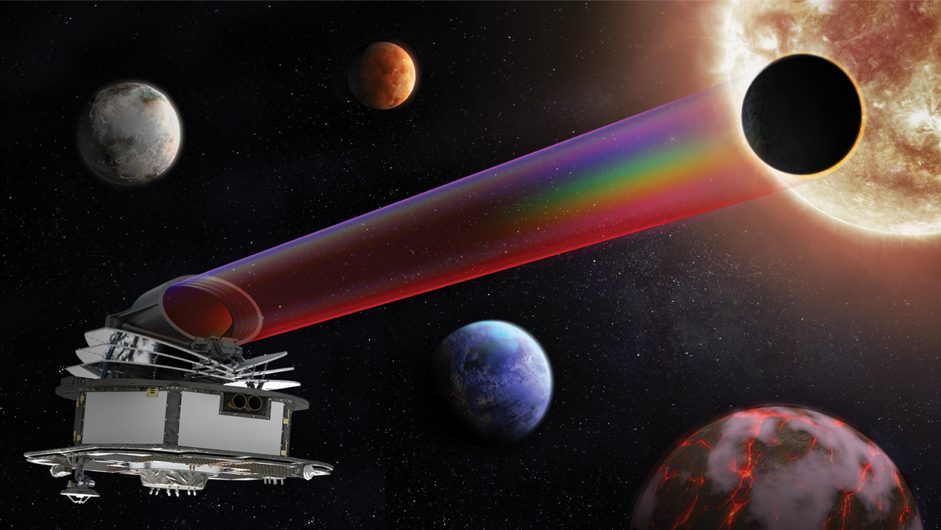
Its primary instrument will be spectroscopy. When a planet transits its host star, a small fraction of the star’s light passes through the planet’s atmosphere. Molecules of various substances absorb light at characteristic wavelengths, producing distinctive chemical signatures in the spectrum. These signatures enable astronomers to detect water vapor, carbon dioxide, methane, and other atmospheric components.
The James Webb Space Telescope is already employing similar methods; however, Ariel is being developed to systematically study approximately one thousand exoplanets. This will enable comparisons of the atmospheres of planets with different sizes, temperatures, and ages.
The primary objective is to understand the patterns underlying their formation and evolution.
However, Ariel will primarily study relatively warm planets with atmospheres suitable for spectroscopic measurements. Searching for potential signs of life on truly Earth-like planets will require an even more sophisticated instrument.
Habitable Worlds Observatory: A Telescope That Will Search for Life (~2040)
Imagine attempting to observe a firefly beside a powerful spotlight located many kilometers away. This is approximately what it is like to photograph an Earth-like planet directly near another star.
In visible light, Earth is approximately ten billion times fainter than the Sun. Consequently, even when a telescope can detect the planet’s light, the star’s radiation overwhelms it. One potential solution is a coronagraph, an optical instrument that suppresses the star’s bright light, enabling the detection of much fainter light from a nearby planet. An experimental coronagraph has already been installed on Roman; however, its capabilities are insufficient for studying Earth-like worlds.
For this reason, NASA is developing the Habitable Worlds Observatory (HWO) concept — a future space observatory specifically designed to search for and study planets that may be capable of supporting life. Its optical system must maintain exceptional image stability. Even microscopic mirror deformations or structural vibrations can generate stray light that obscures the planet’s signal.
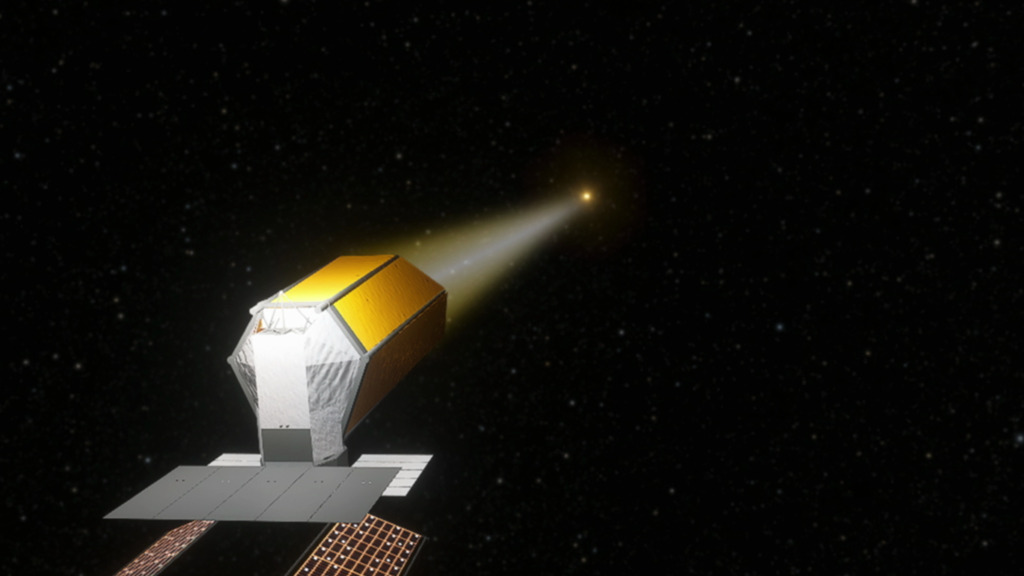
Therefore, engineers must integrate high-precision optics, active wavefront control, and highly sensitive detectors. If the technology performs as intended, the HWO will be capable of directly observing rocky planets and analyzing the composition of their atmospheres. Oxygen, ozone, methane, and other substances that may, under certain conditions, be associated with biological processes will be of particular interest. However, detecting oxygen alone will not provide definitive evidence of life, as some chemical substances can form in the absence of living organisms. Accordingly, astronomers will need to assess the full range of atmospheric conditions.
HWO remains in the conceptual design and key technology development phase. It may be launched in the 2040s; however, no date has been set.
At the same time, the ground-based Extremely Large Telescope is expected to help address several of these complex challenges in the coming years. Its primary mirror, measuring 39 meters (128 feet) in diameter, will comprise 798 segments designed to function as a single optical surface. An adaptive optics system will compensate for atmospheric distortion by adjusting the shape of a specialized mirror approximately one thousand times per second.
The ELT’s initial scientific observations are expected to commence in late 2030. It will be capable of studying individual planets and their atmospheres in detail, thereby complementing the capabilities of space-based observatories.
However, to determine how common habitable worlds are, we must answer one additional question: where does the material from which they are formed originate?
PRIMA: An Overview of the Birthplaces of Stars and Planets [~2033]
Stars and planets form within vast clouds of gas and dust. However, the dust itself often hinders astronomers’ ability to observe these processes. Dust particles absorb visible light and re-emit the absorbed energy in the infrared spectrum. Consequently, a region that appears nearly black in a conventional photograph may appear bright when viewed through an infrared telescope.
The James Webb Space Telescope has already provided a glimpse into many such regions. But even it does not cover the entire infrared spectrum. The coldest dust clouds emit a significant portion of their energy in the far-infrared range, which is beyond the reach of Webb’s instruments. This is where a significant gap exists between the capabilities of modern infrared and radio observatories.
To address this, NASA is developing PRIMA, the PRobe far-Infrared Mission for Astrophysics.
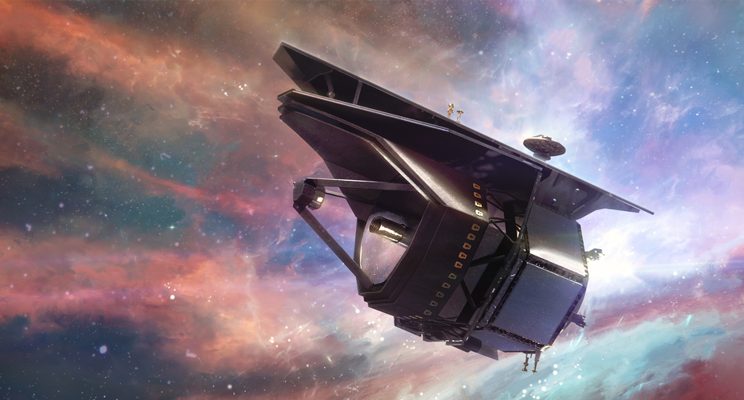
In September 2026, the agency selected this mission to proceed to the next phase of design. Subject to further approval, the project is tentatively scheduled for launch in 2033. The telescope, equipped with a mirror approximately 1.8 meters (5.9 feet) in diameter, will study cold dust, gas, and obscured regions of galaxies. This research will help advance our understanding of how new stars form from interstellar matter, how protoplanetary disks evolve, and the role that water and complex chemical compounds play in the early stages of planet formation.
However, temperature is not the sole reason celestial objects remain invisible. Conversely, certain processes are so energetic that they emit light beyond the detection capabilities of optical and infrared telescopes.
COSI and UVEX: Observing Invisible Cosmic Explosions [2027 and 2030]
Not all cosmic processes are observable in visible or infrared light. For instance, hot stars and the early stages of supernova explosions are especially luminous in the ultraviolet spectrum. To study these phenomena, NASA plans to launch the UVEX (UltraViolet EXplorer) telescope in 2030. The telescope will survey the ultraviolet sky and rapidly reorient itself in response to transient cosmic events, including the aftermath of neutron star mergers.
Even higher-energy radiation will be studied by COSI (the Compton Spectrometer and Imager), which is scheduled for launch in 2027. This gamma-ray telescope will help determine where certain chemical elements form in the Galaxy and the origins of positrons — the antiparticles of electrons. When a positron encounters an electron, they annihilate, producing gamma rays that COSI can detect.
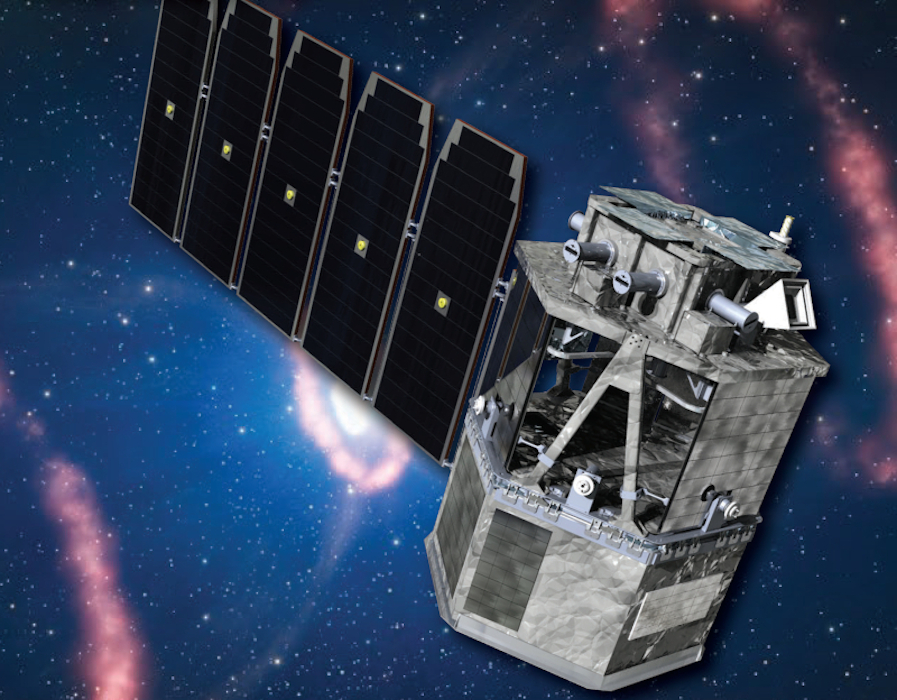
Together, these observatories will enable the study of high-energy processes that are beyond the capabilities of conventional telescopes. However, another challenge remains equally important: detecting the extremely faint matter surrounding galaxies.
Arrakihs and NewAthena: Hidden Features Beyond the Galaxies [2030 and 2039]
Even the most detailed images of galaxies reveal only a portion of their structure. Nearly invisible halos — comprising diffuse gas, dark matter, and faint stellar streams — extend beyond the luminous stellar disks. These halos preserve evidence of ancient collisions and the accretion of smaller galaxies.
To investigate these structures, ESA plans to launch the Arrakihs telescope in 2030. The mission will examine the stellar halos of neighboring galaxies, helping researchers reconstruct their formation histories and test models of dark matter distribution. These observations will complement the large-scale surveys conducted by Roman and Euclid.
However, some ordinary matter exists in a form so hot that it is best observed in the X-ray range. This is precisely what NewAthena — ESA’s future X-ray observatory, scheduled for launch in 2039 — will study. It will investigate gas in galaxy clusters, the growth of black holes, and their effects on the surrounding environment.
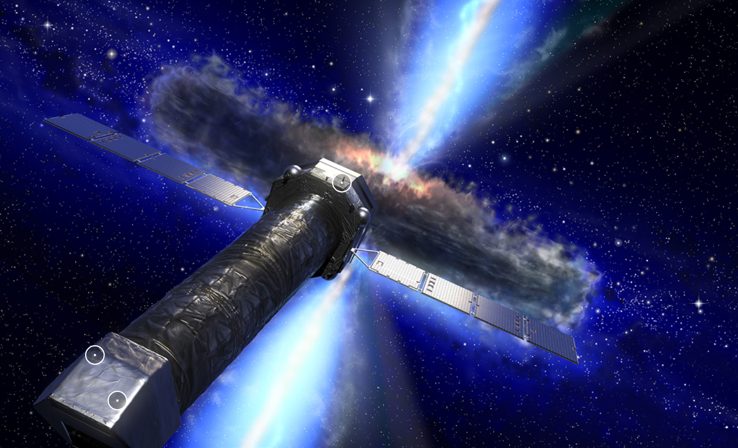
However, the most powerful events involving black holes leave traces not only in radiation but also in the very fabric of spacetime.
LISA: Observing the Collision of Black Holes [2035]
In 2015, the LIGO detectors observed gravitational waves from a black hole merger for the first time. These waves are disturbances in spacetime that propagate at the speed of light. However, ground-based facilities cannot effectively detect the lowest frequencies of these oscillations because of terrestrial noise and the interferometers’ size limitations.
To investigate these phenomena, ESA is developing LISA — the Laser Interferometer Space Antenna — which is scheduled for launch in 2035. The mission will comprise three spacecraft arranged in a triangle, with sides approximately 2.5 million km (1.55 million miles) in length. By exchanging laser beams, the spacecraft will measure minute changes in distance caused by the passage of gravitational waves.
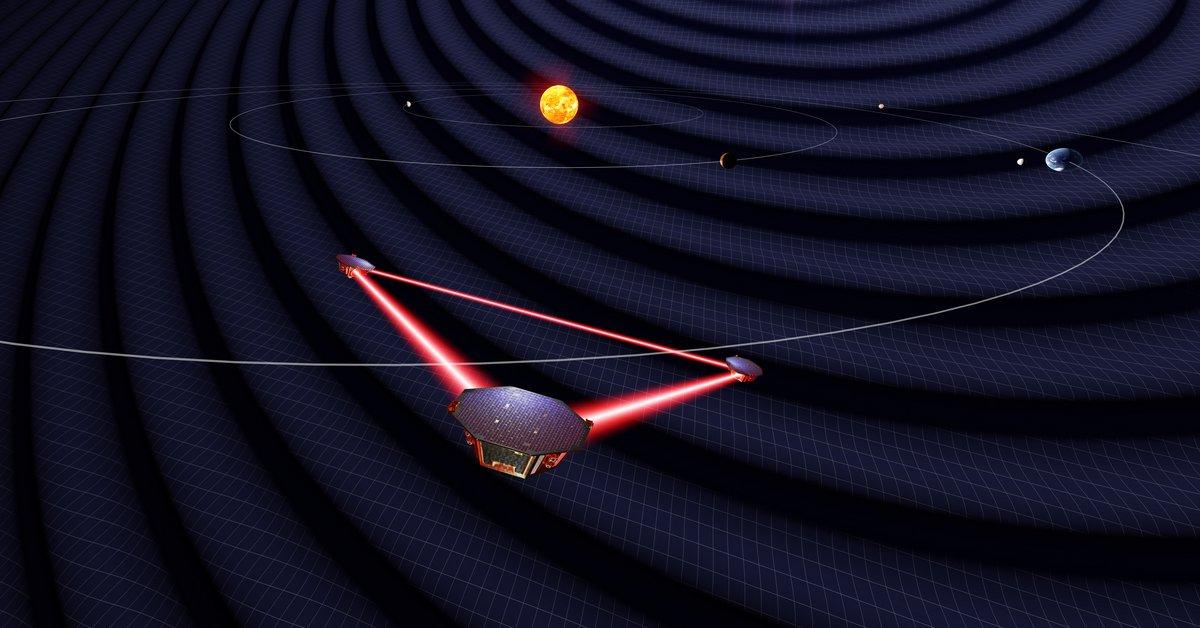
LISA’s primary targets will be mergers of supermassive black holes at the centers of galaxies. Combined with X-ray observations from NewAthena, these observations will help us understand how black holes have grown throughout the history of the universe.
However, to study an era in which neither galaxies nor black holes yet existed, we will need entirely different kinds of instruments.
LiteBIRD: Evidence of the Universe’s Origins [2036]
According to one of the leading hypotheses in cosmology, during the earliest moments of its existence, the universe underwent inflation — an exceptionally rapid expansion of space. Although no direct evidence of this process has yet been identified, potential traces may have been preserved in the cosmic microwave background, the oldest light observable to us.
These are precisely the phenomena that the Japanese LiteBIRD observatory, scheduled to launch around 2036, will seek to detect. The observatory will measure the polarization of the cosmic microwave background radiation in an effort to identify a specific pattern: primordial B-modes, which may have been generated by gravitational waves during the inflationary era.
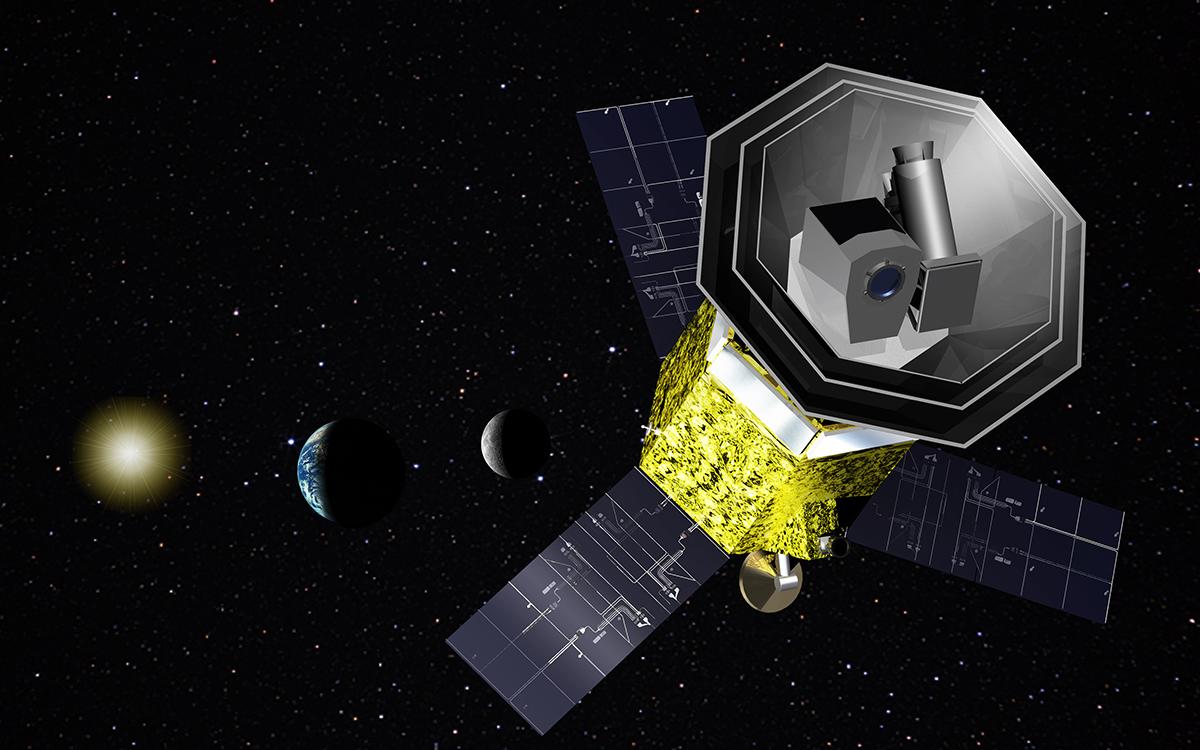
The expected signal is extremely weak, and radiation from galactic dust may obscure it. Accordingly, LiteBIRD will use measurements across multiple frequencies to distinguish the cosmological signal from nearby sources.
The detection of primordial B-modes could provide significant evidence for inflation. However, observations of the cosmic microwave background allow us to directly study the universe only as it existed approximately 380,000 years after the Big Bang. The subsequent stage in its history — the formation of the first stars and galaxies — will be investigated using radio telescopes.
SKA: The Universe Before the Formation of the First Galaxies [2027]
After the universe became transparent to light, the cosmic dark ages commenced. Although atoms had already formed, the first stars had yet to emerge. The Square Kilometre Array (SKA) — a large network of radio telescopes currently under construction in Australia and South Africa — will help researchers investigate this relatively understudied period.
Thousands of antennas will operate together as a single instrument, detecting exceptionally faint radio emissions. Of particular interest is the signal from neutral hydrogen, which can be used to trace how the first stars gradually transformed the surrounding gas.
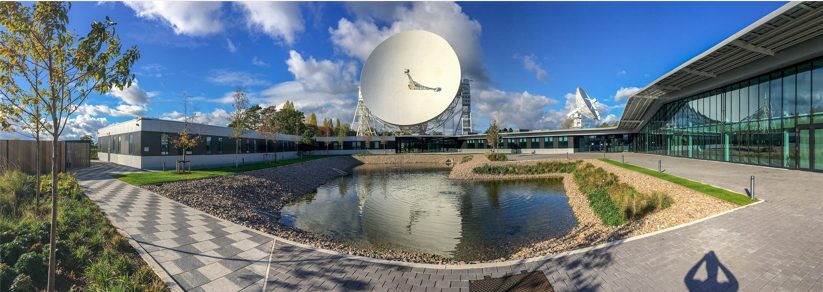
The SKA will be commissioned in phases as its systems become operational. Together with LiteBIRD, it will help investigate the early history of the universe from two perspectives: possible traces of primordial physical processes and the emergence of the first luminous objects.
Thus, future observatories will progressively address gaps in our observations, and their combined findings will enable us to develop a more comprehensive understanding of the universe’s evolution.
The future of astronomy depends not on a single telescope, but on an integrated system
The future of astronomy depends not on the development of a single, exceptionally powerful telescope, but on a comprehensive network of specialized observatories. Some will search for Earth-like planets, while others will investigate their atmospheres, observe black holes, or seek evidence of the universe’s earliest processes.
The primary advantage of this approach is the ability to study the same objects using different methods. For example, one telescope may detect an exoplanet, another may help determine its mass, and a third may analyze its atmosphere. By combining these data, we can assess how closely this world resembles Earth and whether conditions suitable for life may exist there.
Certainly, no single mission can provide definitive answers to questions concerning the nature of dark matter, the origins of the universe, or the existence of extraterrestrial life. However, each mission will gradually help address gaps in our knowledge.
Hubble has enabled us to observe the universe in remarkable detail; the James Webb Space Telescope has allowed us to explore much deeper; and the Nancy Grace Roman Space Telescope is poised to create a large-scale map of the cosmos. The next generation of observatories will seek to answer the questions raised by these discoveries.
Perhaps the most significant outcome will not be another photograph of a distant galaxy, but rather the first compelling evidence of life beyond Earth or the discovery of traces of physical processes that occurred long before the first stars formed.
It will then become evident that all previous space telescopes represented only the beginning of our exploration of the universe.
