

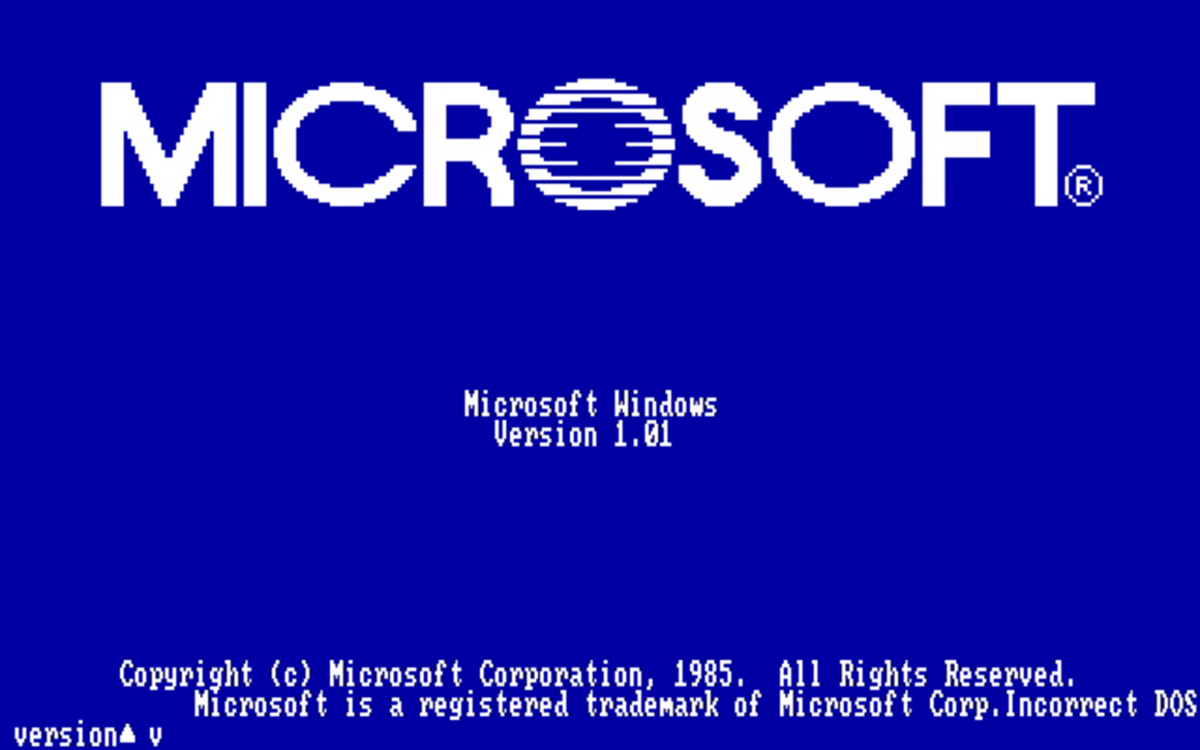
On 20 November 1985, Microsoft unveiled its new product and began selling it officially. It was Windows version 1.0, a graphical multitasking environment. At the time, it was met with considerable scepticism among computer specialists.
The operating system
Forty-one years ago, in November 1985, Microsoft introduced a product called Windows. It was an extension to the company’s own MS-DOS operating system, adding multitasking, a graphical interface, control through a relatively new device called the ‘mouse’, and numerous other features that made computers much easier for ordinary people to use.
However, the professional computing community greeted it with little enthusiasm. Not only had Microsoft’s chairman, Bill Gates, released it considerably later than promised, but all its individual components were already familiar. These specialists knew perfectly well what an operating system was, and would probably have been astonished to hear that, within a couple of decades, this particular product would become almost synonymous with the term.
To understand why, we must go further back, to the late 1940s. Electronic computers had only just appeared, but were already evolving rapidly. People recognised their enormous potential, although the difficulty of interacting with them made that potential hard to realise. Until then, human-built machines had been operated by pulling levers and pressing buttons in sequence.
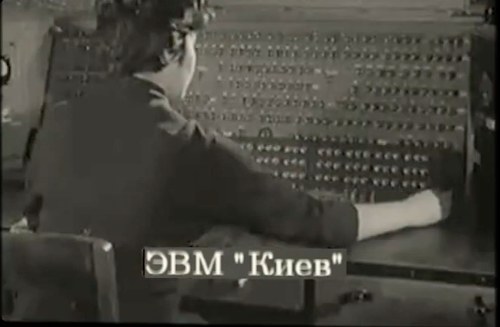
A computer, by contrast, could execute extraordinarily long sequences of instructions at speeds many orders of magnitude greater than even the most skilful operator could enter them. The earliest computers did not have screens to provide feedback at all. They had only a keyboard for entering instructions and rows of indicator lights, each of which signalled something when illuminated. The problem was that, initially, the instructions were merely codes telling the machine to switch particular logical elements on and off.
This is what is known as a low-level programming language. It is the only kind of language a machine truly understands, but it is extraordinarily difficult and counter-intuitive for humans. That is why the idea of a high-level programming language emerged – still highly formalised, but generally comprehensible to people.
High-level programming languages began to be implemented in practice in the mid-1950s. A few years later, in the early 1960s, the first monitors also appeared. Computers still occupied entire rooms, but interacting with them became much easier.

At the same time, it became clear that, for computers to become genuinely versatile, they needed a basic set of functions rather than having every program run ‘from scratch’. This foundation would allow programs to be launched from storage media, make interaction with the system easier, and provide additional capabilities. The essential software permanently present on the machine came to be known as the operating system.
The road to MS-DOS
At the time, however, visual interfaces and the ability to work without a keyboard were not priorities. When the first operating systems appeared in the late 1950s and early 1960s, users saw only a black screen displaying white or green characters and a cursor at the end of the bottom line. It awaited a command, such as an instruction to read and execute a program from magnetic tape.
Consequently, programmers already had extensive experience developing and using operating systems in the 1960s. The idea of a graphical interface existed even then, and some systems and individual programs allowed users to interact with a computer screen using devices such as a light pen. Yet this was not considered a priority.
The priority was to reduce the size of the system kernel while preserving its independence from the computer’s architecture. Computers were still very large, with no generally accepted standards, and attempts to make them smaller meant reducing their available memory. One of the best operating systems of the period was created in 1969. Called UNIX, it became extremely popular – certainly far more popular than the computer mouse, invented a year earlier, which remained an optional curiosity for almost another fifteen years.
Nevertheless, a breakthrough came in the 1970s. The development of the first mass-produced microprocessors and the spread of integrated circuits led to the emergence of personal computers, increasingly purchased by private individuals rather than corporations.
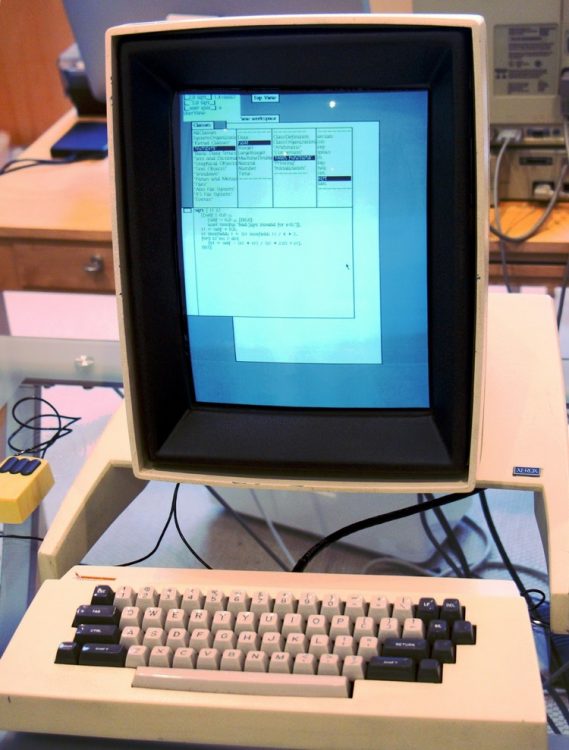
The first personal computer with an operating system featuring a graphical interface, including something resembling a desktop on its monitor, was the Xerox Alto, developed at the company’s research centre in 1973. It was not a commercial product, however, but an internal research prototype that nevertheless proved highly successful.
Meanwhile, the personal computer market was already booming, and an operating system that could be regarded as a standard gradually emerged. It was CP/M, developed by Gary Kildall on the basis of PL/M, a high-level programming language he had also created.
Both the language and the operating system could work with the principal processors of the time, including the Intel 8080, Intel 8085 and Zilog Z80. As a result, they were installed on a remarkably wide range of machines and even reached the Soviet Union.
But progress was extremely rapid. Sixteen-bit processors began replacing eight-bit models, and something new was needed for them. Tim Paterson of Seattle Computer Products took on the task. Drawing on CP/M, he created his own product, named 86-DOS. According to the account presented here, he was working closely with IBM from the outset, and those involved were aware of the difficulties surrounding the use of Gary Kildall’s original code.
Exactly what happened remains uncertain. In 1980, IBM representatives reportedly offered Kildall $250,000 for all rights to CP/M, but he refused. They then decided to pursue an arrangement involving Microsoft, which was still relatively little known. Bill Gates and Paul Allen, who ran the company, were already involved in the story.
Paterson was already using the FAT file architecture developed by Gates and Allen in 86-DOS, rather than the original architecture used in CP/M. In addition, Standalone Disk BASIC-86 was among the programs pre-installed and supplied with 86-DOS.
Gates therefore consulted IBM’s management, obtained its approval, and bought all the rights to 86-DOS from Paterson. He quickly reworked the software and introduced it in August 1981 as the Microsoft Disk Operating System, or MS-DOS.
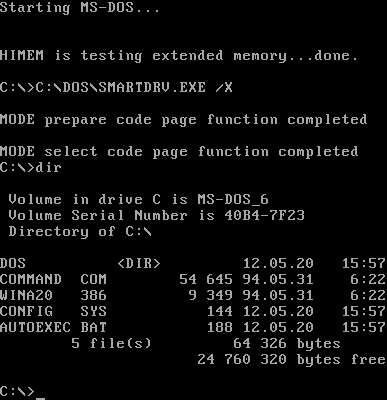
The system was hardly revolutionary. It still featured the same black screen, single-task operation, text-based output, and command line. Nevertheless, MS-DOS could run on the latest processors of the day and was considered convenient by contemporary standards. This helped make it the most popular operating system for an entire decade.
Graphical interfaces and multitasking
By the end of 1981, however, many application programs already existed for computers, and a considerable number had graphical interfaces of their own. The operating system used to launch them still lacked one. It became clear that this would be the next challenge for information technology companies.
At IBM, the project was called Interface Manager, and Microsoft was its principal developer. Initially, it was intended to be a much simpler system, without many of the features familiar today. Yet those involved understood that the aim was essentially to reproduce what Xerox had created for its offices several years earlier.
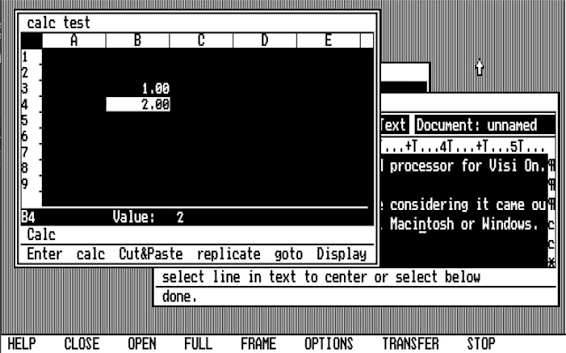
VisiCorp was the first to achieve something along these lines, albeit in a very rudimentary form. In 1982, it introduced Visi On, a graphical operating system for IBM-compatible computers. Its commercial release was delayed until late 1983, but even demonstration versions, with menus that users could select using a pointer, made managers at the computing giant nervous enough to telephone Gates and ask about his progress. In October 1983, Gates gathered his thoughts and formally announced that an entirely new multitasking operating system with a graphical interface, called Windows, would reach the market by the end of 1984.
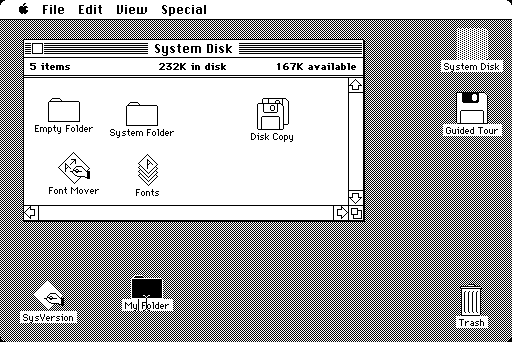
But the competition was already moving ahead. In January 1984, IBM’s main rival, Apple, introduced the Macintosh 128K, featuring a fully fledged operating system with a graphical interface. This was the first version of Mac OS.
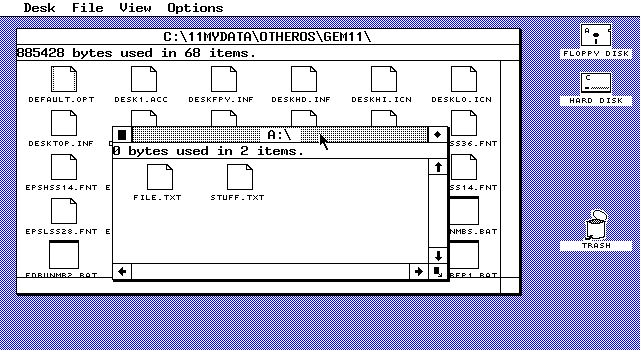
And that was not all. Microsoft failed to complete Windows by Gates’s announced deadline at the end of 1984. Consequently, the next two operating systems with graphical interfaces to appear were Graphics Environment Manager from Digital Research, Inc., and Atari TOS. They too featured icons, windows, and a pointer. By the time Microsoft engineers assembled the first version of Windows in May of that year, none of these features seemed particularly sensational.
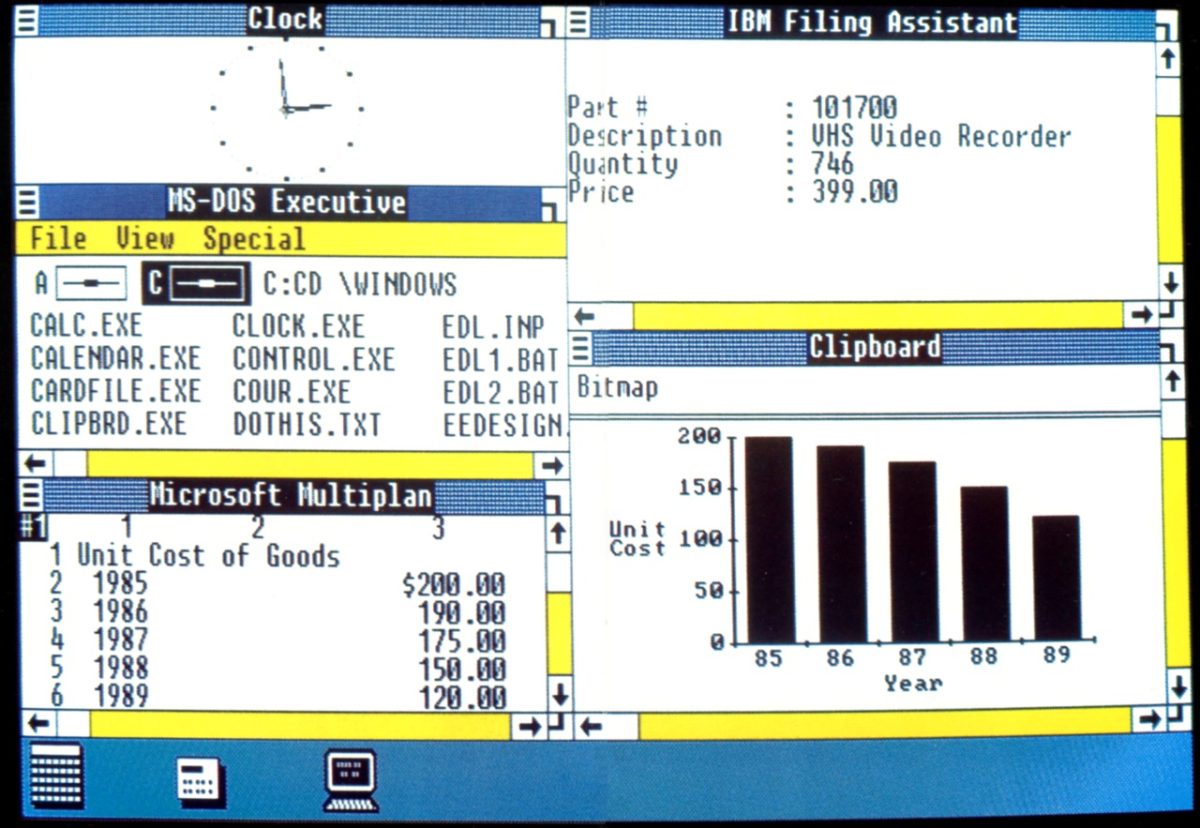
Several months passed between the first private demonstration and the full release. Throughout that period, rumours circulated that the operating system would remain nothing more than an unfulfilled promise from Gates. Nevertheless, it finally went on sale in November 1985. As the preceding history suggests, its reception was distinctly cool: it was not a revolution, but essentially another system offering features with which users were already becoming familiar.
Was Windows really such a unique system?
Despite its advantages, Windows had numerous problems. In particular, it required processors that were only just becoming available and a mouse, which remained an expensive and uncommon accessory. Microsoft had become a victim of its own development approach. In essence, Windows was merely an extension to MS-DOS, with its own drivers and a range of utility programs, but an extension nonetheless.
In essence, the author argues, this remained true even in 2026. Anyone who has ever used a command line will have seen the familiar black screen and cursor supposedly hidden behind all those attractive windows. For the relatively small but highly skilled group of users who formed its core following, a polished graphical interface was not particularly necessary.
That is why MS-DOS remained the most popular operating system until the mid-1990s, when Windows finally displaced it. This happened largely because computers were becoming desirable to a mass audience with little technical expertise. For those users, Windows became an indispensable part of the personal computer.
Windows therefore cannot be considered either the first operating system or the first with a graphical interface. It was simply the most successful, and the following example illustrates why that distinction matters.
In 1991, a Finnish student took the kernel of the long-established UNIX system, which had shown no signs of disappearing since 1969, and wrote a graphical interface for it. The reason UNIX had survived, the article explains, was that it could be freely distributed among users who had the right and ability to improve it.
The student was Linus Torvalds, and the product he created became known as Linux. It too was freely distributed, with users entitled to adapt it to their needs. This gave rise to a vast family of operating systems. They did not displace Windows in the mass market, but they have enjoyed enormous popularity among programmers ever since.
Windows is therefore far from the ingenious breakthrough that Microsoft is often said to portray it as. It is a mass-market product that was not particularly innovative, designed for people to whom discussions of programming-language levels sound like magic spells. Ultimately, however, someone has to serve that market.
