

The final phase of testing for NASA’s new space telescope has begun. Engineers have confirmed that the observatory is fully operational. The team is now refining image sharpness, since even a minor flaw could obscure the faint signal of a distant object.
Speed and Depth
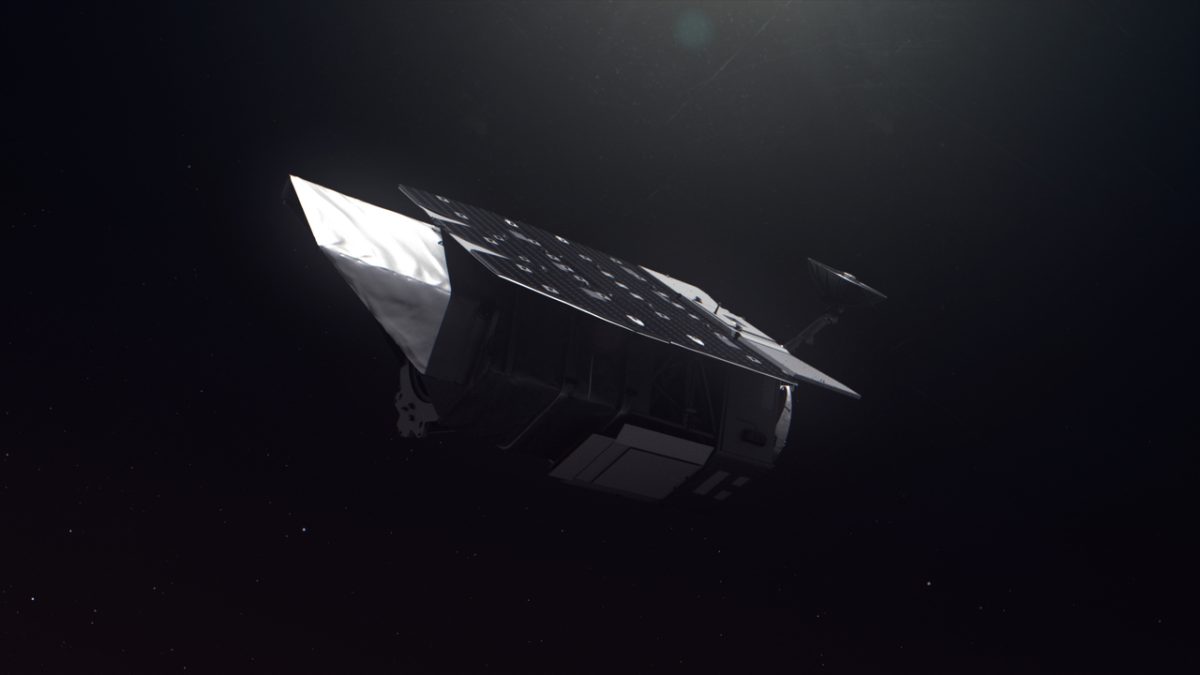
The Nancy Grace Roman Space Telescope, named after NASA’s first chief astronomer, was designed to survey large areas of the sky rapidly. This is its main distinction from Hubble and James Webb, which are designed to study individual objects in detail. With its 6.5-meter mirror and observations primarily in the infrared, James Webb can peer much deeper into space. The most intriguing discoveries from Roman’s surveys will therefore be studied in detail using the two older telescopes. Even routine observations with Roman’s Wide Field Instrument (WFI) will reveal very faint, distant objects, explains instrument scientist Josh Schlieder.
We explored how Roman differs from Hubble and James Webb, and the questions it will address, in a video on the Universe Space Tech YouTube channel.
The Nancy Grace Roman Space Telescope’s capabilities and how it differs from Hubble and James Webb. Source: Universe Space Tech YouTube channel
According to NASA, the tests involve imaging familiar regions of the sky. Jeremy Perkins, an astrophysicist at NASA’s Goddard Space Flight Center, is impressed by how much detail can be captured in such a short time. Roman’s mirror is 2.4 meters in diameter, the same as Hubble’s. However, a single observation with its Wide Field Instrument can cover an area larger than the apparent disk of the full Moon and at least 100 times larger than the field of view of Hubble’s infrared camera. Large mosaics assembled from numerous individual images will therefore become routine, although they have previously been produced only in special cases.
Using Stars as Guides
The first phase of testing was completed successfully. According to senior project scientist Julie McEnery, target acquisition, imaging, and slewing between regions of the sky are working as intended, and data are being transmitted correctly.
The fine guidance system had been the greatest source of uncertainty. It tracks individual stars in the target direction and holds the telescope steady so that their images do not shift on the detector. If stars are too densely packed or obscured by thick dust, the system could confuse them or lose track of them. Test observations of such regions showed that guidance works exceptionally well in every case, explained operations project scientist Tom Barclay.
Reliable guidance in crowded star fields is essential for one of the mission’s main objectives. The telescope will repeatedly observe the central region of the Galaxy, where stars are most densely concentrated, to search for exoplanets through gravitational microlensing. When one star passes in front of a more distant one, the foreground star’s gravity briefly magnifies the background star’s light. If the foreground star has a planet, a short additional spike appears in the brightness curve.

An artist’s concept showing the region of the Milky Way that the Nancy Grace Roman Space Telescope’s survey will cover. Source: nasa.gov
Consistent Images
The imaging requirements are extremely strict. If some images are blurrier or brighter than others, it will become impossible to distinguish a real change in a celestial object from an effect caused by the telescope itself. Josh Schlieder emphasizes that even minor image flaws can conceal the faint signals the observatory was built to detect.
The team is now conducting a series of test observations. These are needed to characterize the observatory’s performance, calibrate the instruments’ response to light, and bring image sharpness to the required level. The science program will begin only after this work is complete, but NASA has not yet specified when that will be.
Some systems are already performing better than required. The announcement does not explain why, but this extra capability could open up scientific opportunities that were not anticipated during the design phase. The already enormous flow of data would then grow even further.
