

As early as 1982, physicists discovered an important phenomenon for thermonuclear energy: under certain conditions, the plasma inside a reactor switches from a low-confinement mode (L-mode) to a high-confinement mode (H-mode). In this state, it retains heat much more efficiently, which is critically important for sustaining the fusion reaction. However, over the following forty years, scientists were unable to calculate precisely how much heating energy had to be supplied to reliably trigger this transition.
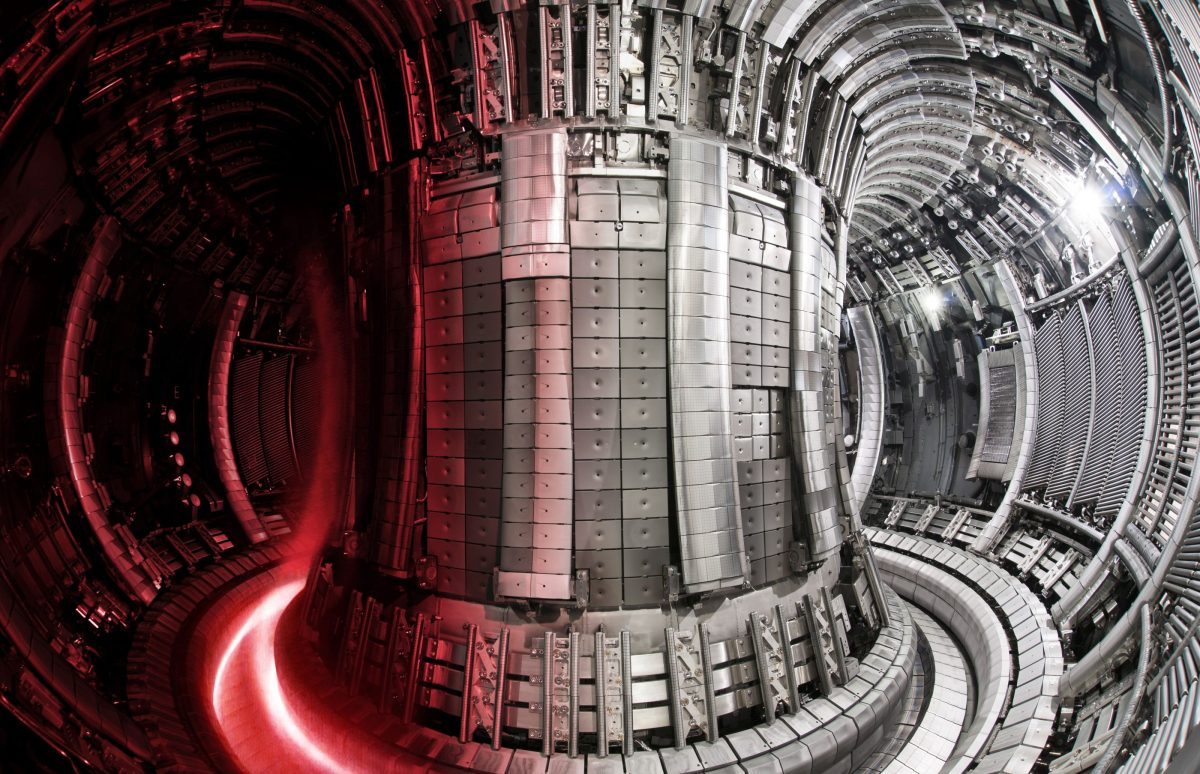
Recently, a team of researchers from the Swiss Federal Institute of Technology Lausanne (EPFL), led by doctoral student Brenno de Lucca, published a paper in Physical Review Letters proposing a new theoretical explanation for this problem. The scientists developed a physical and mathematical model that makes it possible to predict the threshold heating power required for plasma to transition into the high-confinement mode (H-mode) in tokamaks — devices with a toroidal magnetic field configuration designed to confine high-temperature plasma.
Since reactor designs differ, there is no single universal figure that applies to all installations. However, the new model takes into account two key parameters of a particular tokamak — plasma density and the direction of the magnetic field. This allows it to explain why, in one operating mode, the required power increases as density rises, while in another it decreases, creating an optimum point with minimum energy consumption.
From 1980s Theory to Modern Experiments
The history of fusion research includes many cases in which brilliant theoretical ideas from the 1980s had to be put aside because the equipment available at the time was not sufficiently advanced. For example, another group of scientists recently successfully revived the helicon current drive method, which had first been conceived forty years ago. In the case of the transition to H-mode, theorists had likewise laid the groundwork decades ago, but they lacked an adequate empirical basis.
Today, the EPFL team has access to a vast body of data from real experiments conducted on modern tokamaks. First, the physicists used computer simulations to reproduce changes in plasma behavior as heating increased. Based on these simulations, they derived mathematical equations and then compared their predictions with measurements from actual installations.
Taming Turbulence and Challenges for ITER and SPARC
Testing confirmed the accuracy of the calculations and revealed new details about plasma microphysics. It turned out that when turbulence develops inside the plasma, it generates additional flows at the outer edge of the plasma column. These flows eventually suppress chaotic eddies, sharply reducing heat loss to the outside. At the same time, the direction of the magnetic field directly affects how easily the plasma transitions into the stable H-mode.
Having developed a working tool, the Swiss physicists applied it to two of the most ambitious fusion projects of the future — the international ITER reactor, which is being built in France, and the American compact high-field tokamak SPARC.
The calculations produced an unexpected result. To reach H-mode, the ITER reactor will require at least 43 MW of heating power, while its design power is 73 MW — meaning that the facility has a substantial reserve. By contrast, according to the new model, the American SPARC will need at least 26 MW, even though its expected power output is only 25 MW.
If the physicists’ conclusions are confirmed in practice, SPARC engineers will have to be especially careful and look for ways to optimize the system, while ITER designers can feel confident.
Previously, we told the story of the thermonuclear bomb.
Based on material from journalarta.com
