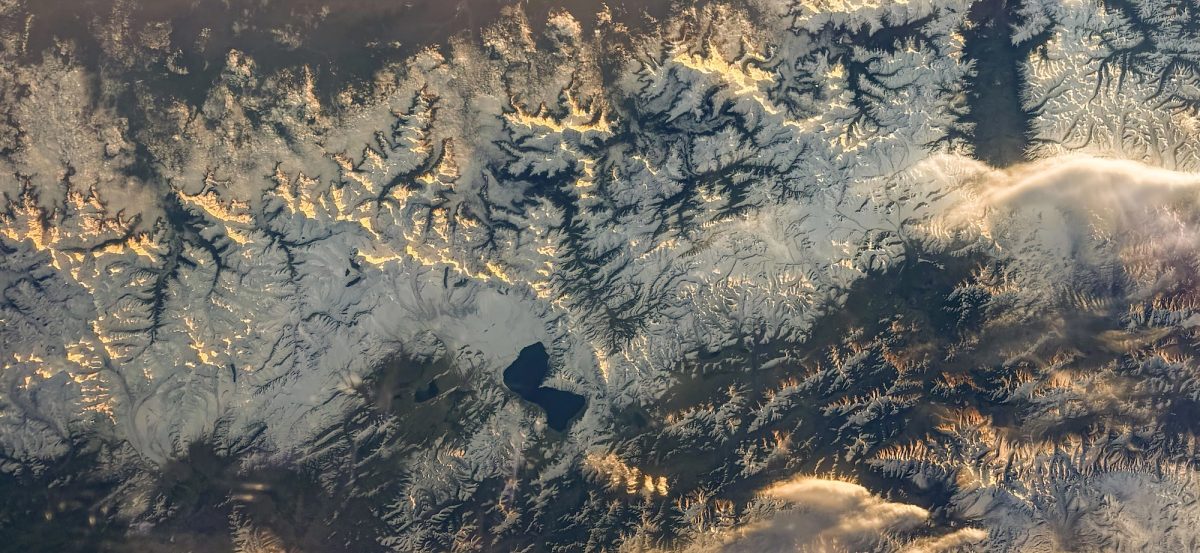
NASA’s selection of the best photos from the past week takes us from the skies over Florida to low Earth orbit, New York, Tibet, and Mars. The collection features four Thunderbirds fighter jets above Kennedy Space Center, a spacewalk selfie by astronaut Anil Menon, the Empire State Building illuminated in gold in honour of Voyager 1, Tibet’s Lake Peiku photographed from the International Space Station (ISS), and a collage of the 49 holes drilled into Martian rock by the Curiosity rover.
Thunderbirds above Kennedy Space Center
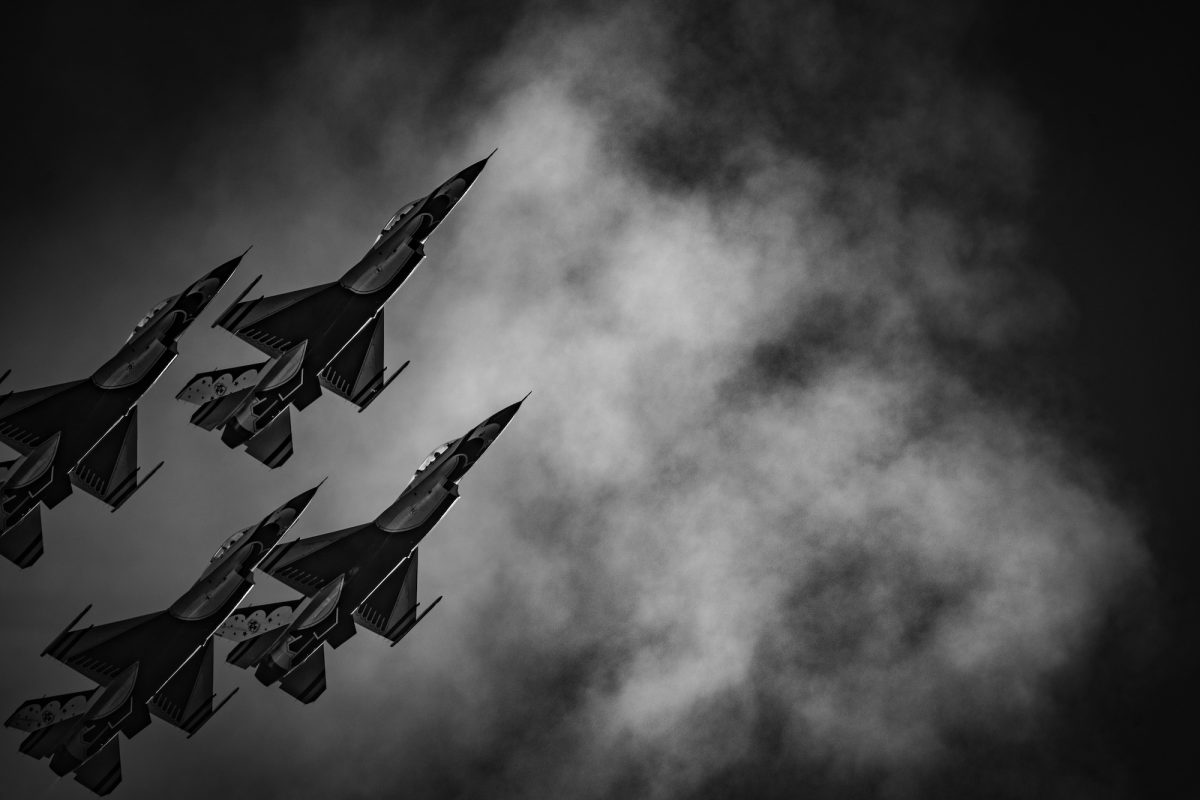
The US Air Force’s Thunderbirds demonstration team flew over Kennedy Space Center in Florida on 7 November during the MAX POWER air show. NASA held the festival for the first time, marking the 250th anniversary of the United States and showcasing the past, present, and future of aviation and spaceflight.
The Thunderbirds have been performing since 1953 and currently fly F-16 Fighting Falcons. In Brandon Hancock’s photograph, four aircraft climb towards the upper right in close formation, with the distance between adjacent wingtips sometimes less than half a metre. The black-and-white treatment removes the team’s vivid livery, leaving the geometry of the flight itself.
Anil Menon’s spacewalk selfie
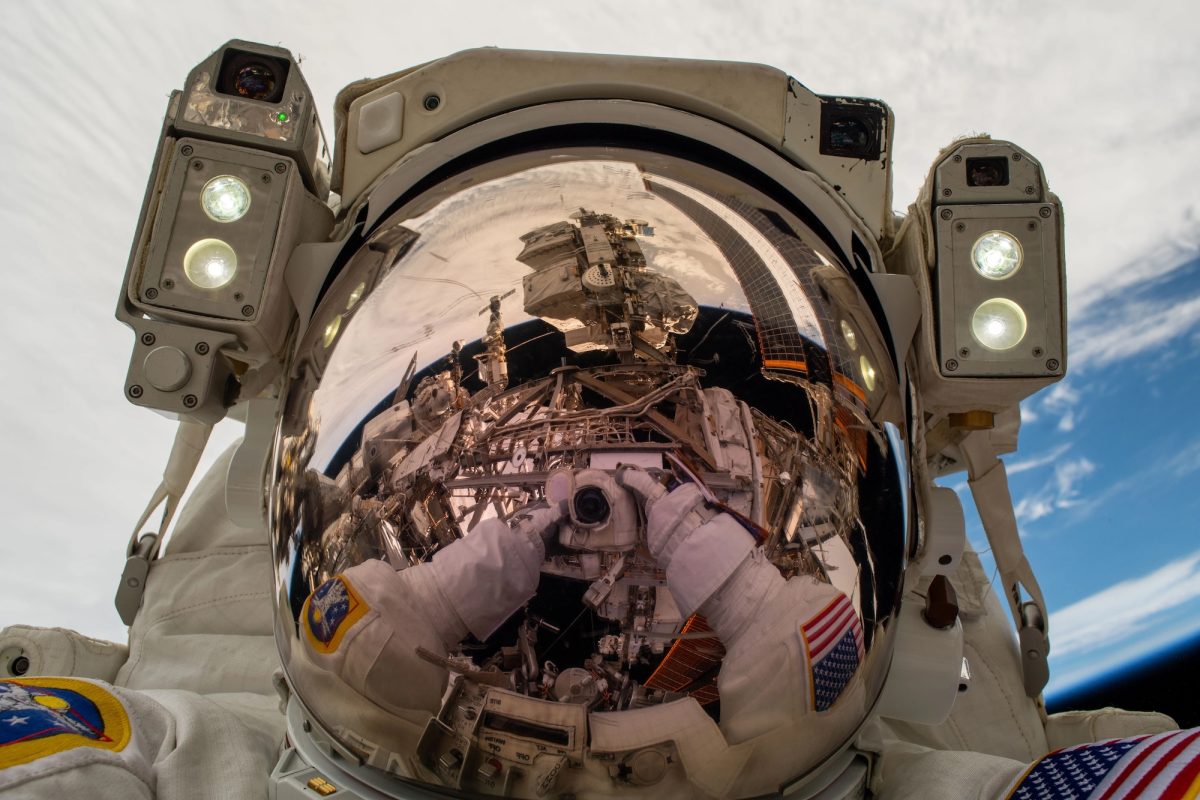
Menon took this photograph on 29 October while working outside the International Space Station alongside Canadian Space Agency (CSA) astronaut Joshua Kutryk. That day, they installed a new ISS Roll-Out Solar Array (iROSA) on the station.
Menon’s hands and camera are reflected in his helmet’s gold visor, with Earth visible behind him. The visor has an extremely thin coating of gold, which reflects infrared and ultraviolet radiation from the Sun, helping protect the astronaut’s face from overheating and burns.
The iROSA arrays are delivered to the station rolled up. Once mounted, they unfurl using flexible composite booms and extend over the older solar panels, which have been operating on the ISS since the 2000s and have lost a substantial amount of their generating capacity. The new arrays partially shade the old ones, but together they supply the station with more power.
The Empire State Building glows gold for Voyager 1
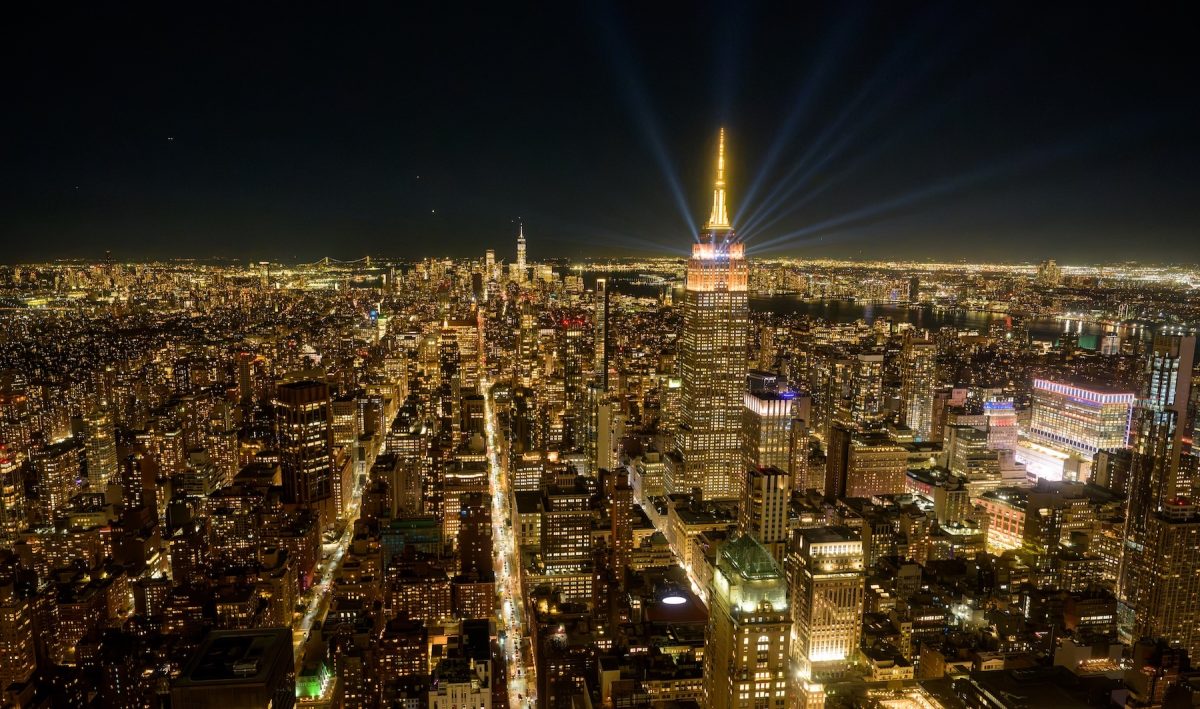
On 17 November, the top of New York’s Empire State Building was illuminated in gold. The city was marking the moment when Voyager 1 was expected to reach a distance of one light-day from Earth – approximately 25.9 billion km. No other human-made spacecraft has travelled so far.
The colour was chosen in honour of the Golden Record carried aboard Voyager 1 since 1977. This gold-plated copper disc contains sounds and images intended to convey the diversity of life and cultures on Earth. A radio signal from the probe now takes a full day to reach us, and engineers must wait two days to receive a response to any command.
The photograph was taken by Bill Ingalls, who has worked as a photographer for NASA since the 1980s. We explored the spacecraft’s journey in detail in our article, ‘Voyager 1 Reaches a Distance of One Light-Day’.
Tibet’s Lake Peiku seen from the ISS
CSA astronaut Joshua Kutryk photographed Lake Peiku, also known as Paiku Co, from aboard the ISS. The lake lies in the southern Tibetan Plateau near the northern slopes of the Himalayas, at an altitude of around 4.6 km. Roughly C-shaped, it is surrounded on all sides by snow-covered mountain ranges.
Lake Peiku has no outlet, and its water level depends on precipitation, glacial melt, and evaporation. Its average depth is 41 m, while the northern part reaches depths of more than 70 m. This substantial body of water retains heat for a long time and experiences its greatest evaporation after the monsoon season, from October to December. In winter, the water beneath the ice acts as a solar collector: it stores heat, which is rapidly released into the atmosphere after the ice breaks up, influencing local weather.
Since 1972, Lake Peiku’s water level has fallen by approximately 4 m, and its water volume has decreased by 8.5 per cent. There are thousands of lakes on the Tibetan Plateau. Inland lakes are generally expanding, whereas those in the south, including Peiku, are gradually shrinking.
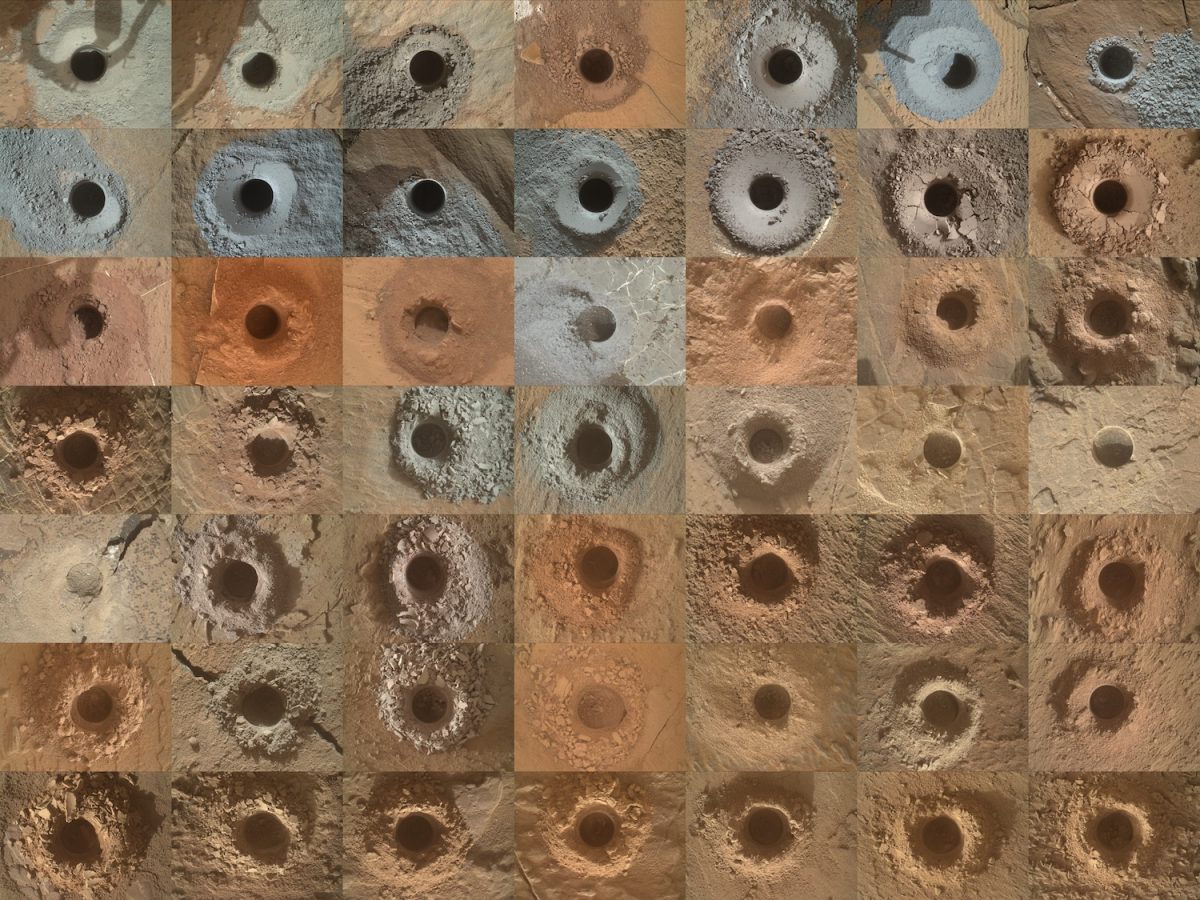
49 holes drilled by Curiosity on Mars
This collage, dated 16 November, brings together all 49 holes drilled by Curiosity on Mars to date. Each hole represents a separate rock sample. The drill at the end of the rover’s robotic arm grinds the rock into powder and delivers it to the CheMin and SAM instruments inside the rover, which determine the sample’s mineralogical and chemical composition.
The holes are approximately 1.6 cm in diameter. The surrounding rock ranges in colour from deep reddish-brown to beige, with the palette changing as Curiosity moves through successive layers while climbing the slopes of Mount Sharp in Gale Crater. The rover has been working there since August 2012.