

Four volunteers have emerged from a habitat simulating life on Mars after more than a year of isolation in Houston. Throughout their stay, they grew vegetables, repaired equipment, and communicated with Earth with a delay, just as a real Martian crew would. This was NASA’s second such mission. Data on how people cope with confinement, limited resources, and slow communications will help plan a lunar base and missions to Mars.
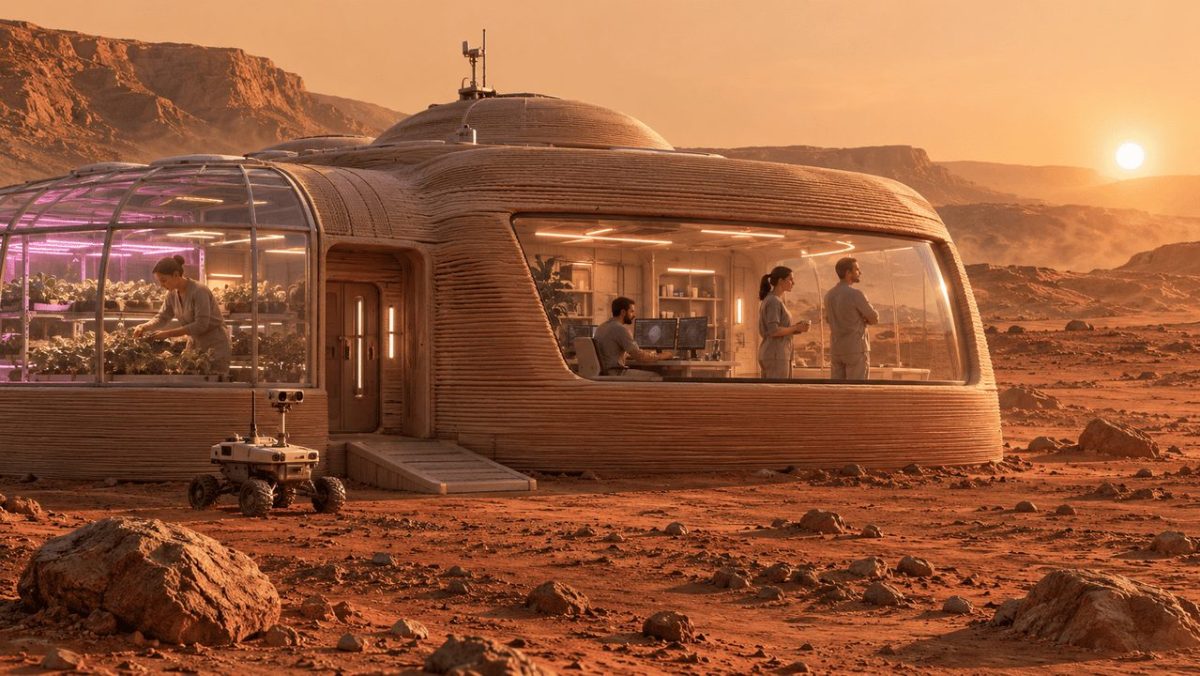
A Year in 158 Square Meters
Ross Elder, Ellen Ellis, Matthew Montgomery, and James Spicer entered the Mars Dune Alpha habitat on October 19, 2025, and emerged on October 31, 2026—a total of 378 days. The habitat was 3D-printed at NASA’s Johnson Space Center and, according to NASA, covers 158 square meters, or approximately 40 square meters per person.
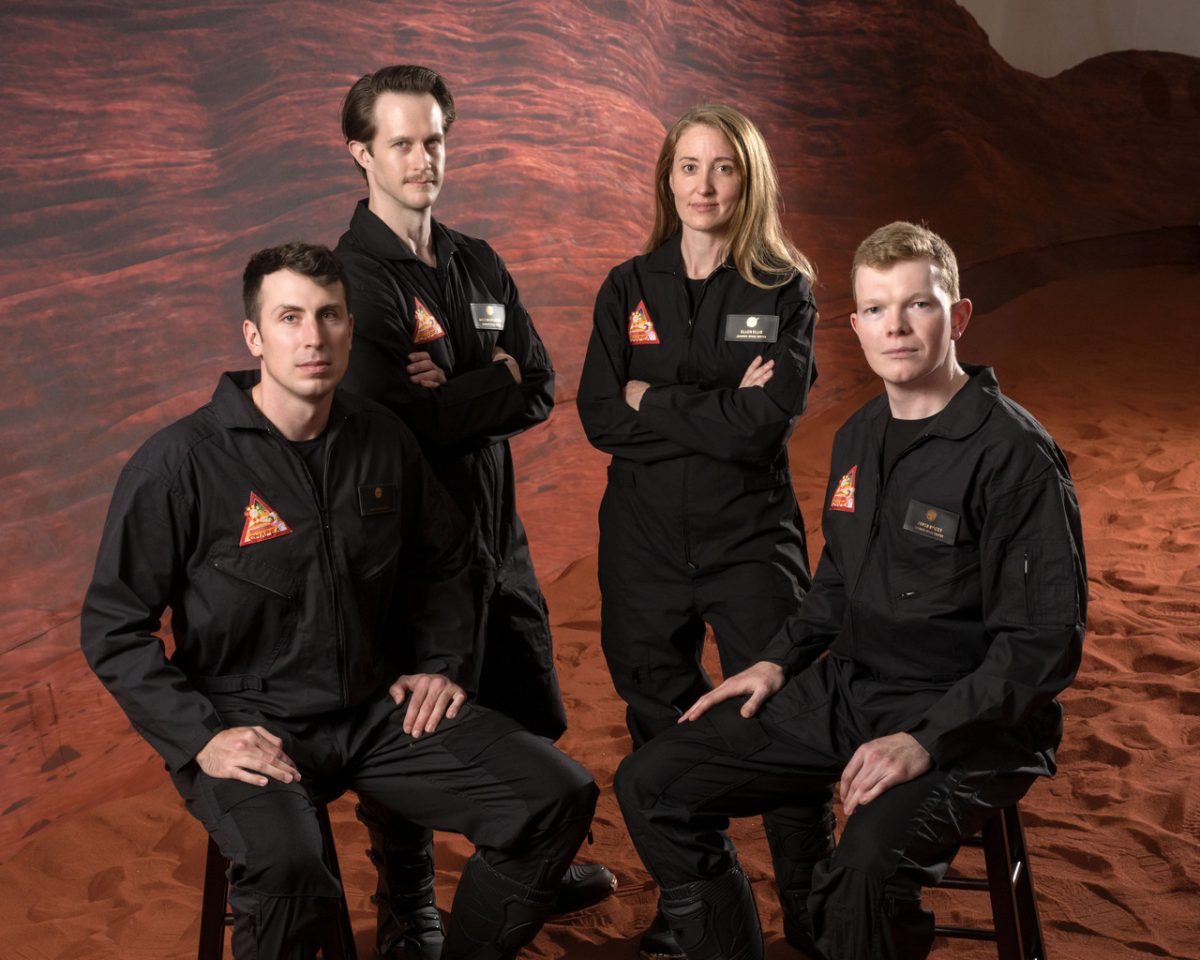
Commander Ross Elder serves as a U.S. Air Force test pilot. U.S. Space Force Colonel Ellen Ellis oversaw medical matters, engineer Matthew Montgomery handled science, and flight engineer James Spicer previously built satellite communications networks.
Delayed Communications
Communications with Earth provided the closest approximation to an actual mission. Under the program’s scenario, an exchange of messages with mission control could take up to 44 minutes. Radio signals travel between Earth and Mars in 3–22 minutes each way, depending on the planets’ positions, so a Martian crew will not be able to hold a live conversation with Earth.

Johnson Space Center Director Vanessa Wyche said such delays require patience and independence—qualities astronauts millions of kilometers from home cannot do without. In May, communications stopped entirely, and the crew operated without mission control for two weeks, simulating the period when Mars passes behind the Sun. The real Mars reaches this position approximately once every 26 months, interrupting communications with spacecraft near it for about two weeks each time.
Gardening, Robots, and Breakdowns
The crew also maintained the habitat, exercised, operated robots, and ventured into a separate sand-covered area simulating the Martian surface. According to Reuters, they grew plants in simulated Martian soil.

The organizers deliberately made life difficult for the volunteers. Supplies were limited, and equipment periodically broke down as part of the scenario. Matthew Montgomery said that without the necessary tools, software, or even internet access, they had to find unexpected solutions.
Why NASA Is Doing This
NASA’s main goal is to understand how isolation and limited resources affect people’s health and performance. These data will help plan nutrition, crew schedules, and demands on the Deep Space Network, while guiding doctors and psychologists on how to support astronauts during long-duration missions.
Can humans live on Mars, and what obstacles stand in the way of colonizing the planet? Source: Universe Space Tech YouTube channel
Exactly what these 378 days revealed remains unknown. Over the next two weeks, Ross Elder, Ellen Ellis, Matthew Montgomery, and James Spicer will undergo medical examinations and debriefings with NASA scientists. The results of the first mission, which ended in the summer of 2024, have still not been released.
The first mission also lasted 378 days, spanning 2023 and 2024. The second followed almost exactly the same scenario with new participants, because reliable conclusions require more people and more experiments.
From the outset, NASA planned a series of three such missions. The start date and crew for the third have not yet been announced.
