

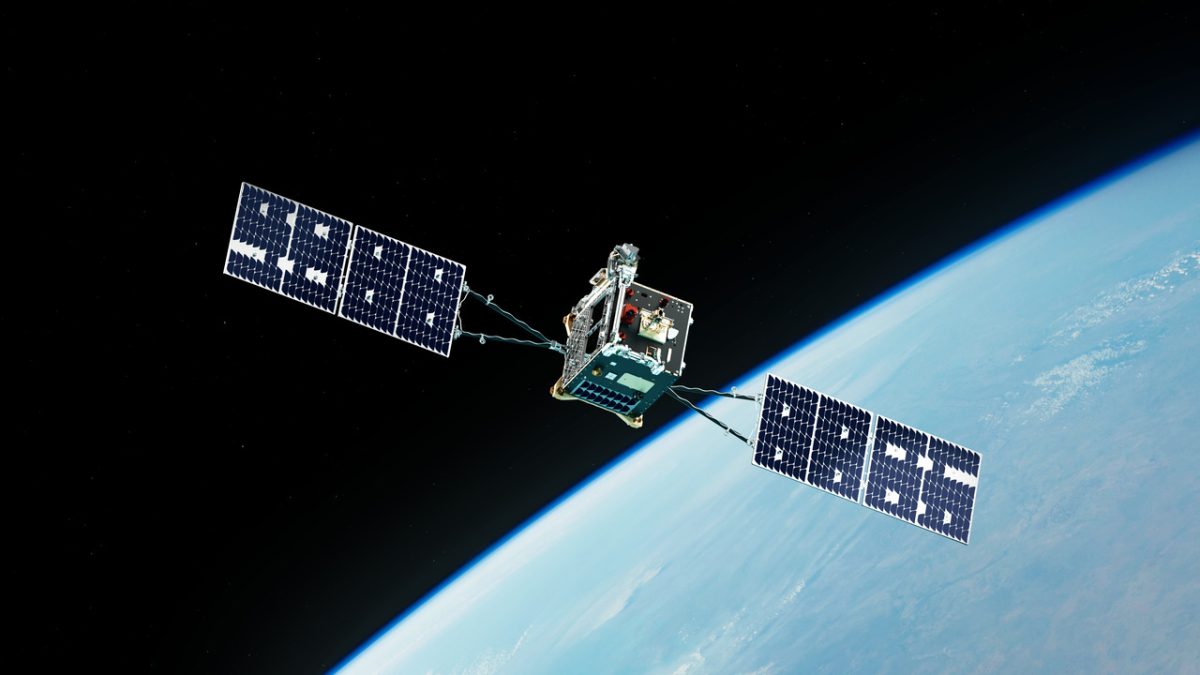
U.S. startup Starfish Space has lost contact with its first full-scale satellite-servicing spacecraft, and communications cannot be restored. The cause was an onboard software error that keeps the radio system switched off. NASA funded the mission. Despite the loss, the company’s contracts with military and commercial customers remain in place for now.
No Contact with Earth
The SSPICY demonstration mission launched on October 1 aboard a Falcon 9 rocket. The team initially received telemetry from the Otter spacecraft, but contact was lost during commissioning—the initial phase after launch when onboard systems are activated in sequence and instruments are calibrated.
According to NASA, the cause lies in the fault-protection system. This onboard software monitors malfunctions and responds by, for example, restarting or shutting down equipment. An error in the software keeps the spacecraft’s radio system switched off, preventing engineers on Earth from sending either commands or a fix. The agency and the company concluded that the spacecraft cannot be recovered.
Inspecting Space Debris
The spacecraft was designed to approach inactive U.S.-origin objects in low Earth orbit and inspect them at close range. To accomplish this, Otter was equipped with a propulsion system, navigation and control systems, and an extendable robotic arm. This was the first flight to bring all of Starfish Space’s key technologies together in a single spacecraft.

NASA invested $15 million in the mission through its Small Business Innovation Research (SBIR) program. The demonstration was expected to provide data on the characteristics of orbital debris. The company is now exploring ways to accomplish SSPICY’s objectives during its other missions.
Funding and Customers
In April 2026, Starfish Space raised more than $100 million in a funding round led by Point72 Ventures. Among its largest orders is a $54.5 million U.S. Space Force contract, under which a separate Otter spacecraft is to be delivered to the military in 2028.
According to GeekWire, the company still plans two commercial satellite-servicing missions in geostationary orbit and two missions for the Space Force. No contract cancellations have been reported following the loss of Otter.
For customers seeking servicing in geostationary orbit, the failure carries particular significance. There, Otter will dock with operational satellites, each worth hundreds of millions of dollars. Customers will therefore expect evidence, above all, that the onboard software error has been corrected and the fix thoroughly tested.
The Next Test
Starfish Space’s earlier, smaller spacecraft, Otter Pup, also encountered problems at the start of its mission. Following its launch in 2023, it experienced a thruster anomaly, but the team regained control and, in 2024, performed a rendezvous with a spacecraft operated by the Italian company D-Orbit.

The second spacecraft in this series, Otter Pup 2, has already completed its autonomous rendezvous phase, approaching within 25 meters of ElaraSat, a satellite from the Australian company Gilmour Space. Next comes docking with a satellite that was not designed for it.
Together with partner Astro Digital, the Starfish Space team is correcting the fault-protection system and reviewing testing procedures for future Otter spacecraft. The company has not yet announced a date for its next full-scale spacecraft launch.
