

Italian startup ORiS has raised €5 million to develop an orbital power network. The technology is designed to transmit electricity between satellites using a laser beam. The first in-orbit test could take place as early as February 2027, following the launch of the spacecraft aboard a SpaceX rocket.
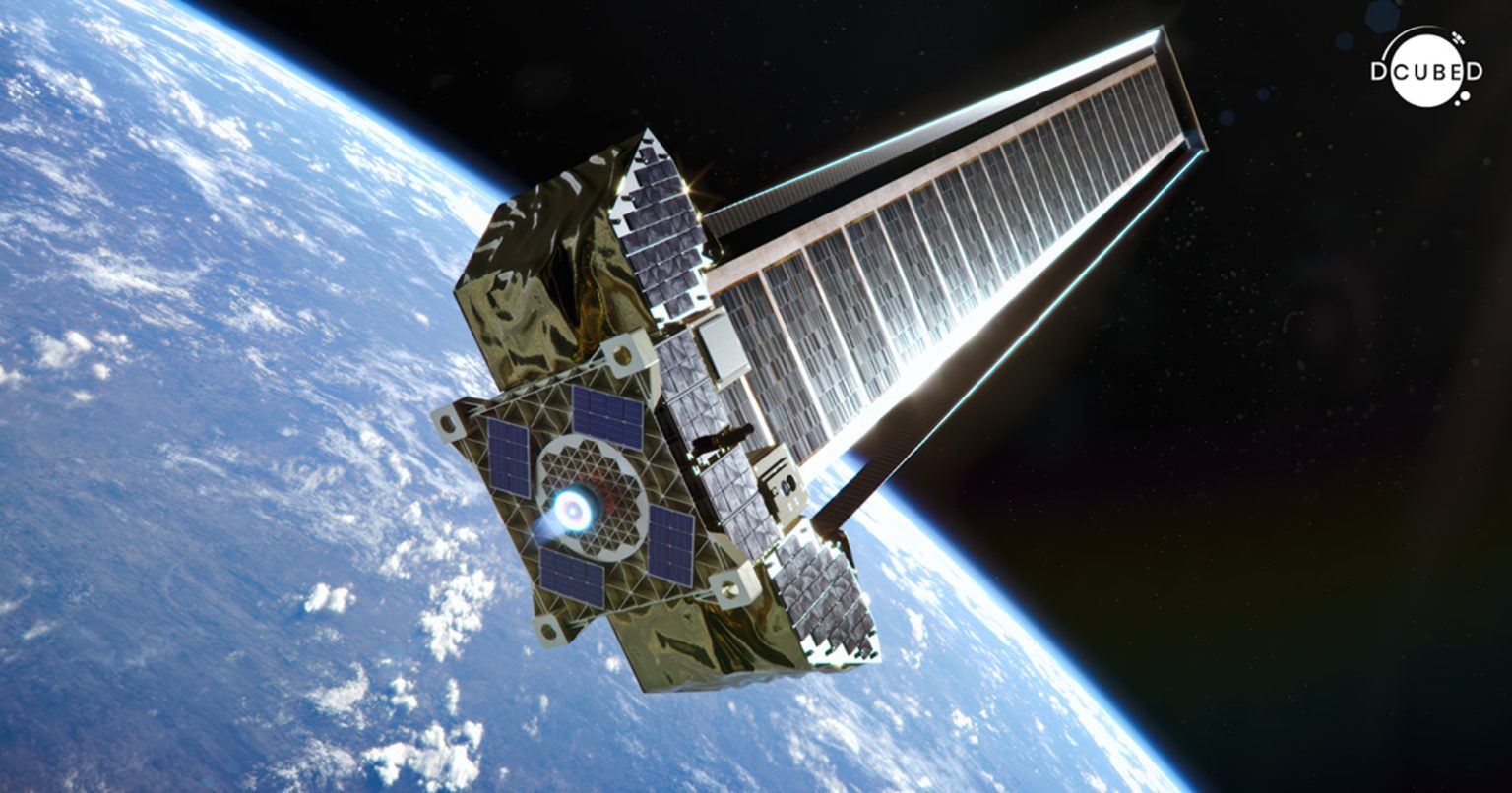
Satellite Platform from Astro Digital
The ARAQYS-D3 mission, during which the demonstration will take place, will launch aboard a SpaceX rocket. The platform will be provided by the U.S. company Astro Digital, while the German company Dcubed will serve as a key partner. ORiS plans to test the compatibility of its laser transmitter with space-based photovoltaic cells, Tech Funding News reports.
If successful, the demonstration will become the first step toward the Power-as-a-Service concept promoted by the company. The idea is to turn electricity in orbit into a commodity available at any time, rather than only when the solar panels of a particular spacecraft are illuminated by the Sun. According to the official ORiS release, this involves a transition from isolated satellites to interconnected energy ecosystems.
LOONA as an Intermediate Proof of Concept
Before taking the technology into space, the company tested it under terrestrial conditions. A system called LOONA, developed within the NATO DIANA defense accelerator, transmitted power to a drone hovering more than 100 meters away.
The same prototype was used in joint work with Thales Alenia Space to study the possibility of powering lunar rovers. The company was founded in 2024 by four graduates of the Polytechnic University of Turin. ORiS is based in Turin and was incubated at I3P and through the ESA BIC Turin program, with support from the European Space Agency and the Italian Space Agency.

Lasers Versus Microwaves
The technological landscape of orbital power transmission has already divided into two camps. ORiS is focusing on lasers, while its U.S. competitors—including Star Catcher Industries, which raised $65 million in a Series A round, Pentagon-backed Aetherlux, and Mantis Space, which secured $10 million in investment—primarily use microwave transmission.
The California Institute of Technology’s SSPD-1 experiment, which transmitted power from orbit for the first time in 2023, also relied on microwaves rather than lasers. The funding gap between ORiS and U.S. companies reflects a broader trend.
In 2025, Europe accounted for only 6.2% of venture capital investment in defense technologies within NATO, while the United States has attracted approximately 85% of such funding since 2019. Four people with €5 million are attempting to outpace competitors whose budgets are an order of magnitude larger in a market that, according to various estimates, could reach between $3.3 billion and $10.7 billion by 2035.
Energy Hunger in Orbit
The driving force behind all this activity is the rapid growth of satellite power consumption. The emergence of space-based data centers and the expansion of Earth-observation programs and communications constellations will require power levels that solar panels can no longer provide on their own.
Solar arrays degrade over time and do not operate during eclipses. An orbital power network would allow spacecraft to receive energy from neighboring satellites at any time. The funding round was led by Earlybird, with Pitchdrive acting as co-lead investor.
Galaxia, Vento, and Piemonte Next Fund also participated. The funds raised will be used to expand the team, conduct subsystem research, increase laboratory capacity, and build a flight model for the satellite demonstration. The model is expected to be completed by the end of July 2026.
