

For a long time, the scientific community widely believed that Mars was geologically dead on the inside. However, a new study published in Science Advances provides strong evidence to the contrary.
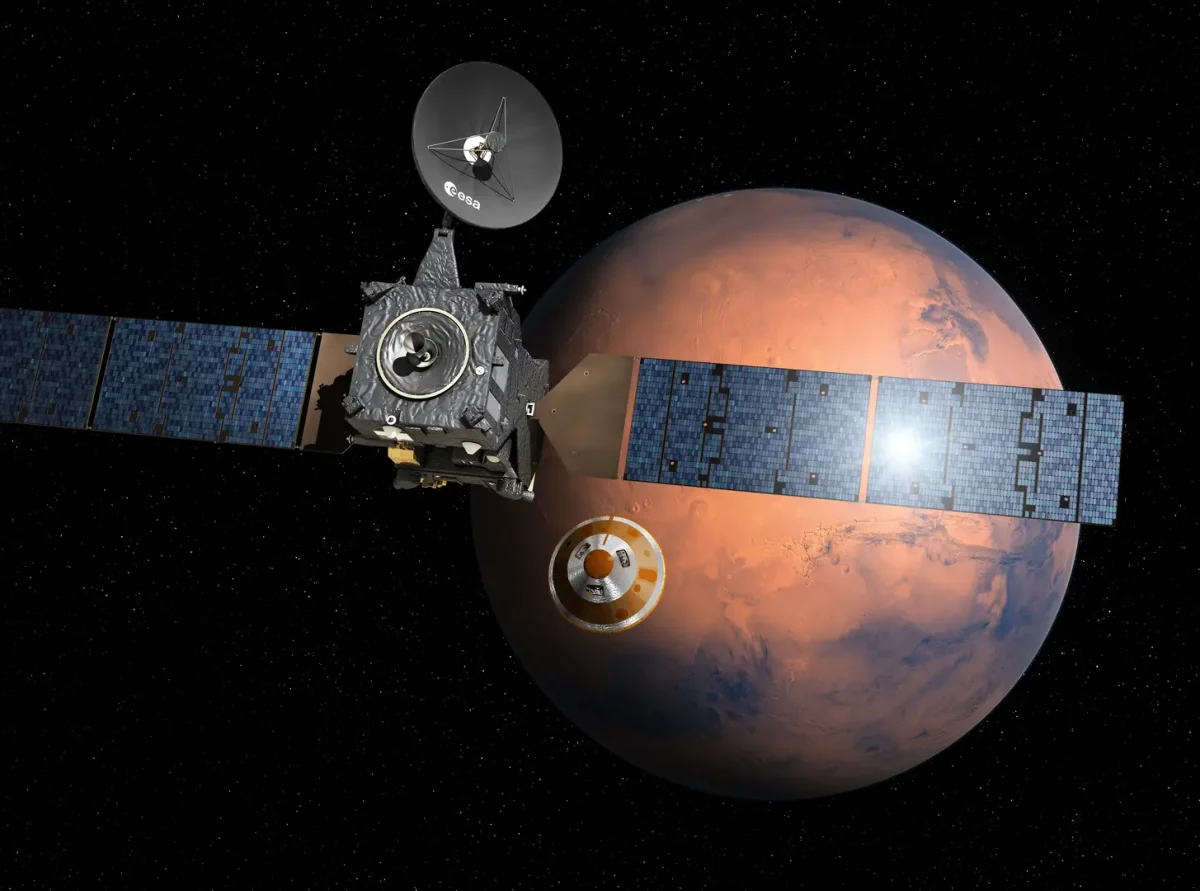
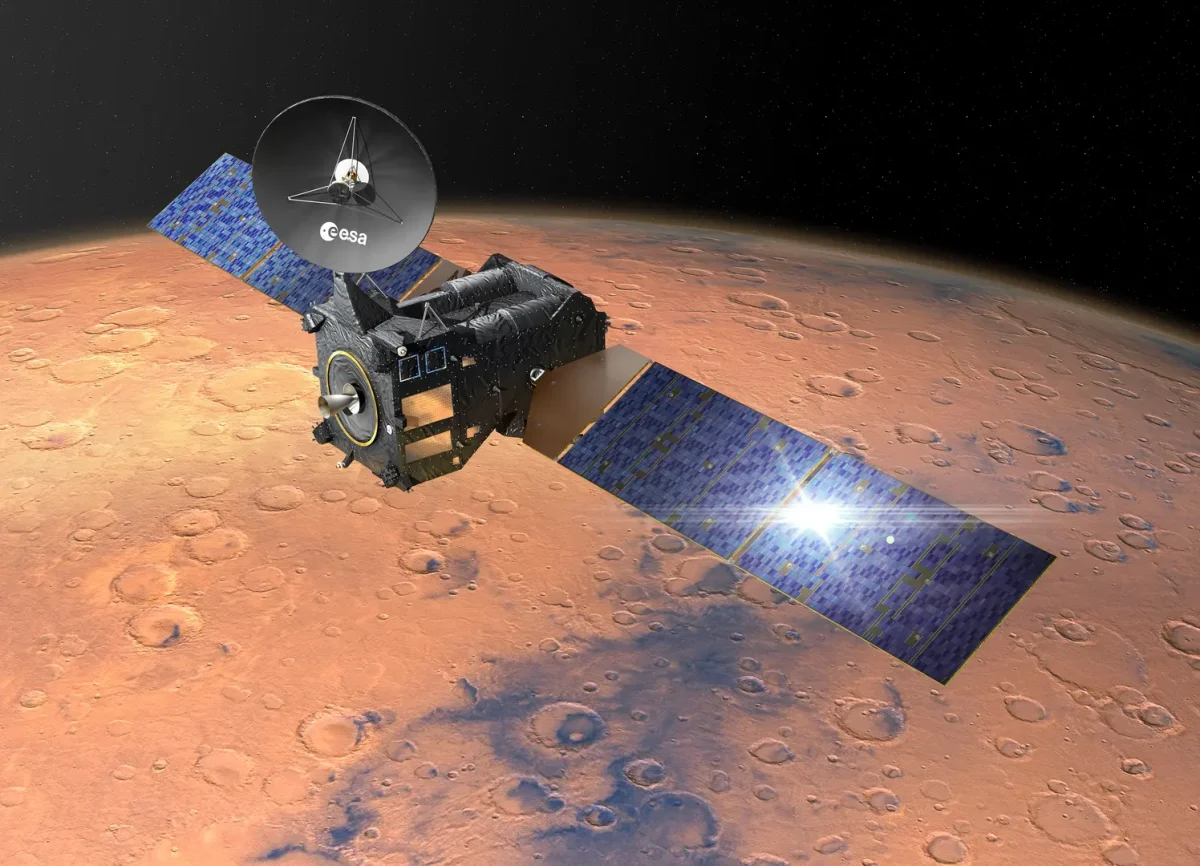
An international team of scientists analysed data collected in 2021 by the Trace Gas Orbiter. The researchers found that the Red Planet is slowly releasing hydrogen chloride. Previously observed fluctuations in this gas had coincided with seasonal changes, but scientists were puzzled by sudden spikes in its concentration in unexpected locations and at unusual times. In particular, localised emissions were detected above the slopes of Alba Mons—the largest volcano on Mars by surface area.
Gas Vents
Scientists believe that the gas is being released from hot magma lying deep beneath the Martian crust. This hypothesis is supported by newly identified fractures hundreds of metres long around the Alba Mons region.
Along these fractures, scientists noticed changes in the colour of the soil. They believe these result from gases seeping out and leaving mineral deposits behind, much like volcanic gas emissions on Earth. As study co-author Daniel Mège, a professor at the Institute of Geological Sciences of the Polish Academy of Sciences, noted, Mars retained enough internal heat to sustain volcanic activity until recently, and may still retain it today.
A New Perspective on the Past and the Search for Life
These findings have significant implications for assessing the planet’s potential habitability. The retention of internal heat suggests that, in the relatively recent past, Mars had a much warmer, denser atmosphere and large amounts of liquid water on its surface.
In addition, the newly identified gas-emitting fractures could become a priority target in the search for Martian life. According to the scientists, if hydrothermal systems remain active there, they could provide microorganisms with the energy and nutrients they need while protecting them from the harsh environment on the planet’s surface.
We previously reported on how liquid water could have existed on Mars until relatively recently.
Based on reporting by futurism.com.
