

Many people are familiar with the Doppler effect thanks to devices that make use of it, such as radar systems for measuring the speed of cars. However, few know what the effect actually involves or how difficult a life its discoverer led.
The Doppler effect in our lives
223 years ago, the Austrian physicist Christian Doppler was born. The effect named after him underlies the operation of radar systems used to measure the speed of cars and aircraft. It is also used in ultrasound examinations performed in hospitals.
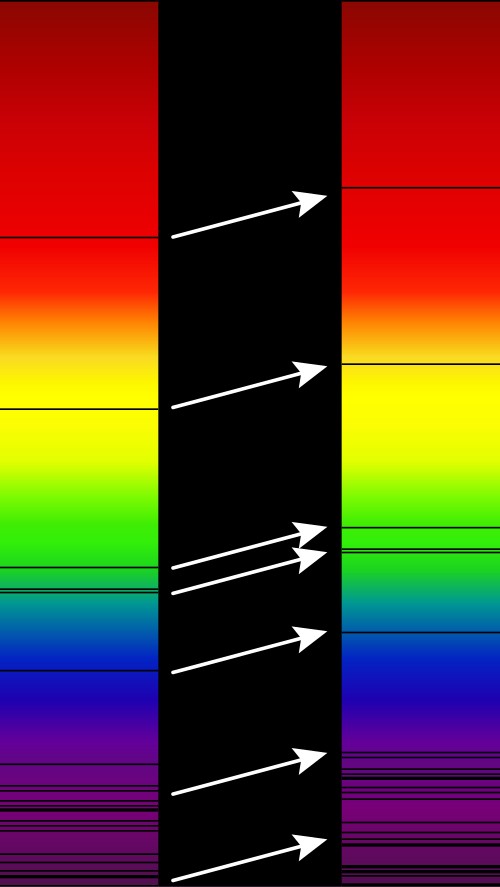
In astronomy, the Doppler effect is one of the principal research tools. It helps astronomers discover planets orbiting other stars and study the motion of matter in supernova remnants. The effect also underlies the phenomenon of redshift, which allows us to observe the expansion of the Universe.
The effect occurs when a source of oscillations, whether mechanical or electromagnetic, moves relative to an observer, causing the observed frequency and, consequently, the wavelength to change. In the case of visible light, this means that light from a source moving towards the observer shifts towards the blue end of the spectrum, while light from a receding source shifts towards the red end.
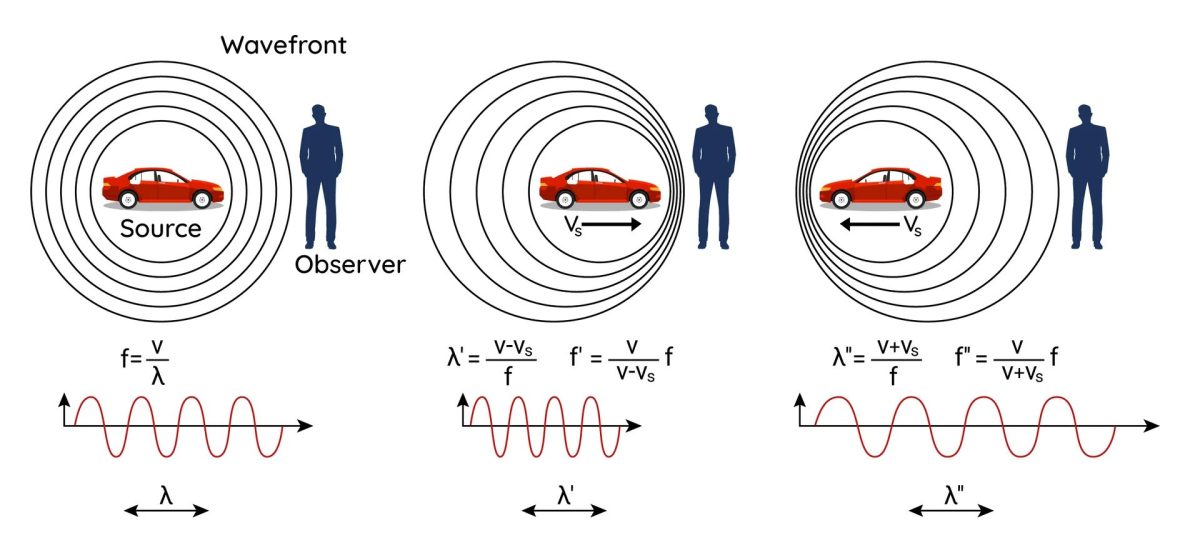
This can be explained by the fact that, as an object moves towards us, each successive wave crest is emitted from a position closer to the observer, reducing the distance between successive crests and making the wavelength appear shorter. When the object moves away from the observer, the opposite occurs: the waves appear to stretch out in space.
In the case of mechanical waves, such as sound waves, the Doppler effect is relatively easy to demonstrate. For electromagnetic waves, however, either high-precision instruments or very rapid motion are required. The idea seems simple, elegant, and far-reaching. One might imagine that its originator had many other ideas of this kind. Yet Christian Doppler’s life is the story of a man who endured numerous hardships and narrowly escaped a fate of utter failure.
Christian Doppler’s early life
Christian Doppler was born in Salzburg in 1803. His father was a stonemason who made fireplaces, stone plaques, and other such items. It was a family business that Christian was expected to carry on. However, he had been in poor health since birth, making physical labour unsuitable for him.

The family was relatively wealthy, so Christian attended a grammar school, where he demonstrated remarkable mathematical abilities. Although his parents had doubts about his talent, they nevertheless sent him to the Vienna Polytechnic Institute in 1822 to study mathematics and other sciences.
However, upon returning to Salzburg in 1825, he was unable to find a suitable job and spent some time teaching mathematics and physics. Concluding that he simply needed further education, Christian returned to the University of Vienna. There, he took additional courses in mechanics, mathematics and astronomy, graduating in 1829.
Yet even this did not help. Teaching vacancies were scarce. Doppler secured a position as a professor’s assistant at the University of Vienna and began conducting scientific research. His first scientific paper was entitled ‘A Contribution to the Theory of Parallels’.
Hardships and family life
This position was not permanent. Doppler began looking for employment at virtually every educational institution in Austria, only to face repeated rejection. In 1833, he went so far as to approach the American diplomatic mission with a request to emigrate. His request was granted. Christian had even begun selling his possessions in preparation for the move when, in 1835, he received a response from the Technical School in Prague (then part of the Austro-Hungarian Empire) to an application he had submitted two years earlier.
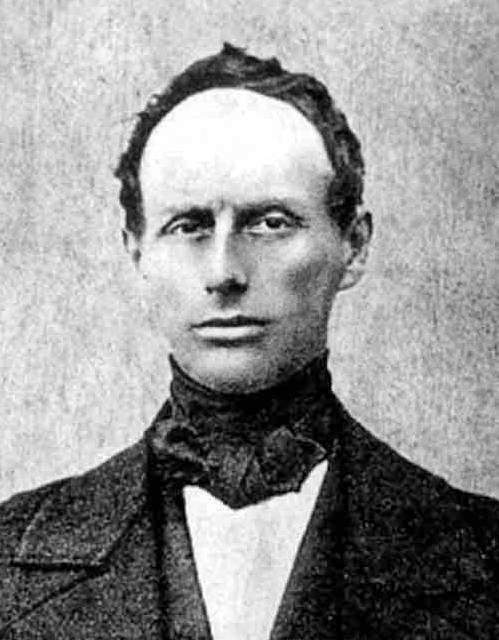
Doppler accepted the offer and became a teacher, while also giving several hours of lectures at the Prague Polytechnic Institute.
Around the same time, Christian married. He and his wife, Mathilde, subsequently had four children whom they had to support. His teaching salary was modest, while his workload was considerable. At approximately the same time, the scientist began suffering from tuberculosis.
Doppler eventually secured a permanent position at the Prague Polytechnic Institute and even attempted to pursue scientific research, primarily in optics and acoustics. He designed various instruments and wrote scientific papers, although he was constantly short of time and his publications attracted little interest.
The Doppler effect and recognition
Things began to change in 1842, when Doppler delivered a lecture at a meeting of the Natural Sciences Section of the Royal Bohemian Society of Sciences in Prague. Entitled ‘On the Coloured Light of Binary Stars and Some Other Stars of the Heavens’, it was essentially an astronomical study intended to explain differences in the colours of stars.
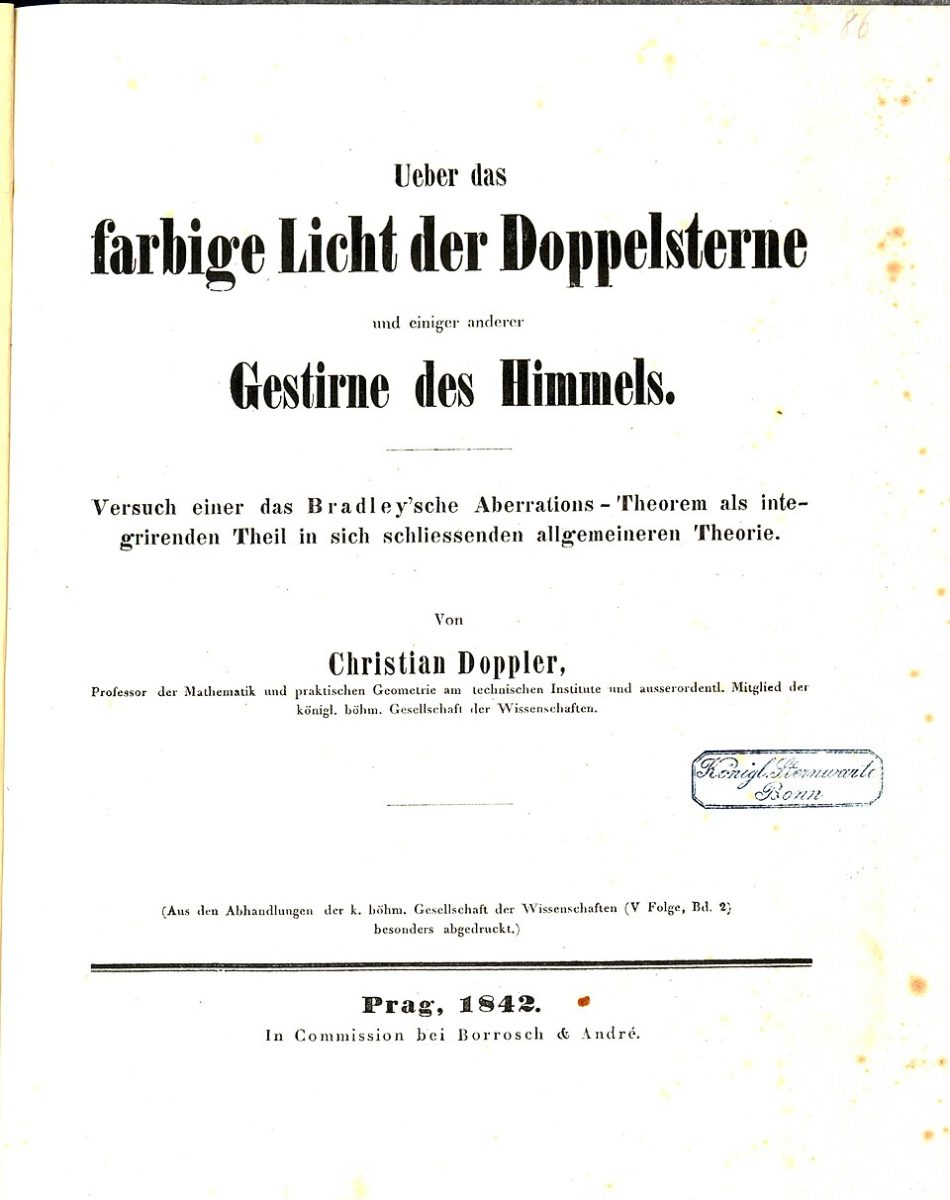
In it, Doppler suggested that all stars were actually white but could appear blue or red as a result of their motion. If they moved sufficiently rapidly, they would become invisible altogether, and this, he believed, was how nova outbursts occurred.
From an astronomical perspective, this was a complete failure. His assumptions suggested that Doppler was unaware of the existence of ultraviolet and infrared radiation. Moreover, scientists had already begun studying the sky at these wavelengths and were able to refute his predictions: nova outbursts occur in an entirely different way from that proposed by Doppler.
The motion of stars itself is far too slow to account for differences in their colours. It soon became clear that these differences were actually caused by variations in temperature. Nevertheless, the equations derived by the unassuming teacher proved to be correct and highly intriguing. The Doppler effect was soon confirmed using sound waves. Experimenters established that sound is perceived as higher in pitch when its source approaches the observer and lower when it moves away.
Doppler gradually gained recognition, but eventually his demanding workload took its toll. Students complained to the administration of the Prague Polytechnic Institute that he was excessively strict during examinations. Christian received a reprimand but ultimately managed to vindicate himself.
Around the same time, his health suffered a serious setback. In 1844, Doppler temporarily left the Prague Polytechnic Institute. He returned in 1846 but subsequently gave up teaching once again. Meanwhile, his scientific reputation continued to grow.
In 1843, Doppler was elected a full member of the Royal Bohemian Society of Sciences by an overwhelming majority, and in 1847, he became its vice-president. That same year, he received an honorary doctorate from the University of Prague, and in 1848, he was elected a member of the Austrian Academy of Sciences.
On 17 January 1850, Emperor Franz Joseph appointed Doppler as the first director of the newly established Institute of Physics at the University of Vienna. Among his students during his time in Vienna was Gregor Mendel, a postgraduate student and monk who would later lay the foundations of the science of heredity. In 1850–1851, he attended Doppler’s physics lectures and private lessons for two semesters.
However, Doppler’s health continued to deteriorate. In 1852, he moved to Venice, hoping that its milder climate would improve his condition. The disease, however, proved stronger: in 1853, the scientist died in his wife’s arms.
