Last week, NASA featured four individuals who had lived in a simulated Martian habitat for more than a year, a Canadian astronaut outside the International Space Station, and the nighttime lights of the United States as viewed from orbit. The Hubble Space Telescope discovered a dwarf galaxy that has lost most of its oxygen and captured thousands of stars in the globular cluster M30 in Capricornus. The selection also included mountains on the Moon’s far side, where humanity’s first base may one day be established, as well as a bright fireball over the Italian Dolomites.
The CHAPEA crew has “returned” from Mars
Four individuals wearing black caps and sunglasses raise their arms in celebration. For the first time in more than a year, they are standing outdoors in an open environment. On October 31, 2026, the second CHAPEA (Crew Health and Performance Exploration Analog) mission concluded. Through this mission, NASA simulates a long-term human presence on Mars.
Matthew Montgomery, James Spicer, Ross Elder, and Ellen Ellis resided in a sealed habitat module for more than a year. They tested equipment, cultivated plants, conserved limited supplies, and adapted to the communication delays that astronauts on Mars will encounter. The crew regularly conducted simulated “surface walks.”
The Mars Dune Alpha module was constructed using 3D-printing technology at the Johnson Space Center in Houston. The first CHAPEA mission lasted 378 days and concluded in July 2024. NASA will use the data on how individuals adapt to long-term isolation to inform the design of a future lunar base and the planning of expeditions to Mars. The photograph was published on November 2.

Joshua Kutryk is currently outside the International Space Station (ISS)
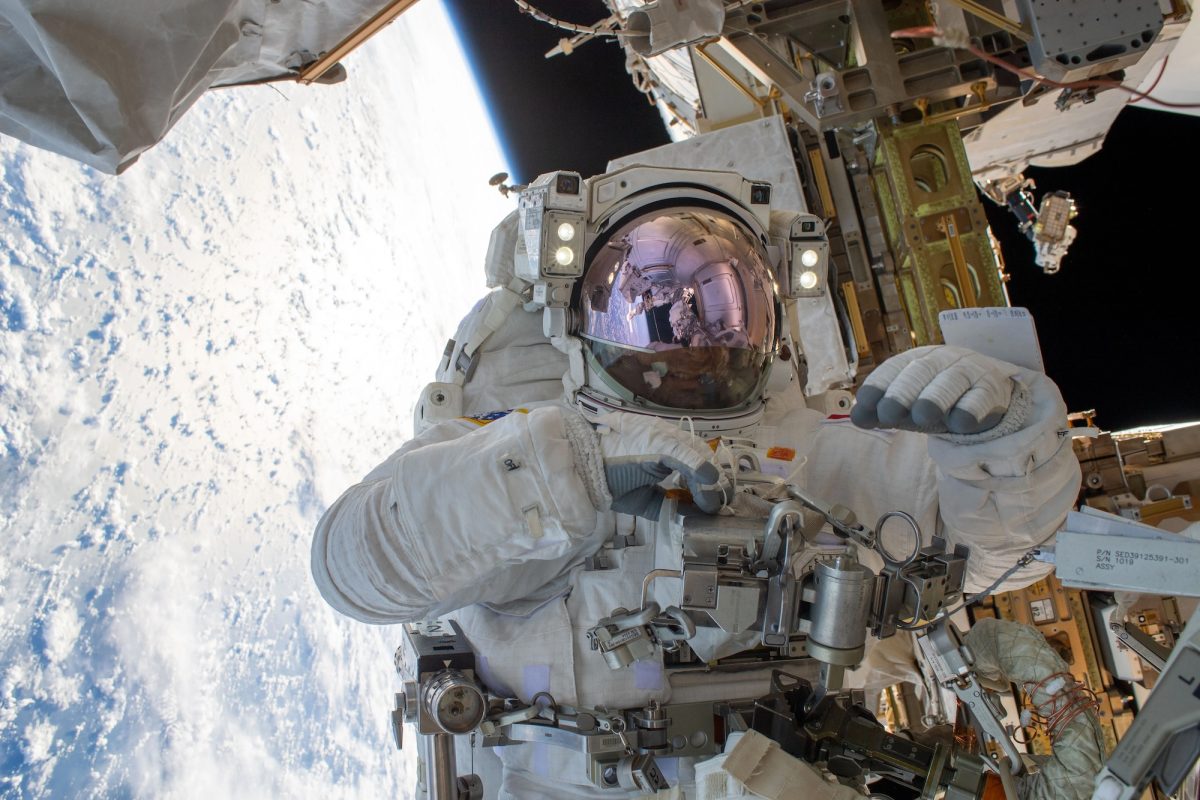
On October 29, Canadian Space Agency (CSA) astronaut Joshua Kutryk conducted a spacewalk. At the time, the International Space Station (ISS) was orbiting approximately 430 km above the southern Atlantic Ocean. White clouds and blue water were visible to the astronaut’s left.
Together with NASA astronaut Anil Menon, Kutryk installed the seventh IROSA deployable solar panel on the station. These panels are launched into orbit rolled up, and once in place, they unroll like a carpet. For Kutryk, this was his first spacewalk. A week later, on November 5, the pair went outside again and installed the eighth and final panel of this type. This marked the completion of the five-year upgrade of the ISS’s power system, and the station now receives up to 30% more electricity. The photo was published on November 3.
NGC 4449: A galaxy losing oxygen
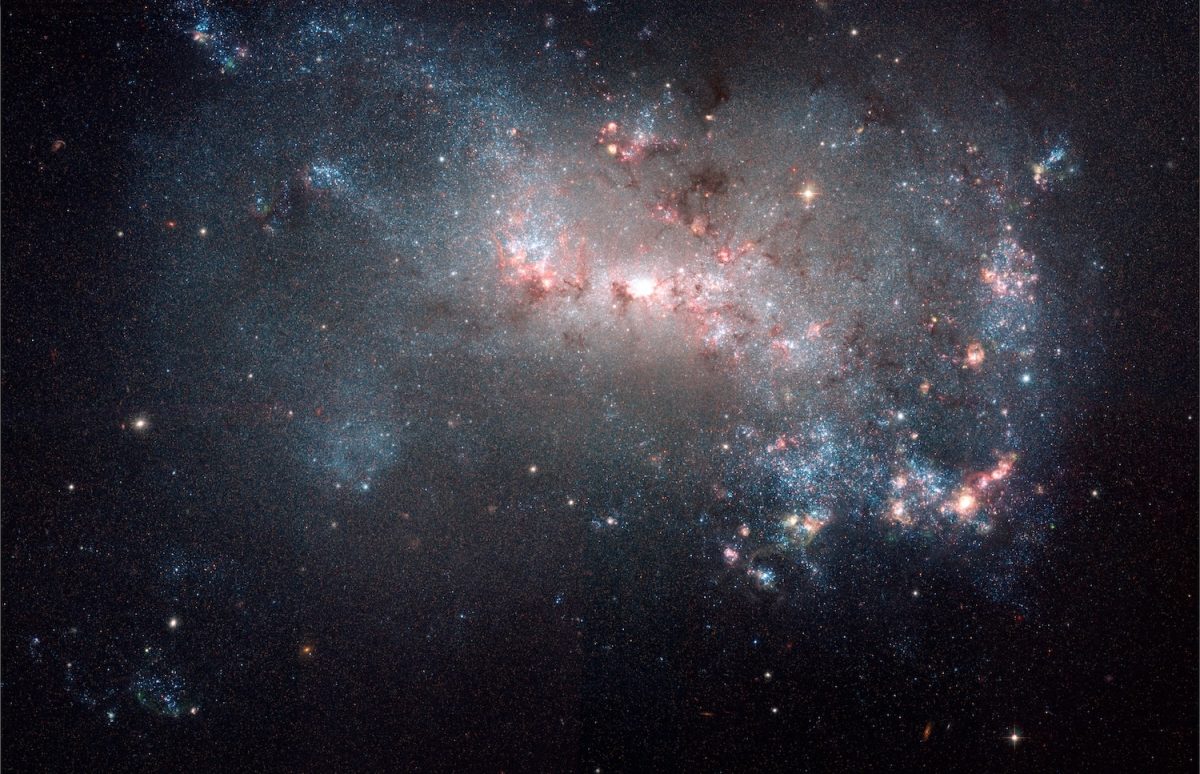
Hubble captured this irregular, patchwork galaxy. NGC 4449 is classified as a dwarf irregular galaxy. The blue regions in the image represent clusters of hot, young stars, while the pink areas correspond to clouds of gas illuminated by their radiation.
As part of the GLOW (Galaxies Losing Oxygen via Winds) project, researchers examined 37 nearby dwarf galaxies. These galaxies contain anywhere from a few thousand to hundreds of millions of stars. Stars produce oxygen and release it into the surrounding space when they explode. Although galaxies are expected to gradually accumulate this element, astronomers found that most of the anticipated oxygen was missing.
Dwarf galaxies retain only a small proportion of the oxygen produced by their stars. The project’s name alludes to the likely cause: galactic winds carry enriched gas outward, while the dwarf galaxy’s weak gravitational pull is insufficient to retain it. The image was released on November 2 and featured in the “Image of the Day” section on November 4.
The United States at Night, as Viewed from Orbit
This photograph was taken by Joshua Kutryk himself, this time from aboard the station. On October 18, a few hours before dawn, he captured the city lights extending from the U.S. Midwest to the Atlantic Coast. The ISS was orbiting at an altitude of approximately 417 km at the time.
The image shows Chicago, Detroit, and the New York metropolitan area. Major cities appear as bright points of light, while smaller settlements are scattered across the dark landscape like tiny sparks. The image was published on November 5.
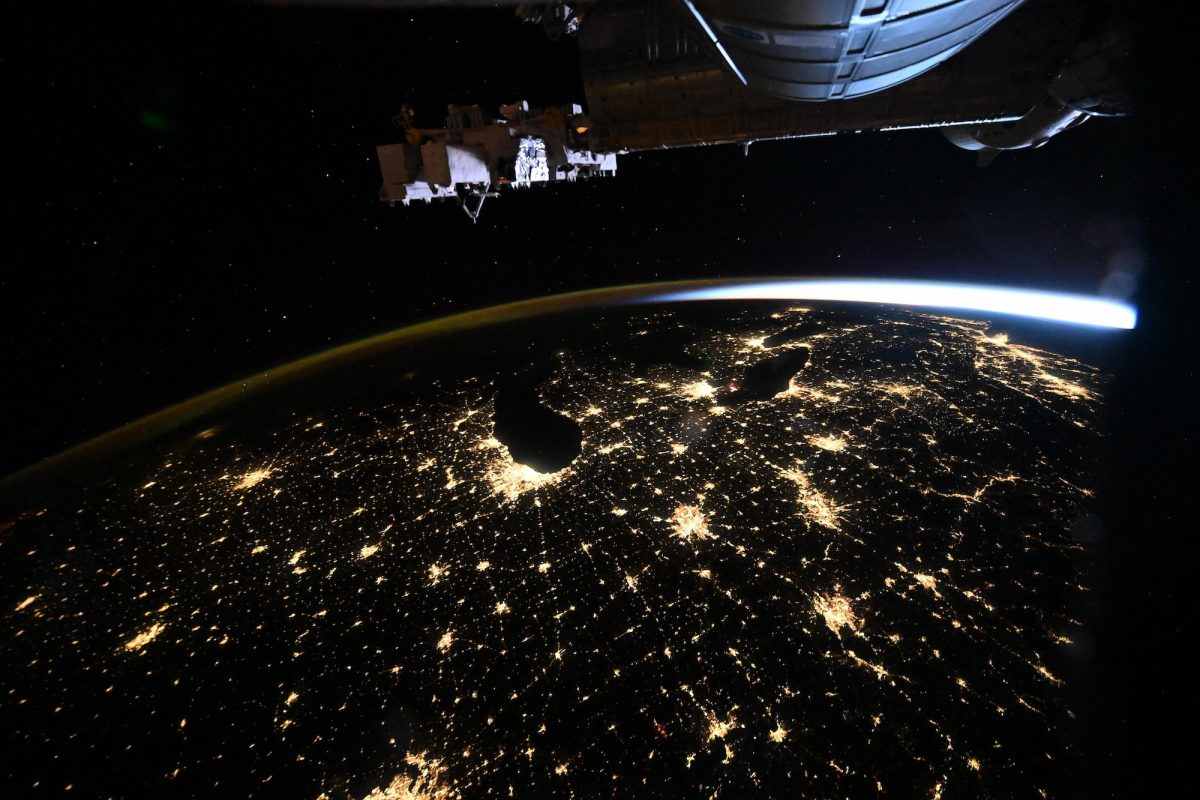
Photo: CSA/Joshua Kutryk
M30: A globular cluster in Capricornus
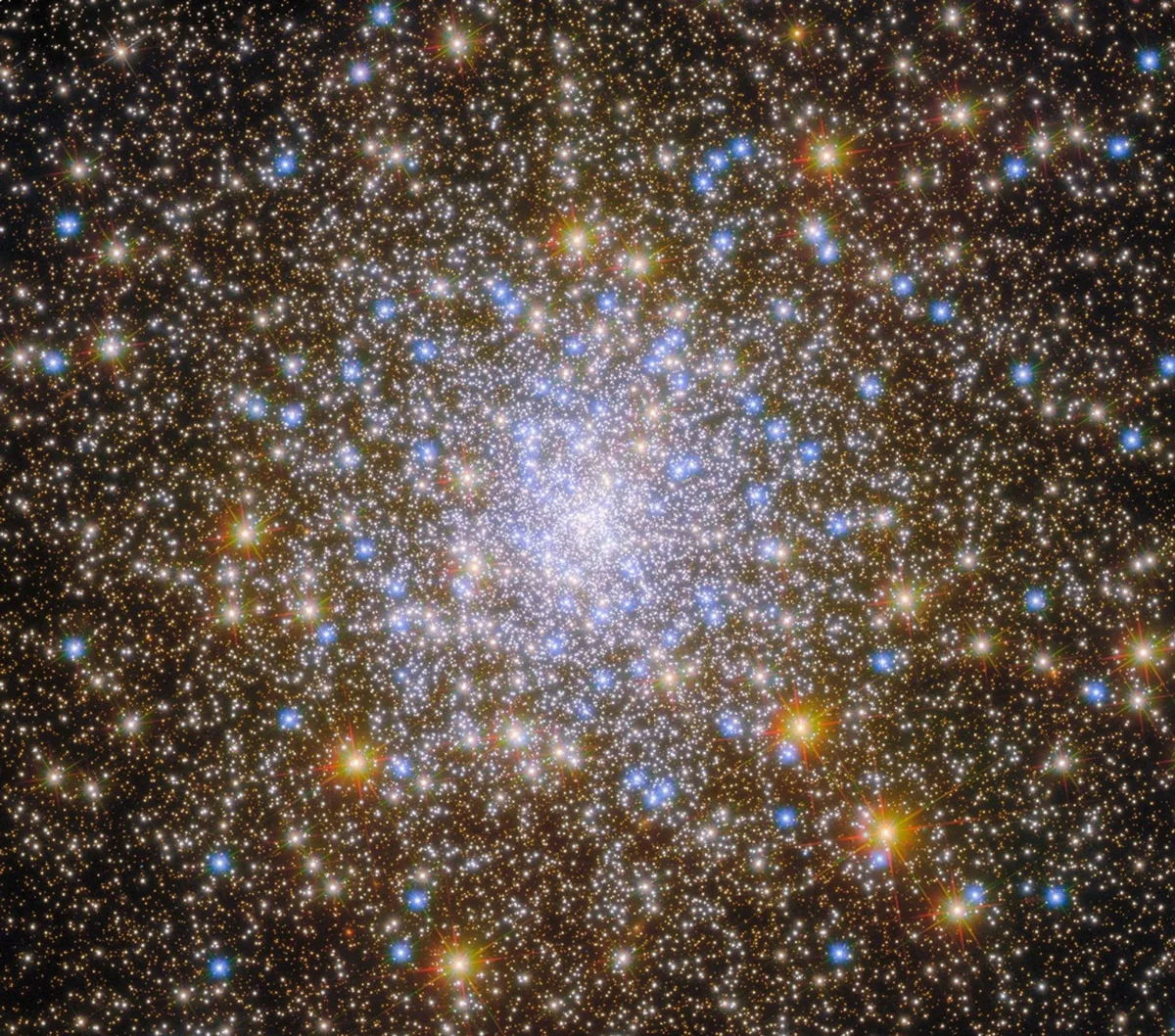
Hubble has observed thousands of stars in the globular cluster Messier 30, located approximately 27,500 light-years from Earth in the constellation Capricornus. Blue stars are concentrated in a bright core, while yellow stars fill the remainder of the frame. Several orange stars, which are closer to us, appear noticeably larger.
The cluster was named by the French astronomer Charles Messier, who searched for comets and compiled a catalog of diffuse objects that could easily be mistaken for comets when viewed through the telescopes of the time. M30 was added to the catalog in 1764.
Globular clusters rank among the oldest objects in the Milky Way. Their stars preserve evidence of the galaxy’s formation, which is why NASA describes this image as a lesson in galactic history. The image was released on November 5.
The De Gerlache-Kocher Massif on the edge of the Moon
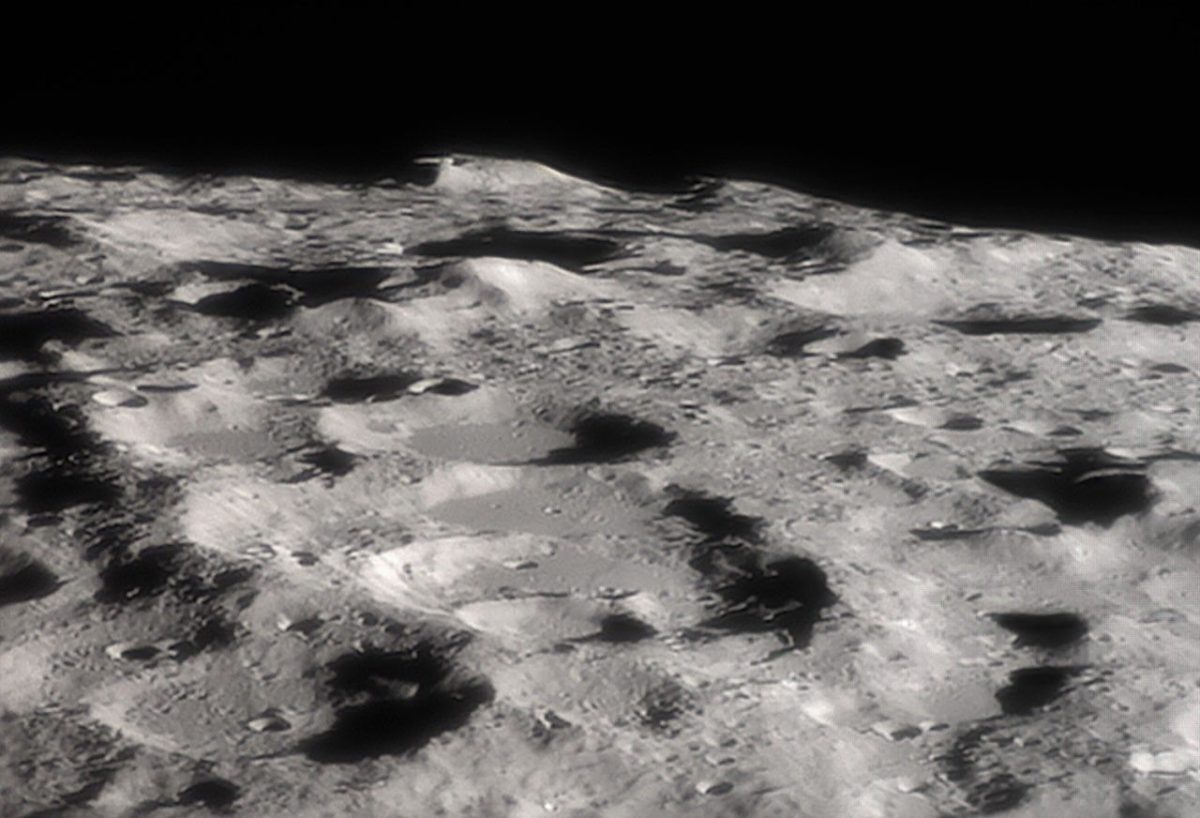
The De Gerlache-Kocher Massif appears on the horizon in this image. The mountains rise approximately 4 km above the surrounding terrain and are located very close to the Moon’s south pole. Alejandro Sanz captured this image through a telescope on October 31.
The South Pole has long been considered the best location for the Moon’s first settlement. Water ice is likely preserved at the bottoms of craters where the Sun never shines. The nearby peaks are illuminated almost constantly, making them ideal locations for solar power plants. The de Gerlache-Kocher Massif itself has been considered a potential landing site for the Artemis crewed missions.
From Earth, the Moon’s polar regions are visible at a very oblique angle. On this occasion, libration — a slight wobble of the Moon — helped turn the south pole slightly toward observers. The image was featured in the APOD selection on November 7.
Bolide over the Dolomites
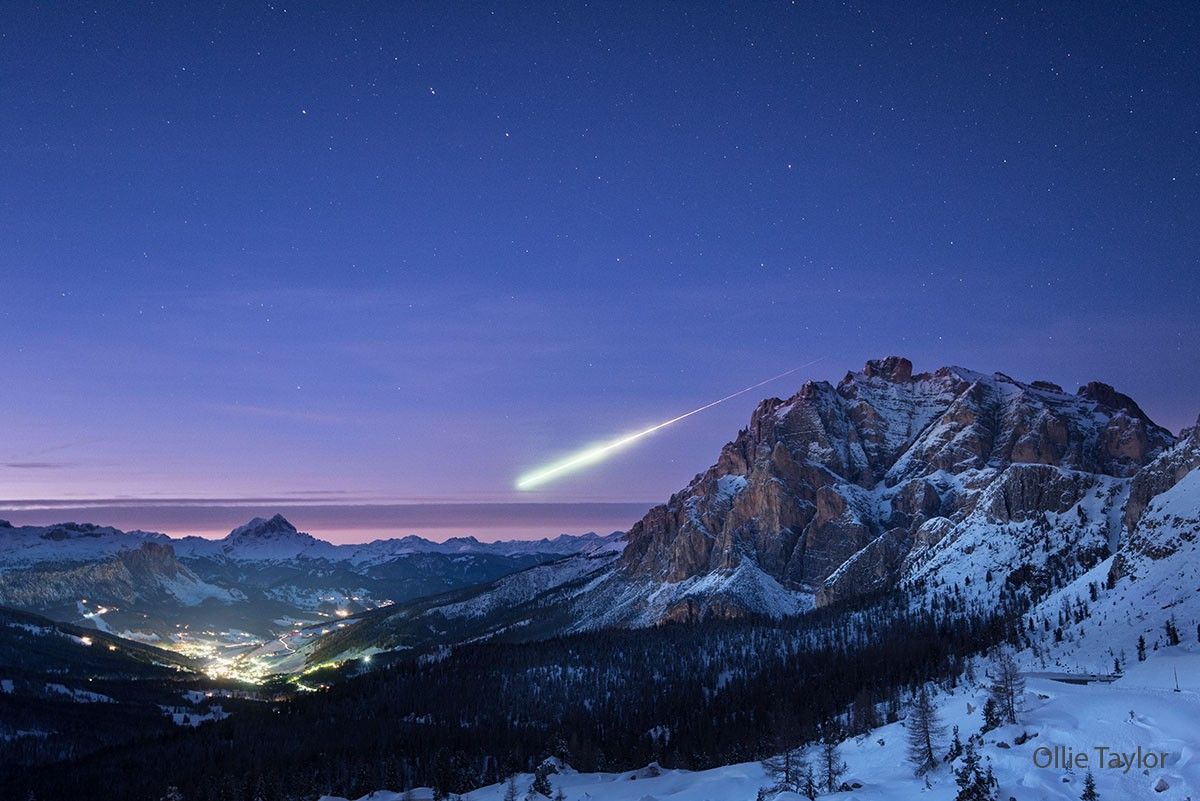
Ollie Taylor captured this photograph on November 14, 2017, at a mountain pass in the Italian Dolomites. Temperatures were freezing, and the sky above the snow-capped peaks continued to glow pink after sunset. Below, the lights of La Villa, a village in the Alta Badia Valley, illuminated the landscape, while the constellation Ursa Major, including its recognizable Big Dipper, appeared above the northern horizon.
While the camera was capturing a long-exposure image, a bright fireball streaked across the sky. It traveled from east to west just below the Big Dipper. The fireball was observed throughout Europe and became one of the most frequently reported events to the American Meteor Society and the International Meteor Organization. Its trajectory over Germany indicates that it originated from the radiant of the Northern Taurids, a November meteor shower caused by dust from Comet Encke.
The Northern Taurids are active right now, with their peak occurring around November 12. This meteor shower doesn’t produce many meteors, but it is famous for its bright fireballs. The image was featured in the APOD selection on November 8.