

The same Sun shines over the Vernadsky Research Base as over Kyiv; however, at night, an entirely different starry sky appears. Crux, Canopus, and two neighboring galaxies are never visible over Ukraine, while the Big Dipper and Polaris never rise above Galindez Island, where the Ukrainian station is located. Clear nights are rare in this part of Antarctica, and polar researchers greet each one with their cameras ready. Here is a look at the celestial wonders visible over the icy continent and the best times to observe them.
The other hemisphere
The station is situated at 65° south latitude, whereas Kyiv lies at 50° north latitude. The difference in latitude exceeds 115°, representing nearly one-third of a meridian. The sky surrounding Earth may be conceptualized as a vast sphere, of which each observer can see only one half at any given moment. Latitude determines precisely which half is visible.
For a polar explorer on Galindez Island, the celestial sphere’s axis of rotation points toward the South Pole, which rises approximately 65° above the horizon. The North Pole lies at the same angular distance below the horizon, and a substantial portion of the northern night sky consequently remains permanently hidden. All stars with a declination greater than +25° never rise above the horizon here. The Big Dipper, Cassiopeia, Vega, Deneb, and Capella — so familiar in the Ukrainian sky — never appear over Galindez, even once a year.
The view from both hemispheres appears unusual here. Orion, regarded as Ukraine’s principal winter constellation, hangs upside down over Antarctica: the red Betelgeuse is at the bottom, while the blue Rigel is at the top. The Moon also appears upside down, with the crescent of the new Moon shining from the left. Sirius, the brightest star in the night sky, is visible from almost anywhere on the planet. Both polar explorers and residents of Kyiv can observe it in winter, although “winter” occurs in different months for them.
How to determine South without Polaris
In the Northern Hemisphere, Polaris indicates the direction of the North Pole and remains nearly stationary in the sky. The South Pole has no comparable celestial landmark. The star nearest to it, Sigma Octantis, has a magnitude of 5.4 and is visible only under exceptionally dark skies and with excellent vision.
For centuries, sailors have used Crux to locate south. If one mentally extends the Cross’s longer arm — from the reddish Gacrux to the white Acrux — approximately four and a half times its length, the line intersects a region of the sky near the pole. A second clue is provided by the two bright “guides” nearby, Alpha and Beta Centauri. A perpendicular line drawn through the midpoint of the segment joining them intersects the Cross’s line at the expected point.
Crux is the smallest of the 88 constellations, yet it is among the best known in the Southern Hemisphere. It appears on the flags of Australia, New Zealand, and Brazil, and last year it featured on the chevron of the 28th Ukrainian Antarctic Expedition. Above the Vernadsky Research Base, Crux never sets, circling the pole throughout the night.
Constellations not visible from Ukraine
According to estimates by polar explorers, 45 constellations visible in the Southern Hemisphere cannot be seen from the Northern Hemisphere. Many were named relatively late. In the late 16th century, Dutch sailors added Tucana, Pavo, and Apus to their maps. In the 1750s, the French astronomer Nicolas-Louis de Lacaille, working near the Cape of Good Hope, added fourteen more. These include Octans, Telescopium, and Mensa, which was named after a mountain near Cape Town.
Canopus, the second-brightest star in the night sky, has a declination of −52° and never rises above the horizon anywhere in Ukraine. Alpha Centauri, the star system closest to the Sun, is located approximately 4.3 light-years away and is likewise not visible from Ukraine. Above the Vernadsky Research Base, neither star sets.
Adjacent to the Cross lies the dark region known as the Coalsack, a nebula composed of cold dust that obscures the stars behind it. Slightly farther away, the faint “star” Omega Centauri is visible. In fact, it is the Milky Way’s largest globular cluster, containing approximately ten million stars, according to scientists.
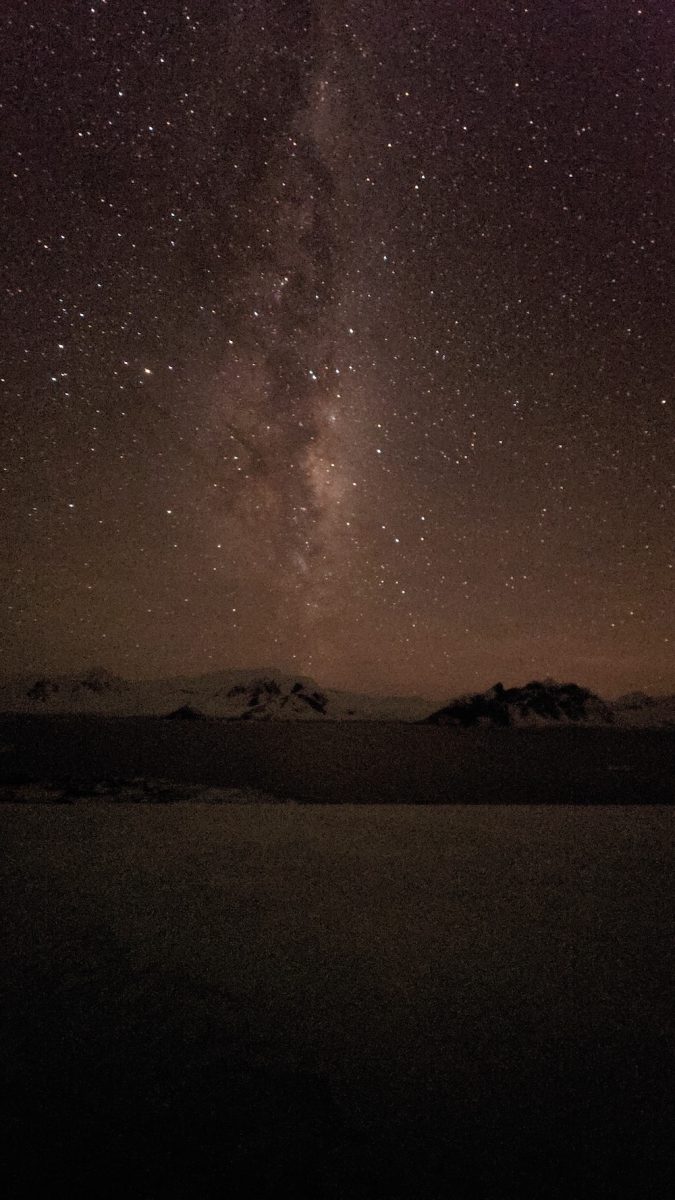
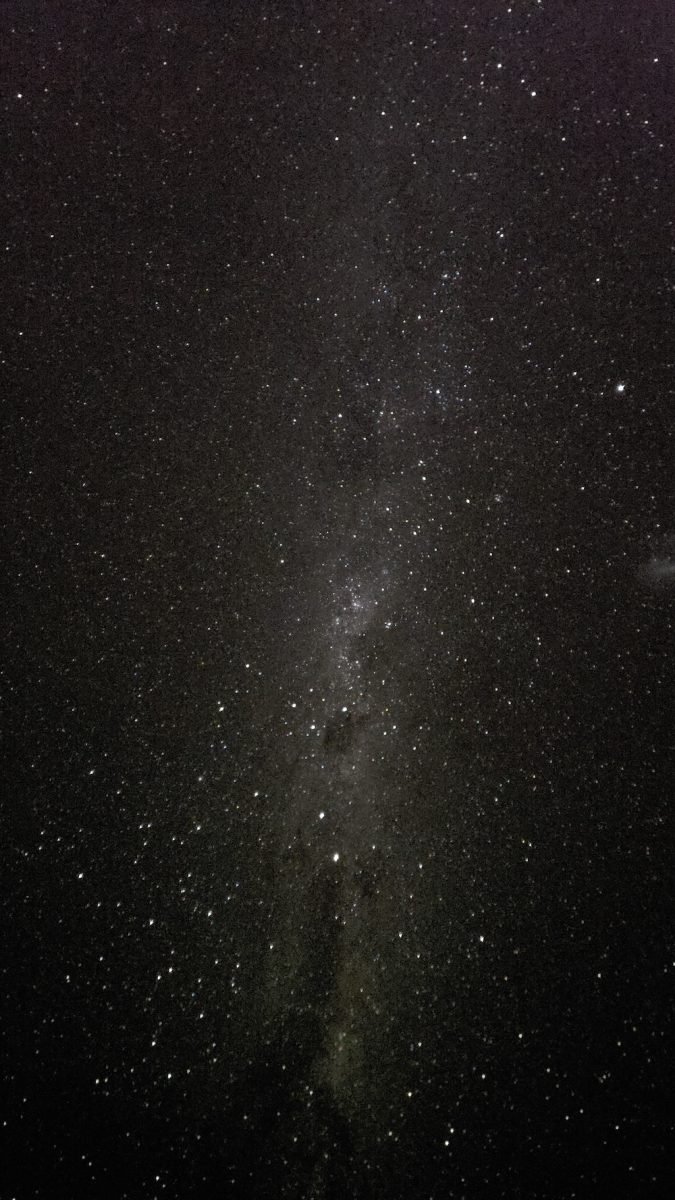
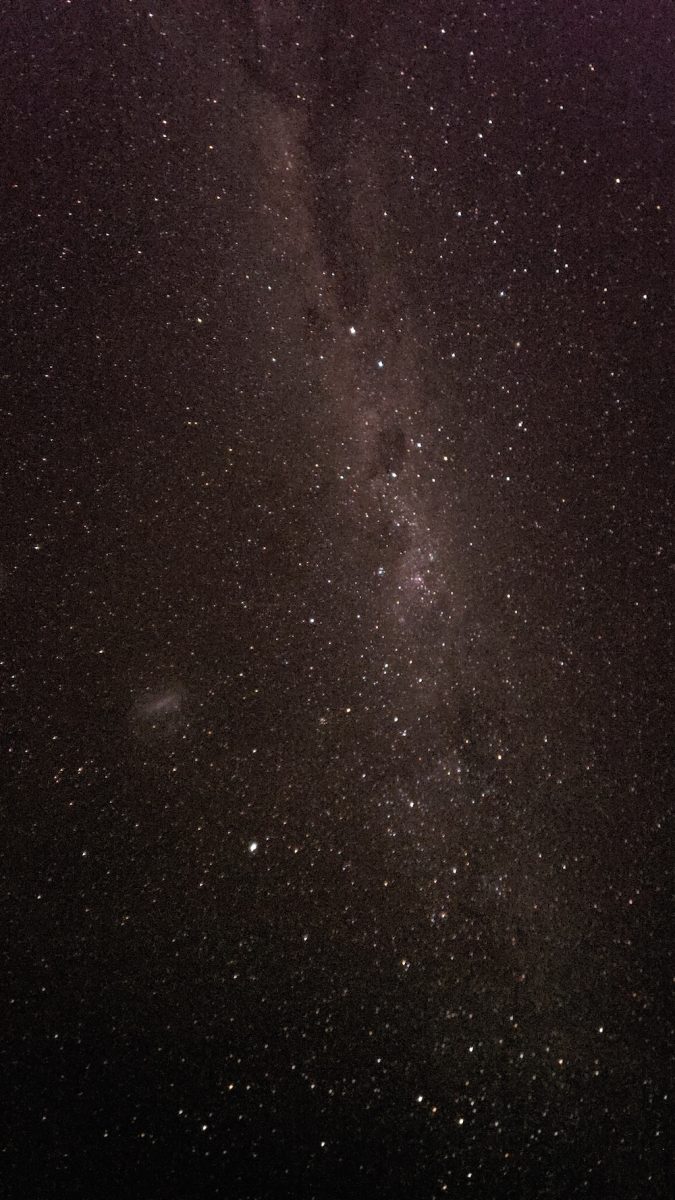
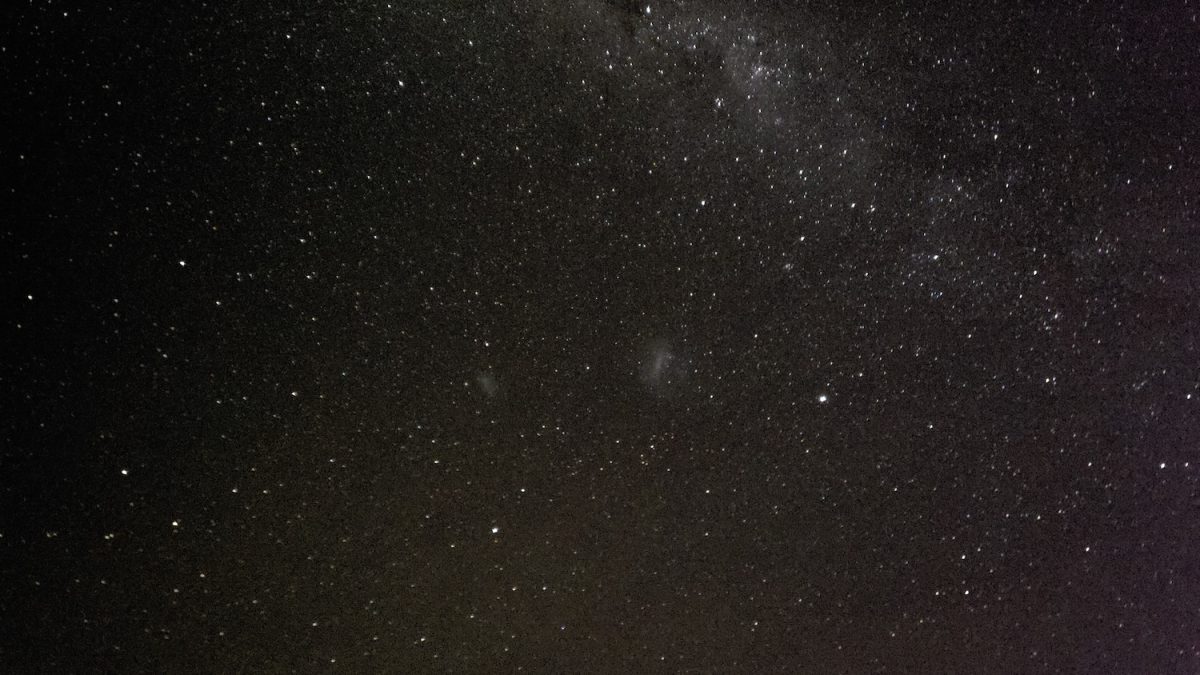
Two galaxies are visible to the unaided eye
The most remarkable sight in the Antarctic sky appears rather modest: two pale spots resembling wisps of cloud that have drifted away from the Milky Way. The Large Magellanic Cloud lies approximately 160,000 light-years from Earth, while the Small Magellanic Cloud is about 200,000 light-years away. Both are dwarf satellite galaxies of the Milky Way.
The Persian astronomer al-Sufi described the Great Cloud as early as 964; however, Europeans first learned of these objects through the notes of Antonio Pigafetta, a member of Magellan’s round-the-world expedition of 1519–1522. The declinations of the Clouds range from −69° to −73°, meaning that they are never visible above the horizon in Ukraine. At the latitude of “Vernadsky,” both galaxies are circumpolar and, on clear nights, remain visible above the horizon throughout the night.
Through binoculars, the Large Cloud resolves into clusters and nebulae. The most prominent of these — the Tarantula Nebula — is the most active star-forming region among all the galaxies nearest to us. It was there that the supernova SN 1987A exploded in 1987, the first supernova visible to the naked eye since Kepler’s time. Near the Small Cloud, the globular cluster 47 Tucanae shines, appearing to the naked eye as an ordinary star.
The light currently being captured by polar explorers’ cameras departed from the Large Magellanic Cloud at a time when Homo sapiens still inhabited only Africa.
The Milky Way overhead
On August nights, Ukrainians can observe the Milky Way as a luminous band extending toward the southern horizon. Its brightest region — the Galactic Center, located in the constellation Sagittarius — rises only 10° above the horizon when viewed from Kyiv and is obscured by haze and light pollution.
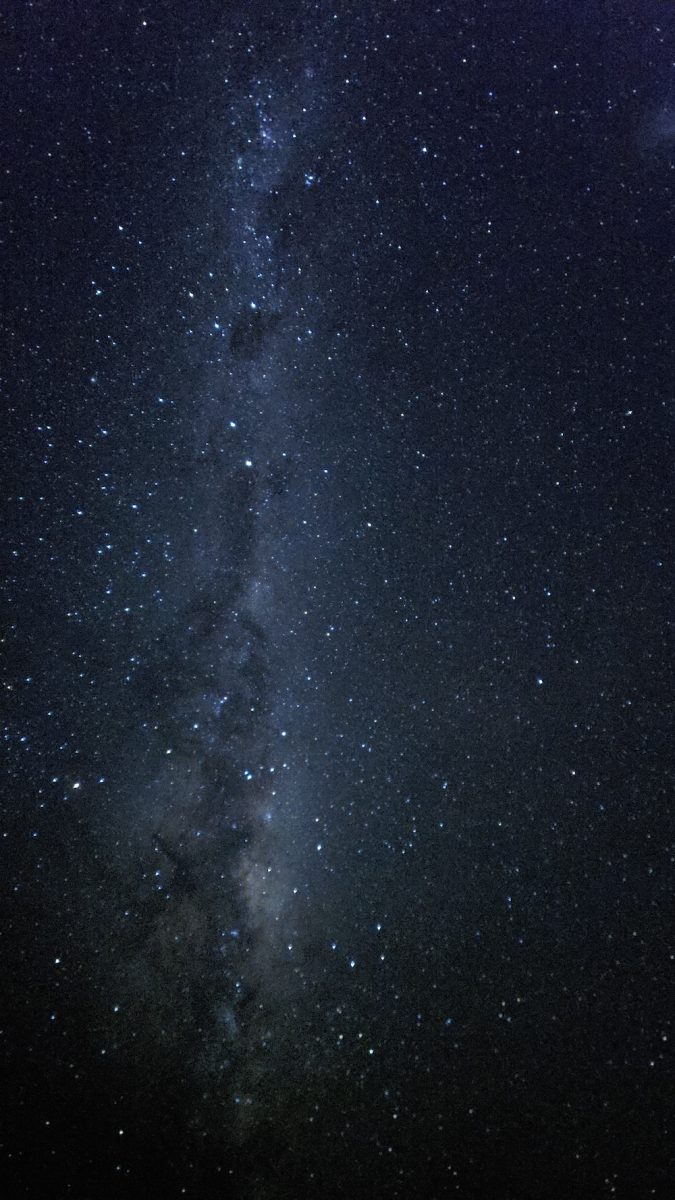
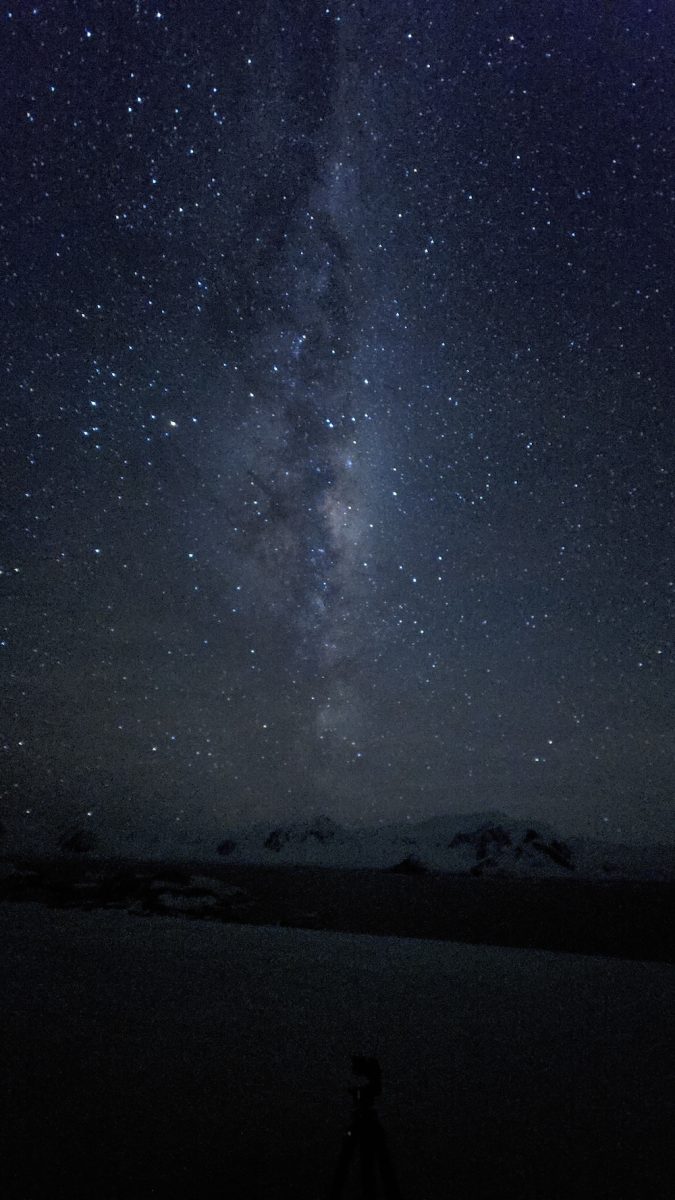
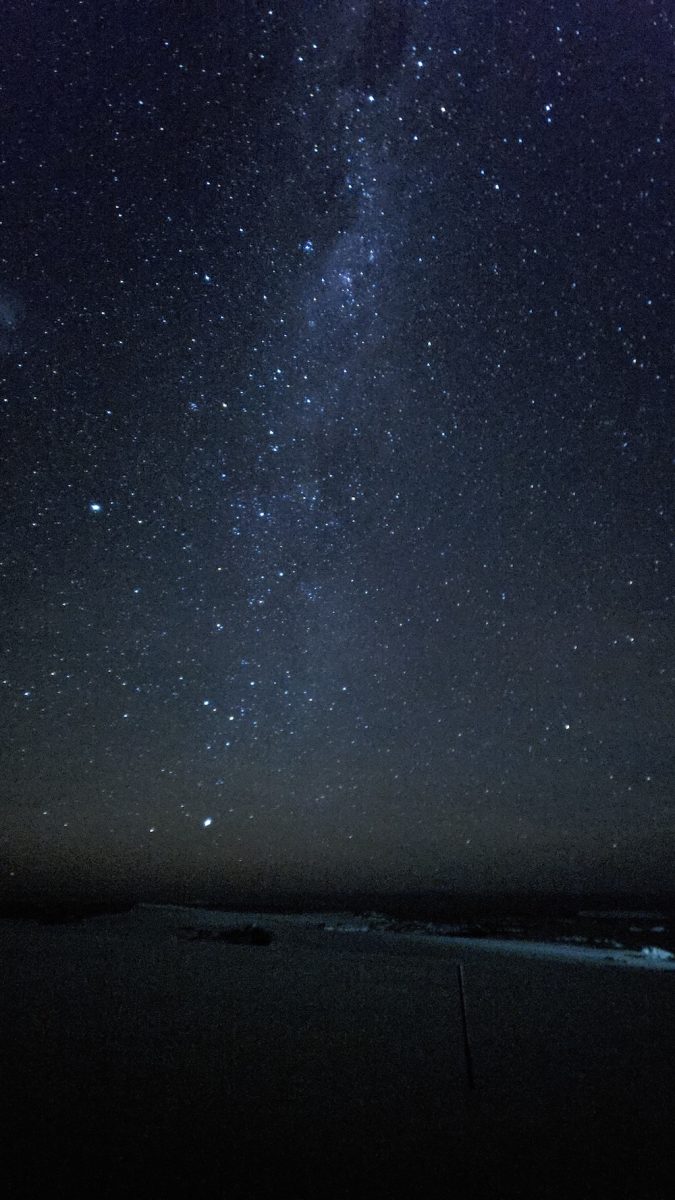
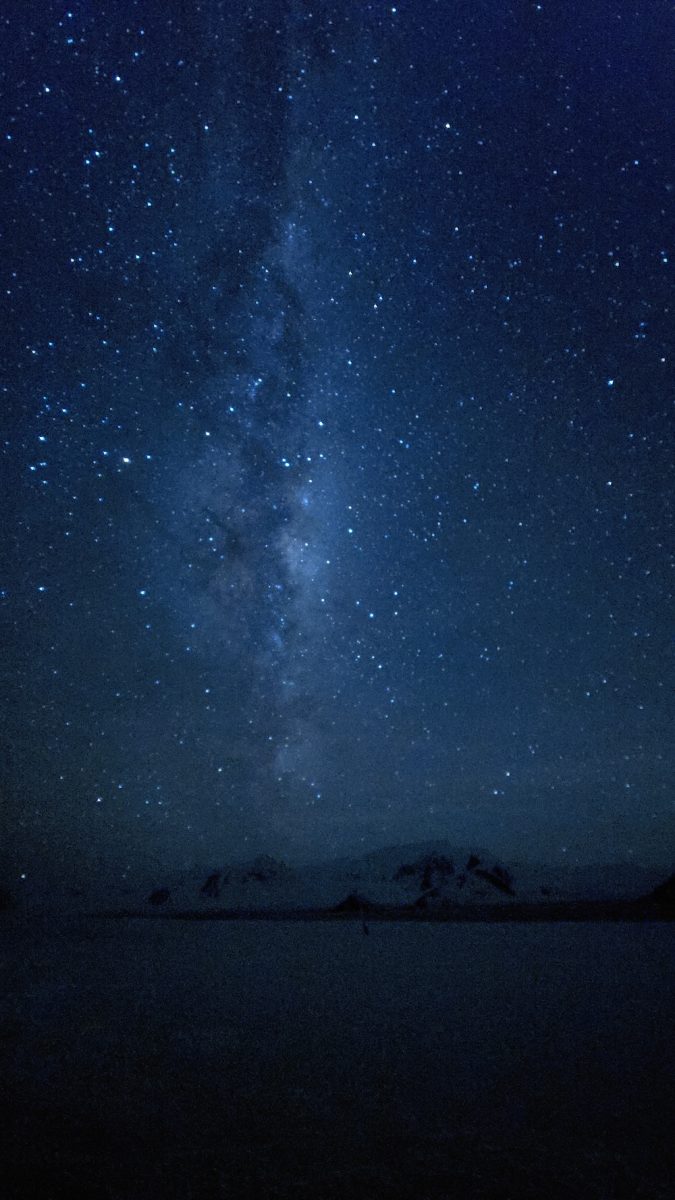
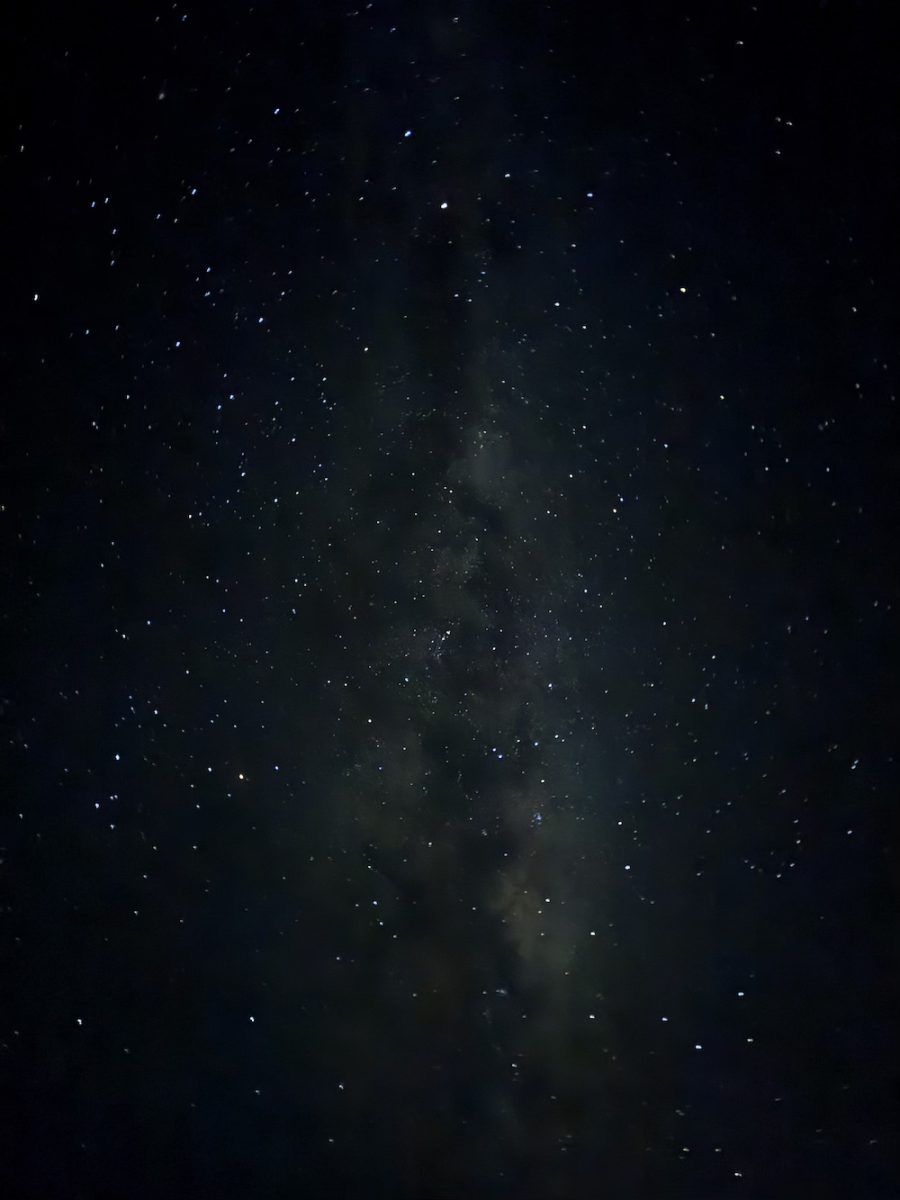
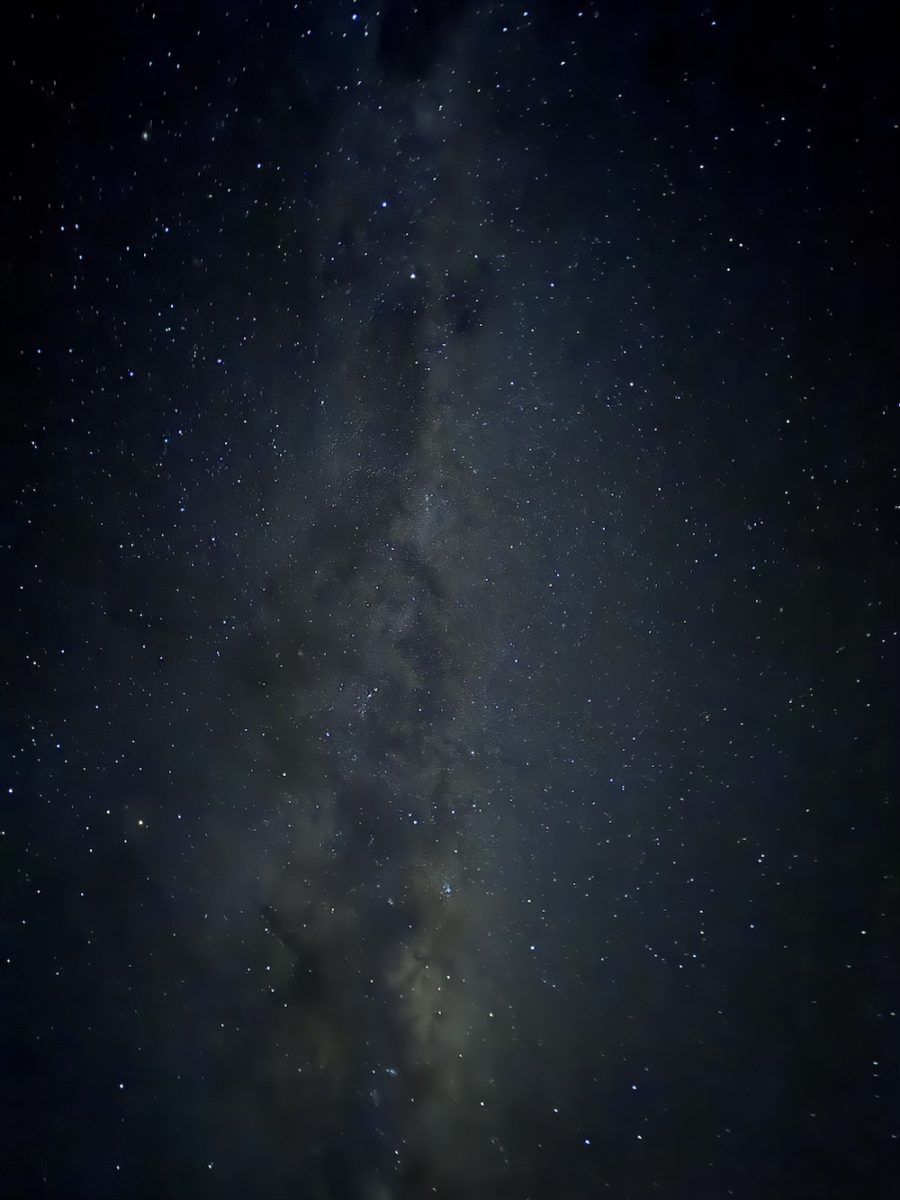
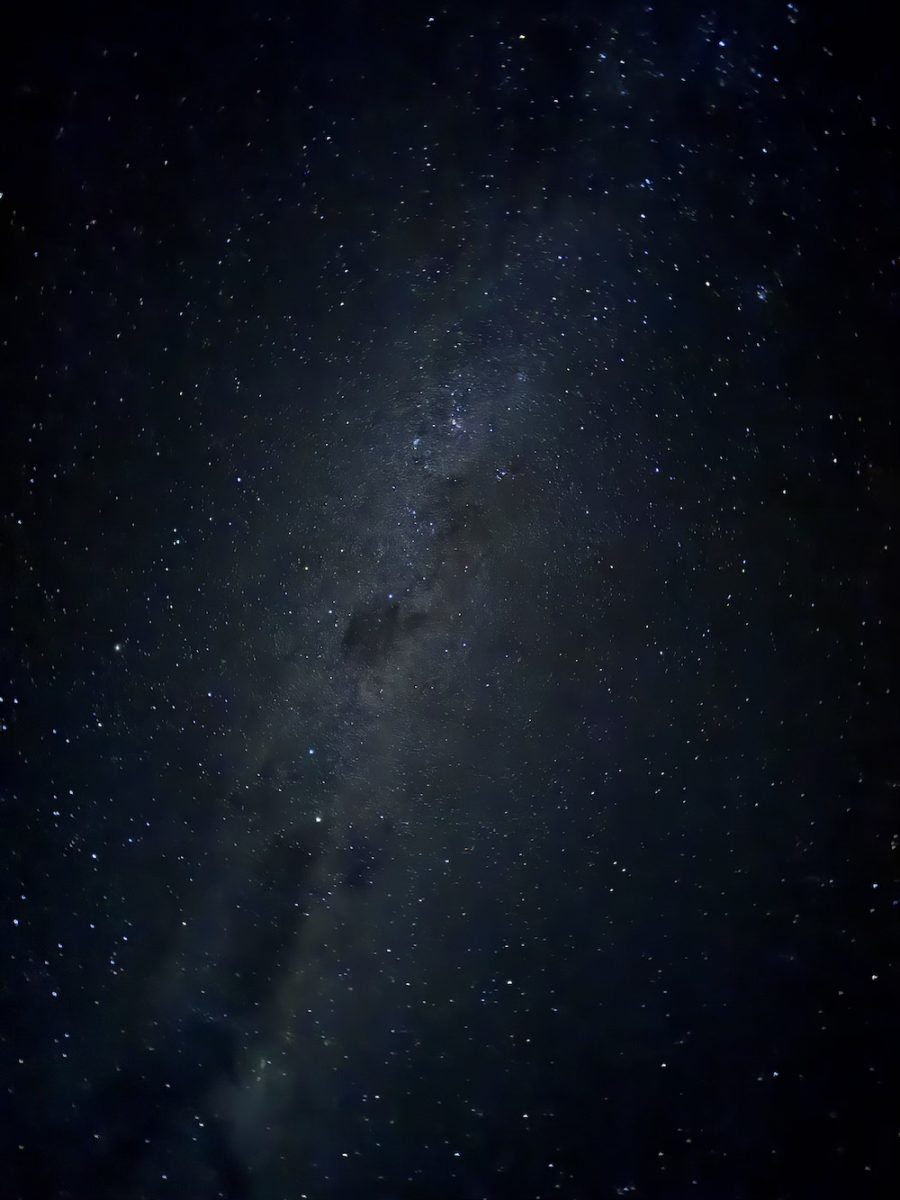
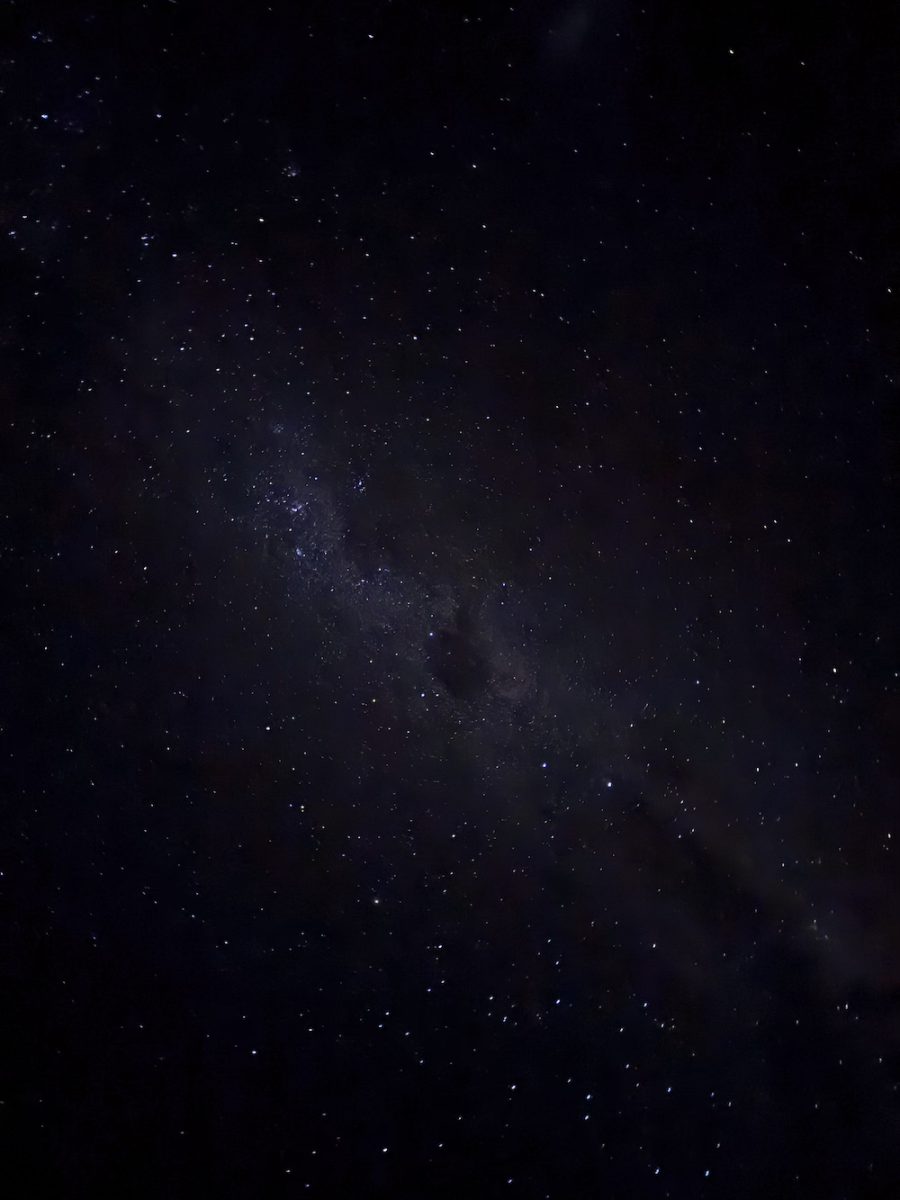
Above Vernadsky, the center of the Galaxy reaches an altitude of more than 50°. A portion of the Milky Way in the constellations of Carina and Crux passes nearly directly overhead. The southern region of our Galaxy is notably richer in bright nebulae and dust lanes. For example, the Carina Nebula covers an area of the sky several times larger than that of the famous Orion Nebula and is readily visible to the naked eye.
The dark dust lanes set against the Milky Way are so distinct that Australian Aboriginal peoples traditionally identified entire figures within them — for example, the Emu, a giant bird whose “head” is located near the Coalsack Nebula.
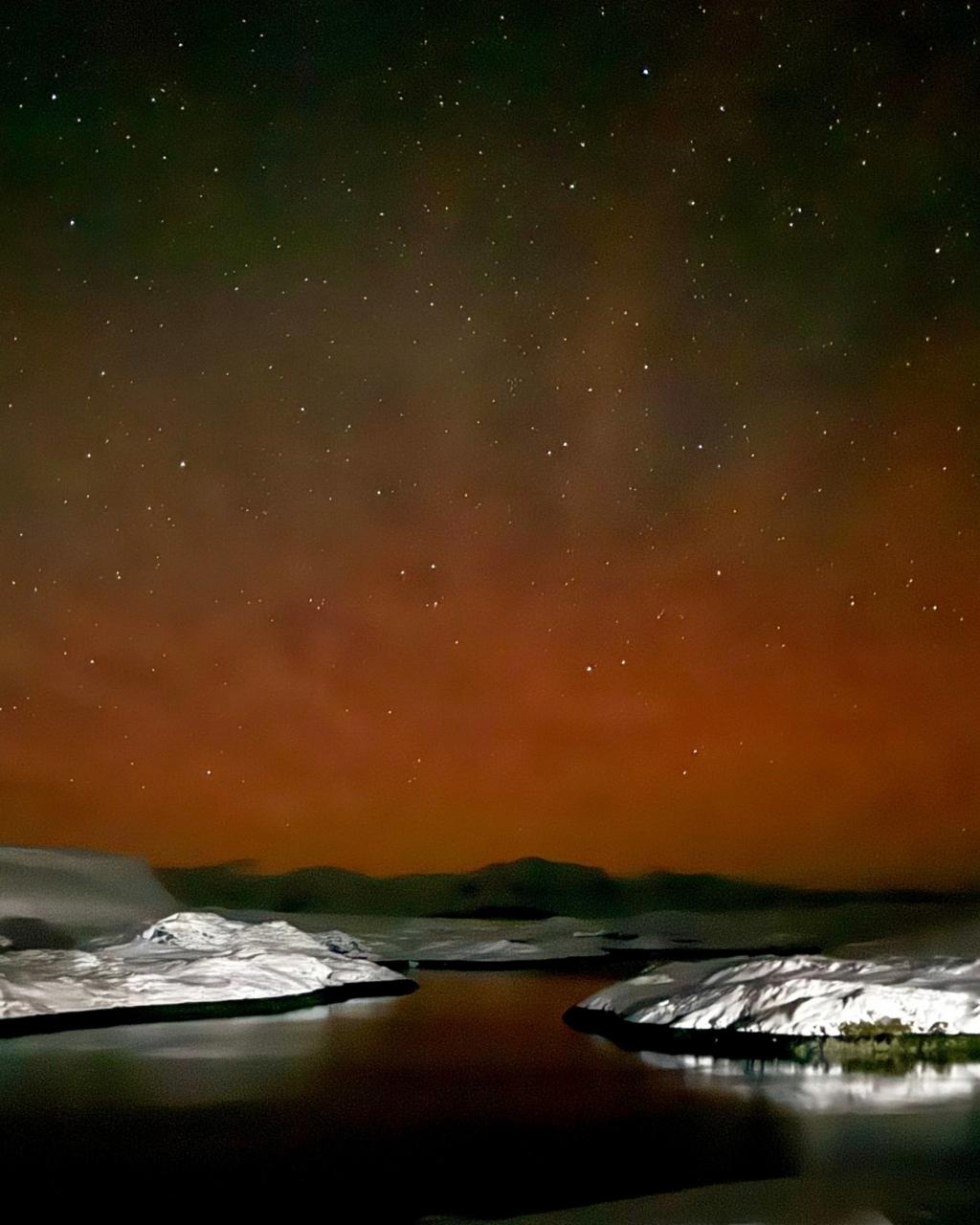
A red glow over Galindez
The aurora is rarely observed over the Vernadsky Research Base. The station is situated far from the South Magnetic Pole, and charged particles from the solar wind reach the area primarily during intense geomagnetic storms.
On one occasion, polar explorers were fortunate to capture both the reddish glow and the two Magellanic Clouds in a single image. The color of the glow depends on the type of gas emitting light and its altitude. Atomic oxygen at altitudes of approximately 100–200 km produces a green glow. At greater altitudes, where the atmosphere is even thinner, the same oxygen emits a red glow. The upper extent of this glow reaches the altitude at which the International Space Station orbits.
The photograph captures phenomena on vastly different scales: a glow hundreds of kilometers above Earth and galaxies whose light has been traveling toward Earth for hundreds of thousands of years.
When to look up
“Vernadsky” is located just north of the Antarctic Circle; consequently, it does not experience a true polar night. During winter, from May through August, the Sun rises above the horizon for only a few hours, casting long, pink hues across the islands at sunrise, while darkness prevails for the remainder of the day. During this period, the Antarctic sky reveals its full splendor.
During the summer months of December and January, the Sun remains close to the horizon and does not set sufficiently to bring complete darkness. Consequently, stars are scarcely visible in the polar sky, and the station experiences white nights instead of starry ones.
The weather remains the principal obstacle. This region of Antarctica is almost perpetually overcast, and a clear night is a notable event discussed throughout the station. There is virtually no light pollution here; when the clouds part, the sky appears much as it did to sailors several centuries ago. In the extreme cold, camera batteries discharge rapidly and lenses frost over, making each photograph of this kind costly for the polar explorers.
The Andromeda Galaxy, the most distant object visible to the naked eye from Kyiv, never rises above the horizon at Galindez. In the polar sky, it is replaced by the two Magellanic Clouds, which are fifteen times closer to us.
This material was jointly prepared by the National Antarctic Scientific Center (NASC) and Universe Space Tech. Most of the photographs were provided by Ukrainian polar researchers. For comprehensive information about Antarctica, the lives of Ukrainian polar researchers, and their scientific work, please visit the NASC website.
