

On August 5, a spent SpaceX rocket that had previously launched two lunar landers into space crashed into the Moon. The impact occurred exactly as scientists had predicted after the vehicle had spent the previous year drifting uncontrollably through space after deviating from its original course.
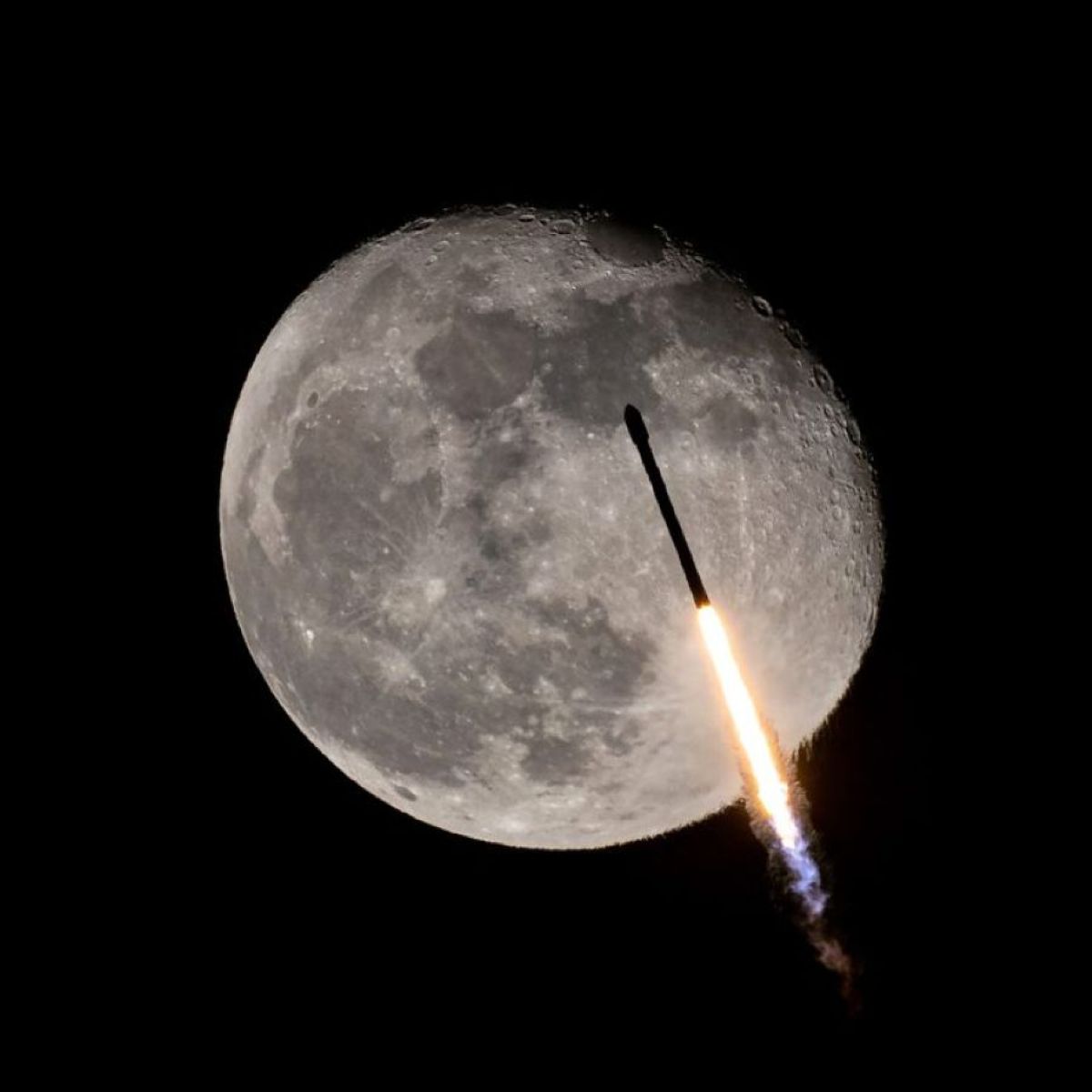
Although no one directly observed the moment of impact, which occurred at a speed of 8,700 km/h, a telescope in Chile detected a plume of debris and dust. Space-object tracking experts had stated that the four-ton rocket segment’s collision with the lunar surface was inevitable.
Jonathan McDowell, a retired astrophysicist who monitored the object’s trajectory on Tuesday evening, confirmed that it was moving directly toward the Moon. According to him, the physics of the event leaves no room for doubt: “I have no doubt whatsoever that the rocket is now nothing more than small fragments scattered across the Moon near Einstein Crater.”
Cosmic Dust Instead of Photographs
Astronomers knew in advance that it would be almost impossible to observe either the impact flash or the ejected lunar material from Earth. Dutch scientist Marco Langbroek attempted to record the event using his telescope, but the effort was unsuccessful. Nevertheless, like McDowell, he had no doubt that the rocket had met its end.
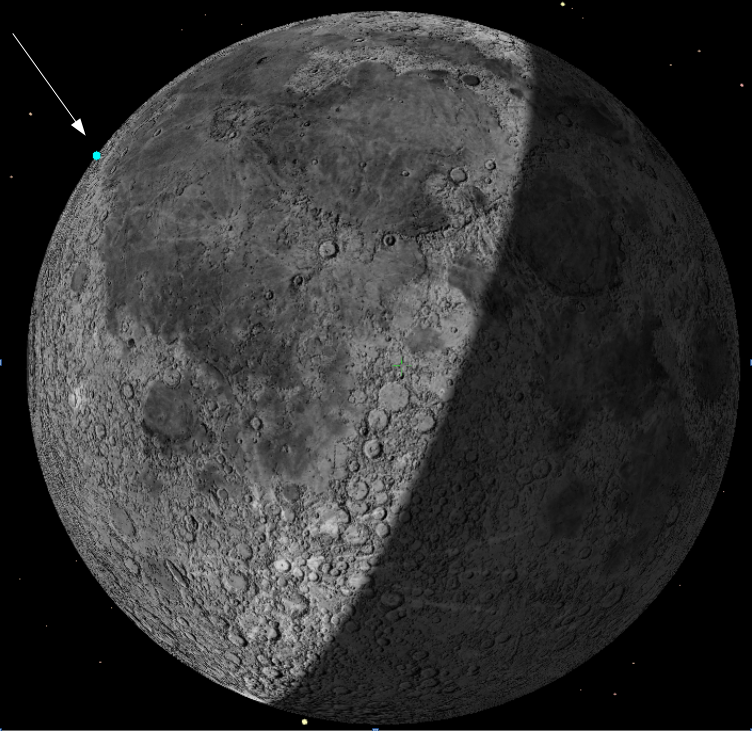
However, Karl Schmidt’s team at Boston University had better luck. According to Schmidt, he is 100 percent certain that they managed to detect signs of the crash. Using the European Southern Observatory’s Very Large Telescope (VLT), the researchers observed a stream of sodium and lithium extending tens of kilometers into space and persisting for at least five to ten minutes after the impact. Final visual confirmation is expected next week, when the Lunar Reconnaissance Orbiter passes over the crash site and transmits photographs of the newly formed crater.
The Threat of Lunar Debris Is Growing
This incident is another example of pollution in cislunar space, an issue that is becoming increasingly urgent amid the space race between the United States and China. In 2022, a Chinese rocket also accidentally crashed into the Moon, and it is entirely possible that similar debris struck the lunar surface repeatedly in previous decades without attracting the attention of scientists.
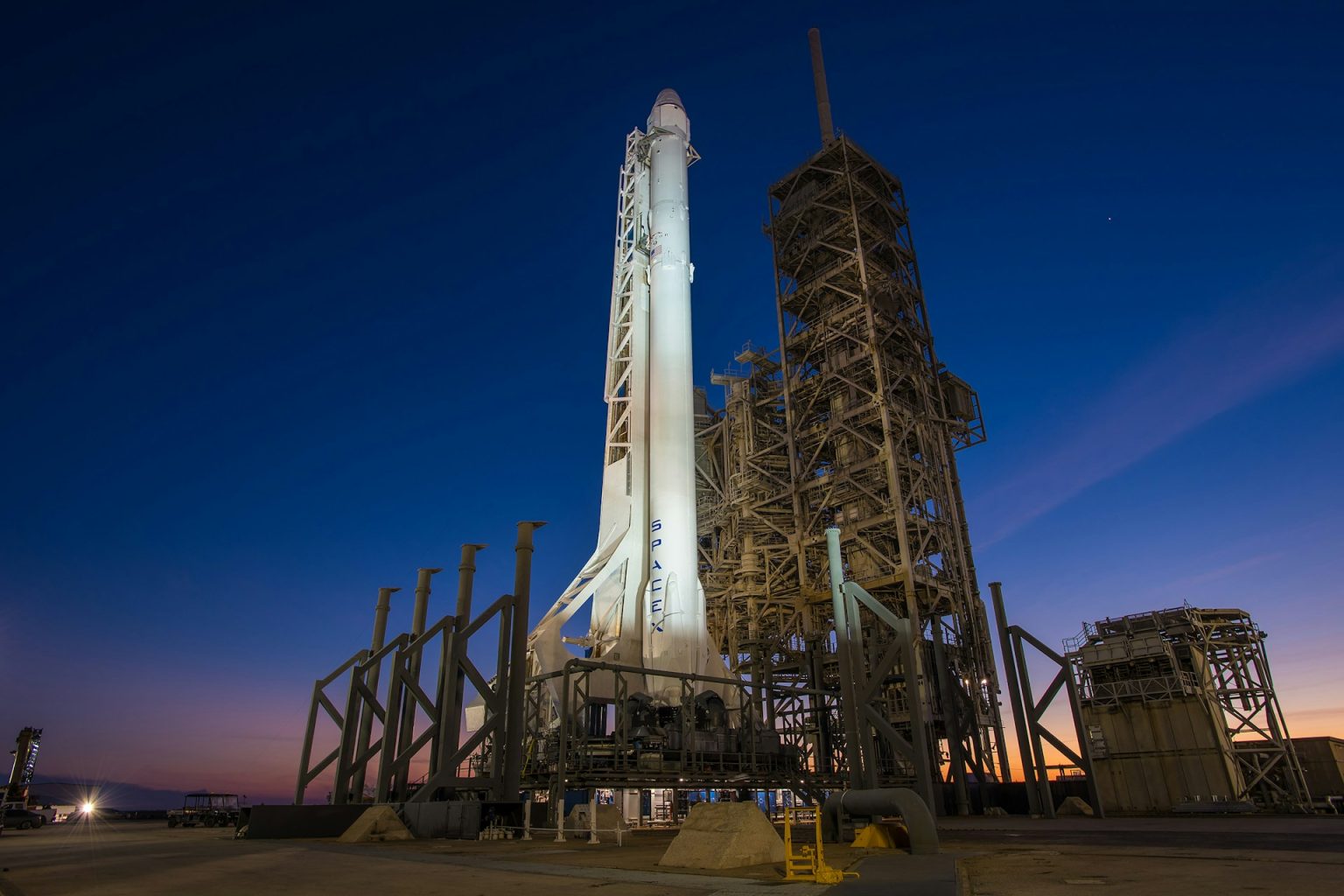
The same 12-meter Falcon upper stage launched two private lunar landers from Cape Canaveral on January 15, 2025: Blue Ghost, developed by Firefly Aerospace, and Resilience, developed by ispace. Resilience crashed, while Blue Ghost completed a remarkable landing, becoming the first private spacecraft to achieve this feat.
SpaceX representative Julianna Scheiman emphasized that the company is actively cooperating with NASA to prevent similar incidents. She stressed that the crash was not intentional: the spent rocket entered a collision trajectory because of a combination of increased solar activity and gravitational effects.
The Future of the Moon
Today, the Moon is once again becoming a major destination for space exploration. In the coming years, NASA plans to send a series of robotic spacecraft there to lay the groundwork for a sustainable base. At the same time, Elon Musk’s SpaceX and Jeff Bezos’s Blue Origin are expected to provide lunar landers for astronauts participating in the Artemis program.
While SpaceX’s Starship continues to make steady progress in test flights in Texas, Blue Origin’s Blue Moon lander is still awaiting its launch. At least one of these spacecraft will participate in the Artemis III mission next year. The first human landing on the lunar surface since the Apollo program is scheduled for 2028.
Against the backdrop of this growing activity, experts are sounding the alarm. “Traffic around the Moon is going to become much heavier,” McDowell warns. “In the future, impacts of this kind on the lunar surface, which raise enormous clouds of dust spreading hundreds of kilometers around the site, will be completely unacceptable.”
We previously reported on how collisions with debris pose a threat to future lunar missions.
According to AP News
