

Exactly ten years ago, Europe’s Trace Gas Orbiter (TGO), part of the ExoMars program, entered orbit around Mars. It was built to search the planet’s atmosphere for methane, which could indicate life or geological activity. The gas has never been found. Instead, hydrogen chloride was detected on Mars for the first time, and the spacecraft has relayed more data from the surface to Earth than all other Mars orbiters combined.
A Decade in Numbers
To mark the anniversary, ESA published an infographic summarizing the mission’s achievements. Over ten years, the spacecraft has completed more than 40,000 orbits around Mars and traveled approximately one billion kilometers. That is almost seven times the distance between Earth and the Sun, which is 150 million kilometers.
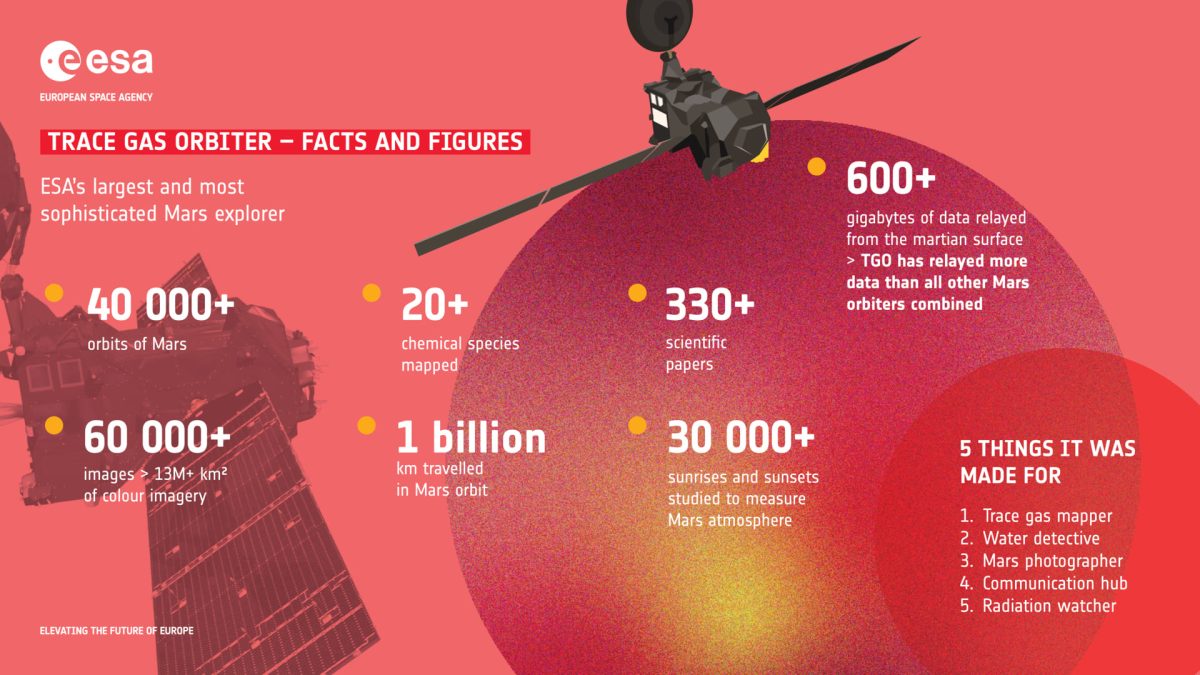
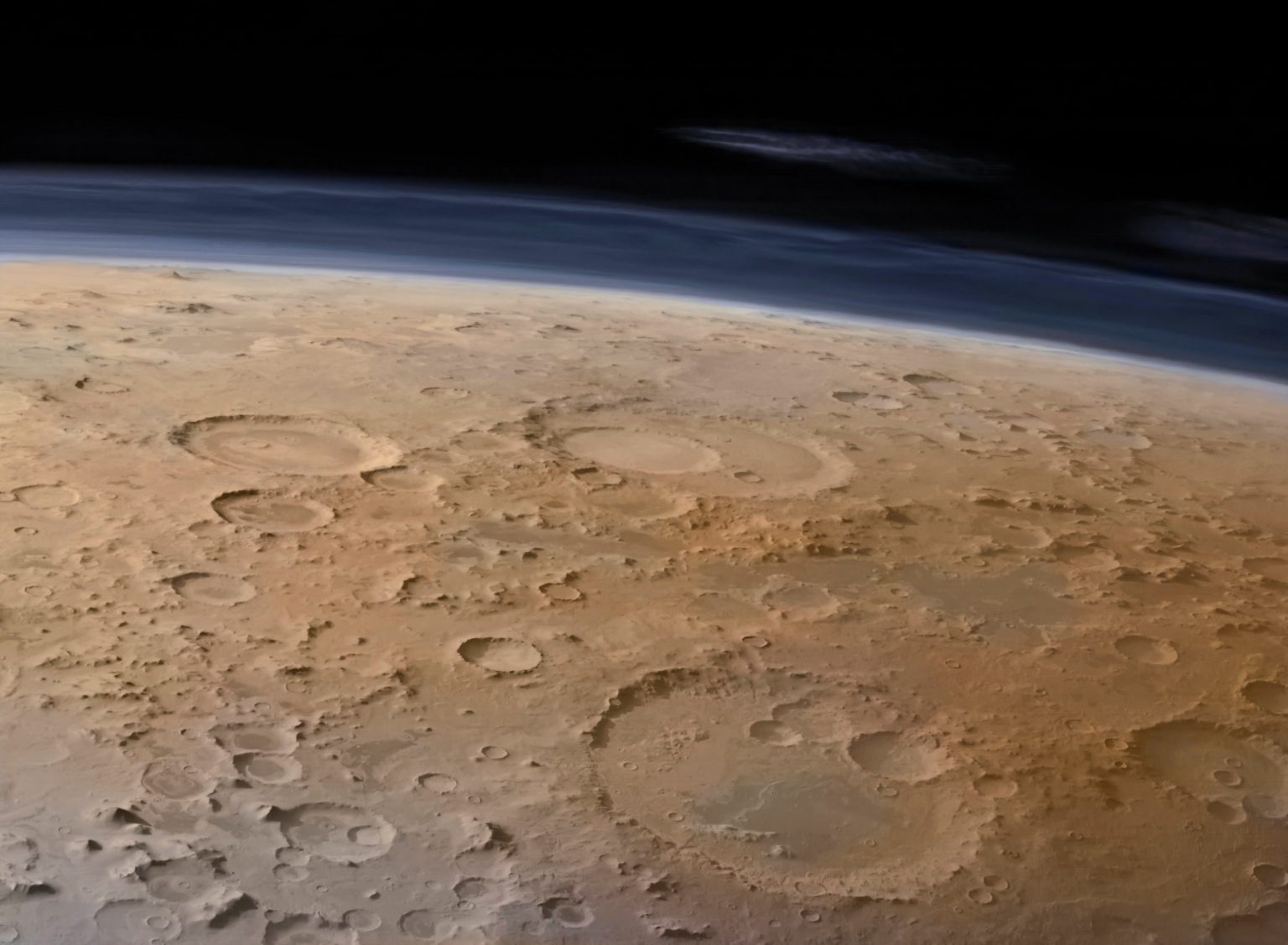
The spacecraft’s camera has captured more than 60,000 images. Its color images cover over 13 million square kilometers—more than 21 times the area of Ukraine. The entire surface of Mars, however, covers approximately 145 million square kilometers.
Another aspect of its work is less visible. NASA’s Curiosity and Perseverance rovers transmit their data through the orbiter, and the total volume of relayed data has already exceeded 600 gigabytes.
The Beginning of the ExoMars Program
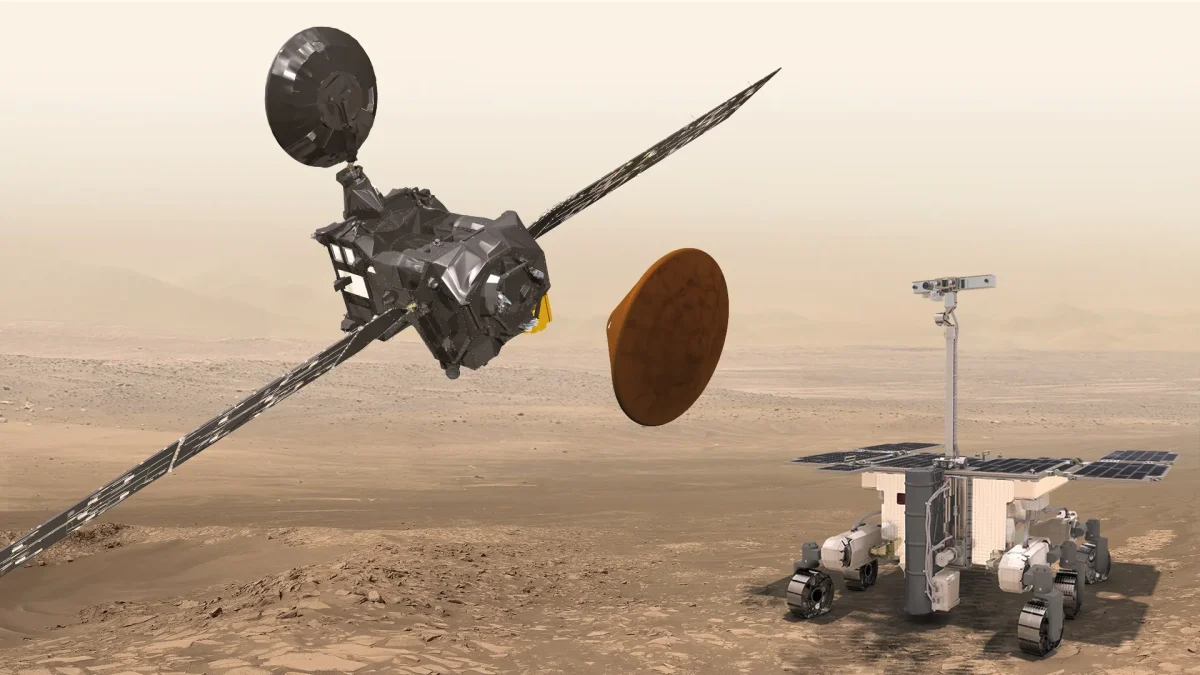
The spacecraft launched on March 14, 2016, aboard a Russian Proton rocket. Traveling with it was Europe’s Schiaparelli lander, also part of the ExoMars program. As Space.com reported at the time, the lander was intended only to test landing technology and operate on the surface for a few days. But on October 19, as the orbiter entered orbit, the lander crashed during descent because its parachute separated prematurely. The accident did not affect the orbiter’s operations.
The next stage of the program was to be the Rosalind Franklin rover, which, according to plans drawn up in 2016, was scheduled to launch as early as 2018. The launch was postponed several times, and in March 2022, ESA suspended the joint program with Russia following its full-scale invasion of Ukraine.

Following the split, ESA replaced the Russian landing platform with its own, while NASA undertook to provide the launch vehicle, braking engines for landing, and radioisotope heater units. The rover is now scheduled to launch in 2028 and land in 2030.
The Mystery of Martian Methane
Methane on Mars has long puzzled scientists. On Earth, most of this gas is produced by living organisms, while on Mars, solar ultraviolet radiation destroys its molecules within a few centuries. So if methane is present there, some source—biological or geological—must be continually replenishing it.
To find even traces of the gas, researchers used the spacecraft’s spectrometers to study more than 30,000 sunrises and sunsets. At these moments, sunlight passes tangentially through the planet’s atmosphere, and each gas absorbs its own characteristic wavelengths. This allowed researchers to map more than 20 chemical species.
No methane was detected in these spectra. According to the peer-reviewed journal Astronomy & Astrophysics, the upper limit of its abundance is 20 molecules per trillion. Yet the Curiosity rover has repeatedly detected methane near the surface. Researchers still cannot explain why the gas is not detected higher up.
Unexpected Hydrogen Chloride
During the global dust storm of 2018, the spacecraft’s instruments detected hydrogen chloride in the Martian atmosphere for the first time. On Earth, volcanoes emit this gas, so the discovery was initially interpreted as a possible sign of present-day volcanic activity.
Subsequent observations weakened this explanation. The gas appears each year alongside dust in both hemispheres, suggesting that it is probably produced by chemical reactions within the atmosphere itself under the influence of sunlight, rather than coming from the planet’s interior.
However, observations from orbit reveal only gases in the atmosphere. Organic molecules that could indicate life will have to be sought on the planet itself. The Rosalind Franklin rover’s drill will reach a depth of two meters, beyond the reach of solar ultraviolet radiation that destroys such molecules near the surface. Samples will be analyzed in the rover’s onboard laboratory, without being returned to Earth.
