

Today marks the 125th anniversary of Enrico Fermi’s birth. He oversaw the launch of the world’s first nuclear reactor and raised the question of whether other civilizations exist — a question that remains unanswered to this day.
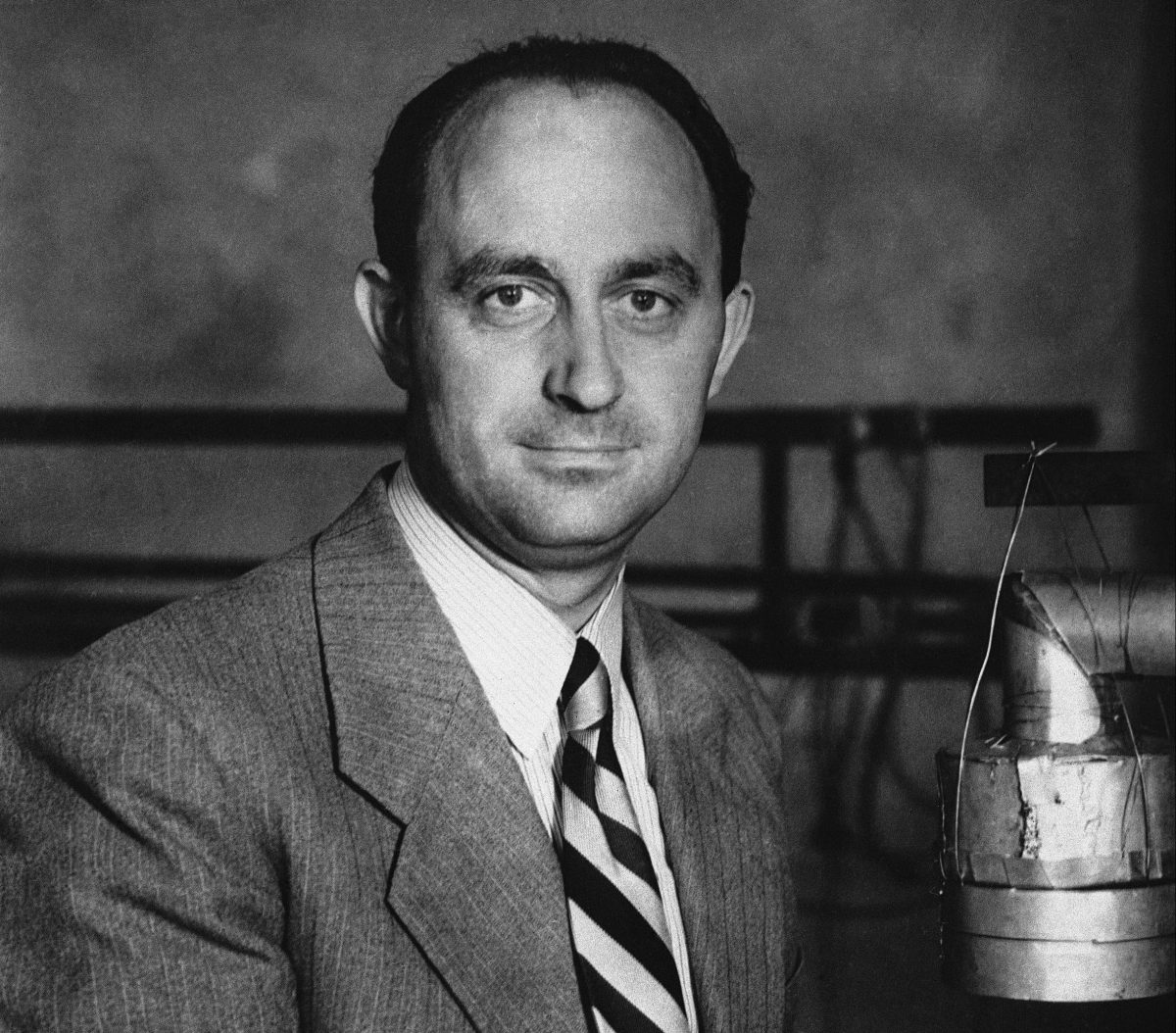
Theoretical and experimental physicist
The atoms of all substances, including those in the human body, consist of electrons, protons, and neutrons. In physics, these particles are classified as fermions, a term named in honor of the Italian physicist Enrico Fermi, who was born on September 29, 1901 — exactly 125 years ago.
Enrico Fermi was among the rare scientists who excelled equally in theoretical and experimental work. He first provided a theoretical explanation of one process by which chemical elements spontaneously transform into other elements, and later oversaw the launch of the world’s first nuclear reactor.
The Nobel Prize in Physics
Enrico Fermi earned his doctorate at the age of 20, and by the age of 26, he had become the youngest professor of physics in Italy. In late 1933, he developed a theory of beta decay — the process in which an electron is emitted from an atom’s nucleus. Some of the energy appeared to disappear during this process, leading the Austrian physicist Wolfgang Pauli to hypothesize that it was carried away by a neutral particle that could not be detected by the instruments available at the time. Fermi incorporated this particle into his theory and named it the “neutrino,” meaning something like “little neutral one.”
The new particle was not experimentally detected until 1956. It is now known that, each second, tens of billions of neutrinos formed in the Sun’s core pass through every square centimeter of the Earth’s surface. These particles are not perceptible because they interact only very weakly with ordinary matter and pass freely through the entire planet. To detect even a small number of them, massive detectors have been constructed around the world, deep underground, underwater, and within Antarctic ice. These include Japan’s “Super-Kamiokande” and IceCube at the South Pole.
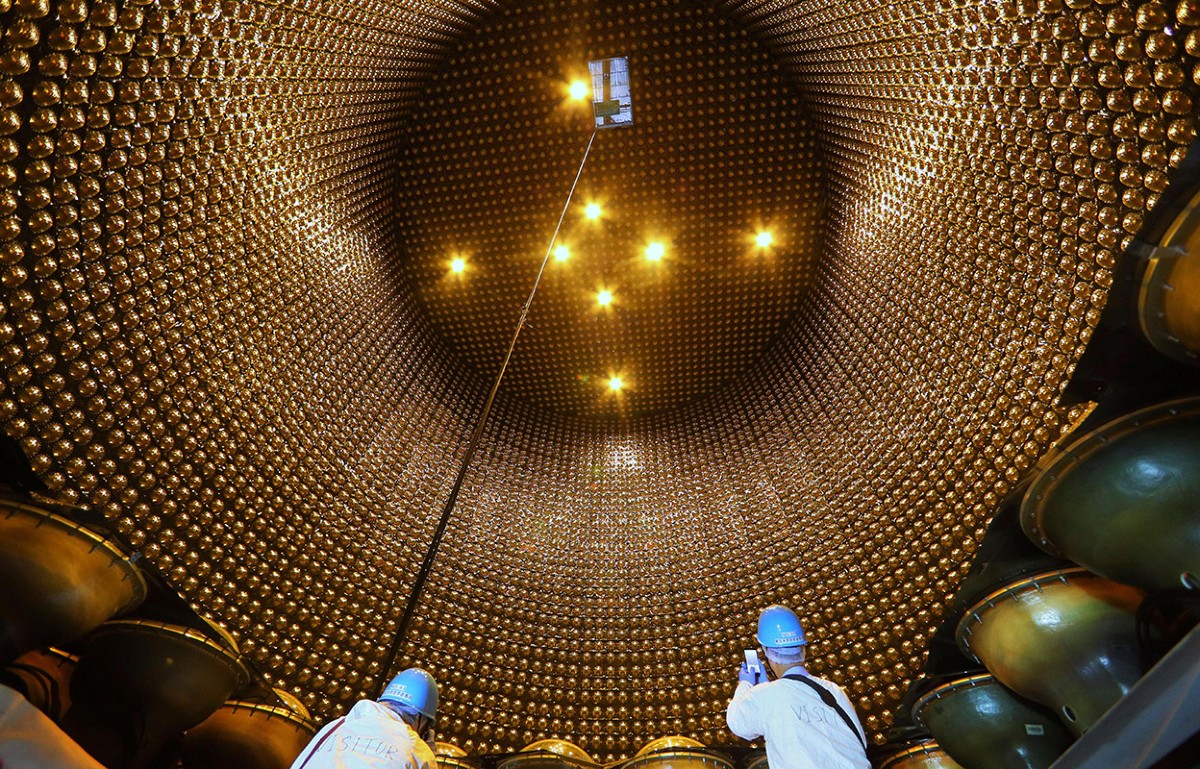
Source: nature.com
In 1934, his research group in Rome began conducting experiments involving neutrons. The scientists used neutrons to irradiate various substances. When the neutron beam passed through a layer of paraffin, it slowed down, and atomic nuclei subsequently captured neutrons much more frequently because the neutrons remained nearby for longer. For this work, Enrico Fermi was awarded the Nobel Prize in 1938 “for proving the existence of new radioactive elements formed by neutron irradiation, and for the related discovery of nuclear reactions caused by slow neutrons.”
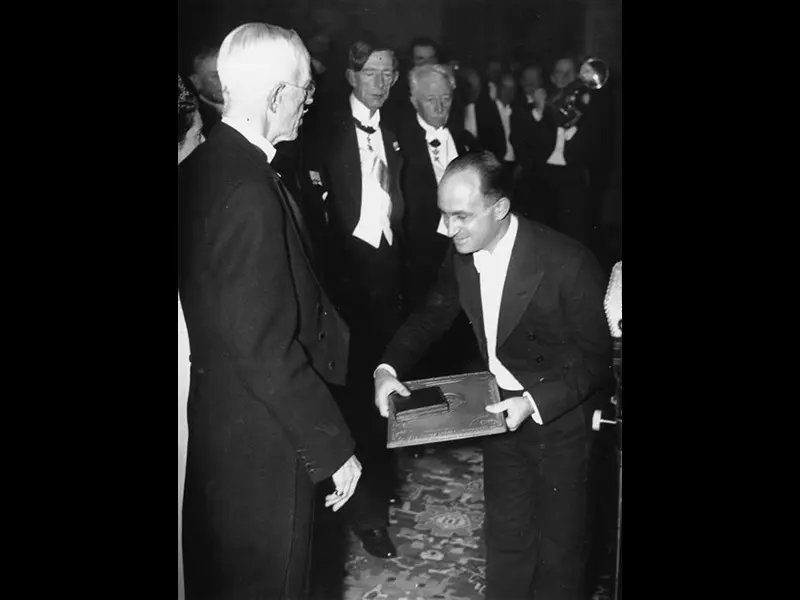
The award ceremony in Stockholm prompted the scientist’s family to leave Italy. Anti-Semitic laws had recently been enacted in the country, and his wife, Laura, was Jewish. They never returned to Italy and eventually settled in the United States.
From particle experiments to the atomic bomb
Shortly after relocating to the United States in early 1939, he received news from Europe. In late 1938, German chemists had discovered that a uranium nucleus could split into two parts when struck by neutrons, and physicists soon provided an explanation for this process. It later became clear that this phenomenon had already occurred during the 1934 Rome experiments, although the results had then been misidentified as new elements, heavier than any previously known.
During this fission process, energy is released, and several additional neutrons are emitted. Each neutron can induce the fission of another nucleus, allowing the process to continue without an external energy source. This self-sustaining process is known as a chain reaction. It was first initiated artificially in Chicago on December 2, 1942. The Chicago Pile-1 facility, under the direction of Enrico Fermi, was constructed directly beneath the stands of the university stadium.
Harold Agnew and Warren Nier, participants in the Chicago Pile-1 test, recount the events of December 2, 1942, when a team of 49 scientists, led by Enrico Fermi, achieved the world’s first controlled chain reaction. Source: Argonne National Laboratory YouTube channel.
It resembled a flattened sphere approximately 7.6 meters in diameter and was composed of graphite blocks, alternating between solid blocks and blocks containing embedded pieces of uranium. The graphite moderated the neutrons, as paraffin had in the Roman experiments, increasing the frequency with which the slowed neutrons caused nuclei to undergo fission. The device did not generate electricity. During its initial test run, it operated for approximately 4.5 minutes at a power output of about 0.5 watts; however, its principal achievement was different. Scientists demonstrated that this process could be initiated, sustained, and stopped as required. On the basis of this experiment, industrial reactors were subsequently constructed to produce plutonium for weapons, and, after the war, industrial nuclear power plants were also built. The reactor’s start-up was celebrated with a single bottle of Chianti, shared among those present in paper cups.
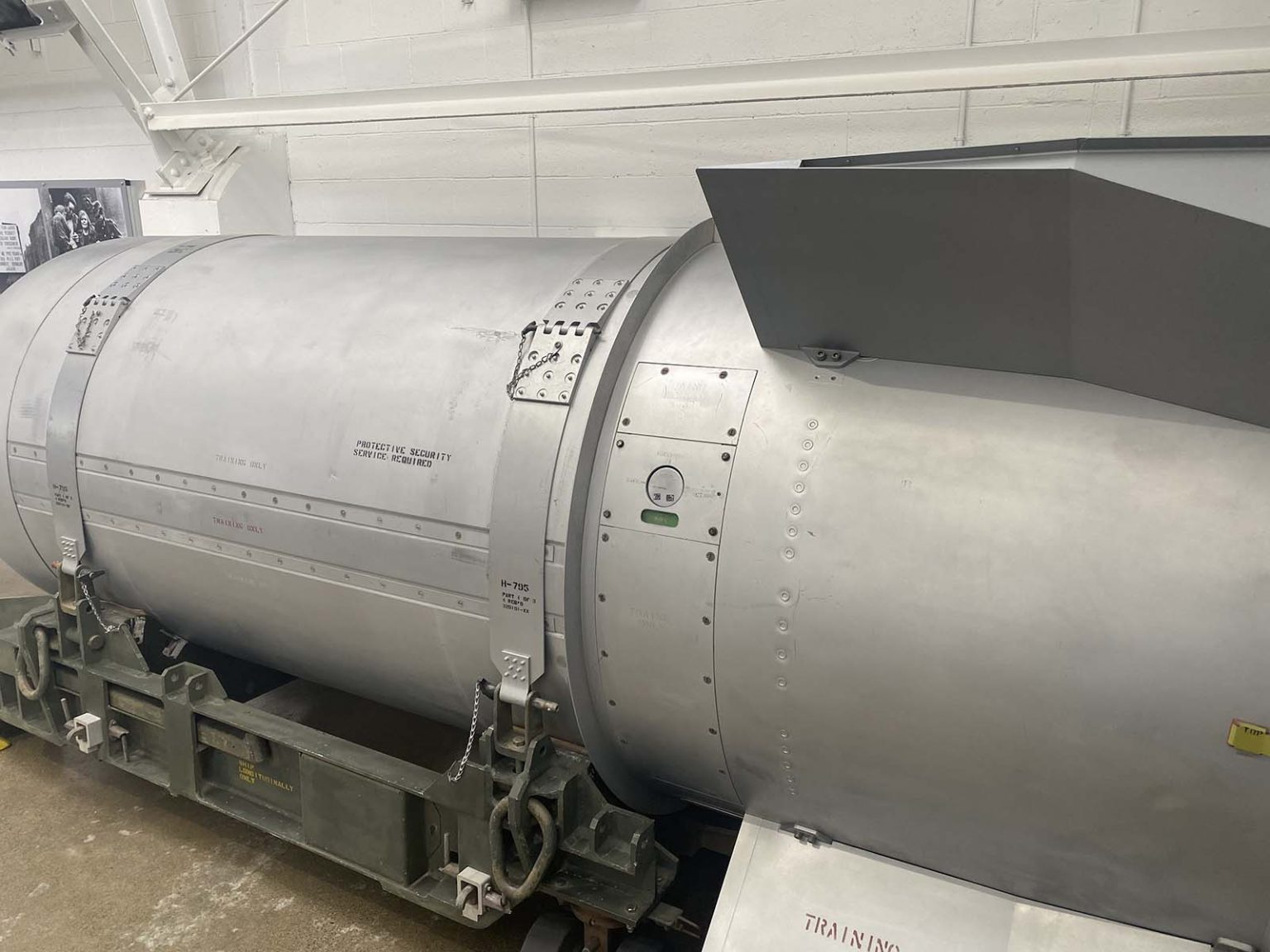
The ability to control a chain reaction was also essential at Los Alamos, where the first atomic bomb was under development. Enrico Fermi moved there in 1944 and became one of the laboratory’s deputy directors. After the war, he returned to Chicago, where he taught at the university. When the question of developing an even more powerful hydrogen bomb arose in 1949, the Italian scientist opposed the proposal and, together with his colleagues, signed a strongly worded objection to the report prepared by government consultants. Despite this opposition, U.S. President Harry Truman ordered its development.
Fermi paradox
In the summer of 1950, Enrico Fermi arrived in Los Alamos as a guest and joined his colleagues for lunch. On the way, they discussed reports of flying saucers and whether interstellar travel was possible. After they had moved on to other subjects and had largely forgotten about the saucers, Fermi suddenly exclaimed, “But where is everyone?”
This remark ultimately gave rise to the concept now known as the Fermi paradox. Our galaxy contains billions of stars, many of which are older than the Sun. Accordingly, intelligent life should have been detected long ago; however, no evidence of it has been found. Enrico Fermi himself, however, did not advance this argument or describe his remark as a paradox. The idea was formulated in 1975 by astronomer Michael Hart, and the Italian physicist likely had no doubt that other civilizations existed. Rather, he was concerned with a different question: whether anyone could travel across the vast distances of space to reach us.
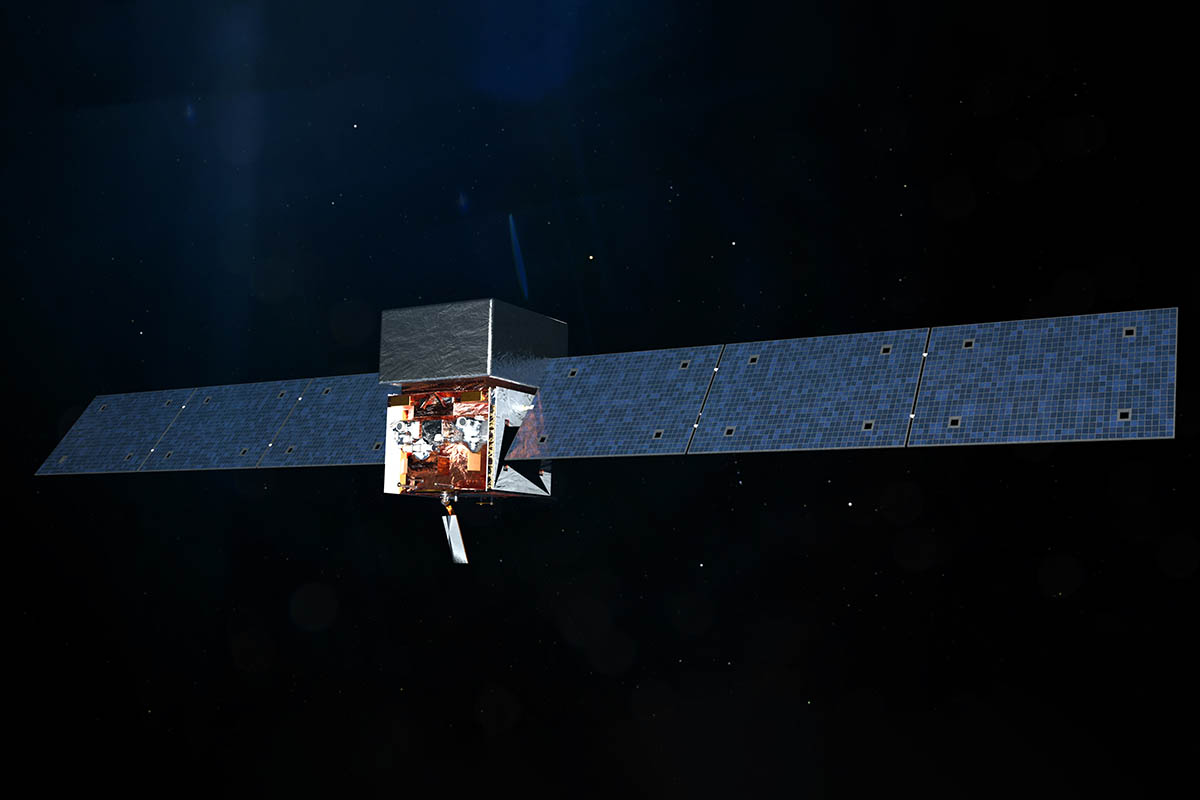
The chemical element fermium and the NASA Fermi Space Telescope were named in honor of the Italian scientist. Since 2008, the telescope has been used to observe gamma rays — the highest-energy form of light — including those produced by powerful explosions in distant galaxies. This name was not chosen at random. As early as 1949, Enrico Fermi was the first to explain how charged particles in space acquire enormous amounts of energy. These particles repeatedly bounce off moving clouds of magnetized gas and accelerate with each collision; under certain conditions, they then generate gamma rays.
Fermi problems
Among his colleagues, Enrico Fermi was renowned for his ability to estimate almost any quantity quickly, using minimal input data. The Italian physicist liked to pose questions to his students in Chicago, such as, “How many piano tuners are there in the city?” Today, such exercises are known as Fermi problems. Since no exact data were available, students had to estimate the city’s population, the number of families that owned a piano, how often pianos were tuned, and how many service calls a tuner could handle in a year. Errors in individual estimates partially offset one another, and the resulting answer closely approximated the number of tuners listed in the city telephone directory.
The most notable rapid assessment of this kind occurred somewhat earlier, on July 16, 1945, during the first atomic bomb test in the New Mexico desert. Approximately 40 seconds after the flash, the shock wave reached the observers, and Enrico Fermi dropped a handful of paper scraps from a height of about two meters. Based on the distance they were carried by the wave, he estimated the blast’s yield at approximately 10,000 metric tons of TNT. Instruments later recorded a yield of about 21,000 metric tons; thus, the estimate derived from a handful of paper scraps was approximately half the actual yield.
Astronomers continue to use Enrico Fermi’s method, for example, to estimate the likelihood of intelligent life elsewhere in our galaxy. To do so, they make several approximate assumptions, including estimates of the number of planets with habitable conditions.