

According to astronomers’ estimates, mysterious dark matter accounts for approximately 85% of the mass of the Universe. This invisible substance does not interact with light, so until now its existence has been detected only through its gravitational interaction with cosmic bodies. However, a team of researchers from the Chinese Academy of Sciences has announced the discovery of what may be the most direct evidence to date of the existence of this substance.
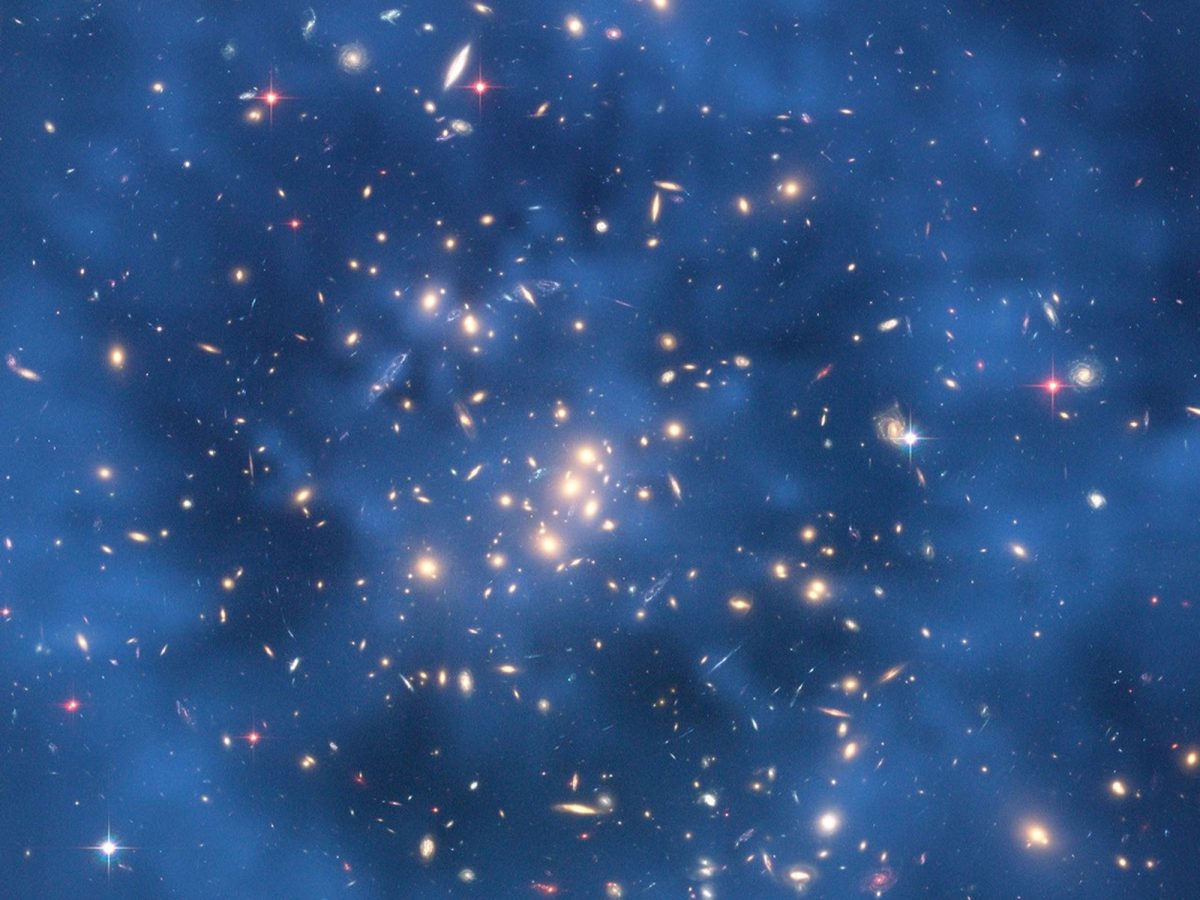
In a study published in Physical Review Letters, astrophysicists reported the detection of a “clear” gamma-ray signal. The findings are based on an analysis of 15.5 years of observations by the Fermi Gamma-ray Space Telescope (FGST). This signal matches predictions of the leading hypothesis that dark matter consists of weakly interacting massive particles — WIMPs (Weakly Interacting Massive Particles).
WIMP Annihilation and the Nature of Gamma Rays
Gamma rays are among the most powerful forms of radiation in the Universe. For supporters of the WIMP hypothesis, they are a key target of observation. Because these particles barely respond to electromagnetic forces and leave no trace in ordinary light, they cannot be detected directly. However, when two WIMP particles collide, they are expected to annihilate, releasing specific gamma-ray photons.
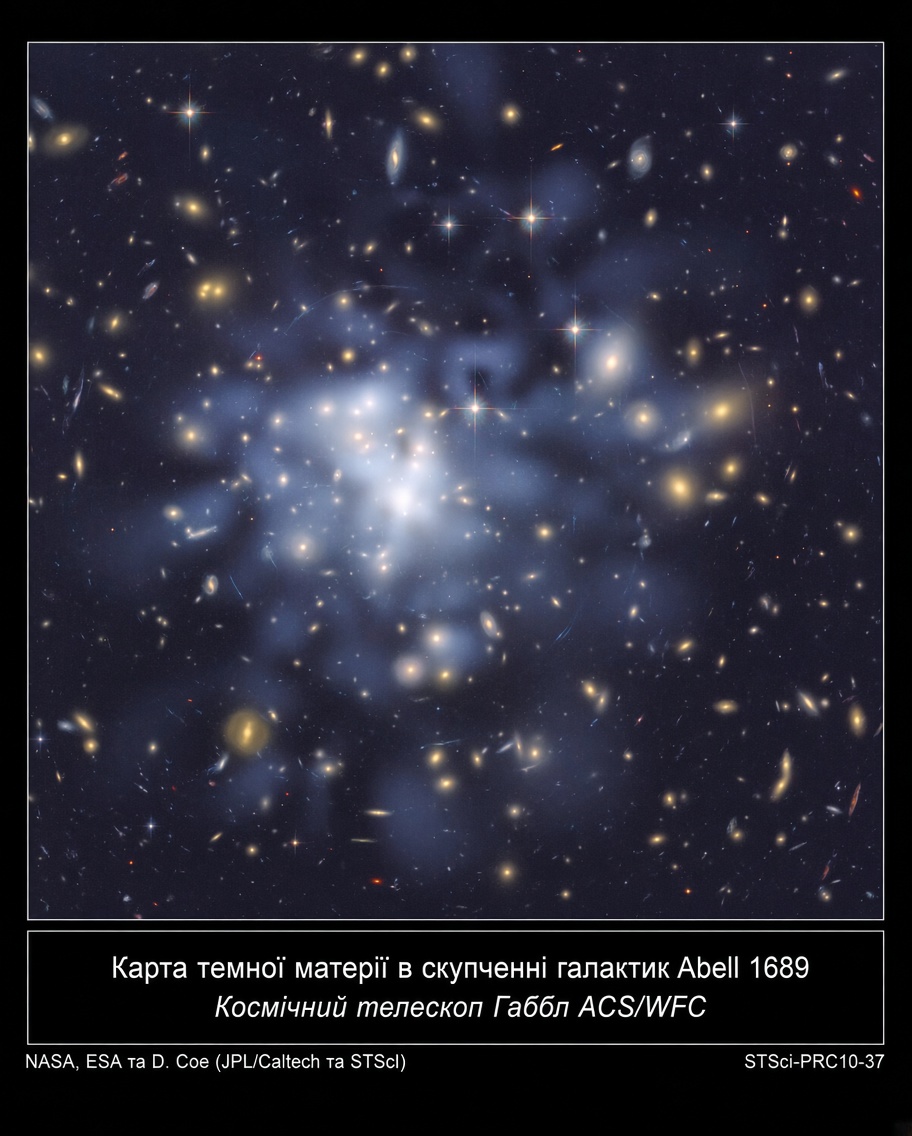
As the study’s first author Yi-Zhong Fan noted in a comment to New Scientist, the detection of a sharp gamma-ray line would constitute indisputable evidence for the existence of dark matter particles and would make it possible to uncover their fundamental properties.
Instrument Error or a Revolution in Physics?
The search for dark matter through gamma radiation already has a long history. Scientists have previously detected anomalous gamma-ray bursts in the center of the Milky Way and in data from the Fermi telescope, attributing them to WIMP activity. However, similar “conclusive evidence” in the past has repeatedly turned out to be nothing more than instrumental errors or emissions from individual galactic clusters.
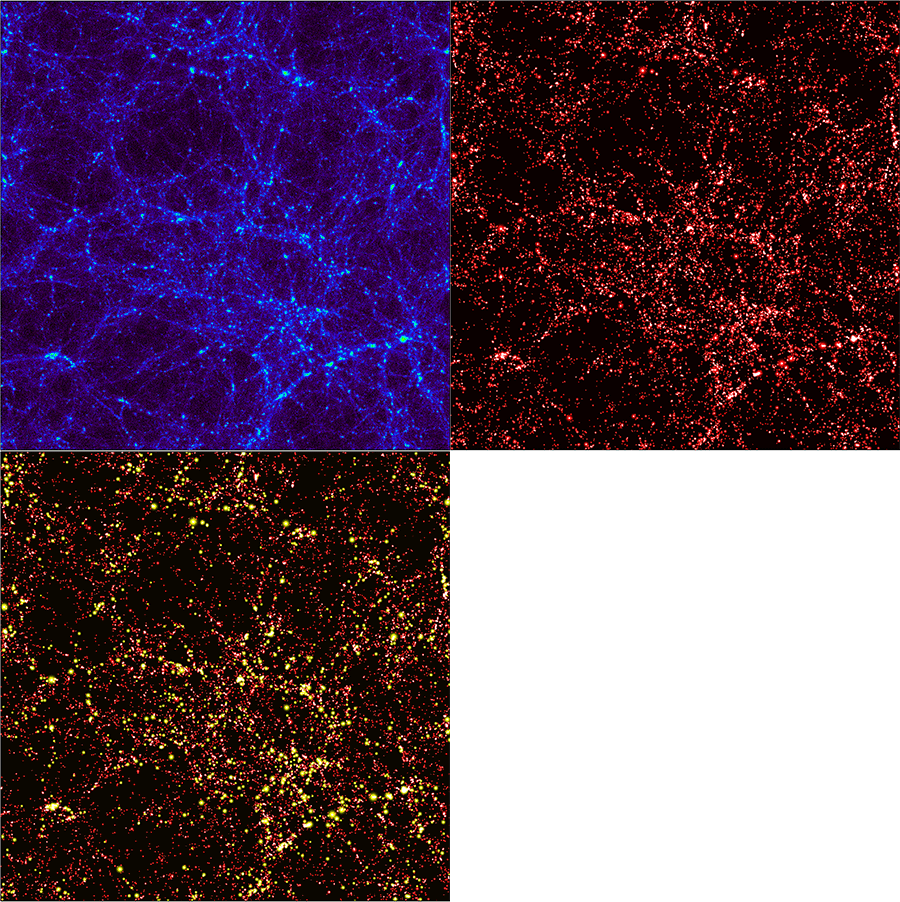
The Chinese team insists that its mathematical calculations of the signal-to-noise ratio completely rule out instrumental artifacts. Given the exceptional clarity of the signal, the researchers are calling on the scientific community to study it in detail.
It is still too early to draw a final conclusion. The FGST project continues to operate and will double the amount of collected data by 2040. In addition, international space agencies plan to launch new gamma-ray telescopes in the coming years, which should help determine once and for all whether the detected signal truly represents humanity’s first contact with dark matter.
Previously, we reported on how dark matter may change the color of light.
