

Two SpaceX rockets lifted off from opposite coasts of the United States less than an hour apart. No company had ever achieved such a short interval between its own orbital launches. The first stages of both launch vehicles returned to Earth for reuse.
Record of 38 Minutes
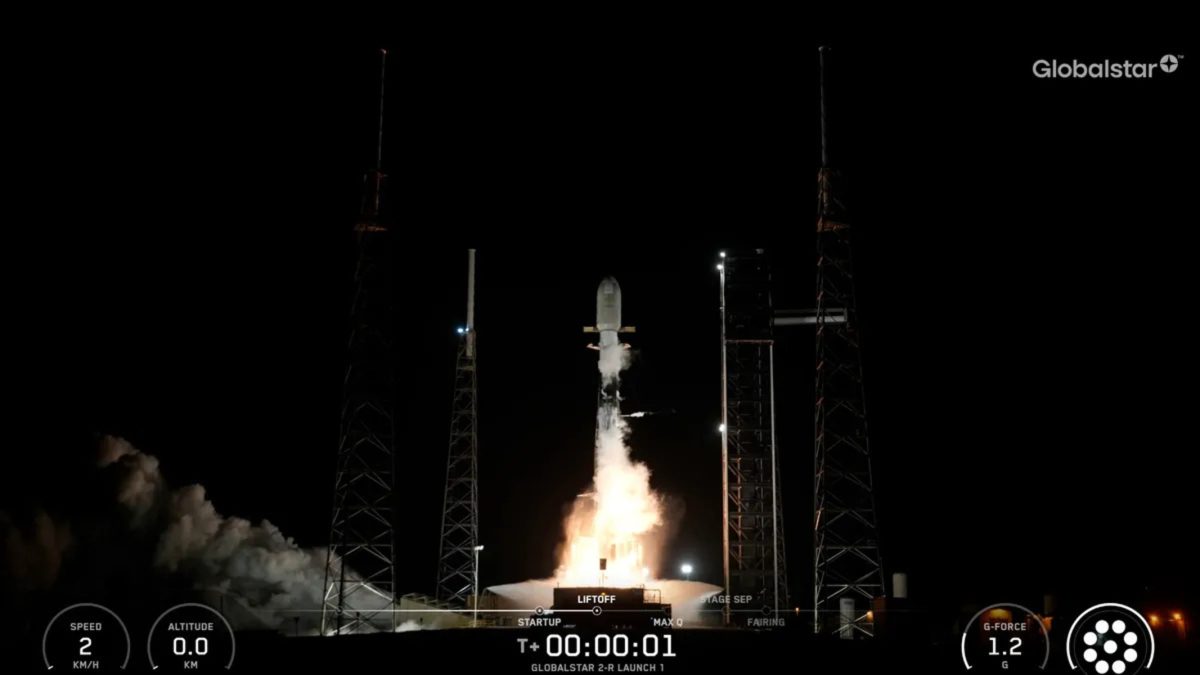
SpaceX conducted both launches during the night of August 16, Kyiv time. The first Falcon 9 lifted off from Cape Canaveral Space Force Station in Florida at 4:12 a.m. The second launched from Vandenberg in California at 4:50 a.m.
Two Falcon 9 launches 38 minutes apart and the landings of both first stages. Source: VideoFromSpace YouTube channel
The previous record had stood since August 31, 2024, and was 65 minutes, according to Space.com. At that time, both missions were part of the Starlink program, so they involved the same type of payload and identical preparations.
This time, the circumstances were more complicated. One launch was commercial, while the other was military and classified, and the launch sites are separated by almost 4,000 kilometers, along with a three-hour difference between their time zones.
Payload for Emergency Communications
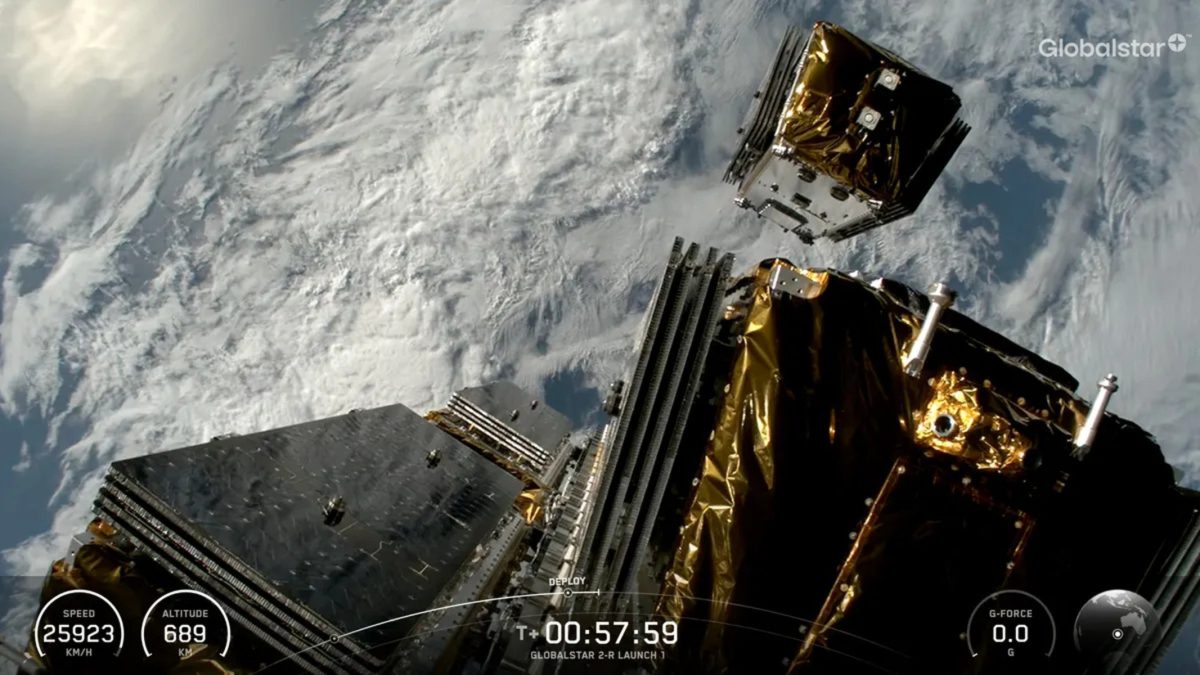
During the Florida launch, eight satellites belonging to a Louisiana-based telecommunications operator were placed into low Earth orbit. The first spacecraft separated 56.5 minutes after launch. The remaining satellites separated over the following six minutes. The mission was designated Globalstar 2-R.
The Globalstar network supports the emergency SOS function on Apple devices. The equipment belongs to Globalstar itself, not to the smartphone manufacturer, which uses the company’s communications channel.
Classified Part
The second launch was conducted for the U.S. Space Force under the designation USSF-366. No official information has been released about the composition of the payload, and the broadcast ended immediately after the first stage landed, as is customary for national-security missions. The time and location of payload separation from the launch vehicle also remain unknown.
According to an assessment by the specialized resource NextSpaceflight, the payload may have consisted of a batch of classified satellites based on the Starshield platform. This conclusion was drawn from the location of the drop zones for the spent sections, which exactly matched previous launches of the Starlink Group 15 series. These are modified versions of the company’s standard production satellites adapted for government orders.
Landings and This Year’s Launch Pace
The Florida booster landed at a site near Cape Canaveral approximately eight minutes after liftoff. This was its 14th flight. The California booster landed on the drone ship Of Course I Still Love You in the Pacific Ocean, marking its 18th flight.
Since the beginning of 2026, Falcon 9 rockets have launched 96 times, with about 75% of those missions devoted to the deployment of Starlink. For comparison, in 2020 the company launched 26 rockets into orbit. It now launches approximately the same number in about two months.
