

The solar cycle can be predicted seven years in advance. The new method focuses on the abrupt cutoff of extreme activity rather than on its gradual decline.
How the Solar Clock Works
The basis for the discovery was the “solar clock,” a method that normalizes solar cycles into the form of a clock face. It was previously developed by Sandra Chapman, professor of physics and director of the Centre for Fusion, Space and Astrophysics at the University of Warwick. This approach maps the Sun’s irregular 11-year cycles onto a standard clock face and shows that the most powerful flares and coronal mass ejections do not fade away gradually.
Instead, they disappear almost simultaneously at a clearly defined moment in each cycle. Chapman’s team found that the number of sunspots at this termination point is closely linked to the peak value of the next cycle. Identifying this moment makes it possible to look six to seven years ahead, whereas existing methods require waiting for the solar minimum, Phys.org reports.
An Early Forecast for Cycle 26
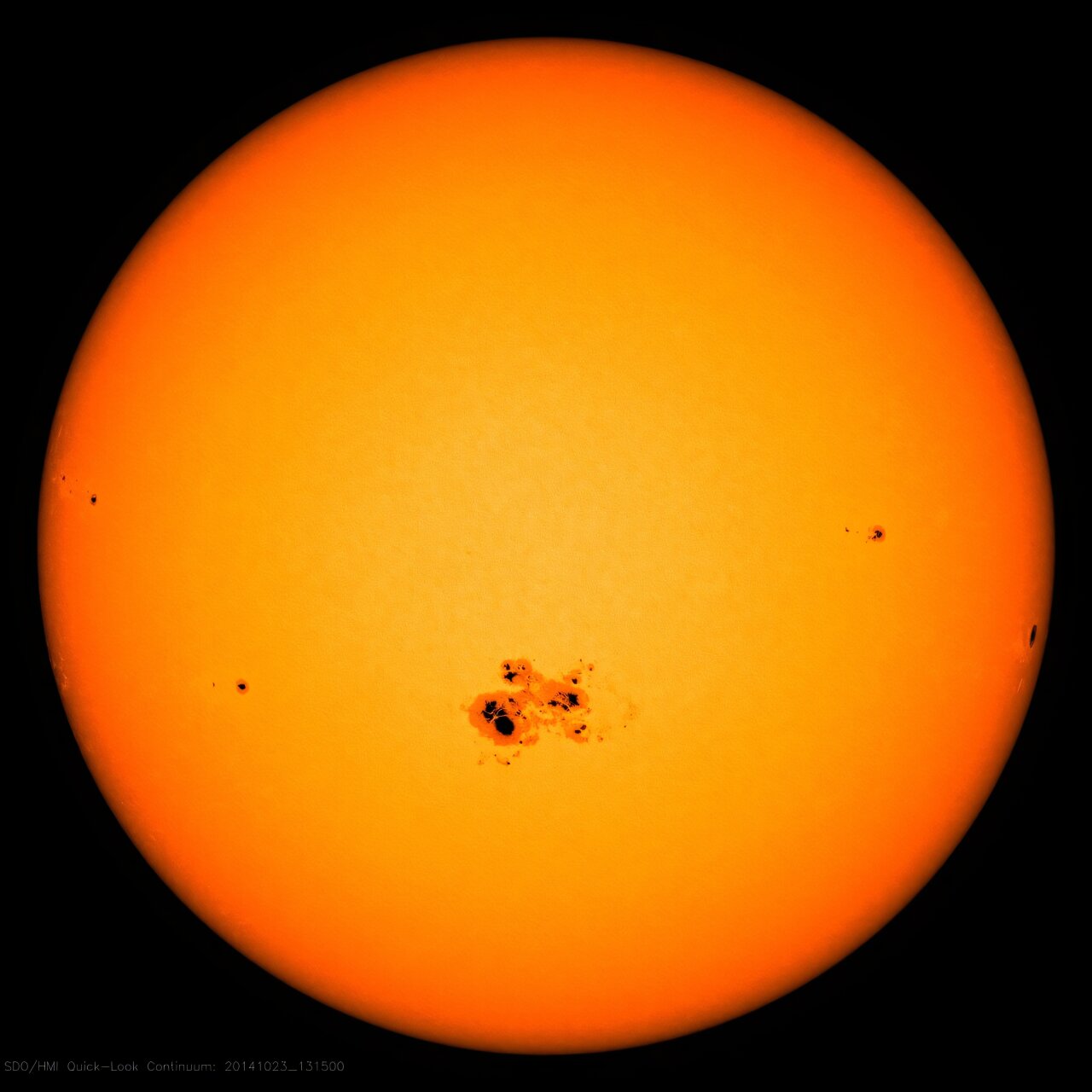
The Sun goes through an approximately 11-year activity cycle during which its magnetic field reverses polarity and the number of sunspots rises and falls. The numbering of these cycles was introduced by Swiss astronomer Rudolf Wolf, who used 1755 as the starting point, when systematic sunspot observations began. The first recorded cycle was assigned number 1, and the current one is Cycle 25, which began in December 2019.
The preliminary forecast points to a moderate Cycle 26, with the number of sunspots expected to fall in the range of 100 to 120. This would be comparable to the current Cycle 25, or perhaps slightly weaker. Final figures will appear in about two years, when Cycle 25 reaches its termination point — the moment when extreme space weather suddenly shuts off — and the calculation will be based on direct observations rather than estimates.
In theory, both a stronger and a weaker scenario remain possible. The main advantage of the method is that it provides a seven-year lead before the peak, something no other approach has offered. Operators of satellites, communications systems, navigation networks, and power grids would gain six to seven additional years to prepare for space weather compared with previous methods.
Cycle 25 Was a Successful Test
The method has already proven its effectiveness. It correctly predicted that Cycle 25 would be stronger than most earlier forecasts suggested. The result was the spectacular auroras of recent years, including the historic geomagnetic storms of May 2024.
At that time, a series of extreme events triggered by coronal mass ejections caused the strongest geomagnetic storms — sharp disturbances in Earth’s magnetic field — in more than two decades. The northern lights were observed in southern England, Devon, and Cornwall, which is rare for those latitudes.
The Magnetic Field of the Future Cycle
The research, presented at the Royal Astronomical Society’s National Astronomy Meeting in Birmingham, offers a new view of the solar dynamo — the process that generates the Sun’s magnetic field. The identified termination point marks a specific stage of the cycle when the magnetic field of the next cycle should begin to form.
“The Sun does not go to sleep gently, and it does not wake up gently either,” Sandra Chapman explains. According to her, the most extreme space weather shuts off quite abruptly at a specific moment in each cycle, and that moment provides the key to the forecast. The research team hopes the new method will help improve understanding of the mechanisms behind solar weather.