

Three helicopters NASA is preparing to send to Mars will be able to fly hundreds of kilometers across the planet. The data they collect should help prepare for human landings. Scientists are getting ready to select the location where the helicopters will begin their work. Their focus is on plains that may contain deposits of frozen water beneath the surface.
Hundreds of Kilometers per Mission
Each SkyFall helicopter will fly one to two kilometers every two sols, or Martian days. Over the entire mission, each aircraft could cover between 200 and 300 kilometers, Matthew Golombek, the project’s science lead at NASA’s Jet Propulsion Laboratory, told Space.com. The helicopters are designed to operate for six months, but the team hopes they will last a full Earth year.
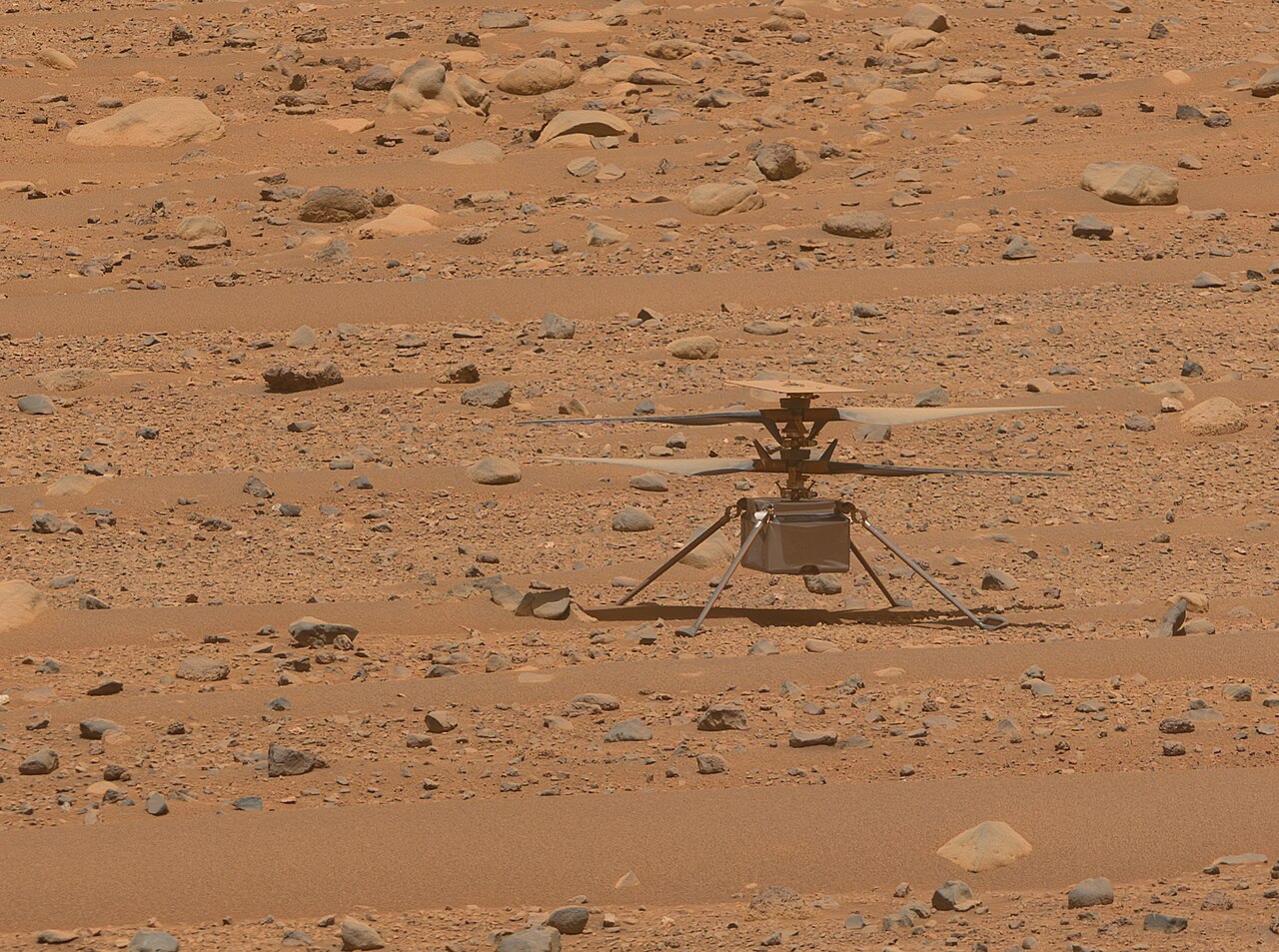
For comparison, the Ingenuity helicopter completed 72 flights during nearly three years on Mars, covering approximately 17 kilometers in total. Each new aircraft could potentially travel at least ten times farther.
Ice a Few Meters Below the Surface
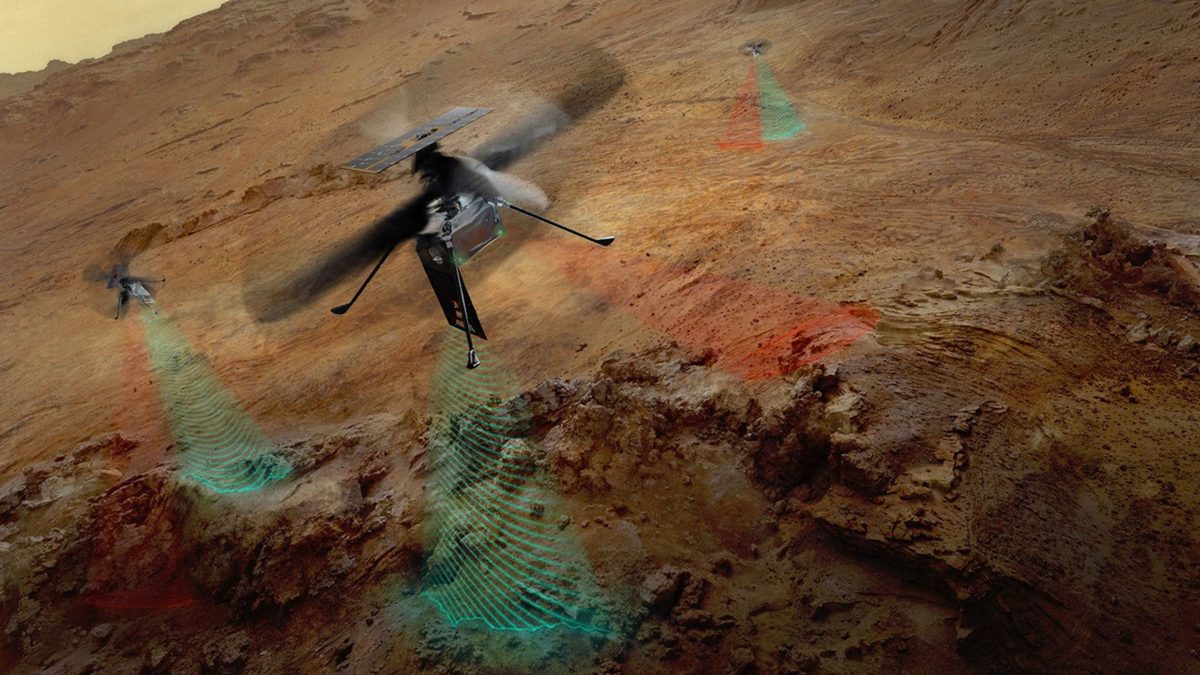
Each aircraft’s main instrument will be a ground-penetrating radar. It will send radio waves into the ground and detect their reflections from subsurface layers, revealing where rock and ice are located. Orbital radars detect large deposits tens of meters below the surface, while SkyFall’s radar will investigate layers between half a meter and three meters deep. Its flexible antenna has already survived 200 test landings.
Ice in the upper layers of the ground interests scientists for two reasons. It preserves traces of Mars’s ancient climate and may provide an environment suitable for life. Future crews could also use this ice as a source of water, oxygen, and fuel.
The other instruments will also be identical on all three aircraft: visible-light and near-infrared cameras, temperature sensors, and a radiation dosimeter. Wind speed will also be determined from the helicopter’s own motion, particularly when it drifts freely in the airflow.
Choosing a Landing Site
The first landing-site selection workshop will take place online on February 9 and 10, 2027, NASA reports. Participants will rank regions that are scientifically interesting and safe for descent. A final decision will be made after a second workshop later in 2027.
As a starting point, the project team has already selected terrain with subsurface ice and landforms shaped by glaciers and ground freezing. According to the mission information package, such regions lie roughly between 30 and 45 degrees north latitude. Candidates include Arcadia Planitia and Utopia Planitia.

The Journey to the Martian Surface
The helicopters will be delivered to Mars by the Space Reactor-1 Freedom spacecraft, the first interplanetary vehicle with a nuclear propulsion system. Launch is scheduled for November 2028, with arrival at Mars planned for autumn 2030.
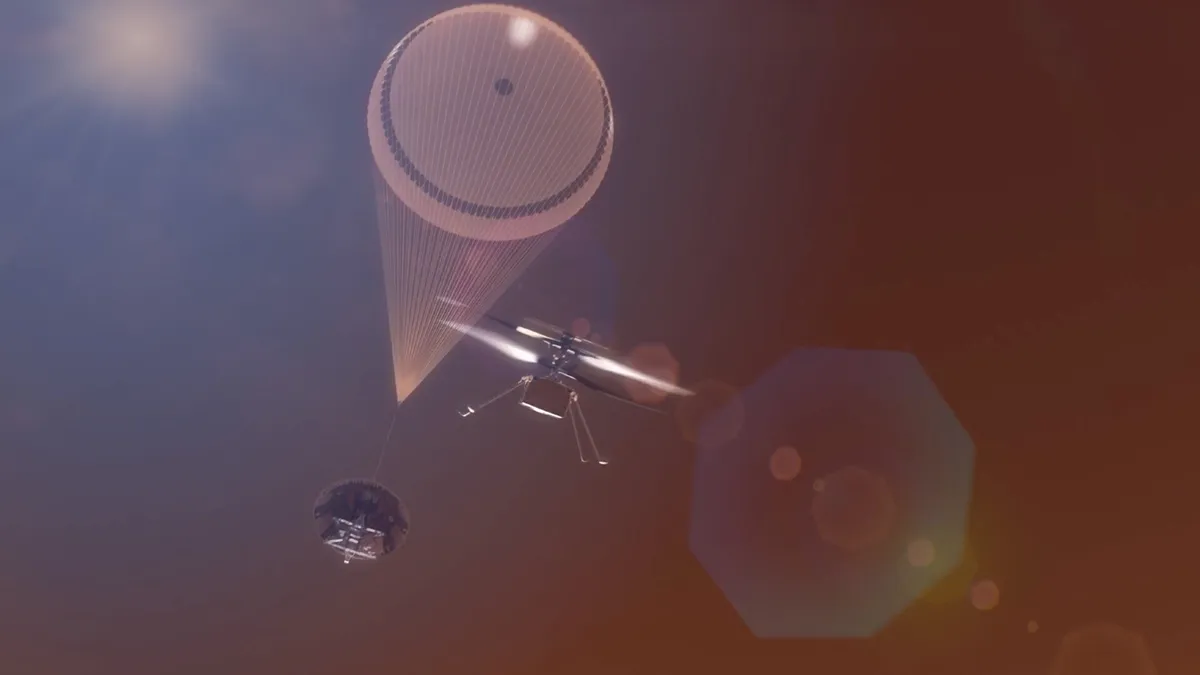
The mission includes neither a landing module nor a carrier rover. The helicopters will separate from the capsule at an altitude of approximately one kilometer. Each aircraft will deploy its rotor blades and land independently. It will be spring in Mars’s northern hemisphere—a season chosen to avoid dust storms.
