

Deimos — the more distant of Mars’s two tiny moons — is named after the ancient Greek god of fear. Unlike its companion Phobos, which is covered in craters, Deimos has an unusually smooth surface buried beneath a thick layer of regolith. In addition, a giant crater about 10 km wide is located at its south pole.
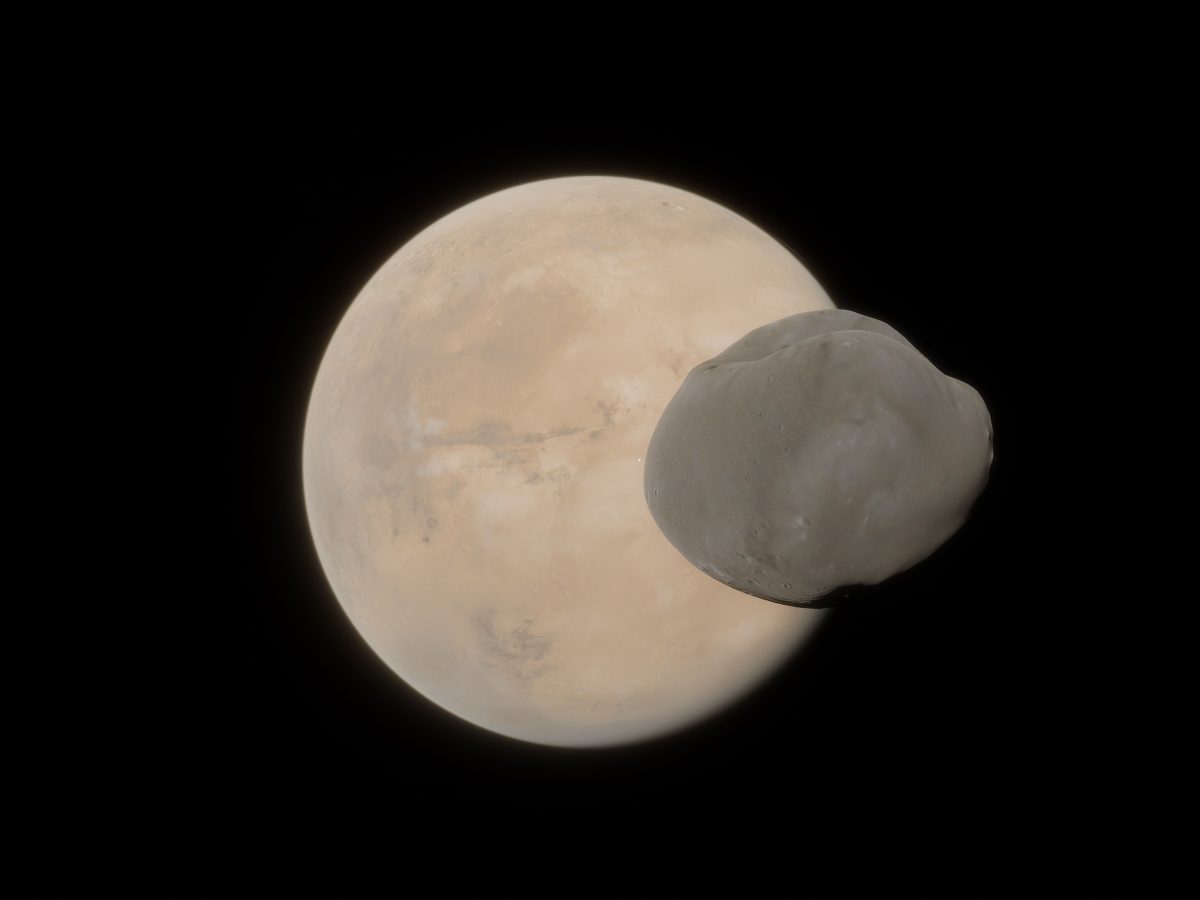
For a long time, astronomers could not understand exactly what events had shaped such an unusual landscape. A new study published in Nature Astronomy provides answers to these questions.
One Fatal Impact
The European Space Agency’s Hera mission, which took detailed images of Deimos from close range in March 2025, provided scientists with valuable new data. A team of researchers led by Dr. Sabina Raducan of the International Space Science Institute and the Free University of Brussels compared the images with large-scale computer simulations.
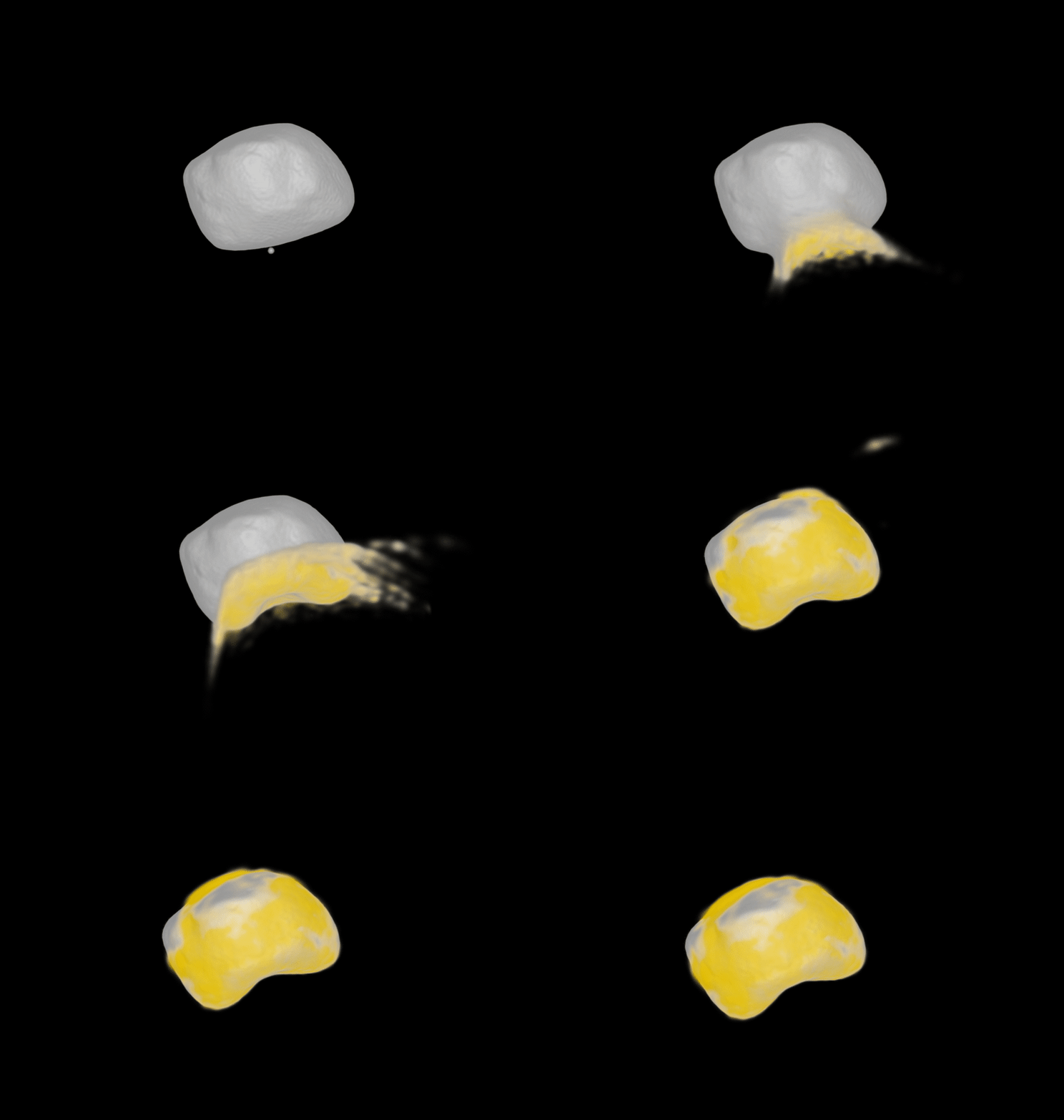
Using special code developed at the University of Bern, the scientists conducted about one hundred impact simulations, each of which took nearly a week. According to the calculations, the most likely scenario was the impact of an asteroid approximately 320 m in diameter that struck Deimos at an angle of 40°.
This single catastrophic collision was enough to completely reshape the moon’s appearance. The impact blasted out an enormous amount of debris and dust, which settled back onto the surface, forming a “blanket” up to 200 m thick. This layer buried smaller ancient craters beneath it, making Deimos appear visually smoother than Phobos.
Why Did Deimos Not Break Apart?
A logical question arises: why did such a powerful impact not shatter a relatively small moon only about 12 km in diameter?
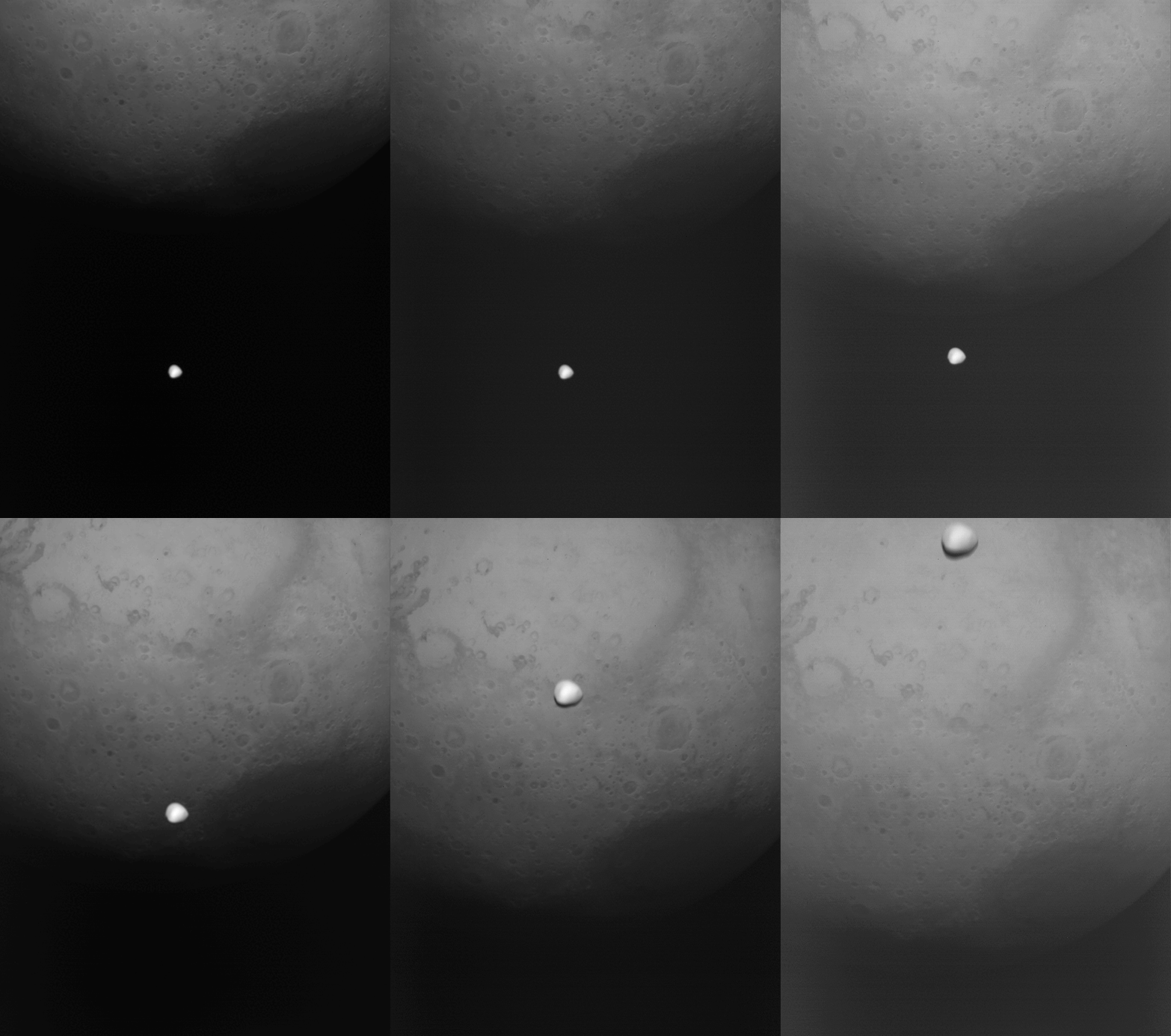
The answer lies in Deimos’s internal structure. Observations confirm that it has an extremely porous structure — its interior is more like a loose pile of space rocks held together by weak gravity. When the asteroid struck the surface, Deimos’s fractured interior acted like a shock absorber: it absorbed and softened the shock wave, saving the moon from complete destruction.
Answers from the MMX Mission
The origin of the Martian moons themselves remains a matter of debate: they may either be asteroids captured by Mars’s gravity or fragments blasted off Mars itself during ancient collisions. Deimos’s porous structure inclines scientists toward the first hypothesis, but the upcoming Japanese MMX mission (Martian Moons eXploration) is expected to provide a definitive answer.
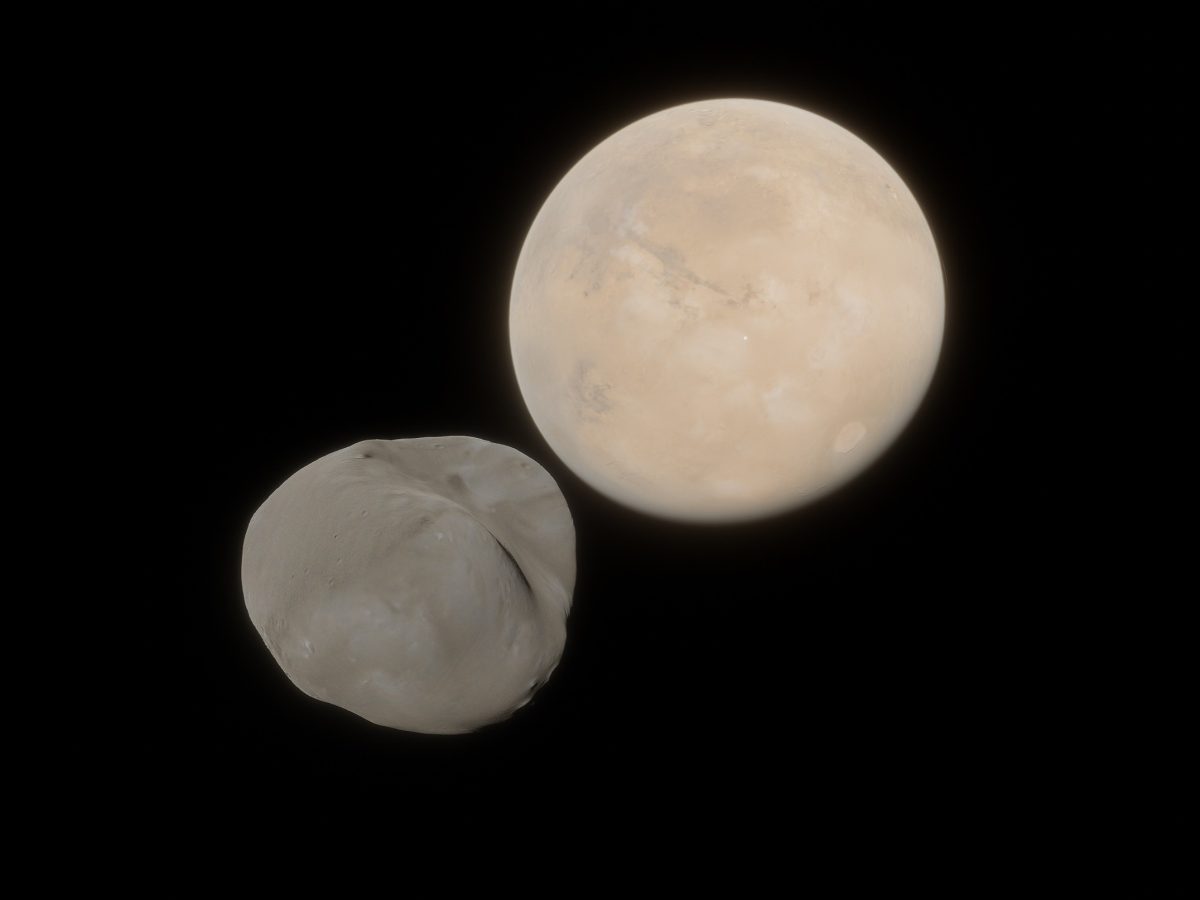
The launch of JAXA’s MMX spacecraft is scheduled for the end of this year. In 2027, it will arrive in the Martian system, conduct detailed observations of both moons, and collect soil samples from Phobos, which are expected to return to Earth in 2031. The collected data will help not only verify the calculations concerning Deimos, but also provide a better understanding of the evolution of the entire Solar System during the early stages of its formation.
Previously, we reported on how the moons of Mars turned out to be remnants of a destroyed comet.
According to CNN
