
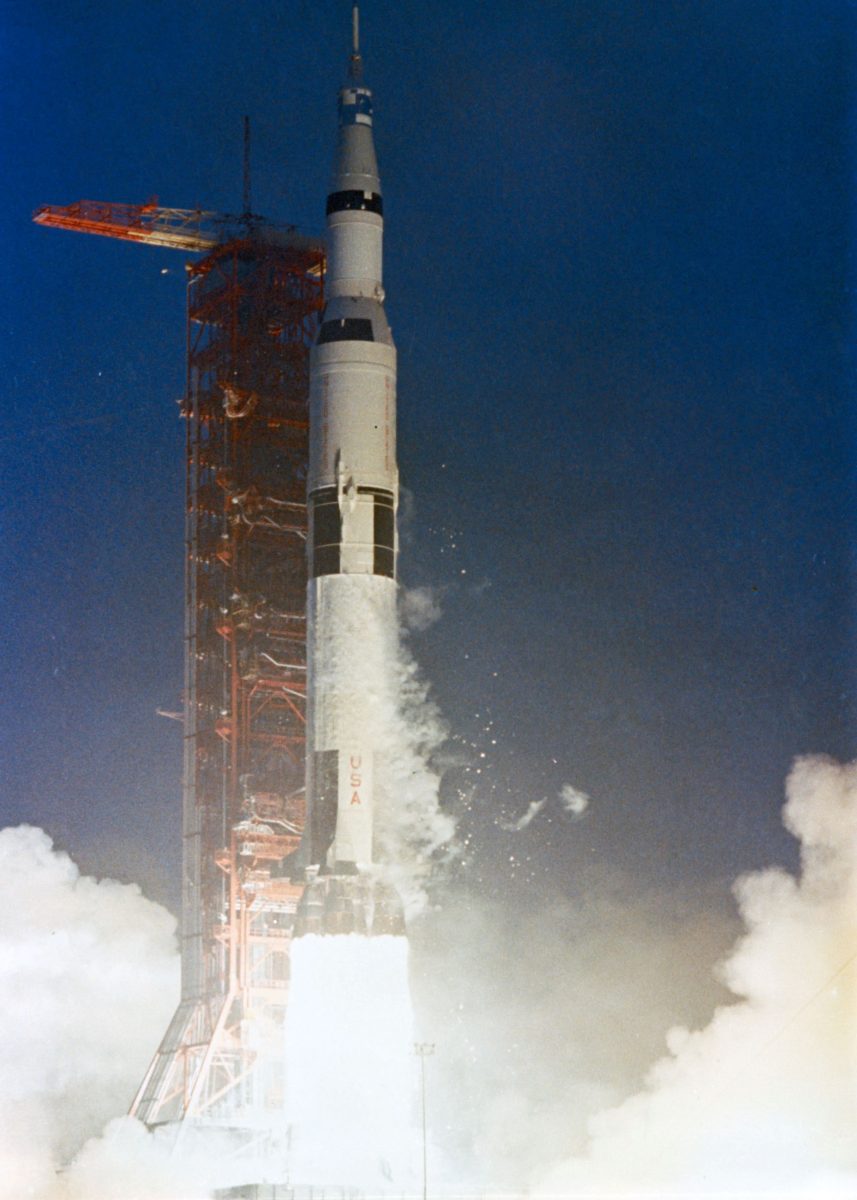
On November 14, 1969, Commander Charles “Pete” Conrad, Command Module Pilot Richard Gordon, and Lunar Module Pilot Alan Bean took their seats aboard Apollo 12 atop a Saturn V launch vehicle at NASA’s Kennedy Space Center in Florida. NASA was preparing to carry out the second human landing on the Moon in history — just four months after the historic triumph of Apollo 11.
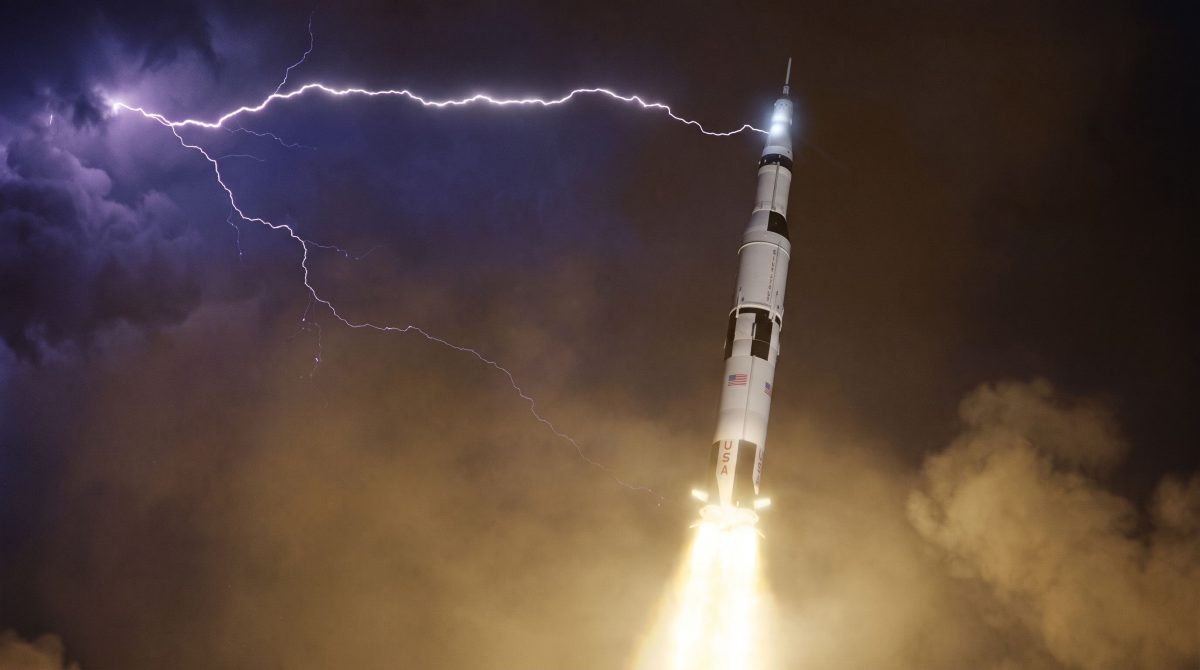
However, just 36 seconds after lifting off from the launch pad, the rocket was struck by lightning. Approximately 16 seconds later, a second strike occurred. Dozens of warning lights suddenly illuminated inside the crew cabin.
“We had so many lights coming on that we couldn’t even read them all,” Commander Pete Conrad later recalled. Alan Bean added that he saw more warning signals on the panel than he had ever seen in the simulators, and the crew had no idea what to do. Meanwhile, at Mission Control, telemetry monitors filled with a chaotic array of meaningless numbers. Although the rocket itself continued flying along its planned trajectory, the lack of reliable instrument readings brought the mission to the brink of an emergency abort.
The engineer who recognized the chaos
Watching the digital confusion at Mission Control was 27-year-old engineer John Aaron, who was responsible for life-support and communications systems. Looking at the chaotic data, he suddenly recognized a familiar pattern.
About a year earlier, during nighttime tests of the Apollo command module in Florida, Aaron had already witnessed similar malfunctions caused by a sudden drop in voltage. At the time, he and a colleague had discovered that the problem lay in the Signal Conditioning Equipment (SCE) — a unit that converts electrical signals from sensors into data for the cockpit instruments and transmission to Earth. They found that when the voltage dropped, the unit could be restored to operation by switching it to an auxiliary power mode.
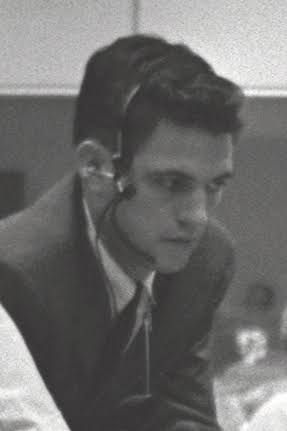
Remembering this incident, Aaron gave Flight Director Jerry Griffin a brief recommendation: “Try SCE to AUX.” Astronaut Alan Bean, who had spent hundreds of hours in the simulator, immediately found the correct switch and flipped it. Telemetry in the capsule and on the controllers’ screens instantly returned to normal.
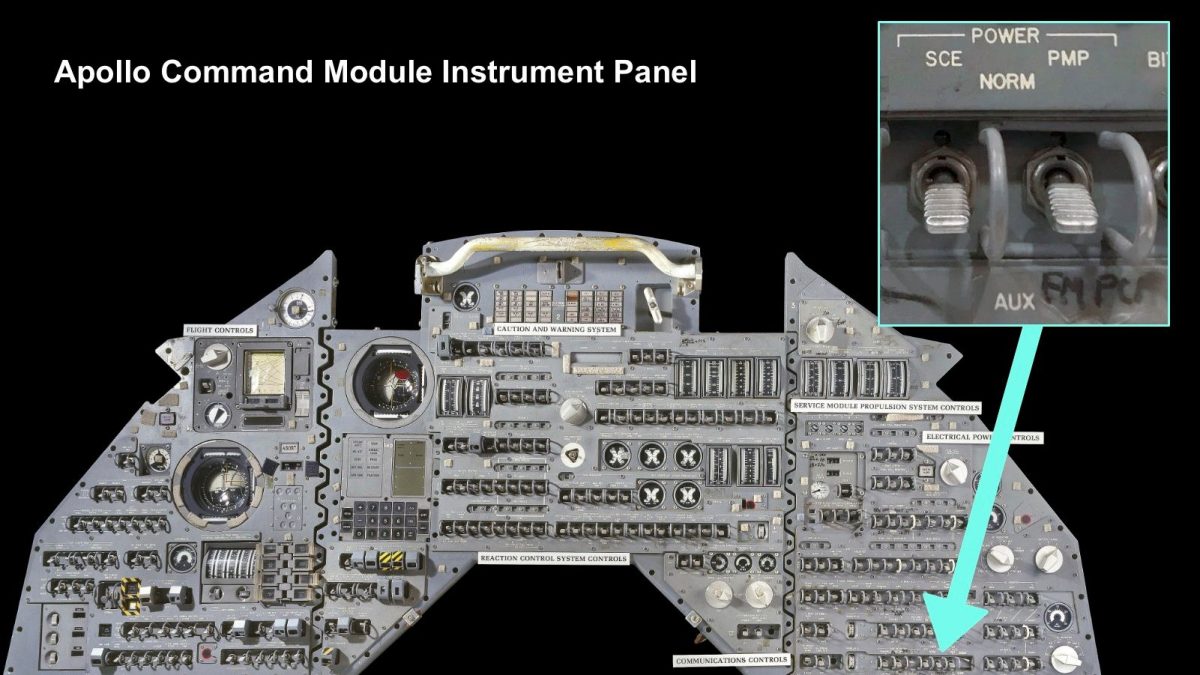
This instruction was not included in any emergency manual — the mission was saved by an engineer’s professional curiosity and his composure at a critical moment. John Aaron later became one of NASA’s most respected experts. He helped save the crew of the stricken Apollo 13, led the development of software for the Space Shuttle, and worked on the International Space Station program until his retirement in 2000.
How the rocket triggered the lightning strike itself
After the mission was completed, specialists began investigating how this had happened in the first place. Launch regulations strictly prohibited sending a Saturn V through cumulonimbus storm clouds, but there were no active thunderstorms along the rocket’s trajectory at the time of launch. The investigation showed that the rocket had not simply been struck by lightning by chance — it had triggered the strike itself.
In nature, lightning occurs when collisions between ice particles inside a cloud separate electrical charges, creating an electric field strong enough to break down the air. The long metal body of the Saturn V, together with its hot, electrically conductive exhaust plume, acted as a giant conductor, distorting the atmospheric electric field and triggering a discharge in clouds that would not normally have produced lightning under ordinary conditions.
This incident, which occurred 57 years ago, forced NASA to fundamentally revise its weather requirements for launches. It became clear that avoiding only visible thunderstorms was not enough — the invisible electrical state of the atmosphere also had to be taken into account. Additional sensors were installed around the launch pad, and special measurements were carried out during the Apollo 13 and Apollo 14 launches in 1970–1971. Today, before every launch, meteorologists are required to analyze not only wind conditions and cloud types but also the strength of electric fields in the atmosphere.
Earlier, we reported on how a NASA supercomputer recreated the Apollo 12 Moon landing in detail.
Based on WRAL
