

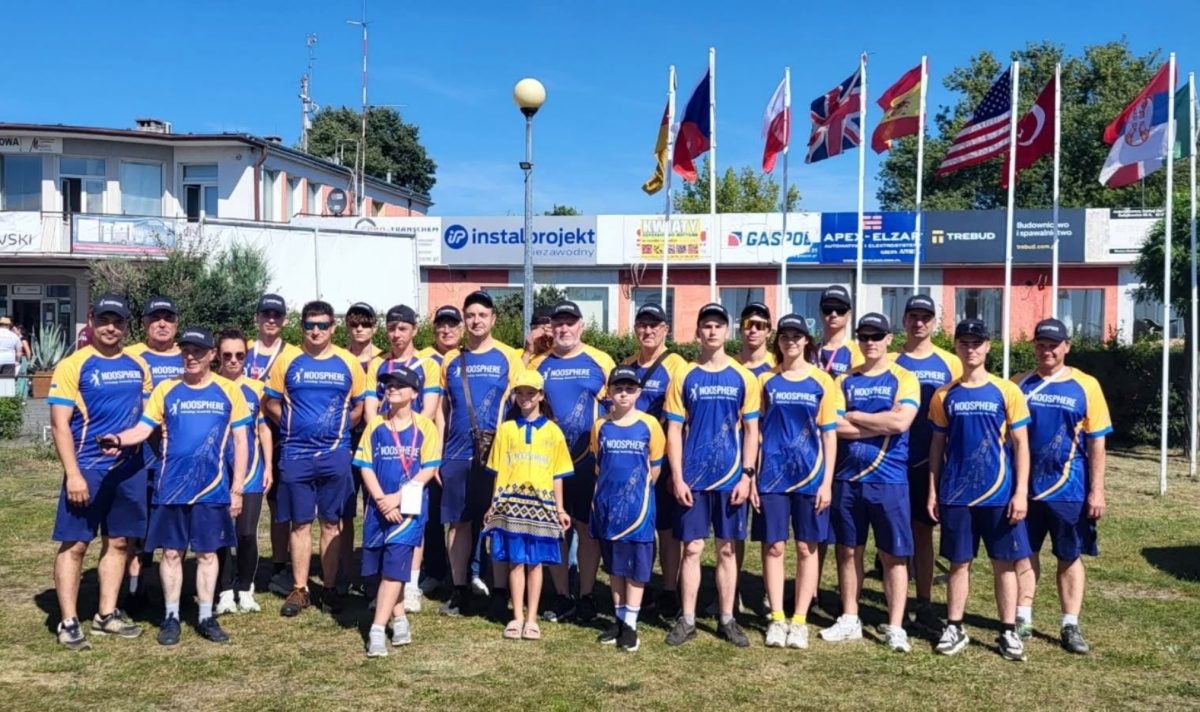
The Ukrainian flag is displayed at the Krushin airfield near Włocławek, Poland. Oleksandr Chekh, an athlete representing Chernihiv, achieved the title of European champion in the S8P class and secured Ukraine’s inaugural gold medal of the event. Nonetheless, this marked only the initial achievement. Throughout the week-long competition, the Ukrainian team won a total of 15 medals — four gold, five silver, and six bronze.
A total of 259 athletes from 17 countries participated in the 2026 European Model Rocket Championship. 22 participants from six regions represented Ukraine — marking the largest fully participatory national team at a competition of this caliber since 2021.
Source: Ukrainian Model Rocket Federation
Four gold medals and a new generation of champions
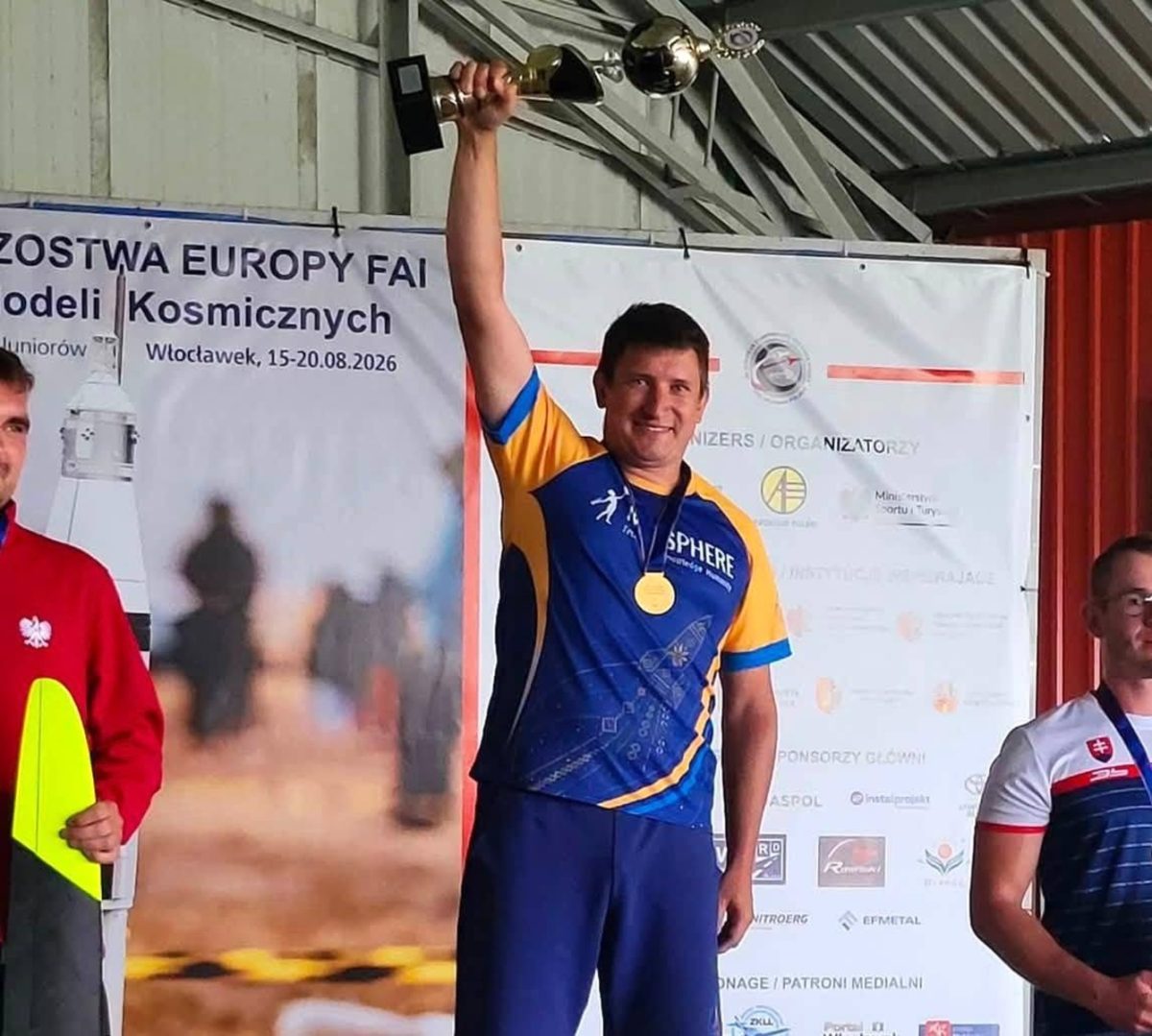
The initial victory was secured by Oleksandr Chekh from Chernihiv, who achieved first place in the S8P class — radio-controlled rocket gliders. In this discipline, the competitor is required not only to execute a flight of a specified duration but also to land the model with maximum precision within the designated landing zone.
Source: Ukrainian Model Rocket Federation
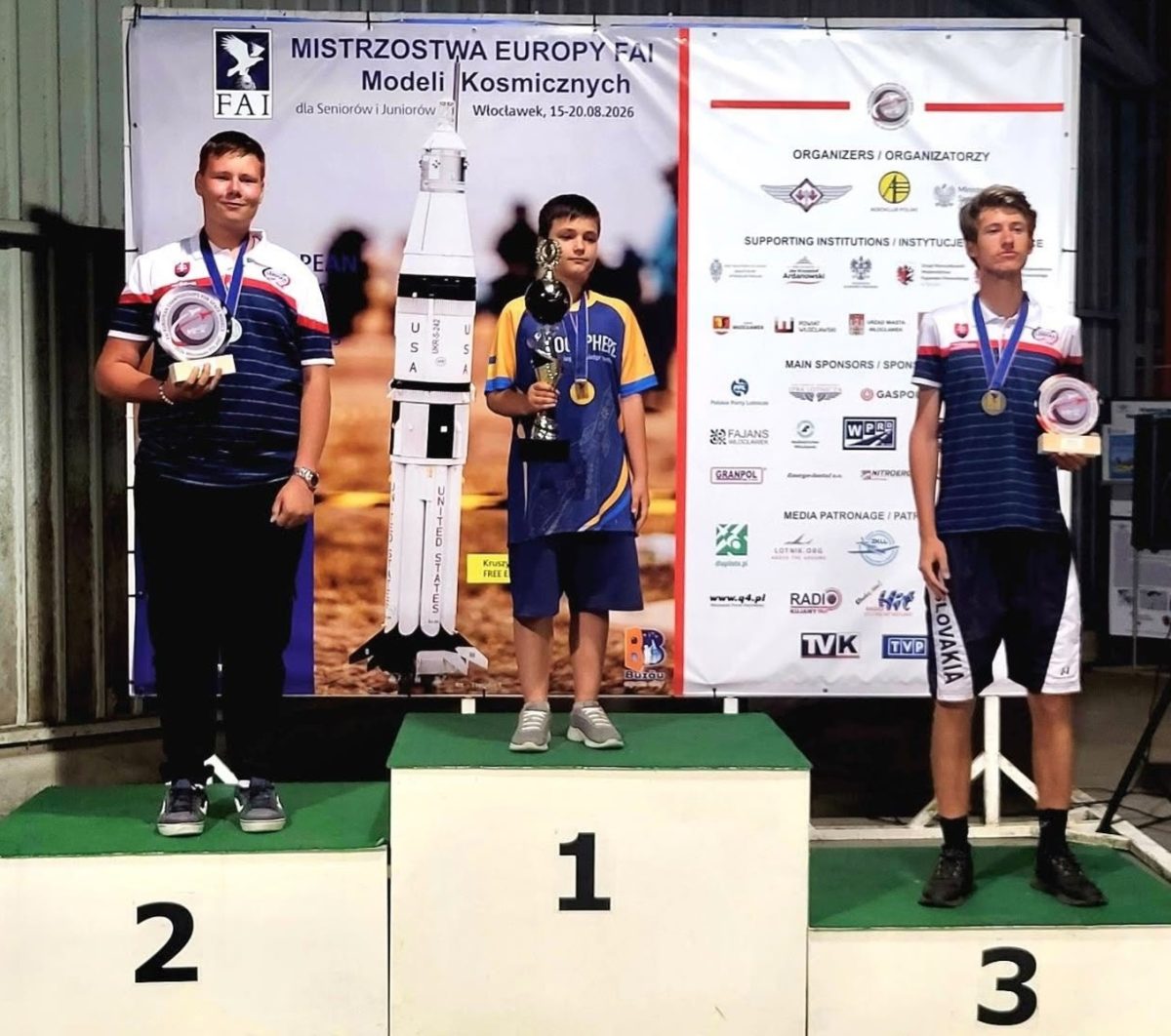
The second Ukrainian gold medal was secured by Matvii Derzhavetskyi, a junior competitor from Dnipro. He achieved victory in the S6A class, where participants operate models that, after ascent, descend along a streamer — an elongated braking tape. The athlete’s objective is to maintain the model in the air for a designated duration, completing this task with two models across three rounds.
Source: Ukrainian Model Rocket Federation
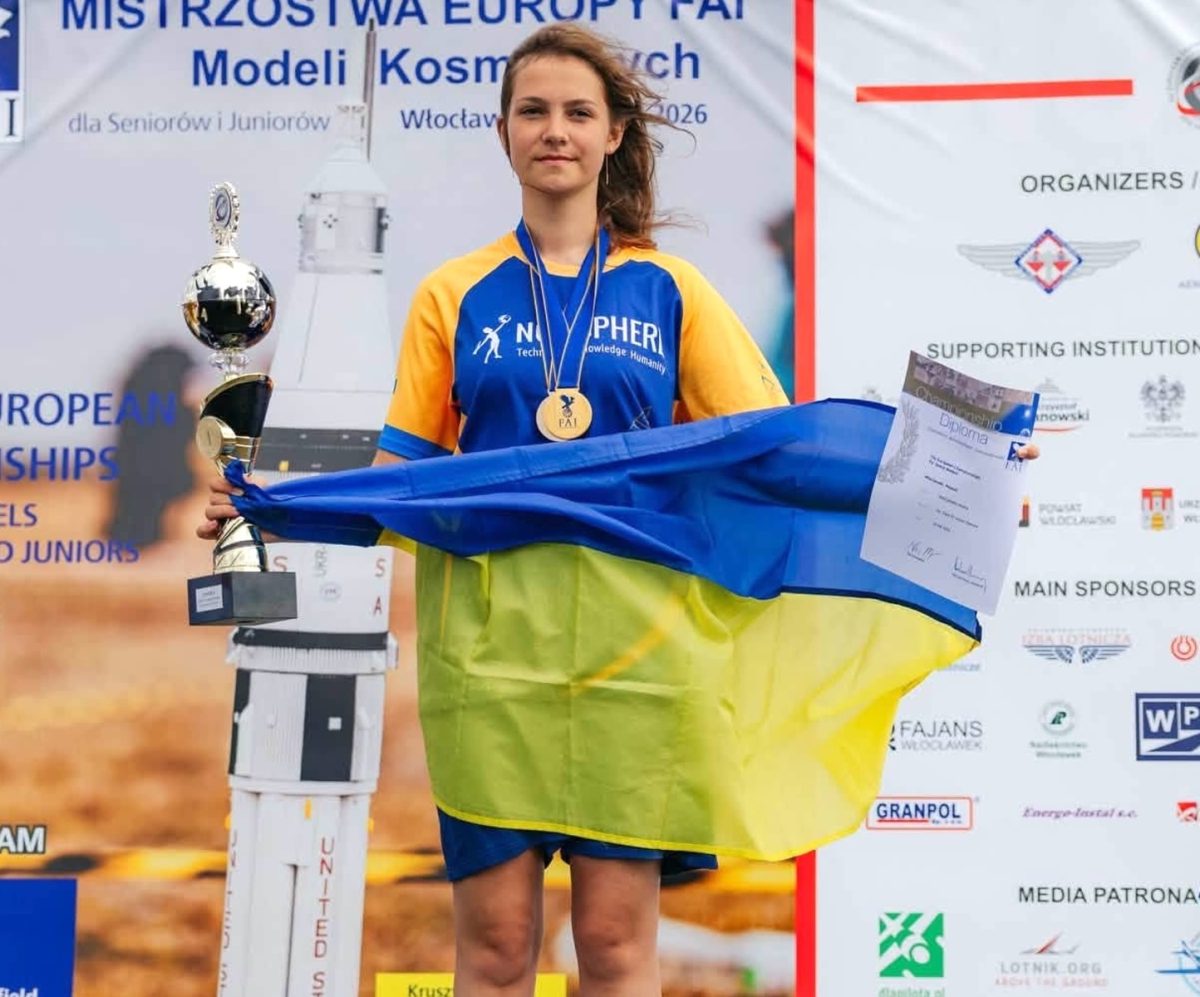
For Nadiia Radchenko, the championship held in Włocławek represented her inaugural participation in an international competition of this caliber. The Ukrainian junior athlete concluded her first continental event by securing three medals across two model categories.
Source: Ukrainian Model Rocket Federation
She secured gold in the women’s division and bronze in the overall standings within the S7 class, which involves scale models designed to emulate realistic flight. Initially, the model undergoes a bench evaluation, wherein judges assess its scale accuracy in relation to the original prototype, the precision of detail reproduction, and the quality of construction and paintwork. Subsequently, the flight performance is evaluated; during this phase, the model must mimic the flight path of the actual launch vehicle as realistically as possible, a replica of which the competitor has crafted.
Nadiia Radchenko secured an additional bronze medal in the S5B classification, wherein scale models compete based on flight altitude.
The Ukrainian senior national team secured its fourth gold medal by achieving first place in the S6A class team competition. In the same category, Mr. Ihor Volkanov, a native of Dnipro and President of the Ukrainian Model Rocket Sports Federation, earned the bronze medal in the individual event.
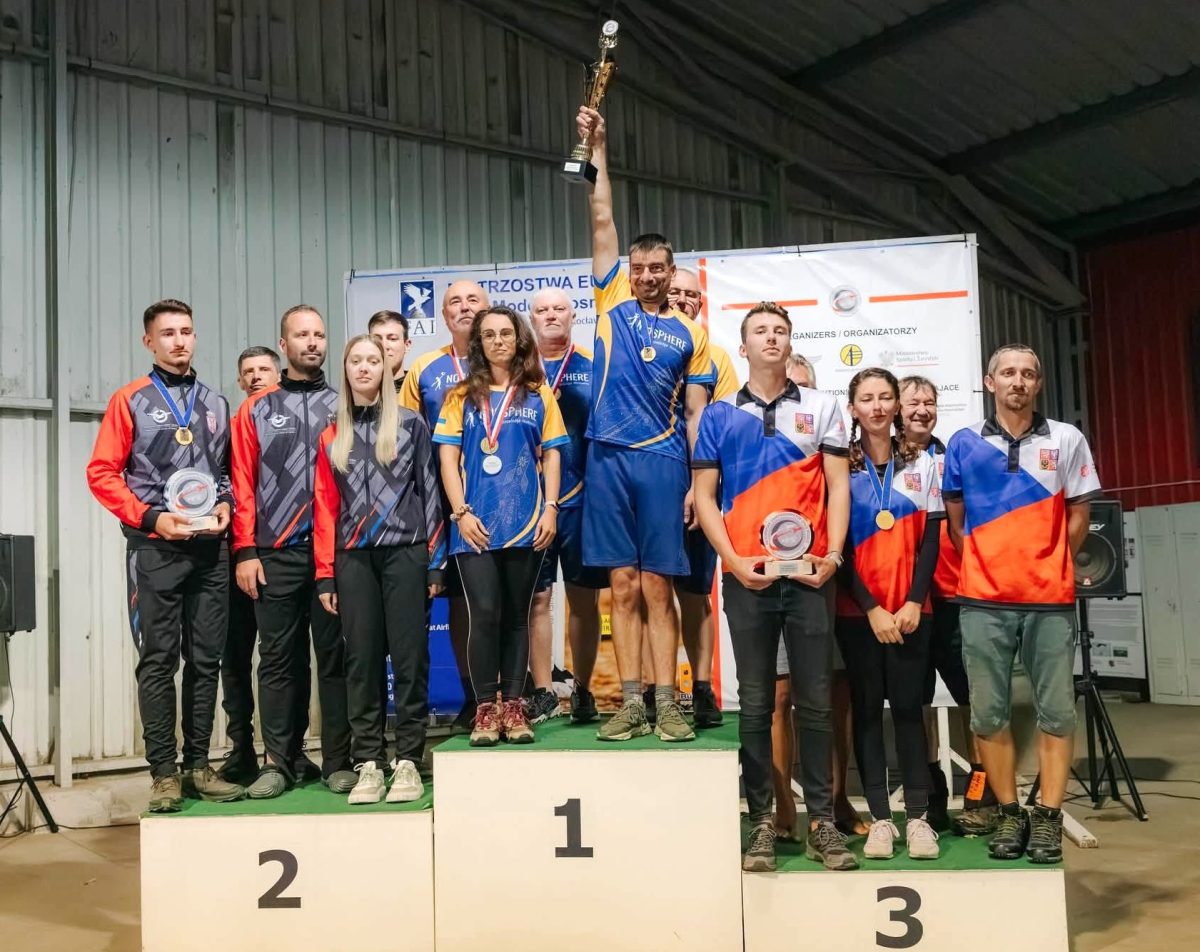
Source: Ukrainian Model Rocket Federation
Grams, seconds, and imperceptible air currents
Model rocketry extends beyond merely a competition to attain the highest altitude. Participants are responsible for designing and constructing their own model rockets and rocket gliders, subsequently competing in categories such as flight duration, altitude, landing precision, and the fidelity of their models to real-world prototypes and flight dynamics. Each launch serves as an empirical assessment of principles in physics, mathematics, aerodynamics, and engineering. Often, the distinction between success and failure hinges upon minimal differences, such as a few grams of mass, a single second of flight time, or slight variations in wind conditions.
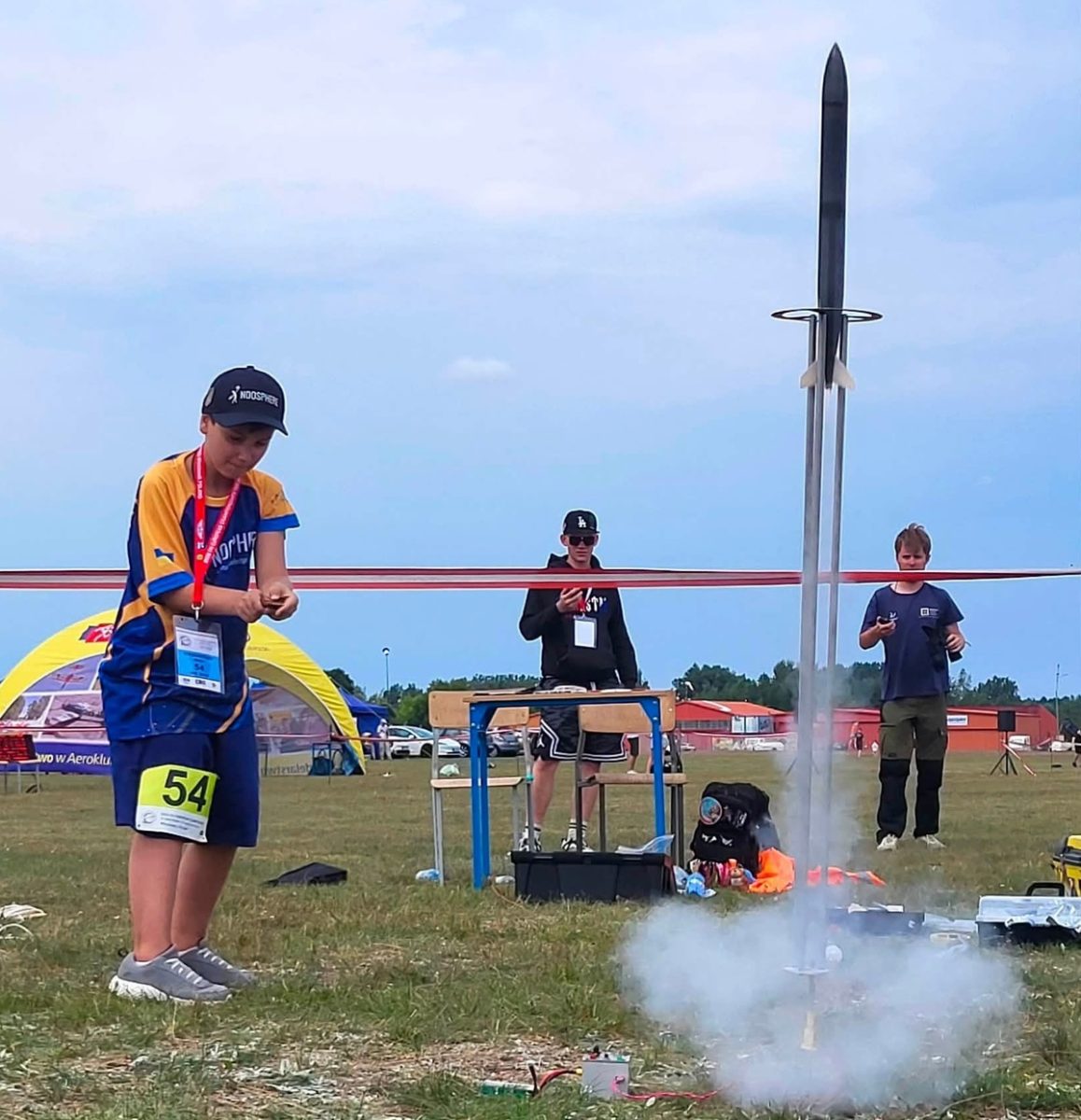
Before the launch, the athlete is required to accurately calculate the model’s specifications, select an appropriate engine, determine the positions of the center of gravity and the center of pressure, and establish the recovery system. During the flight, certain uncontrollable factors such as wind direction and velocity, temperature, cloud cover, as well as updrafts and downdrafts, come into effect. Thermals, which are particularly significant, are invisible currents of warm air that can lift the model rocket and prolong its flight. The athlete must learn to identify these thermals through subtle indications such as grass movement, variations in temperature and wind, bird behavior, or the outcomes of prior launches.
The weather in Włocławek consistently altered the flying conditions. We were compelled to operate under a range of conditions, including intense thermal activity, mild updrafts, low cloud cover, and variable winds. In some classes, the entire team was required to monitor the glider continuously after launch to ensure it remained within sight.
Medals earned despite the war
For the Ukrainian national team, these 15 awards carry particular importance. The comprehensive conflict has profoundly altered training conditions. Due to security constraints, deploying rockets within Ukraine has become considerably more challenging. The availability of training facilities has diminished, and the capacity to conduct full-scale training frequently depends on the circumstances prevailing in specific regions.
In the field of model rocketry, practical training cannot be entirely substituted by computer simulations or workshop activities. Even a meticulously designed model necessitates a series of launches, during which researchers evaluate its stability, the efficacy of the recovery system, its performance under diverse weather conditions, and its adherence to the predetermined specifications.
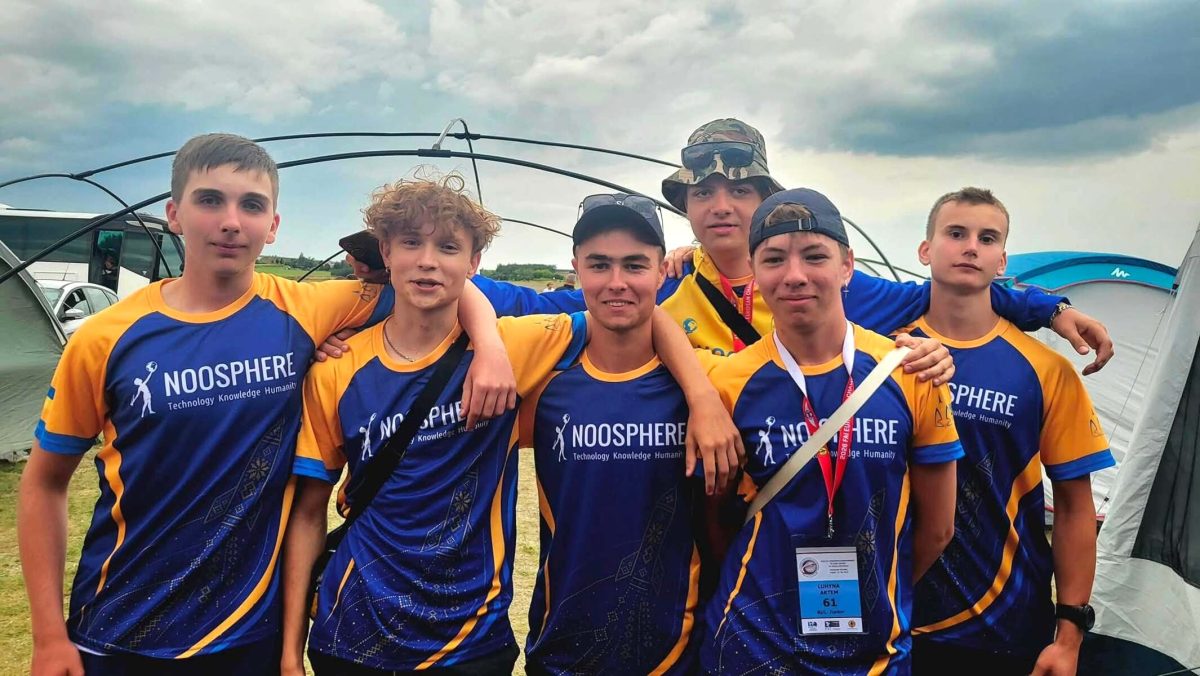
Source: Ukrainian Model Rocket Federation
Despite limited training opportunities, Ukrainian athletes remain competitive and continue to achieve success on the international stage. “Behind every medal lie years of dedicated training, numerous trials, and the diligent efforts of the athlete, coach, and entire team. It is now imperative for us not only to sustain the standard of Ukrainian model rocket sports but also to ensure continuity across generations. The results of our juniors in Włocławek demonstrate this ongoing succession. Young Ukrainian athletes are already competing alongside Europe’s most formidable opponents. This indicates that, despite various challenges, the Ukrainian model rocketry school continues to advance,” observes Denys Khmil, Secretary General of the Ukrainian Model Rocketry Federation.
More than merely a sport: model rocketry as an educational discipline in engineering
Model rocketry has a longstanding tradition in Ukraine. For many decades, clubs dedicated to model rocketry have been active within Young Technicians’ Stations, centers devoted to science and technology creativity, and institutions offering extracurricular education. Presently, model rocketry is increasingly integrating athletic competition with hands-on STEM education. Students do not merely memorize formulas or physical laws; they engage comprehensively in the engineering process: receiving an assignment, designing a model, calculating its parameters, constructing it, conducting tests, analyzing outcomes, refining the design, and participating in competitions.
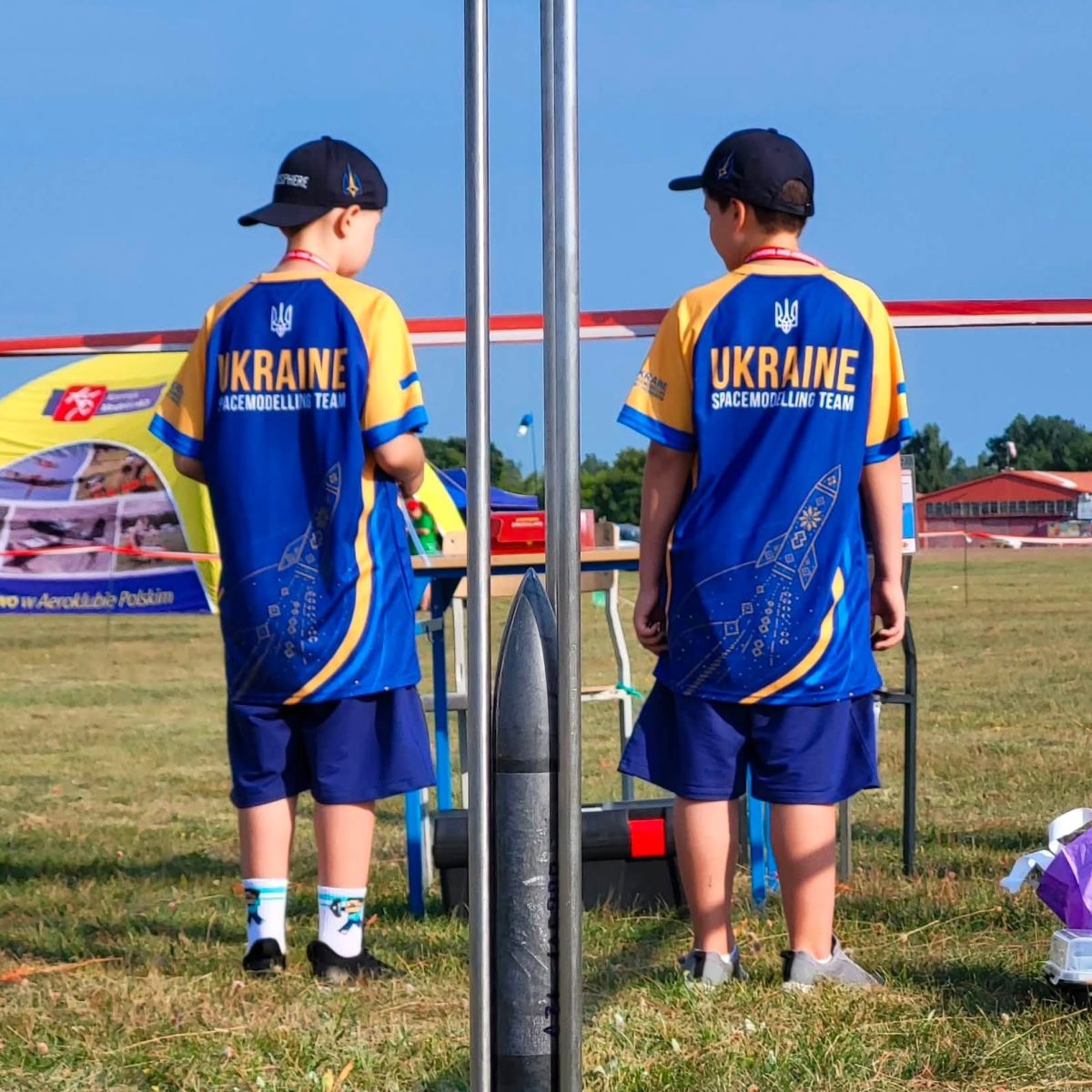
Source: Ukrainian Model Rocket Federation
Errors in this context should be regarded not as failures but as valuable data sources. When the rocket deviates from its prescribed trajectory, it is necessary to examine its balance and the geometry of the stabilizers. In cases where the model descends at a rate faster than anticipated, adjustments should be made to the parachute or streamer configurations. If the desired altitude is not achieved, an analysis of the mass, aerodynamic drag, and engine performance is warranted. This methodology fosters system thinking, technical innovation, and the capacity to address real-world engineering challenges. For some students, participation in a regular model rocket club constitutes an initial step towards a prospective career in the aerospace industry or the technology sector.
The Ukrainian Model Rocket Federation collaborates with educational institutions, scientific and technical centers, and youth technology clubs to attract new athletes to this field. Additionally, the NGO “Association Noosphere” offers systematic support for the advancement of model rocketry and STEM initiatives across Ukraine.
Next stop: the 2027 World Championship
Regarding the Ukrainian national team, the European Championship held in Włocławek served not merely as a contest for medals but also as a significant phase in their preparatory process for subsequent major events. In 2027, the athletes are scheduled to return to the renowned Krushin airfield to participate in the FAI World Championship in model rocketry.
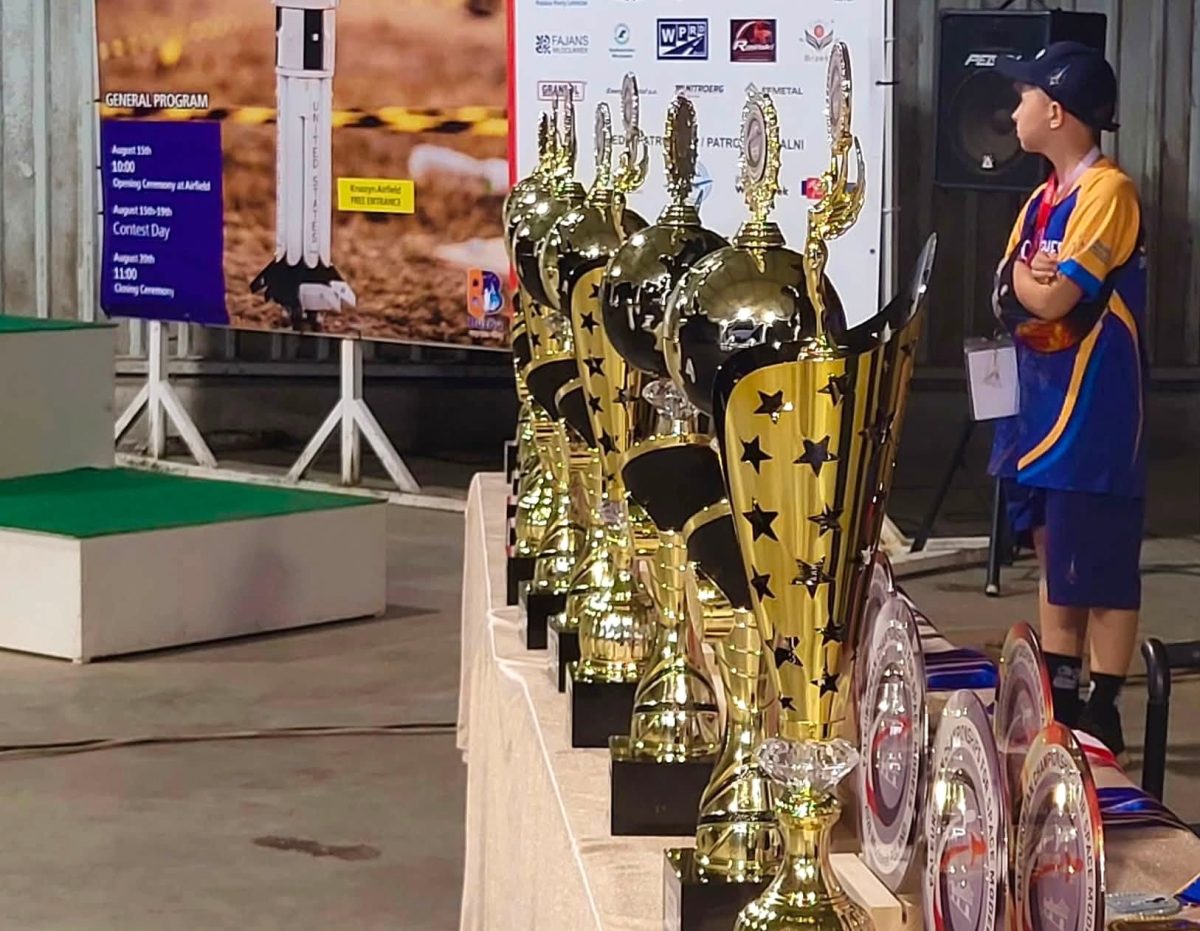
Ukraine departed from Włocławek with a total of 15 medals. Nonetheless, the importance of this achievement extends beyond mere numerical representation in the final standings. It exemplifies how the Ukrainian rocket modeling school maintains its traditions, continues to evolve, and how its emerging generation is already demonstrating its capacity to succeed at the highest international level. Consequently, the Ukrainian flag will be flown numerous times over future rocket modeling competitions.
Sponsored content.
