

The 2026 Nobel Prize in Chemistry went to Henri Kagan and Kenso Soai. They discovered reactions that make it possible to obtain only one of the two mirror-image isomers in which many organic substances exist. At first glance, this research seems far removed from space, yet it helps answer the question of how life arose in the Universe.

The Chemical Basis of Life
Henri Kagan and Kenso Soai, who received this year’s Nobel Prize in Chemistry, work in an area of chemistry directly connected to biology. Their research is of particular interest to the pharmaceutical industry because one of its implications is the potential to enhance desired effects and reduce harmful ones.
However, the same research is also relevant to the origin of life and how difficult it is for life to begin. This, in turn, is directly related to how widespread it may be in the Universe. To understand this, though, we need to start with the basics: what distinguishes living matter from nonliving matter?
In the early days of chemistry, from the 15th to the 18th centuries, most scientists believed that the structure of living organisms was fundamentally different from that of nonliving matter and therefore could not be reduced to a simple sum of chemical reactions. Many attributed this to a special “vital force” in the Universe that could turn collections of atoms into living beings.
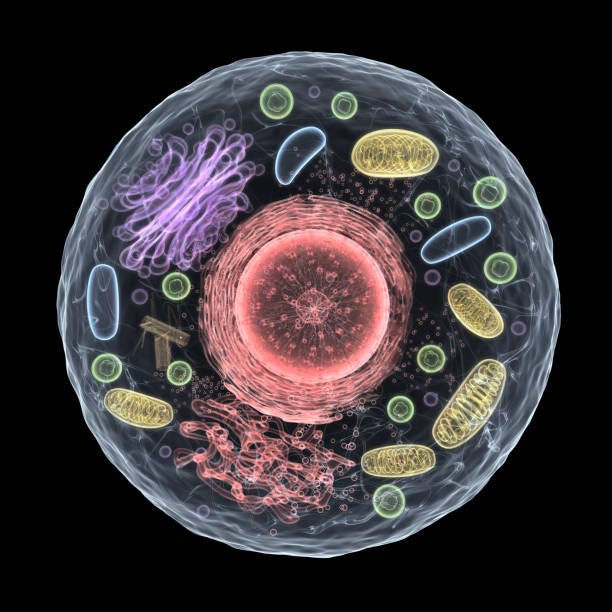
This theory is called vitalism, and many still invoke it when suggesting that Earth may be the only planet in the entire Universe to have given rise to life. Yet as early as the 19th century, chemists realized that the complexity of biological processes became somewhat less mystical if one assumed that chemical transformations of hydrocarbons did not simply add individual elements to a general “soup,” but instead produced specific spatial structures.
It became clear that this could indeed explain life, but it also led to the discovery of a complex phenomenon called isomerism. Isomers are forms of organic molecules that contain the same atoms connected in different ways, affecting their physical and chemical properties.
Then came experiments with polarized light, in which electromagnetic oscillations occur in a single plane. These revealed the existence of optical isomers with identical physical and chemical properties—at least in an inorganic environment—that nevertheless rotate the plane of polarization in opposite directions.
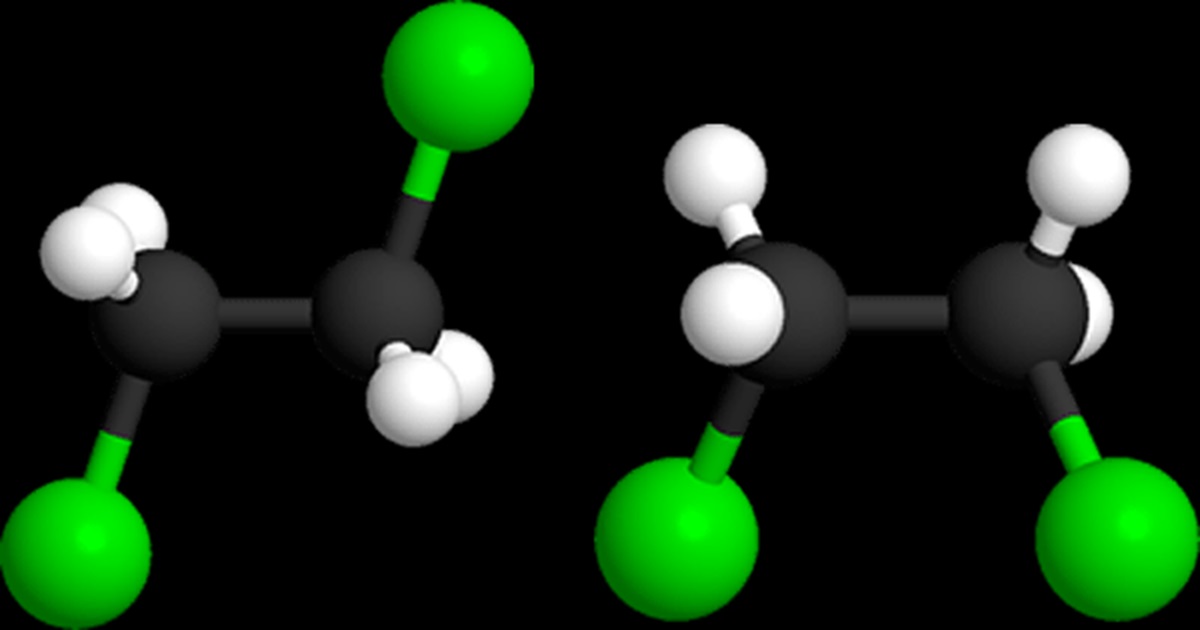
The solution to this puzzle was not particularly difficult, even for 19th-century scientists. The structures of these molecules simply had to be asymmetric while also being mirror images of each other.
The simplest analogy is human hands. You can rotate them however you like, but you can never make them overlap perfectly in the same position: some fingers will always point the wrong way.
Enantiomers and the Problem of Homochirality
In fact, the analogy with hands gave this phenomenon its name. The Greek word χέρι means “hand,” so the existence of mirror-image isomers of a substance became known as chirality. The mirror-image isomers themselves were called enantiomers, while a substance consisting of only one type was described as homochiral—literally, having the “same handedness.”
They might have remained a little-known curiosity had it not emerged that all the sugars in DNA and RNA are right-handed enantiomers, while all the amino acids that make up proteins are left-handed, except for glycine, which has no enantiomers.
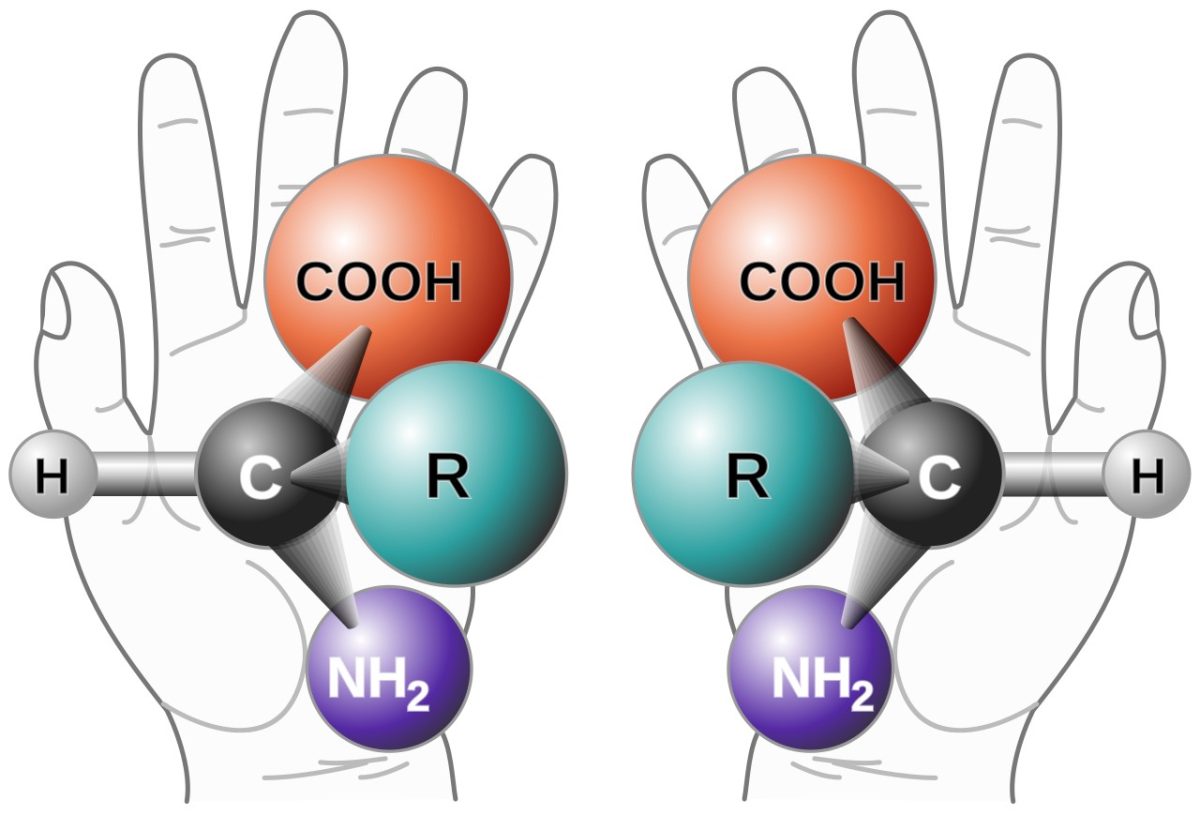
The internal logic here is perfectly clear: proteins are synthesized on ribosomes, which read information from RNA, and all of this happens through chemical bonds, so they must have different orientations.
The problem lies in how such a structure could have arisen in the first place. Scientists learned relatively quickly how to synthesize organic substances from inorganic materials, but the result was a mixture containing equal amounts of left- and right-handed isomers. Such a mixture is called a racemate.
Vitalism, which chemists had successfully laid to rest, seemed to come back to life. If nature could produce only a racemate, then some form of “qi” or “prana” must have shaped it into homochiral proteins and RNA.
This is the very argument on which many people still base their claims that life cannot exist on other planets, naturally linking it to the concept of a God who is especially favorable toward our planet.
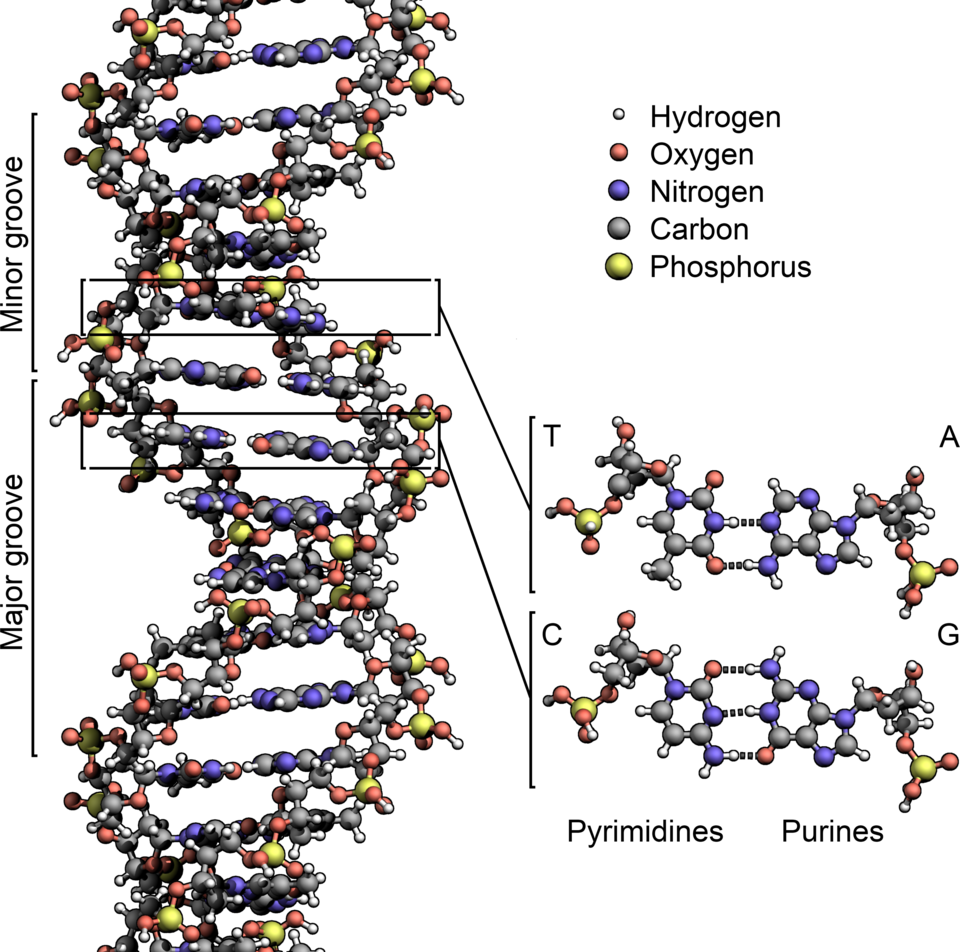
Another idea stems from this as well: another planet might have plants and animals, yet humans would be unable to survive by eating them because, for example, their DNA might contain left-handed sugars and their proteins right-handed amino acid enantiomers. This scenario cannot be ruled out entirely, although the more chemists learn about this difficult subject, the more doubtful it seems.
Asymmetric Synthesis
Chemists, however, were undeterred. As early as the turn of the 20th century, they found the first way to disrupt the strictly racemic composition of organic mixtures. In many cases, it proved sufficient to place them in an environment that was itself homochiral—for example, one containing those same proteins or amino acids.
An immediate question arose: where could the first such environment have come from? Once again, life seemed to be the result of some mystical force. The situation was further complicated by the fact that there were no methods for distinguishing left- and right-handed isomers other than observing them using polarized light. Only with the advent of X-ray crystallography did working in this field become truly practical.
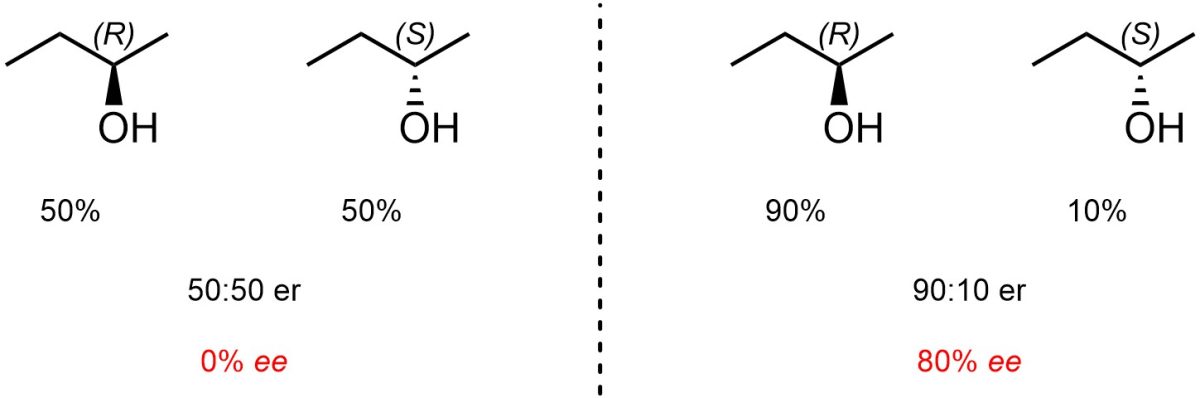
Even before that, however, scientists had recognized another problem. Breaking the racemic balance did not necessarily produce homochirality. There were numerous intermediate states in which one enantiomer was more abundant, but the other was still present. This gave rise to the concept of enantiomeric excess: the extent to which one molecular form outnumbers the other in a mixture. It can range from 0, corresponding to a 50:50 ratio, to 100, meaning complete homochirality.
As early as the first half of the 20th century, scientists realized that the route to obtaining homochiral substances involved chemical reactions with molecules that were themselves asymmetric. These often turned out to be substances containing a metal atom alongside carbon, oxygen, and hydrogen.
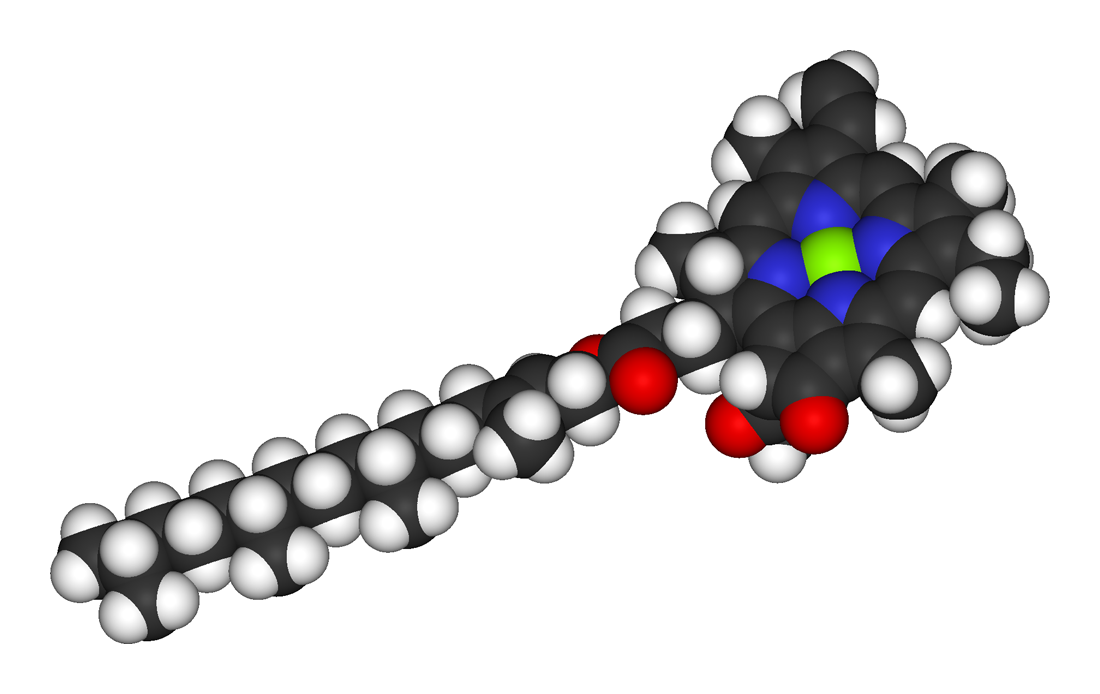
A familiar example is chlorophyll, which gives leaves their green color. Its molecule contains a magnesium atom and is quite asymmetric and elongated. Most interestingly, however, the products of reactions involving it exhibit a substantial enantiomeric excess.
This is how the concept of asymmetric synthesis emerged. It became possible to selectively obtain left- or right-handed enantiomers. Yet the spirit of vitalism had not been fully overcome. The new methods often failed to produce an entirely homochiral product, unlike what is observed in nature. Nor was it clear where new chlorophyll molecules were supposed to come from. Perhaps, though, the answer lay in the fact that biological reactions in nature form complex cycles.
The situation changed in 1968, when William Knowles, Ryoji Noyori, and Barry Sharpless independently concluded that the key lay in using asymmetric metal-containing molecules, which did not necessarily have to participate in the reaction themselves.
After all, many processes in nature take place simply in the presence of a catalyst. This led to the asymmetric hydrogenation of organic molecules—the first method of asymmetric synthesis that could be applied in the pharmaceutical industry. But there was still one catch: even in this reaction, the enantiomeric excess was only 15%.
What Kagan and Soai Did
Now it is worth explaining exactly what the Nobel laureates in chemistry accomplished. André Kagan had been working in asymmetric synthesis since the early 1970s. He tried using asymmetric molecules based on metals rarely found in living organisms as catalysts. His first major achievement was a selective reaction in the presence of a rhodium-based catalyst. Its product had a very high enantiomeric excess. Kagan subsequently worked extensively on developing selective catalysts based on lanthanides.
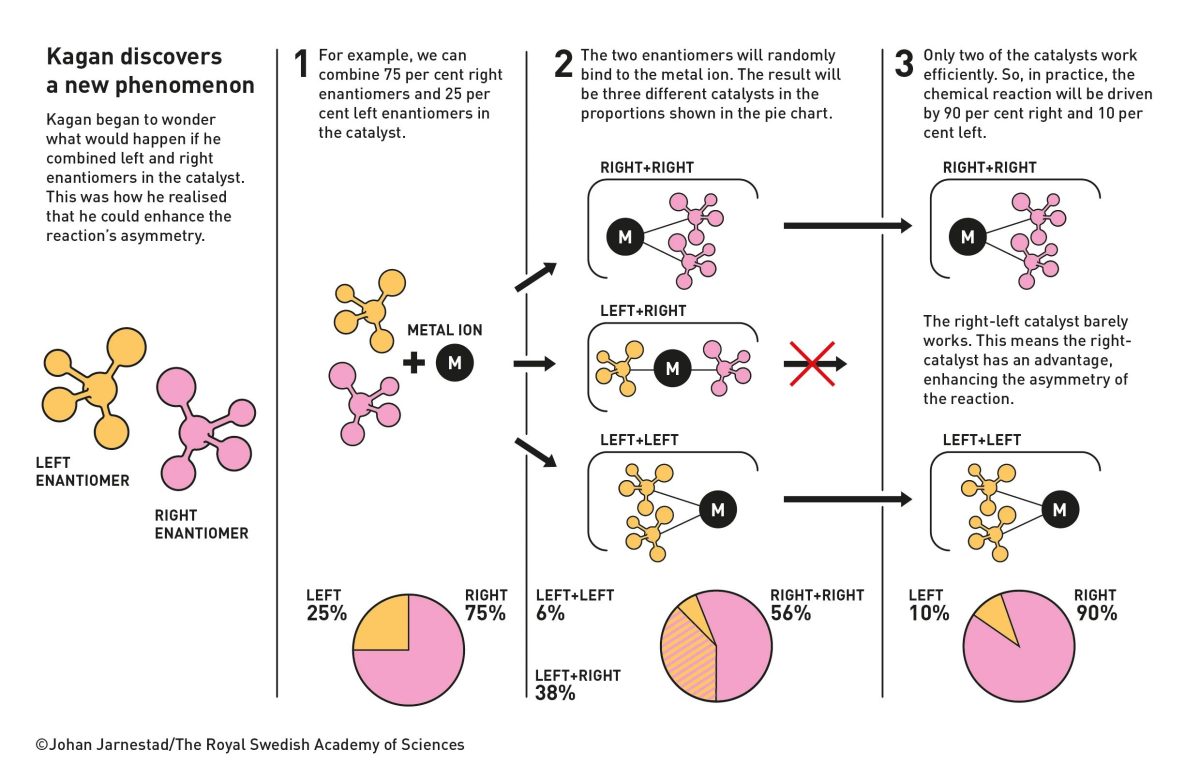
Kagan made his most important discovery, however, in 1986. He was studying a fairly complex catalytic reaction involving an asymmetric titanium-containing molecule as a catalyst when he noticed that the reaction behaved nonlinearly.
Such reactions usually follow a simple principle: the more catalyst molecules there are, the faster and more efficiently they work. In this case, however, at a certain point, the acceleration of the reaction ceased to depend on an increase in the amount of catalyst. The reactant molecules themselves had begun gathering around the catalyst molecules, further disrupting the racemic balance of the product. This is known as asymmetric amplification.
Later, already familiar with Kagan’s findings, Kenso Soai decided to achieve asymmetric amplification by applying the principles of autocatalysis. The idea here is even simpler: these are reactions in which the product acts as a catalyst for its own synthesis. This happens constantly in nature. In essence, all life is one vast system of autocatalytic cycles.
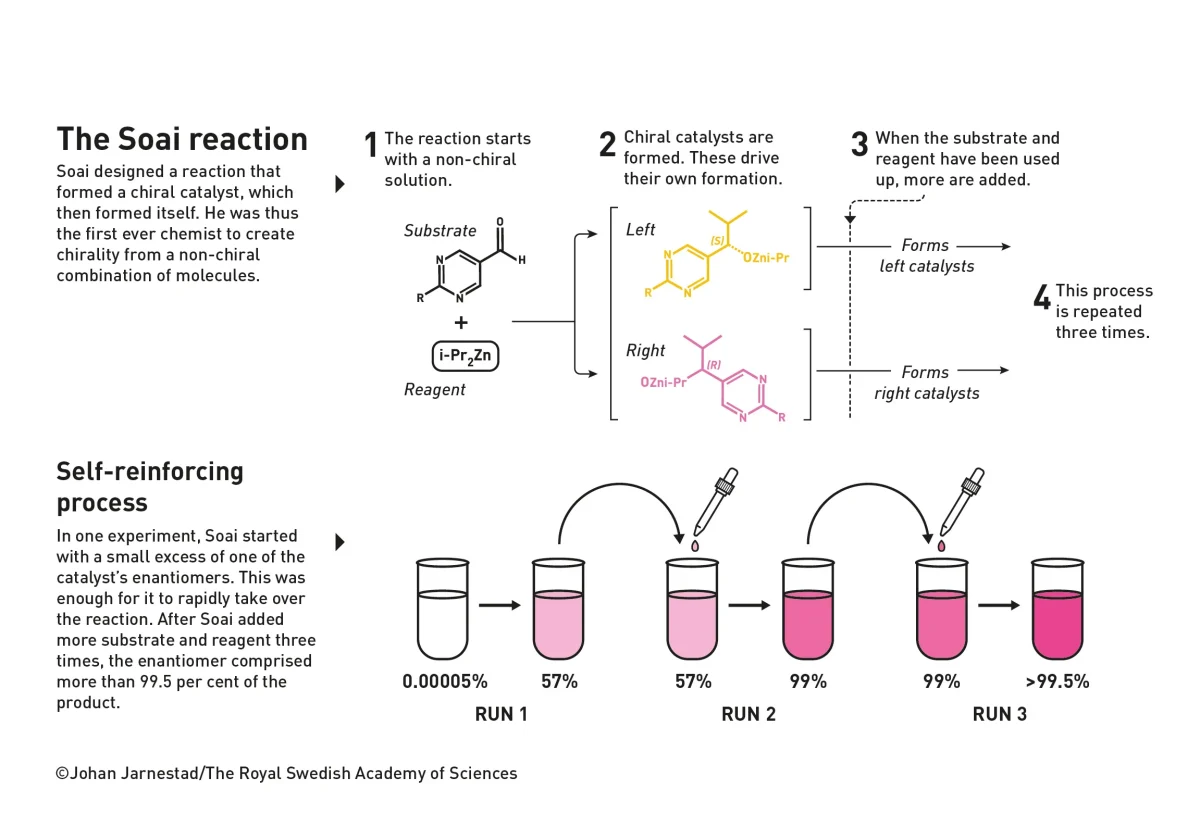
In 1995, Soai introduced the reaction that now bears his name. It was not the final step in the evolution of asymmetric synthesis. On the contrary, it encouraged other scientists to search for similar processes.
The main outcome of its discovery was that scientists could finally demonstrate how a uniform mixture of isomers could give rise to DNA and proteins in the forms we know.
So, Does Life Exist Beyond Earth?
The work of Knowles, Noyori, Sharpless, Kagan, and Soai is usually discussed in the context of developing new medicines. Yet it is no less important for understanding how life might have arisen on Earth or other planets.
The point is that methods of asymmetric synthesis—all those metal-containing organic compounds, the complex catalysts based on them, and autocatalytic processes—closely resemble what happens inside and around a cell, even though they often involve components rarely found in living organisms. But yes, this is a possible pathway by which life could have arisen.
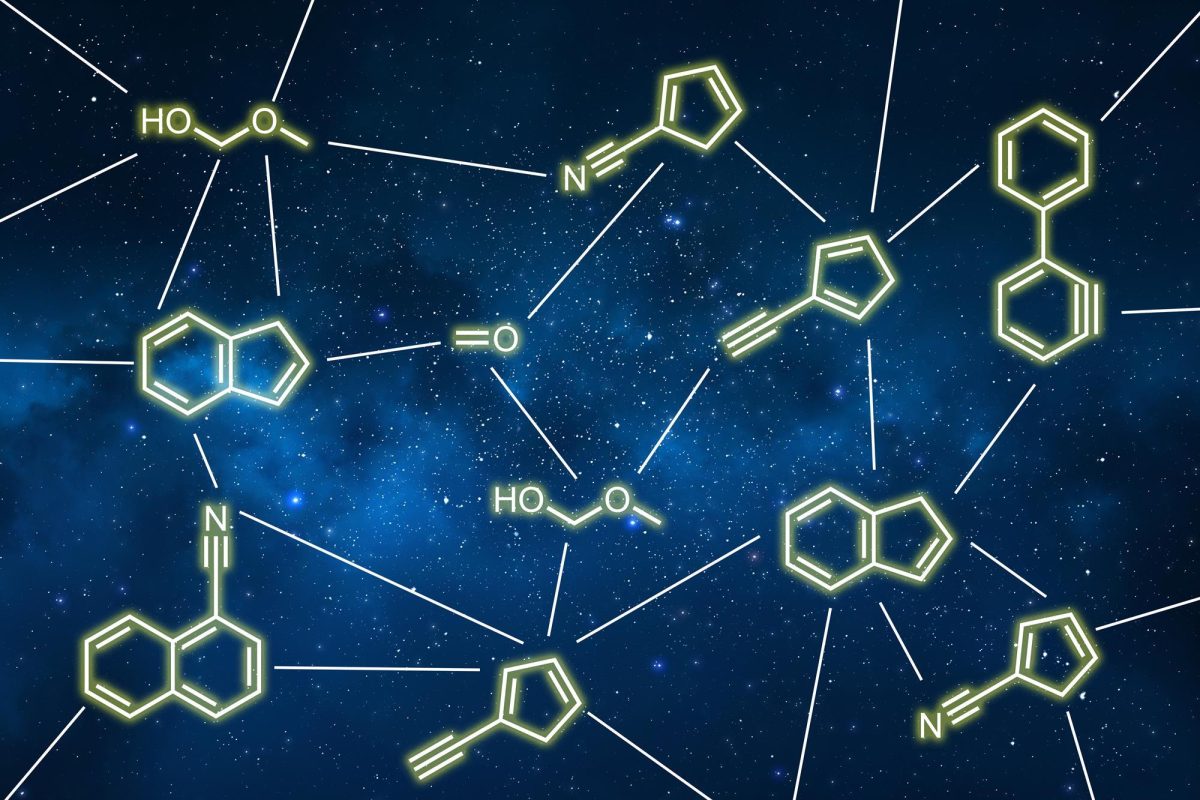
The broader question of life around other stars extends far beyond the problem of synthesizing homochiral hydrocarbons. Scientists are still considering the possibility of alternative biochemistries, such as those based on silicon. These questions remain unanswered for now. What is clear is that such a system would require conditions very different from those on our planet.
Equally important is how common Earth-like planets are, with conditions favorable to the evolution of organic molecules. Yet we know that organic material is abundant in space. And thanks to the work of this year’s Nobel laureates in chemistry, it has become clear that asymmetric synthesis can begin spontaneously in a hydrogen environment rich in metal atoms. Perhaps the first replicators—RNA—then emerge, opening a path to DNA and proteins, and ultimately to living cells, tissues, and entire organisms.