

The global scientific community has officially crossed the threshold into a new era of timekeeping. Two independent research groups — from the Vienna University of Technology (Austria) and Tsinghua University in Beijing (China) — have presented the first working prototypes of nuclear clocks. The results of their fundamental studies were published simultaneously in the prestigious scientific journal Nature.
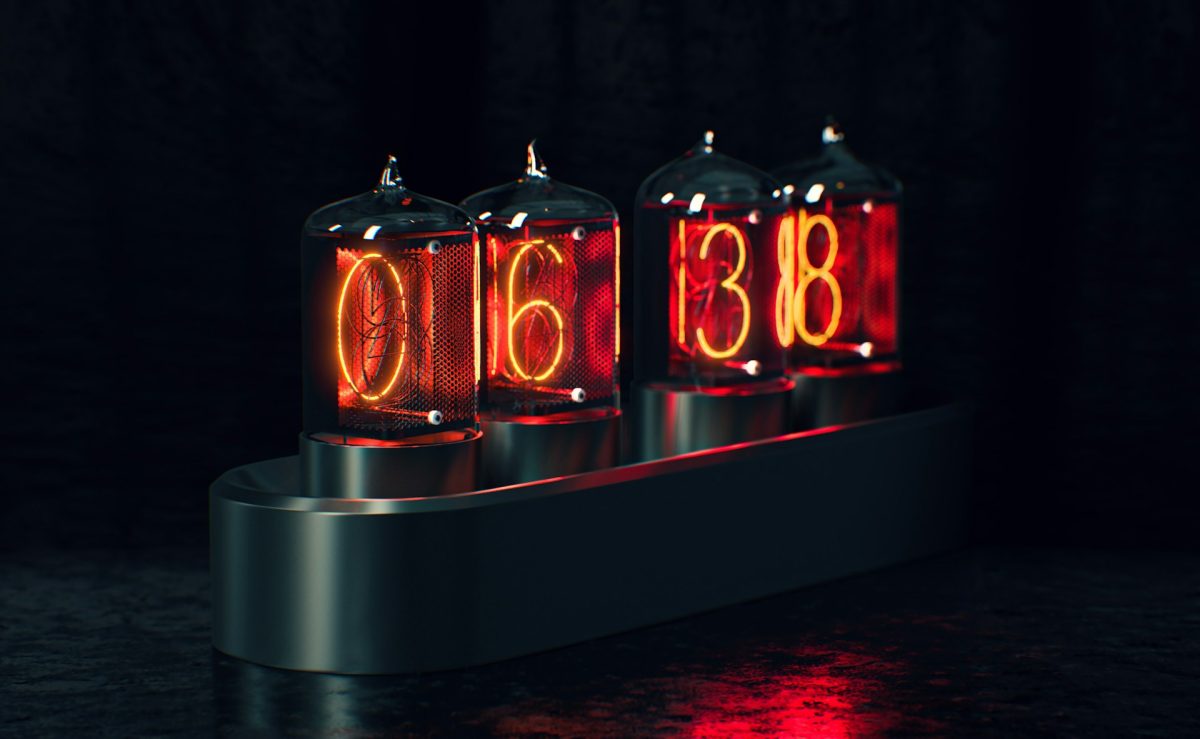
Modern atomic clocks, which underpin the operation of GPS satellite navigation and the global internet, demonstrate impressive accuracy, with an error of just 1 second in 300 million years. Nuclear counterparts, however, could push these limits to billions of years, opening the way to studying some of the least understood phenomena in the Universe, including dark matter.
How Does a Nuclear Clock Differ from an Atomic Clock?
To understand the significance of the breakthrough, it is worth recalling some basic physics. A conventional atomic clock works using a laser tuned to a precise frequency of light. This frequency causes an electron to jump between two energy levels within an atom.
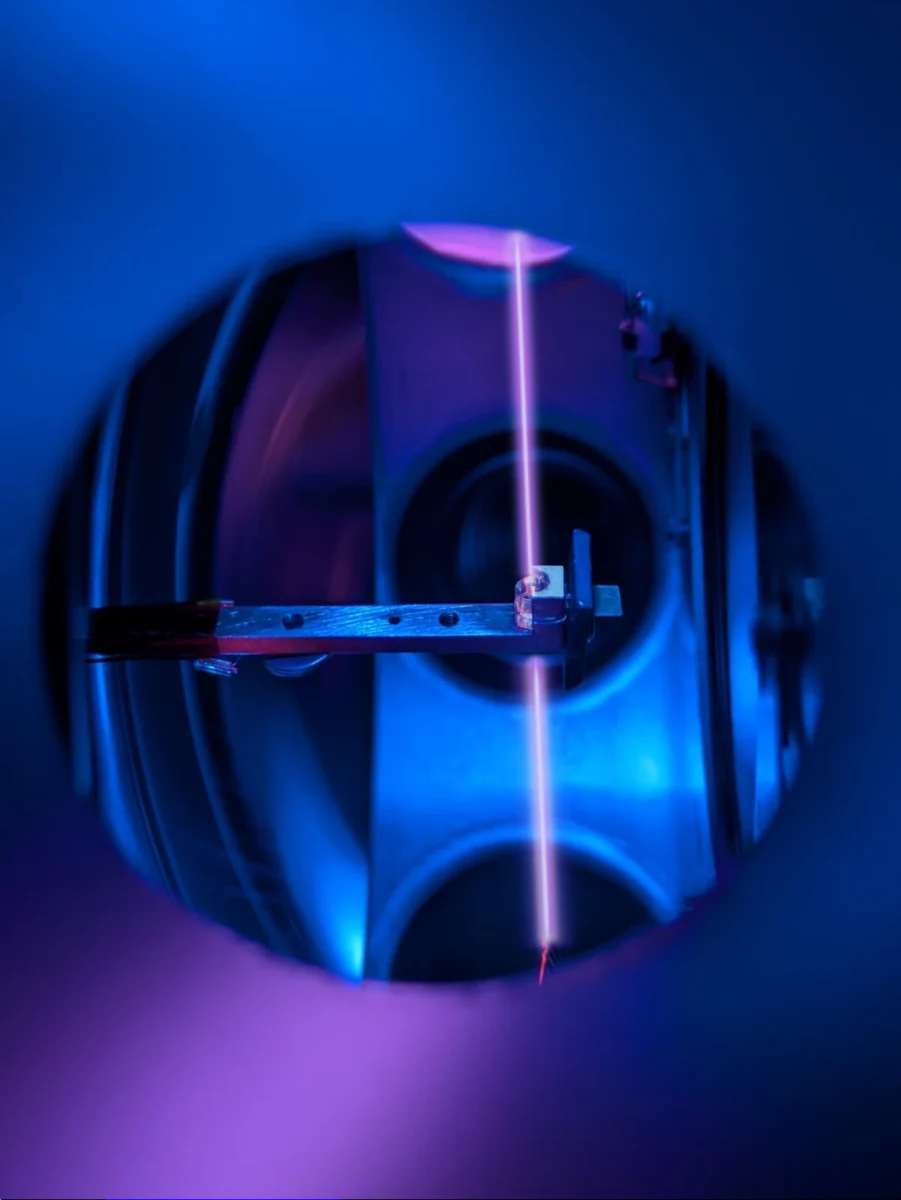
A nuclear clock goes much deeper — into the very heart of matter. An atomic nucleus is roughly tens of thousands of times smaller than the atom as a whole, including its electron cloud. The laser is then focused directly on the oscillations of the nucleus, detecting its transition between energy states. Because the nucleus is hidden deep inside the atom, it is much less affected by external disturbances and electromagnetic fields, which in theory makes the clock significantly more precise.
Why Thorium-229?
Normally, changing the state of an atomic nucleus requires enormous amounts of energy and high-energy radiation. The thorium-229 isotope, however, is a unique natural exception. Its nucleus can be “squeezed” and shifted between energy levels using relatively accessible optical lasers.
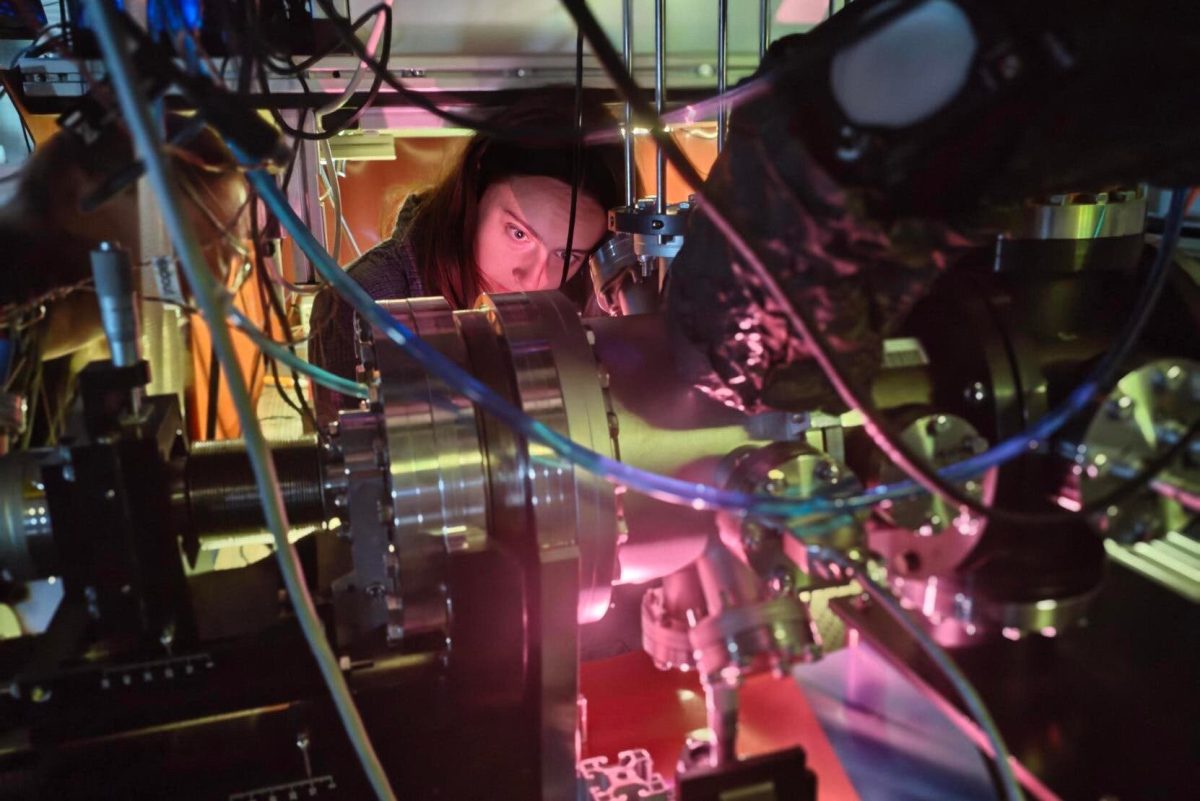
Study co-author Professor Thorsten Schumm of the Vienna University of Technology explains the concept in simple terms: “The basic idea is simple: you have a laser and thorium. The laser changes the energy state of the thorium nuclei, while the nuclei themselves provide feedback — they stabilize the frequency of the laser.”
Both developments are based on a thorium crystal. Scientists grew the material in parallel, leading to a “fierce but friendly global competition” between Austrian and Chinese physicists.
Current State and Prospects
Despite their enormous potential, the new nuclear clocks are still at the stage of “early prototypes.” Current tests show that the Chinese version is approximately six times more stable than the Austrian one. At the same time, the Vienna device was the first to publish a stabilization system similar to the one used in conventional atomic clocks.
At present, the prototypes accumulate an error of 1 second roughly every 30 million years. This is about 10 times worse than modern cesium standards, which officially define the length of a second on Earth.
However, this is only the first step. Scientists are convinced that as the quality of thorium crystals improves and laser power increases, each new generation of nuclear chronometers will become more accurate, eventually leaving atomic clocks behind.
Previously, we reported on how time in the early Universe moved five times more slowly than it does today.
Based on Popular Science
