

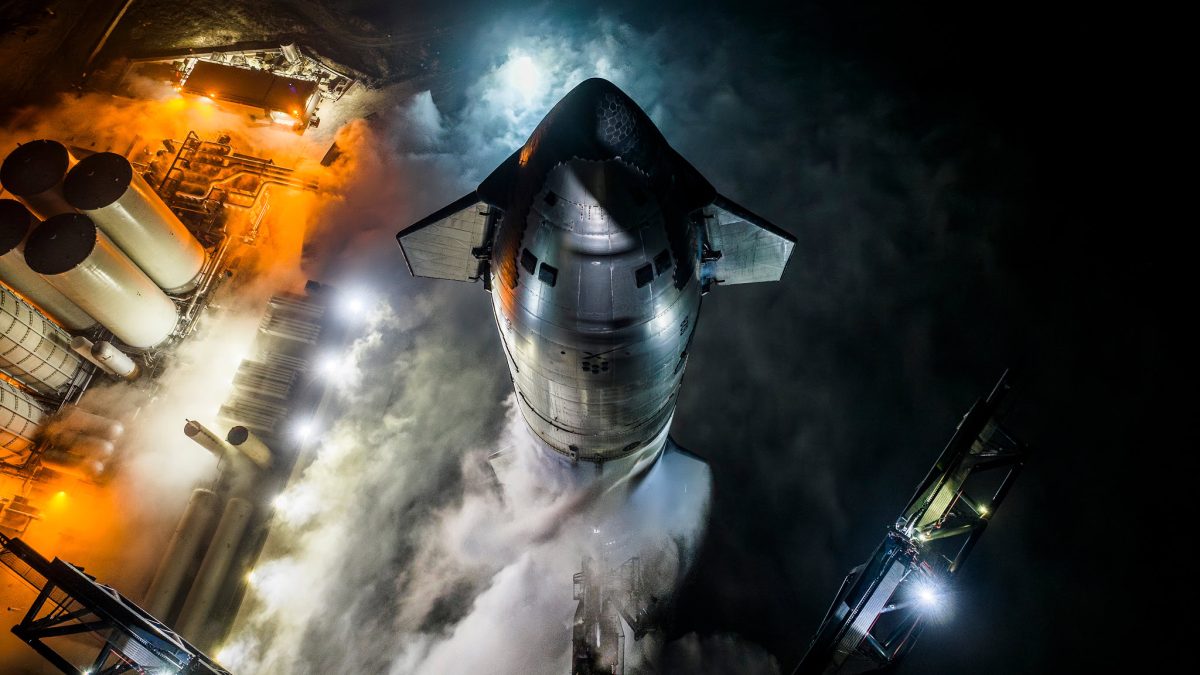
Just one day after SpaceX successfully caught the Starship upper stage at the launch pad for the first time in history, Elon Musk shared details about the next, significantly larger version of the spacecraft. In a post on the social network X, the company’s head revealed the technical specifications of the Starship V4, which could dramatically accelerate humanity’s return to the Moon.
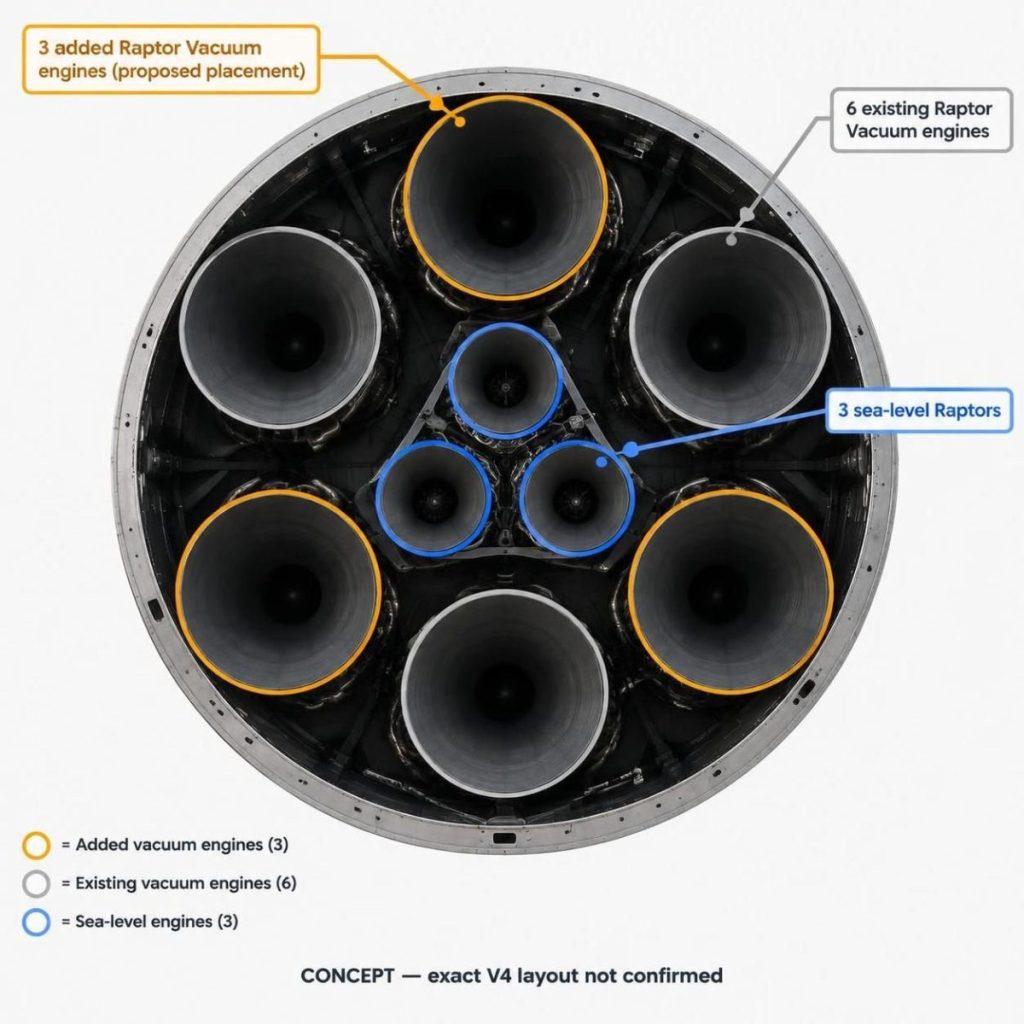
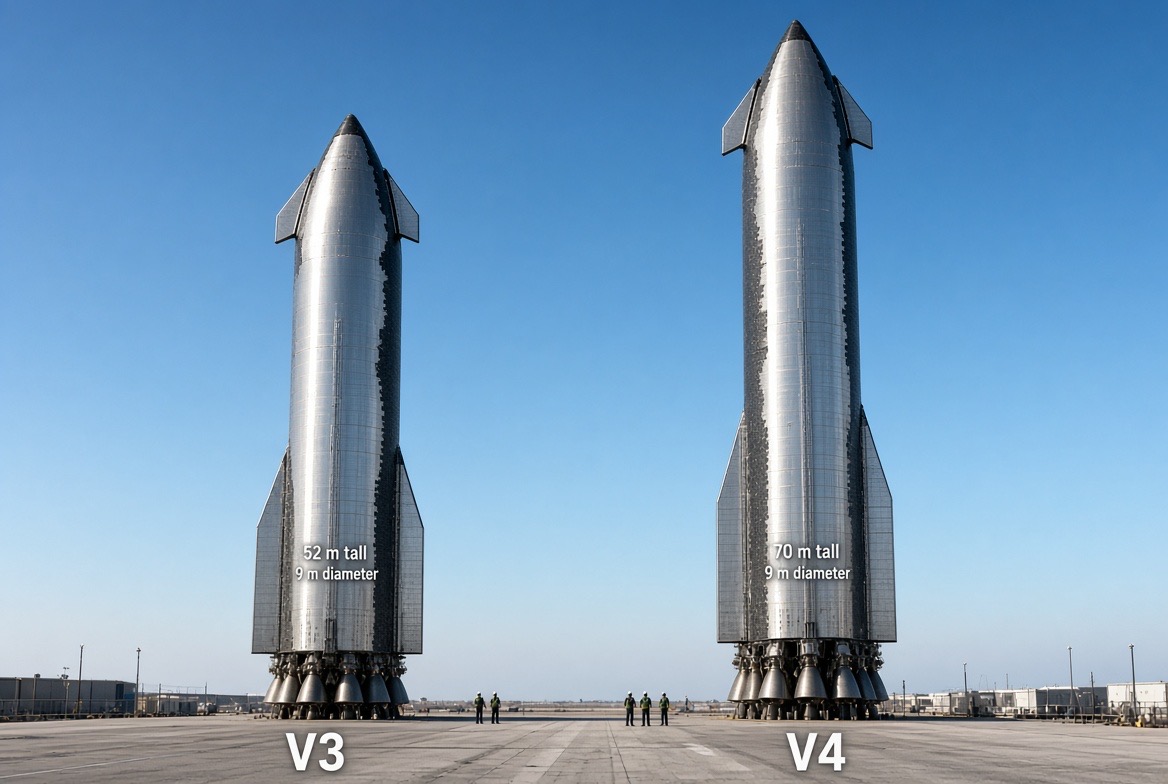
According to Musk, Starship V4 will reach approximately 70 meters in height. This is 40% taller than the current V3 version, which flew on Flight 15 and stood about 52 meters tall. The extended body will allow the fuel capacity to increase by more than 60%. The propulsion system will also change: instead of six Raptor engines, the new spacecraft will have nine. The number of Raptor Vacuum engines will double to six, and they will be upgraded V4 units with increased thrust. The first launch of this giant is expected in 2027.
A leap in payload capacity
For the space industry, the most important performance indicator remains payload mass. According to SpaceX’s investment prospectus, the current V3 version is designed to carry approximately 100 tonnes of cargo into orbit. New generations, starting with Starship V4, will be capable of lifting up to 200 tonnes. For comparison, the reusable Falcon 9 rocket can deliver only about 17 tonnes to low Earth orbit.
This will have the greatest impact on the lunar program. Every Starship expedition to Earth’s natural satellite requires a fuel depot to be established in orbit beforehand through a series of launches by tanker spacecraft. Previously, a representative of NASA’s safety panel estimated that 22 such flights would be required, while Musk insisted that the number would be 6–8. The secret lies precisely in the spacecraft’s dimensions: a single V4 tanker will be able to deliver more than 200 tonnes of fuel into orbit at once, which, according to the entrepreneur’s calculations, will reduce the refueling cycle for a Moon mission to just five or six launches.
From cargo deliveries to a city on the Moon
Fewer tankers per expedition mean that more lunar landings could be carried out each year. SpaceX is already offering a commercial cargo delivery service to the lunar surface, which is scheduled to begin no earlier than 2028. The service will cost $100 million per tonne, and a single Starship lander will be capable of delivering up to 100 tonnes of equipment or supplies to the surface.
Starship V4 will be ~70m long, which is roughly a 40% length increase and allows >60% more propellant load.
Engine count will be raised to 9, with 3 more Raptor-Vacuum engines added, and these will be higher thrust V4 engines.
— Elon Musk (@elonmusk) November 16, 2026
All of this fits into the company’s new strategy. In February, Musk announced that SpaceX had shifted its focus to building a “self-growing city on the Moon,” which, in his view, could be established in less than 10 years. These plans coincide with the schedule for NASA’s Artemis IV mission, whose lunar landing is planned for 2028, as well as the White House’s calls to begin work on a permanent lunar outpost by 2030.
Testing reusability with Ship 42
However, none of these ambitious plans will work without full and rapid reusability of the spacecraft themselves. That is precisely why Musk spent Sunday at the launch pad, personally inspecting Ship 42, which had returned from orbit and was successfully caught by the launch tower the previous day.
According to the engineer’s assessment, the heat shield and engines withstood the flight in excellent condition, meaning that Ship 42 could return to space after just a few weeks of turnaround servicing. Until now, SpaceX had never relaunched an upper stage, while the intervals between repeat launches of first stages had been measured in months. Therefore, Ship 42’s return to the skies within just a few weeks would set a historic precedent, although engineers still have many minor issues to resolve before achieving the ideal airline-like operational turnaround.
Earlier, we reported on how Starship could cut the travel time to Uranus in half.
Based on Teslarati
