

The NASA Voyager 1 spacecraft, which set off on its journey back in 1977, is about to achieve another historic milestone. The small probe, roughly the size of a passenger car, has already become the first human-made object to enter interstellar space. For almost five decades, it has been racing away from Earth at a speed of 61,100 km/h. On November 18, 2026, at 10:16 Coordinated Universal Time (UTC), the spacecraft will officially reach a distance of one light-day from our planet — 25.9 billion kilometers.
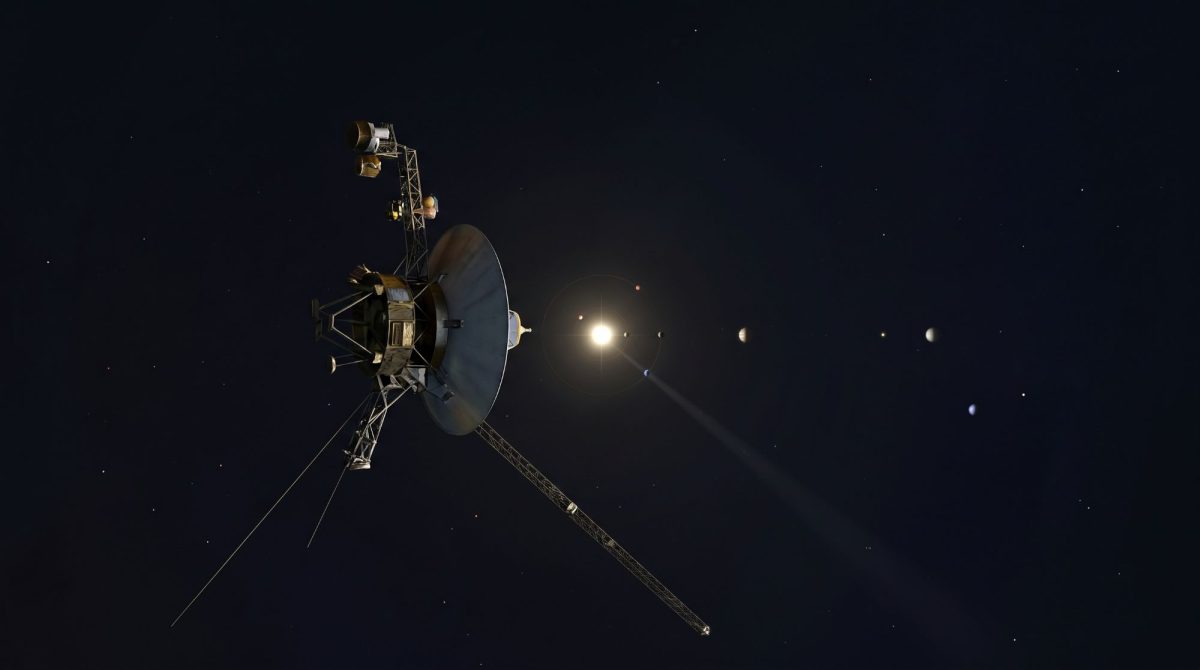
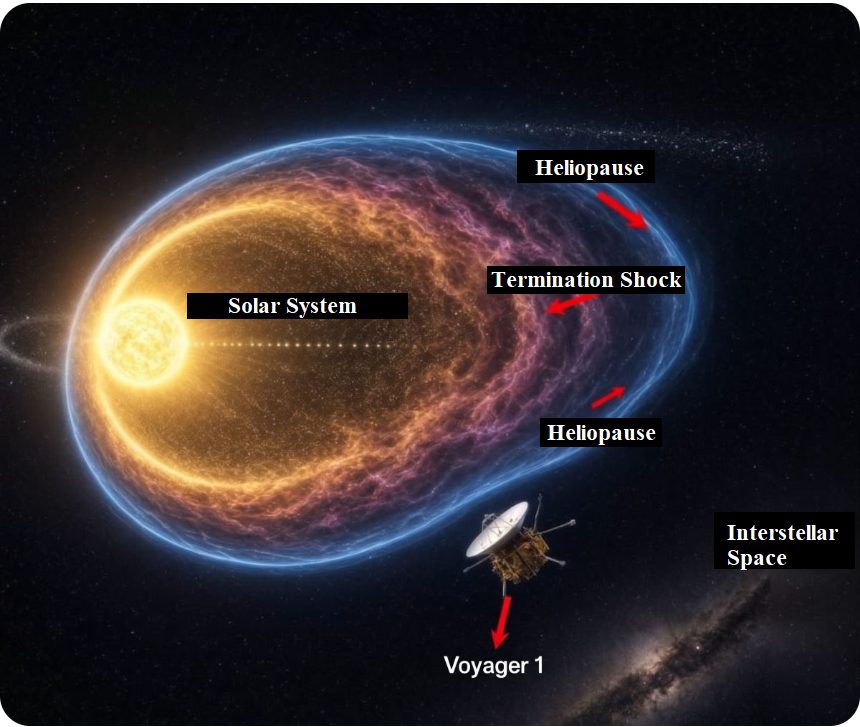
A journey that a beam of light covers in 24 hours has taken Voyager 1 more than 49 years. According to NASA, this event adds another achievement to the mission’s long list of unique milestones, as Voyager 1 and its twin, Voyager 2, remain the only spacecraft operating beyond the heliosphere — the protective bubble of solar particles and magnetic fields.
To mark the occasion, the space agency has invited people to send a light signal into the sky after sunset on November 17. Using a special web application on a smartphone or an ordinary flashlight, anyone can transmit the letters “V G R” in Morse code into space as a show of support for the distant traveler.
Communicating with the probe will take two days
As Voyager 1 approaches one light-day from Earth, you can track its position, visualize the time it takes for its messages to reach home, and re-create its tour of the solar system. All it takes is our free, online solar system simulator!
Try it out: https://t.co/IOhgYvdB3x https://t.co/q8WkWypZLB
— NASA Solar System (@NASASolarSystem) November 13, 2026
Reaching a distance of one light-day is not merely symbolic; it also has practical significance for mission engineers. It directly affects the speed of communication between Earth and the probe. Suzie Dodd, Voyager project manager at NASA’s Jet Propulsion Laboratory (JPL), explains it with a simple example: if a command is sent to the spacecraft at eight o’clock on Monday morning, its response will reach Earth only around eight o’clock on Wednesday morning. Radio signals traveling at the speed of light now require a full day to make the journey in one direction and another day to return.
Voyager 1’s original mission was limited to flybys of Jupiter and Saturn, which the probe successfully completed in 1979 and 1980. However, the spacecraft continued its journey. Together with Voyager 2, it transmitted detailed images of the giant planets, and in recent years, the probes have been studying the properties of the interstellar medium.
A message that will last a billion years
Despite its phenomenal endurance, the power supply aboard Voyager 1 is gradually running out. The spacecraft is powered by a plutonium-based source whose output is steadily declining. Over the past year, NASA specialists have been forced to switch off scientific instruments one by one to extend the mission’s lifetime as much as possible. Only two instruments remain operational: a magnetometer and a plasma wave subsystem, which detects faint electromagnetic fluctuations in interstellar space. NASA hopes to maintain communication with the probe until the early 2030s, until its power level falls below the critical minimum. However, switching off its electronics will not mean the end of the mission.
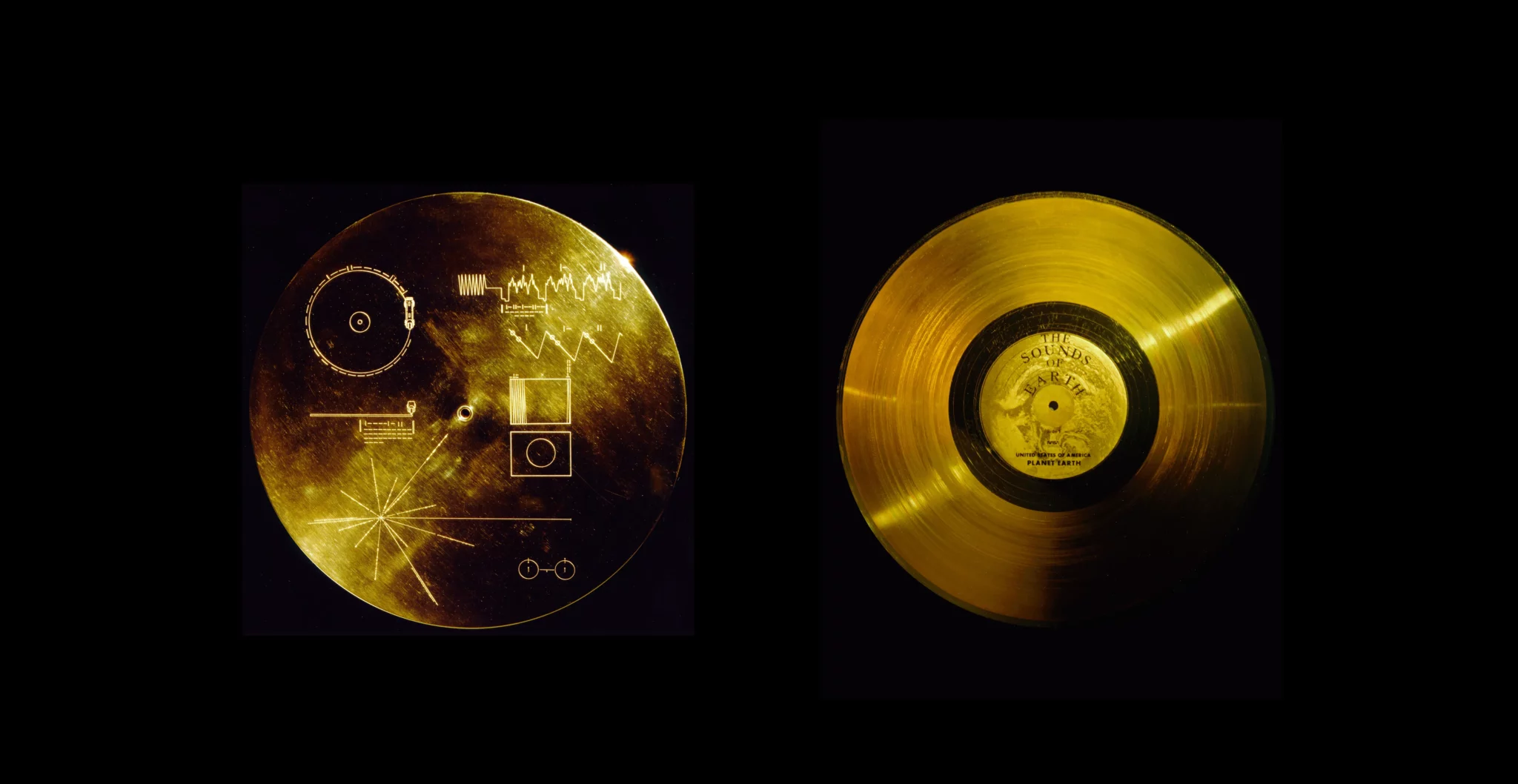
Voyager 1 and Voyager 2 carry gold-plated copper discs known as the Golden Records. They contain greetings in more than 50 languages, sounds of rain and ocean waves, music ranging from Beethoven’s Fifth Symphony to Chuck Berry’s rock and roll, as well as a map of pulsars showing Earth’s location. In addition, the record contains a message from then-U.S. President Jimmy Carter, which will likely outlast our civilization by a billion years and serve as a sign of humanity’s goodwill to possible extraterrestrial civilizations in the vast Universe.
Earlier, we explained why Voyager 1’s farewell image is more relevant today than it was 36 years ago.
Based on ScienceAlert
