
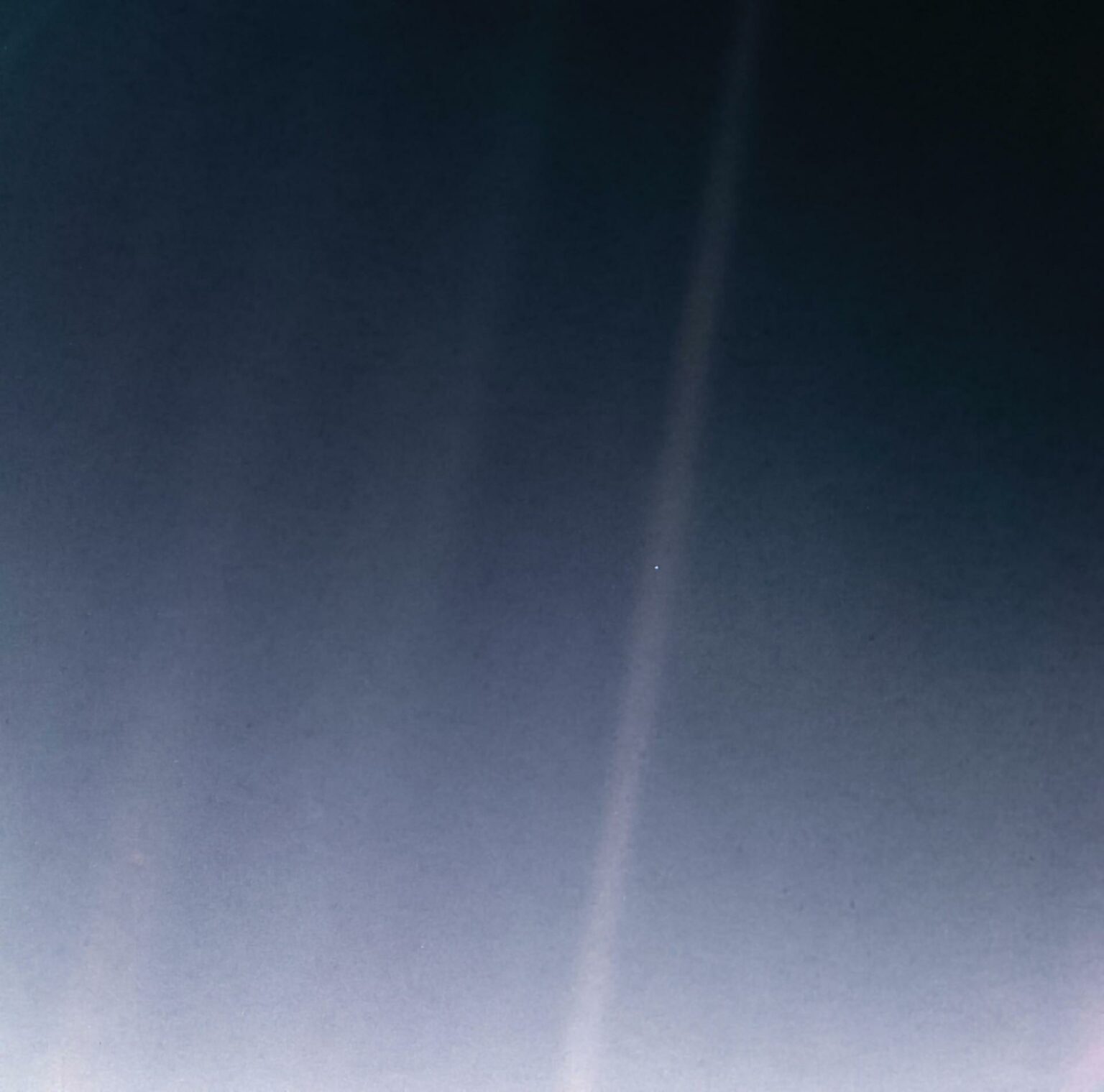
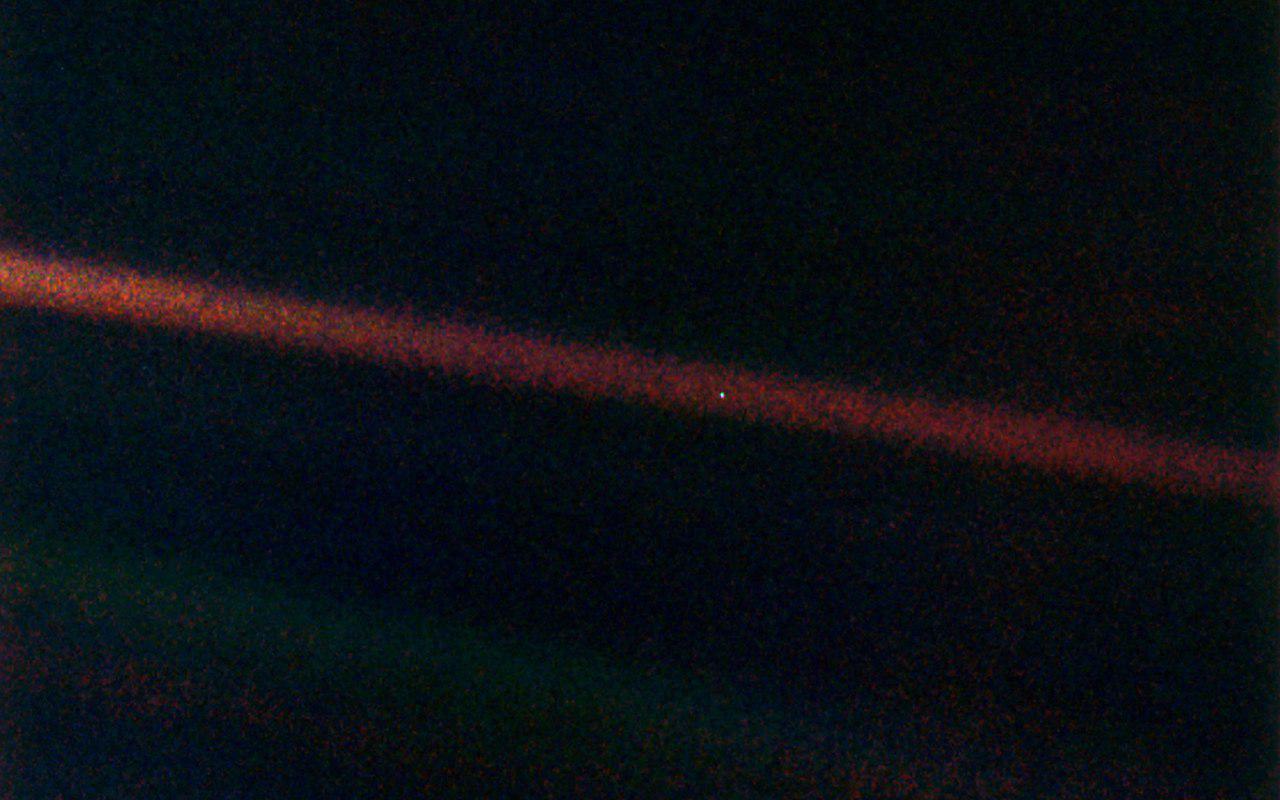
Images of outer space usually impress with their brightness: glowing nebulae, detailed craters, or luminous planetary rings. Yet one of the most famous images in the history of astronomy shows almost complete darkness. There are no continents, clouds, or oceans — only a barely visible beam of sunlight and a pale-blue pixel. The image shows Earth photographed from a distance of about 6.4 billion km.
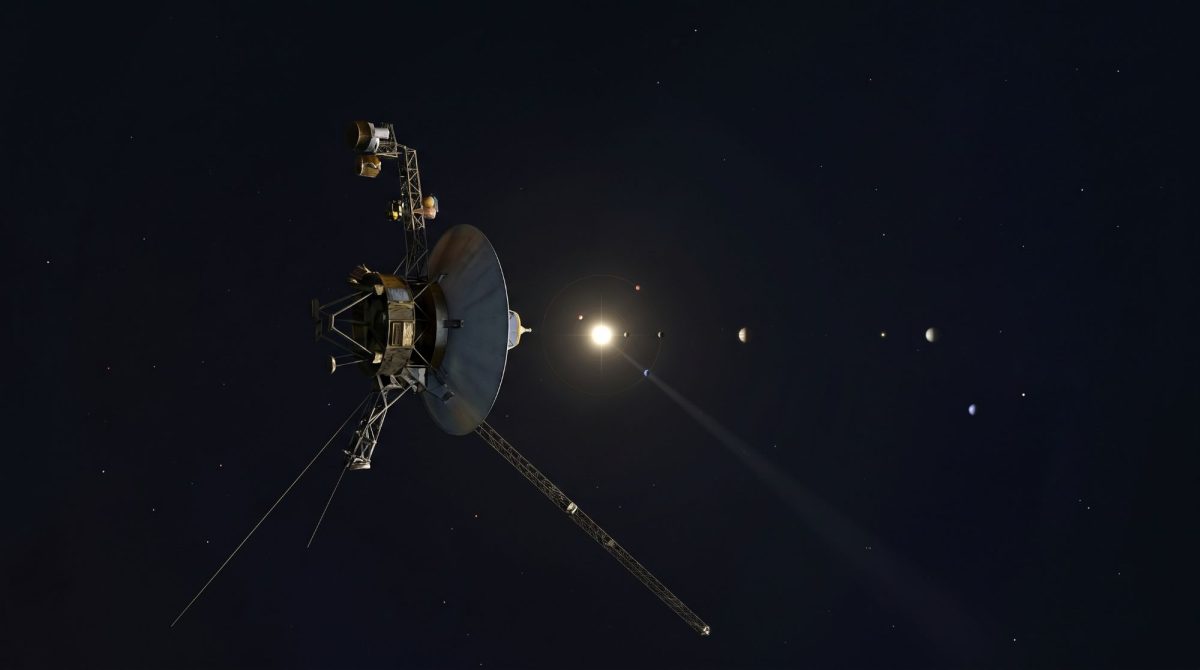
Voyager 1, launched by NASA in 1977 to study Jupiter and Saturn, had fully completed its primary mission by 1990. Scientists planned to permanently shut down its cameras to conserve energy. However, astronomer Carl Sagan, a member of the imaging team, insisted on one final experiment: turn the spacecraft around and take a “family portrait” of the Solar System from a perspective no one had ever seen before.
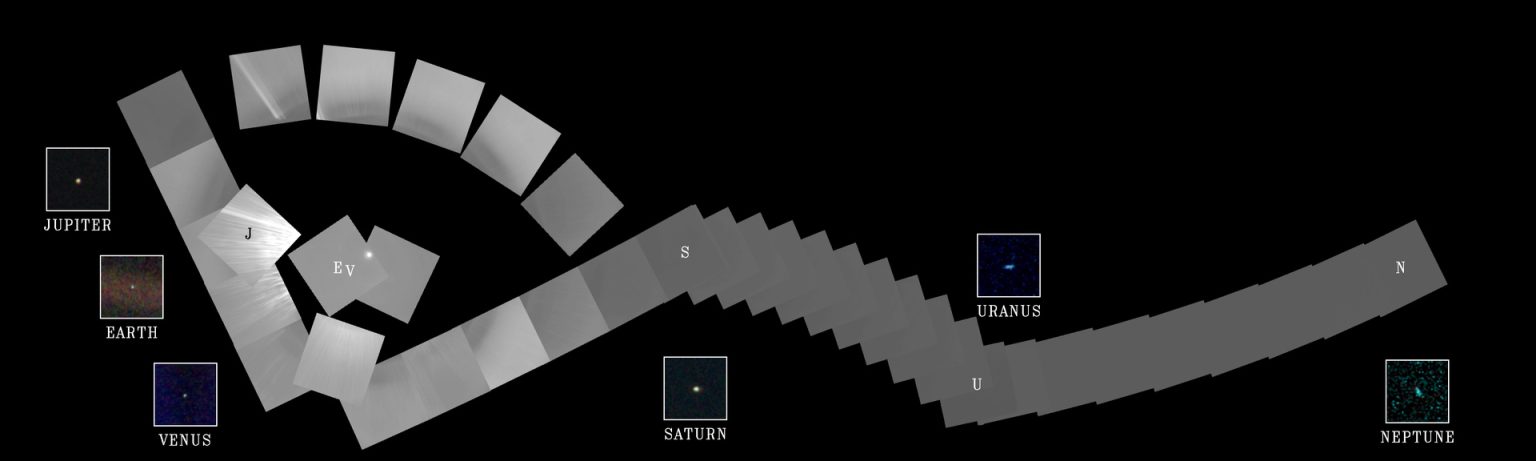
On February 14, 1990, just 34 minutes before its imaging system was permanently switched off, Voyager 1 took a series of 60 consecutive photographs. In one of them, our planet occupied only 0.12 pixel. The image later became known as the Pale Blue Dot, and Sagan devoted his famous words to it, reflecting that every human being in history had lived out their life on that tiny speck suspended in a sunbeam.
The Psychology of Cosmic Scale
Psychologists and space researchers have noted an interesting phenomenon known as the Overview Effect. Astronauts looking at Earth from orbit often experience a profound sense of awe, an acute awareness of the fragility of our home, and a stronger feeling of unity with all humanity.

The Pale Blue Dot gives each of us a similar experience without requiring us to leave the planet. One telling example comes from visitors to NASA’s Jet Propulsion Laboratory: on a printed mosaic of the image, the section containing Earth had to be replaced repeatedly because people constantly touched the tiny dot with their fingers, seeking to physically feel a connection with their home.
The Paradox of the Digital Age
Three decades after the historic image, the world has changed beyond recognition. Social networks, instant notifications, and video calls allow us to contact almost anyone on the planet within seconds. At the same time, AI assistants and chatbots are developing rapidly. Although studies show that artificial intelligence can temporarily ease feelings of isolation, long-term observations involving more than 2,000 adults suggest the opposite: frequent interaction with chatbots is often accompanied by an increased sense of loneliness.
According to WHO data for 2025, one in six people worldwide suffers from loneliness. This highlights one of the main problems of modern life: the ability to send a message does not guarantee a genuine emotional connection.
A View from Billions of Kilometers Away
Most digital technologies encourage us to move closer — to stare at screens, track likes, and become drawn into arguments. Voyager 1’s legendary photograph offers the opposite perspective: it takes the observer billions of kilometers away.
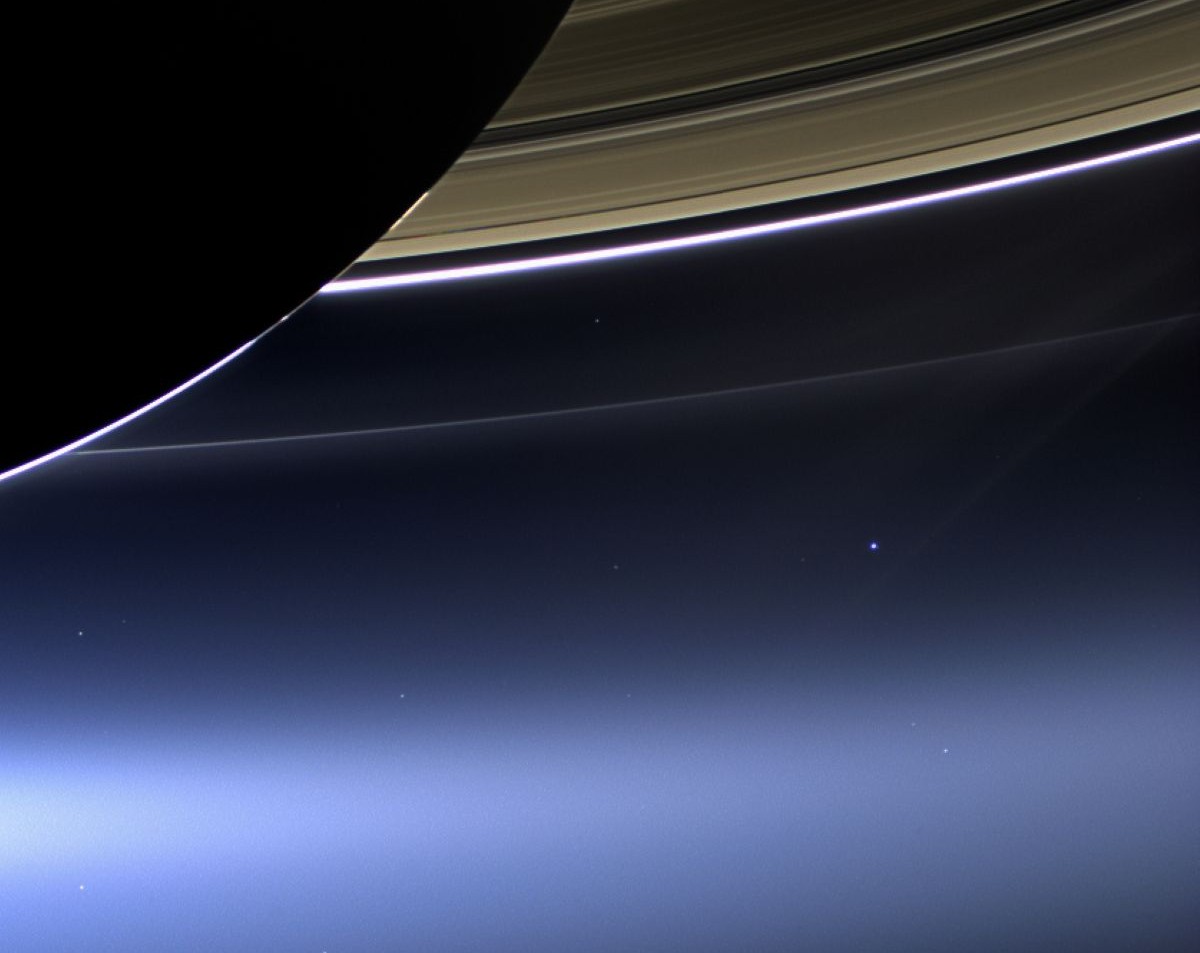
From such a distance, national borders, social status, follower counts, and political disagreements disappear. They simply do not fit into 0.12 pixel. Voyager 1 crossed the boundaries of the Solar System long ago and is now traveling through interstellar space as the most distant human-made object. Yet its farewell image reminds us that we do not need additional technology to be together, because we already share one common home.
Previously, we reported on whether Voyager 1 will be able to continue operating into the 2030s.
According to Science Alert
