

The first major data release from the European Euclid space telescope contains the largest catalogue of strong gravitational lenses ever compiled. It includes more reliable candidates than all previous catalogues combined. Among them are many rare systems that were previously discovered only individually. Astronomers can now study such lenses using large samples and use them to weigh galaxies together with their dark matter.
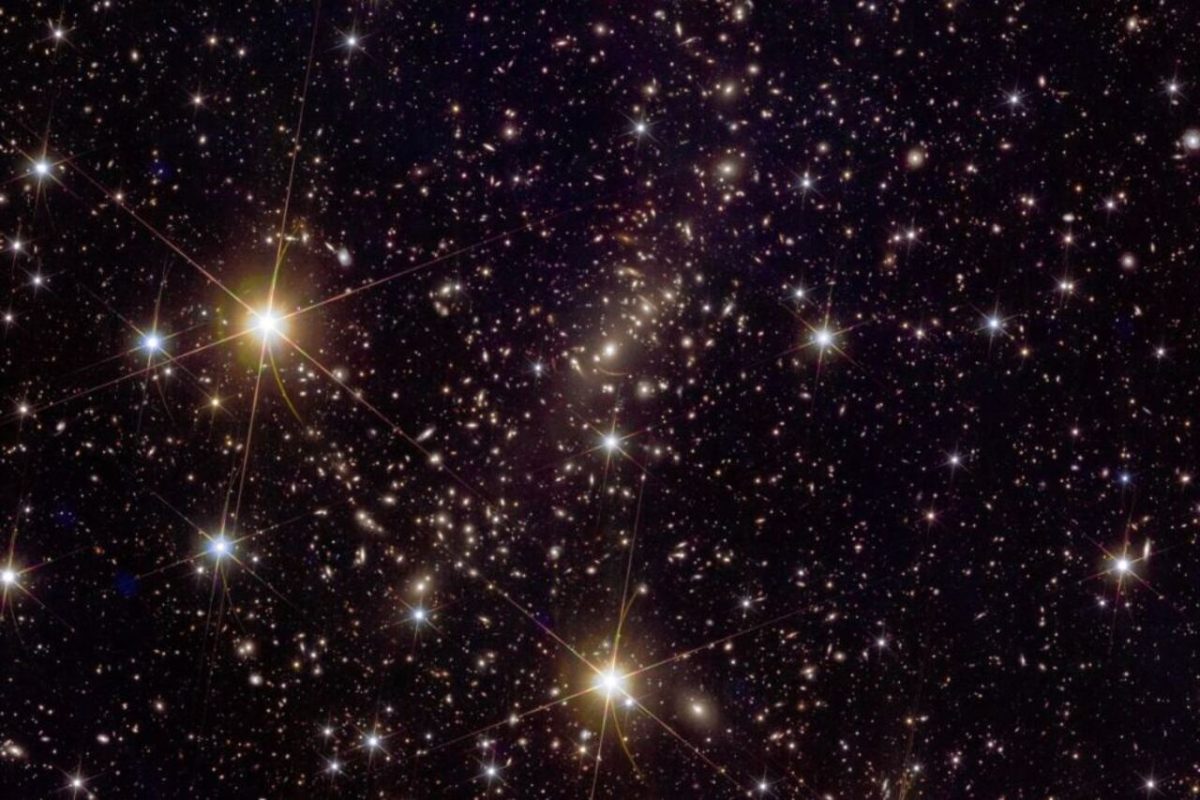
A record 15,000 candidates
On November 12, 2026, ESA released the catalogue together with the first Euclid data release. It contains 15,072 reliable candidates, of which the authors consider 6,073 almost certainly to be lenses, while the rest are classified as probable candidates. They were selected from 68 million galaxies using machine learning and volunteers, turning strong gravitational lensing from a field of individual discoveries into a statistical tool.
A strong gravitational lens occurs when a massive galaxy lies almost directly between Earth and a more distant object. Its gravity bends the light from the background source, producing arcs, multiple images, or a ring visible through a telescope. In the more than four decades since the first such discovery in 1979, astronomers have confirmed fewer than a thousand strong gravitational lenses. The number of reliable candidates from Euclid’s 13 months of observations is at least 15 times greater, although each one still needs to be confirmed.
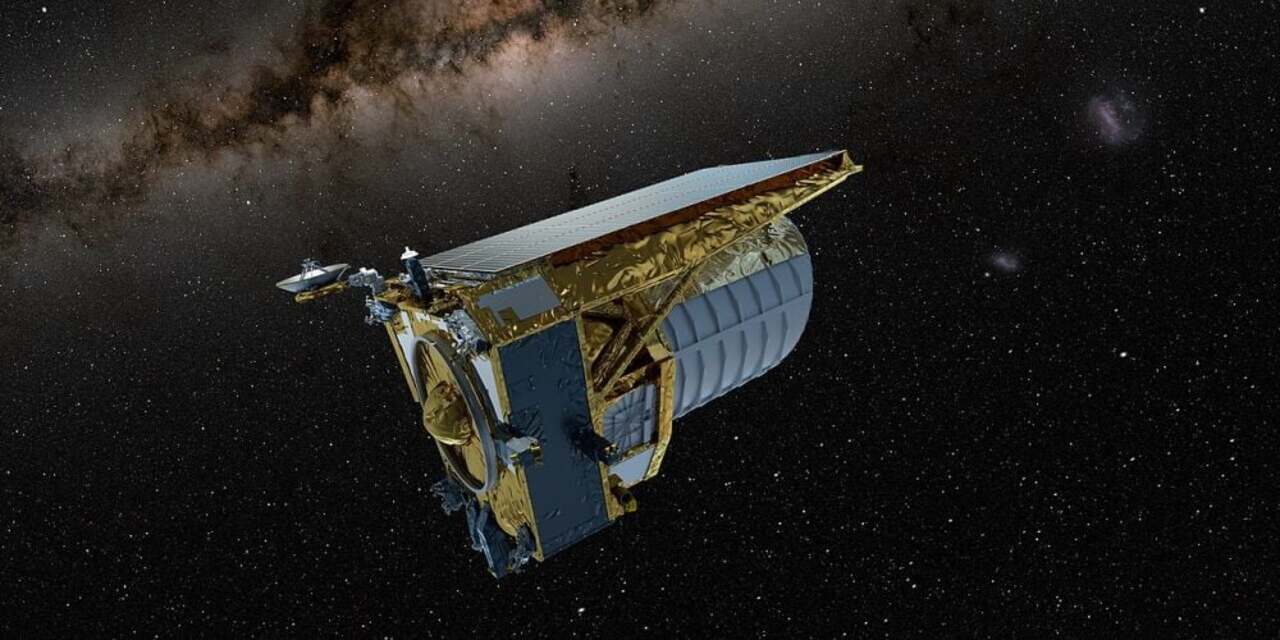
Strong gravitational lensing is one of the few ways to measure the mass of a galaxy. All the mass contributes to the bending of light, including stars, gas, black holes, and dark matter. Therefore, the shapes of the arcs make it possible to determine how much matter a galaxy contains and how it is distributed. When there are thousands of such systems, they can be compared with one another rather than drawing conclusions from just a few examples.
How Euclid maps dark matter using weak gravitational lensing. Credit: ESA / Euclid Consortium / Cacao Cinema.
From algorithms to experts
As Universe Today reports, previously, there was approximately one strong gravitational lens for every 10,000 galaxies, making it impossible to examine all the images manually. Therefore, the galaxies were initially assessed using five machine-learning models.
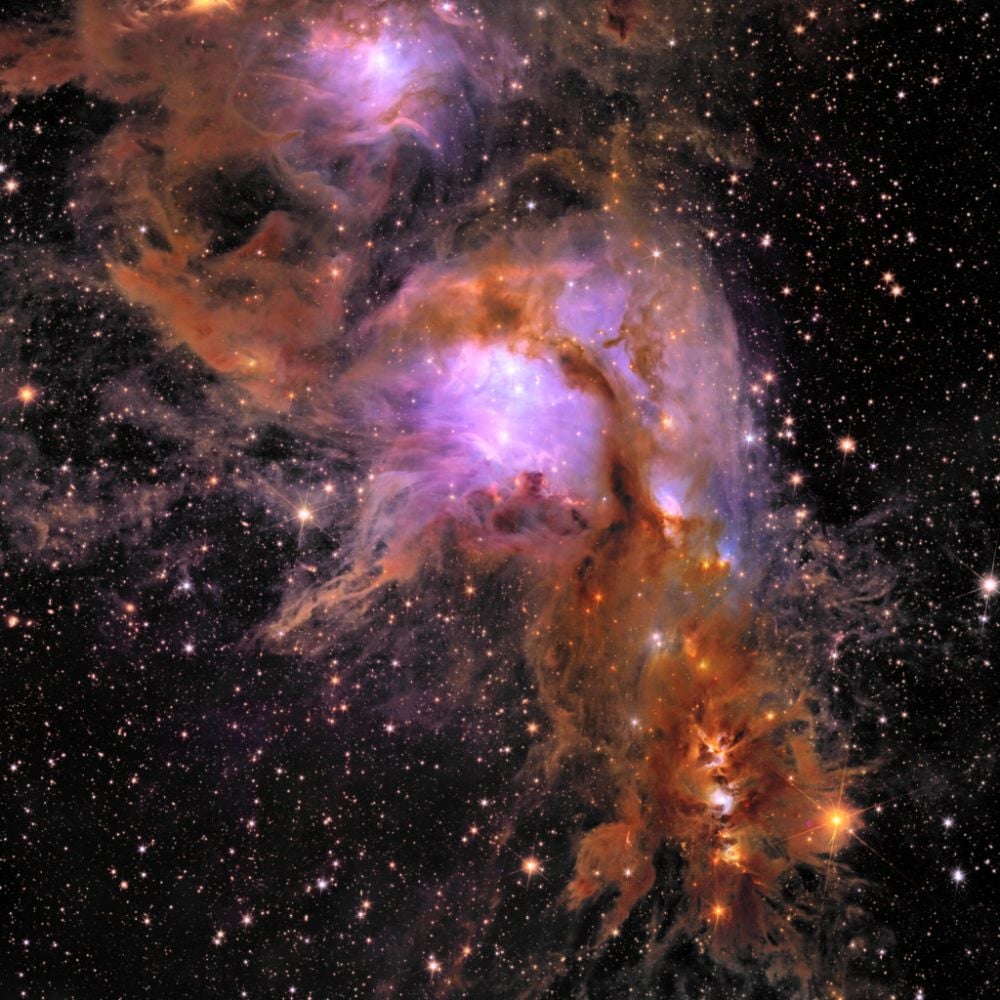
The most promising candidates were reviewed by approximately 7,000 volunteers from the Space Warps project, while the final assessment was carried out by 67 experts from the Euclid Consortium. The search was led by doctoral student Natalie Lines from the University of Portsmouth. The catalogue is described in a preprint submitted to the journal Astronomy & Astrophysics, so the findings have not yet undergone peer review.
Rare types of lenses
Most objects in the catalogue are massive galaxies in which star formation has almost ceased. This is expected because the greater the mass, the more strongly light is bent. At the same time, in 84 candidates, one galaxy lenses two background galaxies at different distances, producing several rings that allow the mass distribution in the lens to be reconstructed more accurately. More than a thousand other lenses are formed by disk galaxies, including spiral galaxies. They are generally less massive than elliptical galaxies, so strong lenses among them are rare.
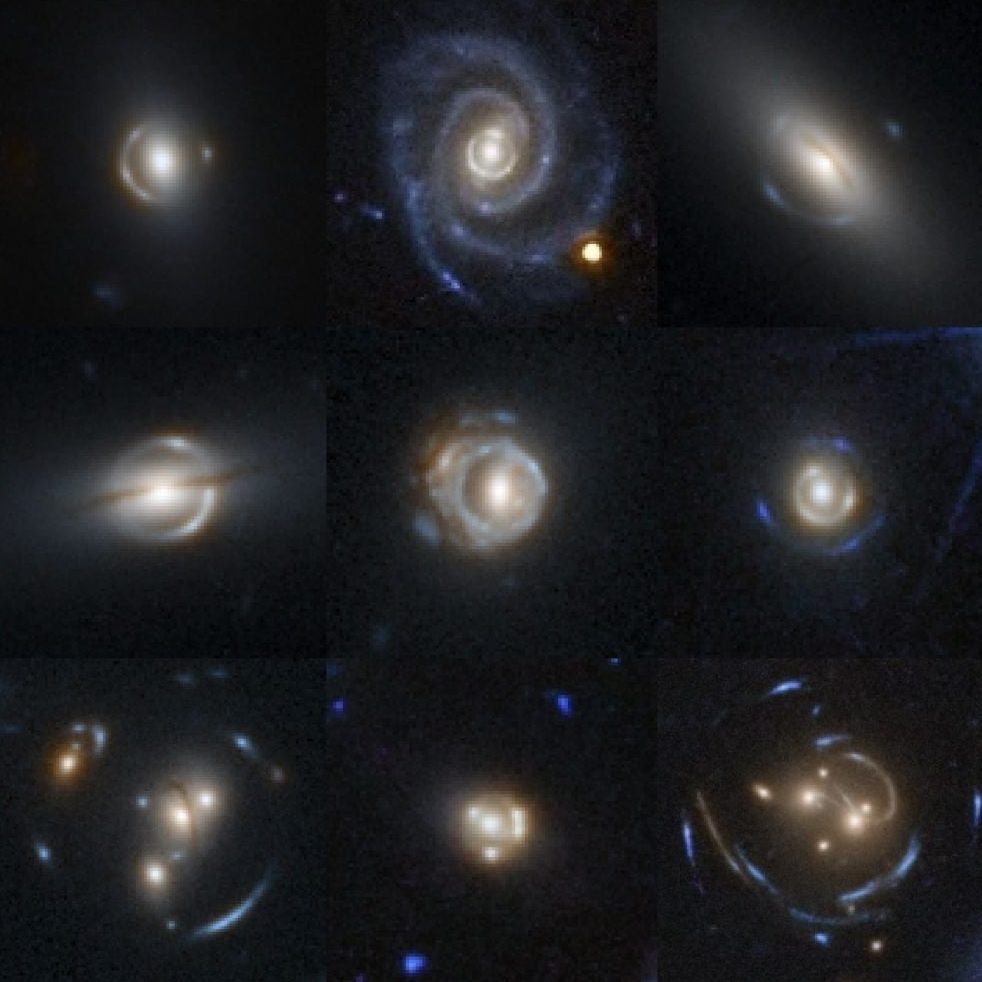
Several hundred lensed quasars, or bright cores of distant galaxies, are particularly valuable. Light from each image of a quasar travels along a different path, so changes in brightness reach us with different time delays. This delay depends on the distances to the lens and the quasar, while these distances depend on the expansion rate of the Universe. Therefore, this method makes it possible to measure that rate independently.
100,000 by the end of the mission
The current catalogue covers 2,000 square degrees, or less than 5% of the sky. The authors have already prepared automated mass models for all the reliable candidates, so the catalogue can be used immediately.

Over the six-year nominal mission, the telescope is expected to survey more than one-third of the sky and create a three-dimensional map of the Universe. According to the authors’ estimates, the number of reliable candidates will then exceed 100,000.
