

The European Space Agency (ESA) launched the Euclid space telescope on July 1, 2023, with an ambitious goal: to create the largest and most detailed three-dimensional map of the Universe in history. Unlike the well-known Hubble and James Webb (JWST) observatories, which focus on narrow regions of space, Euclid operates as a wide-field survey telescope. According to Leiden University astronomer Koen Keiken, the spacecraft covers an area of the sky more than 100 times larger in a single image, generating around 20 new images every day. Over the course of its six-year mission, it is expected to map one-third of the entire celestial sphere.
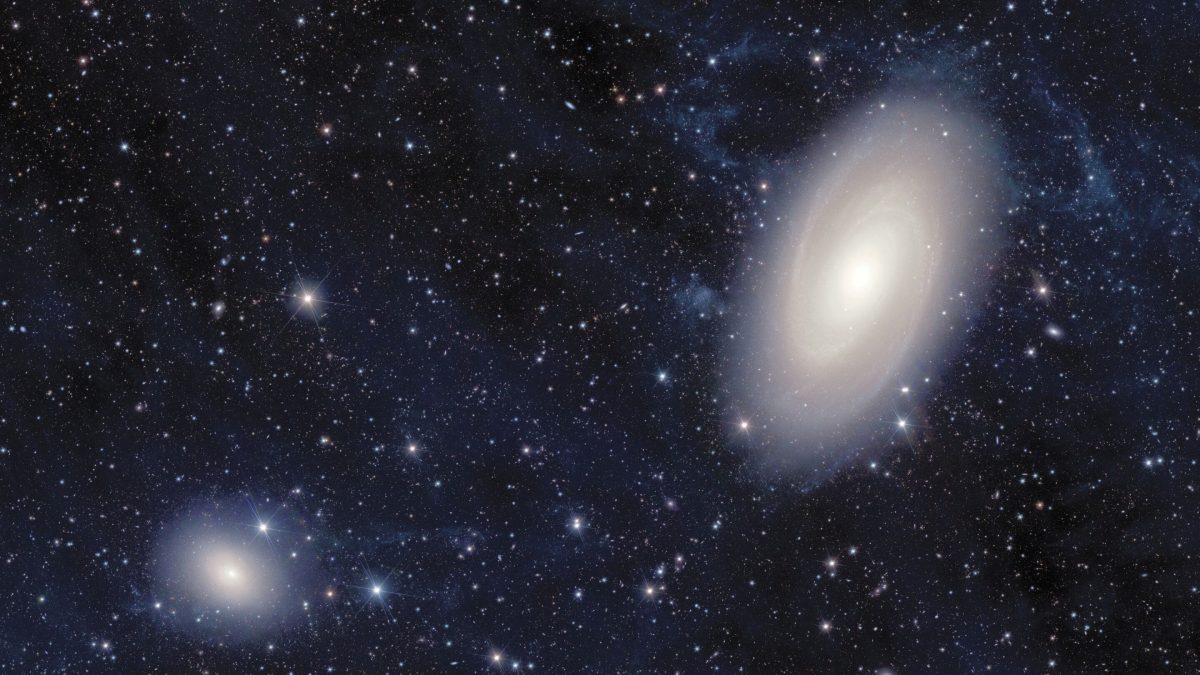
Scientists have released the first major data set, which is already impressive in its scale. The images cover an area of the sky almost 10,000 times larger than the apparent size of the full Moon. This data set includes around 900 million galaxies and 60 million quasars. The total volume of information amounts to 1.7 petabytes (1.7 million gigabytes), while the combined resolution of the images reaches approximately 2.5 trillion pixels. These observations allow us to look deep into the past: some of the recorded galaxies existed when the Universe was only 700 million years old — just 5% of its current age.
The invisible 95% of the Universe

Although modern science has a fairly good understanding of the chronology of the Universe’s evolution, the nature of most of its components remains a mystery. Professor Alessandra Silvestri of Leiden University points out that ordinary matter — stars, planets, gas, and galaxies — accounts for only about 5% of the Universe’s total content. The remaining 95% consists of two elusive substances: dark matter (27%), which holds cosmic structures together through its gravity, and dark energy (68%), which accelerates the expansion of space.
Euclid was developed precisely to unravel these phenomena, earning it the nickname “the detective of the dark Universe” among scientists. In addition to seeking answers about the dark components, researchers face another fundamental question: is our current understanding of gravity complete? By analyzing the telescope’s data, physicists will be able to test whether the known laws of nature behave as expected on the largest cosmic scales. The first results of these extensive tests are scheduled for publication in June 2027.
Statistics of billions of galaxies
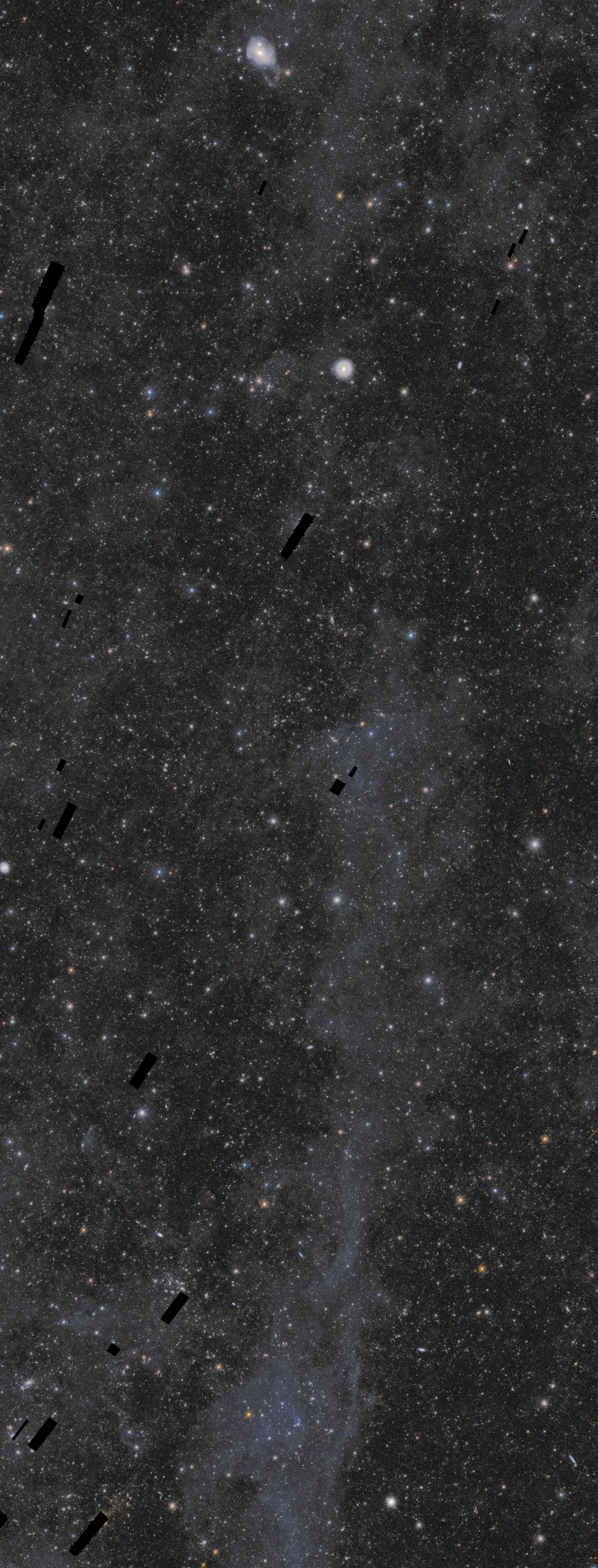
To detect the invisible, Euclid uses two complementary approaches. First, it records the precise positions of billions of galaxies to trace the evolution of the large-scale structure of the Universe. Second, the spacecraft measures subtle distortions in the shapes of distant galaxies. This effect, known as gravitational lensing, occurs when light is bent by massive objects and makes it possible to “weigh” the invisible dark matter along the light’s path.
As Silvestri emphasizes, a single galaxy cannot reveal the secrets of gravity or dark energy, but a sample of billions of objects provides all the necessary clues. Since this analysis is based on processing enormous volumes of data, Guadalupe Cañas Herrera, a researcher at Leiden Observatory, is already developing specialized statistical tools to handle the vast amounts of information expected in the future.
The current data release is only the first step. Astronomers have already prepared around 20 scientific papers providing an initial description of the observations, while dozens more studies are underway. According to the scientists, obtaining such detailed images of enormous areas of the sky required a tremendous effort, but the real scientific adventure is only just beginning.
Earlier, we reported on how NASA is inviting volunteers to train a neural network using data from Euclid and the Nancy Grace Roman Space Telescope.
Based on Phys.org
