

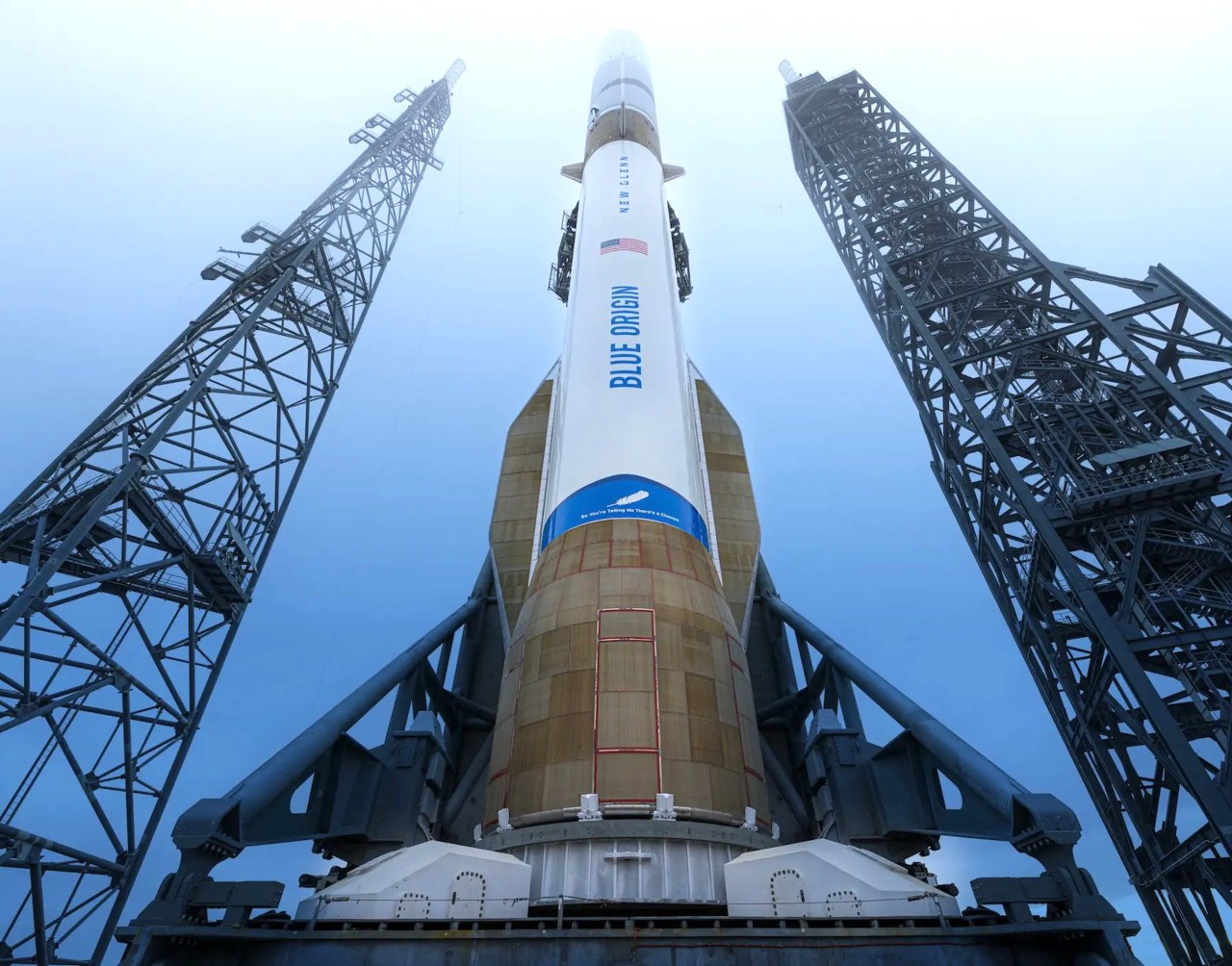
For the first time, Google has booked a launch aboard a heavy-lift rocket to test whether artificial intelligence computing can operate in orbit. Its satellites, equipped with Google’s own chips, will fly aboard Blue Origin’s New Glenn rocket and run on solar power. The mission will determine whether server hardware can withstand space radiation and whether it can be cooled in a vacuum.
Google’s servers in orbit
The launch services agreement was announced on November 19, 2026, by Blue Origin and Google. The launch is scheduled for the first quarter of 2029 as part of Google’s project called Suncatcher. The rocket will deploy several satellites equipped with Tensor Processing Units (TPUs), chips that Google developed specifically for neural networks. In terms of computing capacity, each satellite is roughly equivalent to a server rack in a conventional data center.
The mission will use a Sun-synchronous orbit, in which the spacecraft rarely pass into Earth’s shadow. This means their solar panels will remain illuminated almost continuously. According to Google Research, a solar panel in this orbit can generate up to eight times more energy than an identical panel on Earth’s surface, because a ground-based panel does not operate at night, while clouds and the atmosphere reduce the amount of sunlight it receives during the day.
Why move servers into space?
Demand for computing power for neural networks is growing rapidly, while terrestrial data centers require increasing amounts of electricity, land, and cooling systems. In orbit, sunlight is available almost constantly, and no land is needed for construction.
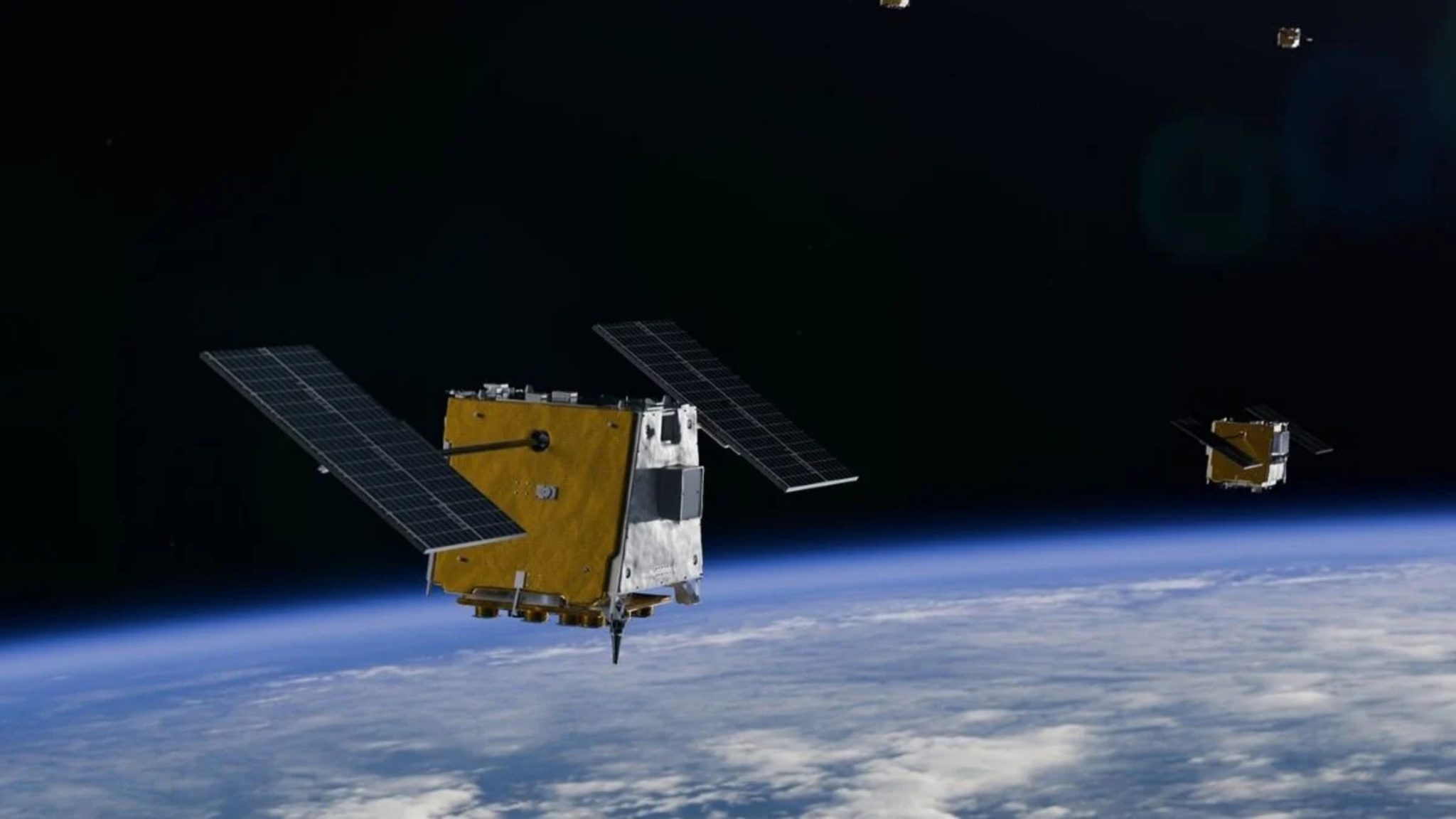
However, space presents its own challenges. Powerful chips generate considerable heat, and in a vacuum there is no air to cool servers as there is on Earth. Heat must therefore be transferred through tubes to radiator panels, which release it into space as radiation. In addition, charged particles from space radiation can damage electronics and corrupt data stored in memory.
A prototype is already in orbit
Some of these questions began to be tested this autumn. A demonstration satellite built by Planet Labs launched aboard a Falcon 9 rocket on October 1, 2026. It is being used to determine whether tensor processors can withstand launch stresses, radiation, and temperature fluctuations.
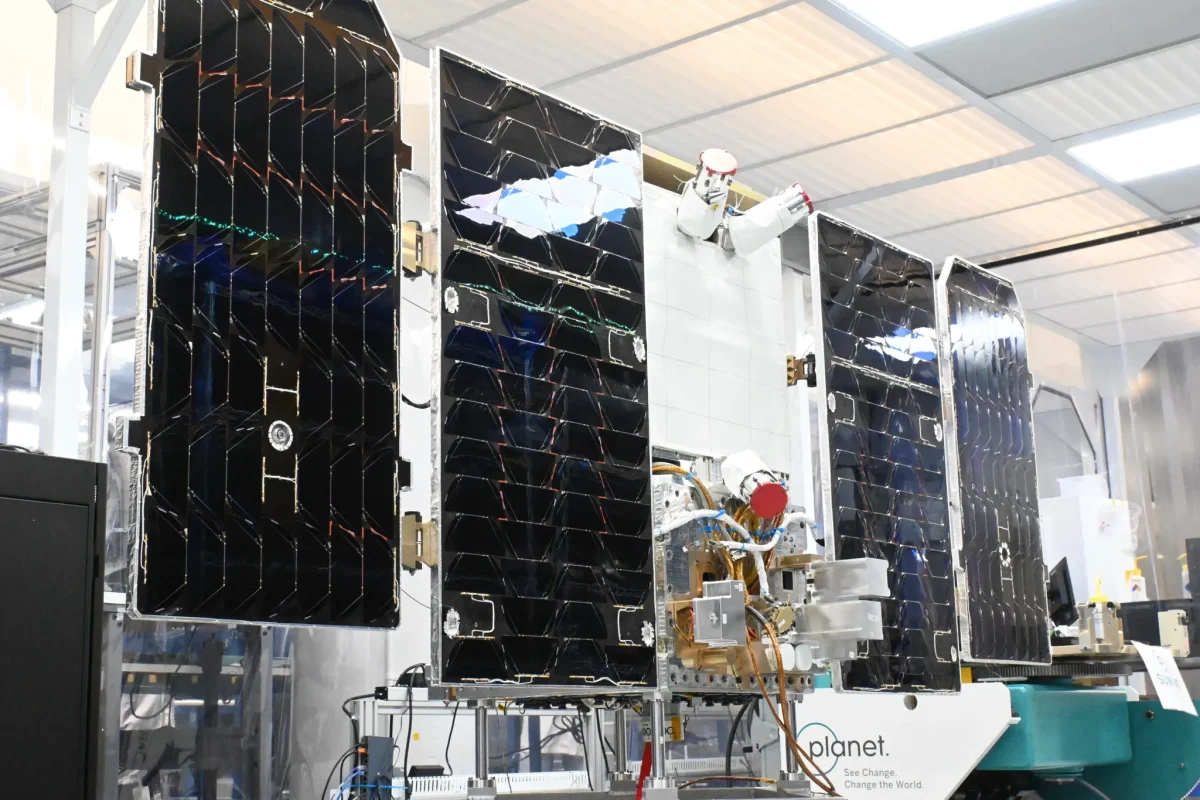
At the end of October, the first computing result came from the prototype. In response to a request sent during a communication session, the Gemma 4 model composed a short haiku. Modest as poetry goes, but Google called it the first response from artificial intelligence generated by a data-center-class chip in space.
A major contract for Blue Origin
The agreement is important for Jeff Bezos’s company because Blue Origin is trying to expand its launch business following delays and the May explosion at the launch pad, reports Reuters. The companies have not disclosed the value of the contract or the exact number of satellites.
Google is not alone in this race. SpaceX, led by Elon Musk, the Starcloud startup, and China’s ADA Space are also moving computing infrastructure into orbit. The farther servers move from Earth, the more pressing the question becomes of who will control artificial intelligence, which is increasingly being entrusted with decisions without human involvement. We explored this topic in detail in a video on the Universe Space Tech YouTube channel. At the same time, experts point out that commercial use of such systems is still years away because of expensive launches and engineering challenges.
Artificial intelligence on Earth and in orbital data centers: who controls it? Video from the Universe Space Tech YouTube channel.
Thus, the project’s prospects for moving beyond the experimental stage depend on launch costs. In a conceptual study published in 2025, Google researchers estimated that the costs of launching and operating an orbital data center could become comparable to the energy costs of a terrestrial data center if the cost of reaching orbit falls to approximately $200 per kilogram by the mid-2030s.
