

A SpaceX rocket placed a satellite carrying a Google artificial intelligence processor into orbit. The mission will test whether such a chip can operate reliably beyond Earth. The company plans to eventually deploy entire data centers in space. Its own calculations show that for this to happen, the Starship super-heavy launch system would have to fly dozens of times more frequently than it has so far.
The Cost of Reaching Orbit
About 1,800 Starship launches over ten years would be required to reduce the cost of delivering cargo to orbit to approximately $200 per kilogram by 2035. This estimate was presented by Google researchers in a peer-reviewed paper that will be published in the journal Joule. The scenario involves 370,000 tons of cargo and 180 launches per year, assuming that each flight carries 200 tons. This is slightly less than the mass of 900 International Space Stations, since the ISS weighs about 420 tons.
The authors based their estimate on the fact that since the Falcon 1 era, SpaceX has reduced launch costs by approximately 20% each year. They applied the same rate of cost reduction to Starship, using the amount of cargo launched by Falcon 9 rockets as a basis. At the same time, the researchers emphasize that they did not assess the economic feasibility of the project.
Between Plans and Reality
So far, Starship has never flown more than five times in a single year. For comparison, Falcon 9 rockets launched 165 times during all of 2025, while Google assumes an even higher launch rate for a much larger rocket.
Elon Musk has suggested that by 2029, Starship could fly once every hour. TechCrunch is skeptical of such promises.
Google is one of SpaceX’s major investors. Like other developers of orbital data centers, it is counting specifically on SpaceX rockets. Rockets capable of making orbital computing economically viable do not yet exist, so the project is intended for the distant future. Google envisions a future data center as a group of 81 satellites flying in close formation and performing computations in parallel.
A Test in Space
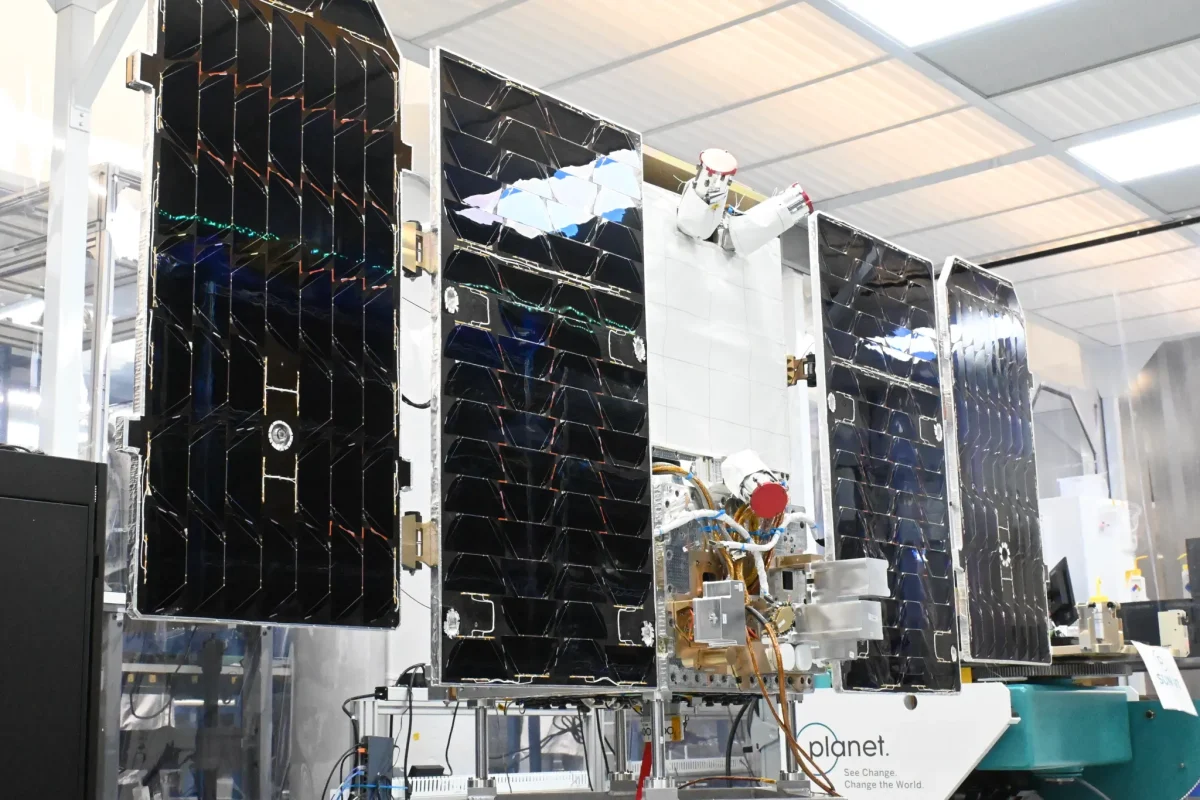
Travis Beals leads Google’s Suncatcher project, which the company described on the Google Research blog. The prototype satellite was built by Planet Labs on its standard platform. The same rocket that launched from California on October 1 carried more than one hundred other payloads into orbit.
The satellite carries a tensor processing unit (TPU), which Google developed as a competing alternative to Nvidia graphics processors. The experiment will test whether one kilowatt of continuous power is sufficient for the processor and whether the cooling system can handle it. Several artificial intelligence models will also be run on the processor to monitor possible failures.
After the satellite is commissioned, the processor will be switched on in 15-minute sessions so as not to overload the power and thermal-control systems. Next year, Google and Planet Labs plan to launch two specialized satellites that will attempt to communicate via a laser link.
Radiation and Errors
Repeated tests in a particle accelerator showed that Google’s processors will most likely withstand space radiation. The first round of testing had to be repeated because the chip configuration provided them with more shielding than they will have in orbit.
Without this protection, the logic circuits made errors somewhat more often. However, the company is confident that the processors will be able to handle computations throughout the satellite’s five-year service life. According to Travis Beals, for ordinary model queries the error rate is very low, around one in a million, but for multi-month training runs across thousands of chips, it becomes a problem.
