

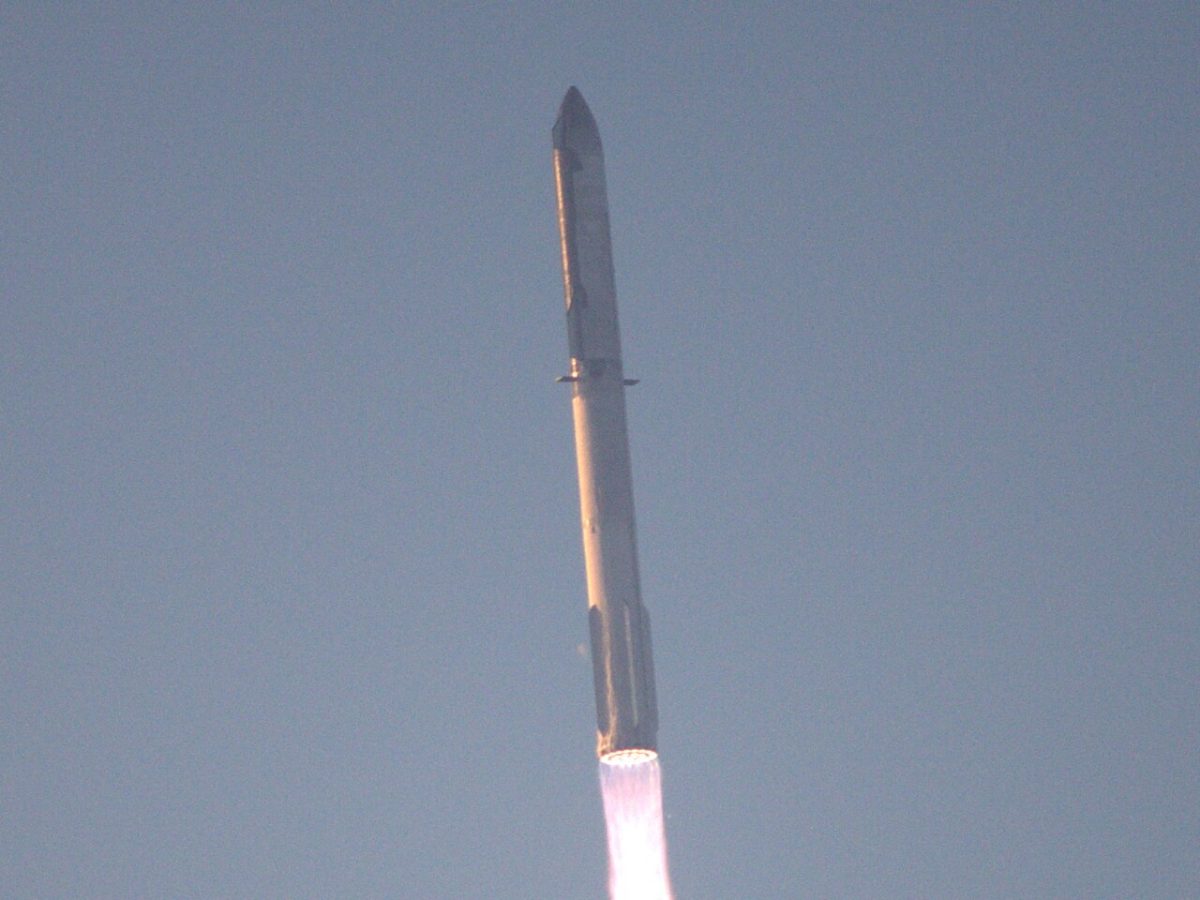
On September 28, SpaceX’s Starship heavy-lift launch vehicle is scheduled to undertake its 14th flight, which has been described as its first commercial mission. The vehicle is expected to place 26 third-generation Starlink satellites into orbit. However, does this mission truly represent a significant milestone for the program?
Starship history
Elon Musk is preparing to launch Starship once again. The launch is scheduled for September 28 at 3:15 p.m. Kyiv time, and it is being presented as a particularly significant event. For the first time, the launch’s primary objective will be to deliver commercial cargo into orbit: 26 third-generation Starlink satellites manufactured and operated by Musk’s SpaceX. But does this launch truly represent an important milestone in the rocket’s decade-long development?
It is worth noting that the history of the project, now known as Starship, is complex and convoluted. Elon Musk first announced his intention in 2005 to build a super-rocket capable of launching 100 metric tons of cargo into low Earth orbit and sending spacecraft on trajectories to the Moon and Mars. However, at the time, he was focused on considerably less ambitious projects, and the project was not mentioned again for several years.
The project was revisited in 2012, again in connection with Musk’s ambitious plans to colonize Mars, as its name — the Mars Colonial Transporter (MCT) — clearly indicated. Although it could be regarded as a different project, it was based on the same Raptor engines used by Starship today. The concept was even more ambitious, with two side boosters, each no smaller than the central rocket, attached to the massive launch vehicle.
However, the project did not progress beyond the conceptual stage. In 2016, it was renamed the Interplanetary Transport System (ITS). At that time, it remained a two-stage system, comprising a super-heavy-lift launch vehicle as the first stage and an interplanetary spacecraft or refueling tanker as the second. Notably, the rocket was expected to have a diameter of up to 12 meters, compared with its current diameter of 9 meters.
Starship’s design and purpose
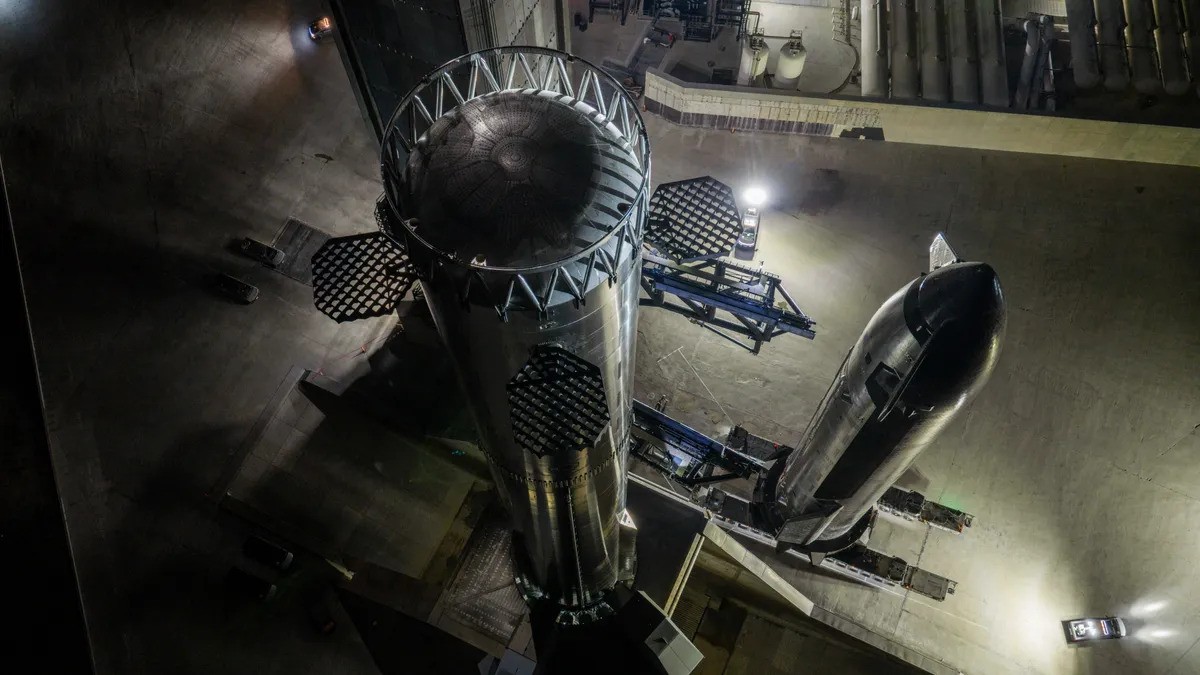
The project assumed its current form in 2017. Both stages had a diameter of 9 meters, the vehicle’s total height was 124 meters, and its payload capacity for orbital launches was 100 metric tons. The sole difference was that it was not then known as Starship, but as the Big Falcon Rocket. It received its current name in 2018, alongside Musk’s pledge to relocate one million people to Mars by 2050.

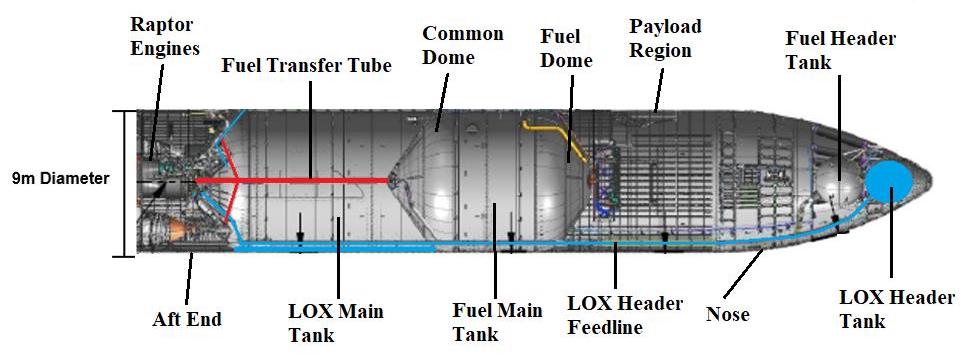
It should be noted that, even at the time, amid widespread enthusiasm, experts had serious concerns. These concerns primarily related to the rocket’s reliability, given that its lower stage contains as many as 33 engines. This substantially increases the risk of an accident should even one engine fail.
Another concern is the limited maneuverability of the second stage, which is also a reusable spacecraft, as a result of its design. The Tsiolkovsky rocket equation establishes a general principle for launch vehicles: they should have as many stages as possible, with the lower stages being larger and the upper stages smaller.
Starship, consisting of two stages — the upper stage of which is 52 meters long — deviates from these principles. This design choice has several justifications, including the simplification of the design, particularly in maintaining reusability. However, it also results in a distinctive feature that is rarely discussed.
If Starship were placed into orbit in its current configuration, its maneuverability would be significantly more limited than that of the Russian Soyuz and the American Orion.
For this reason, even during the design phase, the engineers anticipated that they would need to launch an additional Starship tanker — and possibly more than one — to refuel the spacecraft in orbit. Otherwise, it would not be capable of reaching the Moon, much less Mars.
This was particularly significant because Elon Musk secured a contract with NASA under which a landing module based on the Starship upper stage will be used for lunar missions as part of the Artemis program.
Current status
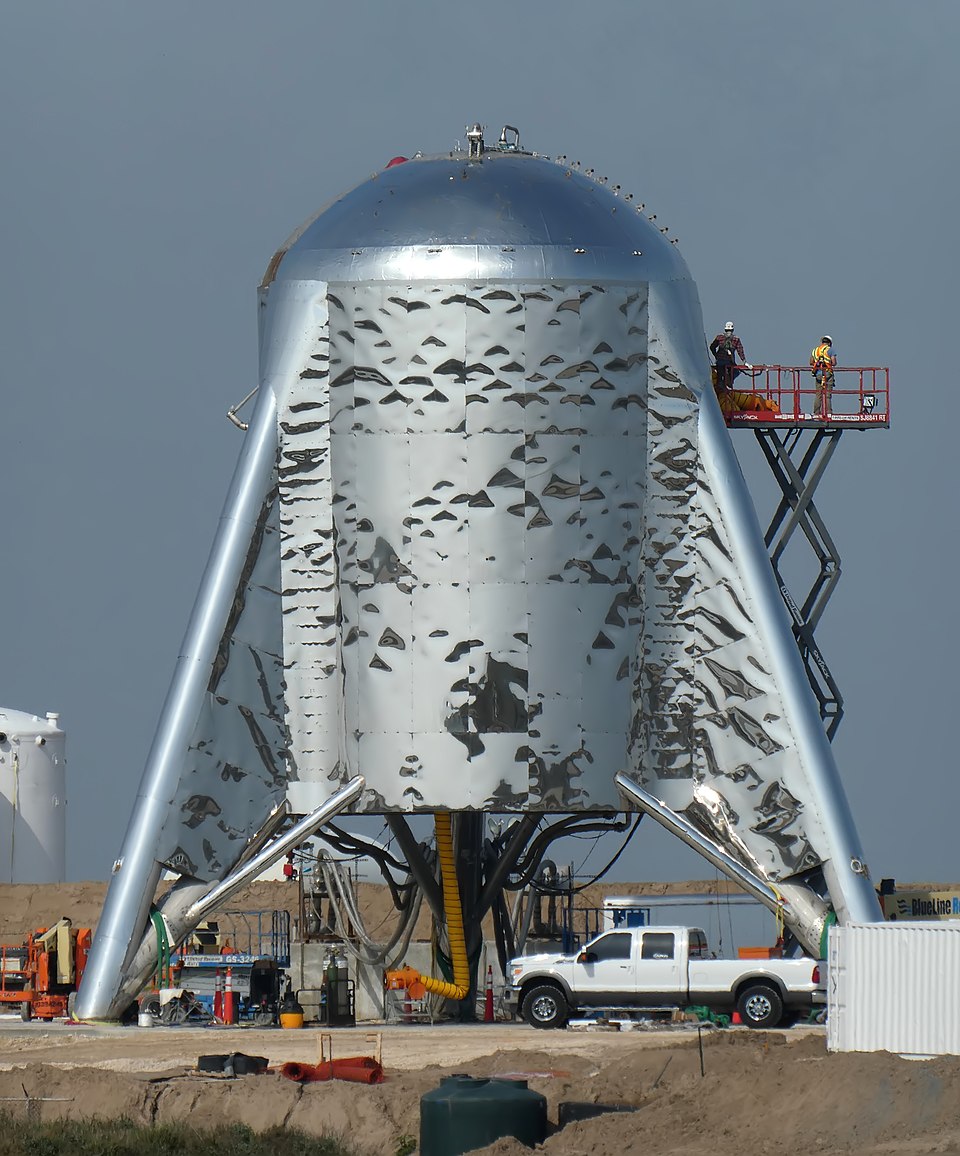
From 2019 to 2021, SpaceX conducted a series of low-altitude flights to test the Starship stages and their components separately. Overall, these tests were successful, and flights of the fully assembled spacecraft began in 2023.
Over the past three years, a total of 13 flights have taken place, each with a distinct outcome. The missions have included both failures and successes; however, it is reasonable to conclude that, during this period, engineers have learned how to launch Starship without incident. The fourteenth flight is expected to demonstrate this progress. It is important for SpaceX representatives to show that the program has advanced beyond the experimental stage, in which financial considerations are secondary to achieving results. The third-generation Starlink satellites are also significant, as the future communications infrastructure will depend on them. Musk plans to launch as many as 100,000 satellites.
However, none of this addresses the central issue concerning Starship: SpaceX does not need it to fulfill its commercial contracts. The company has the Falcon 9 and Falcon Heavy, and the latter is not fully booked with orders.
Starship was designed from the outset as an interplanetary spacecraft, and that is where the most significant delay lies. SpaceX’s decision not to attempt recovery of the first stage using a mechanical claw on this flight is a minor detail; that is scheduled for the 15th flight. More importantly, the in-orbit refueling experiment is not scheduled until the 16th mission.
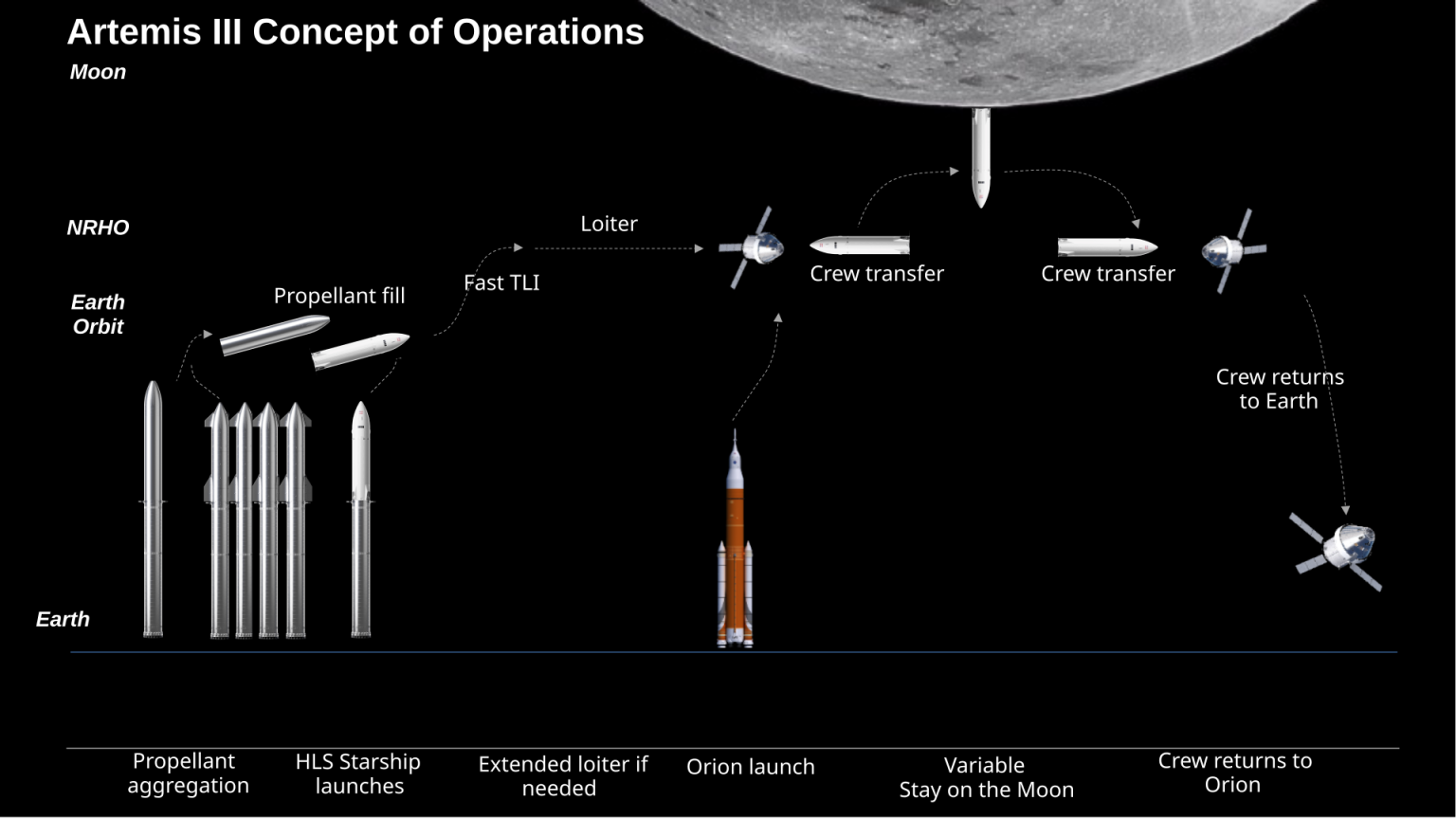
According to the plan, it is also scheduled to take place before the end of this year; however, whether this will be possible remains to be seen. Without its completion, all plans for flights to the Moon and Mars would become unrealistic. The Artemis III mission, during which astronauts will practice docking with Starship and Blue Moon — developed by Musk’s principal competitor, Jeff Bezos — is scheduled to take place as early as 2027. Postponing it for SpaceX’s sake would be highly inadvisable.
This would be detrimental, first and foremost, to Musk himself. Two years ago, he called for the Artemis program to be discontinued, claiming that he would send people to Mars as early as 2028. However, to date, even the uncrewed Starships have not reached the Moon, and Musk himself has faced a barrage of accusations that he is delaying the lunar landing, which is scheduled for the fourth mission of the Artemis program.
In practical terms, the most important outcome of the fourteenth flight is that it concludes without a crash. Accidents remain a persistent risk in the space industry; however, a crash during this mission could further delay future flights under the Starship program, which is already behind all of its announced deadlines.
Update: The 14th Starship launch successfully took place at 15:49 Kyiv time on Monday, September 28. The Starlink satellites were successfully deployed into orbit, despite one of the engines unexpectedly shutting down 18 minutes into the flight. Now, we must wait for the announcement of the date for the next (15th) flight and see whether the 16th flight will take place before the end of 2026 or be postponed to 2027.
