

Scientists have studied lava from Hawaiian volcanoes that erupted over the past few centuries. It contains substantial amounts of carbon, and its isotopic composition revealed where that carbon came from. Most of it turned out to originate in regions of the Solar System far from the Sun.
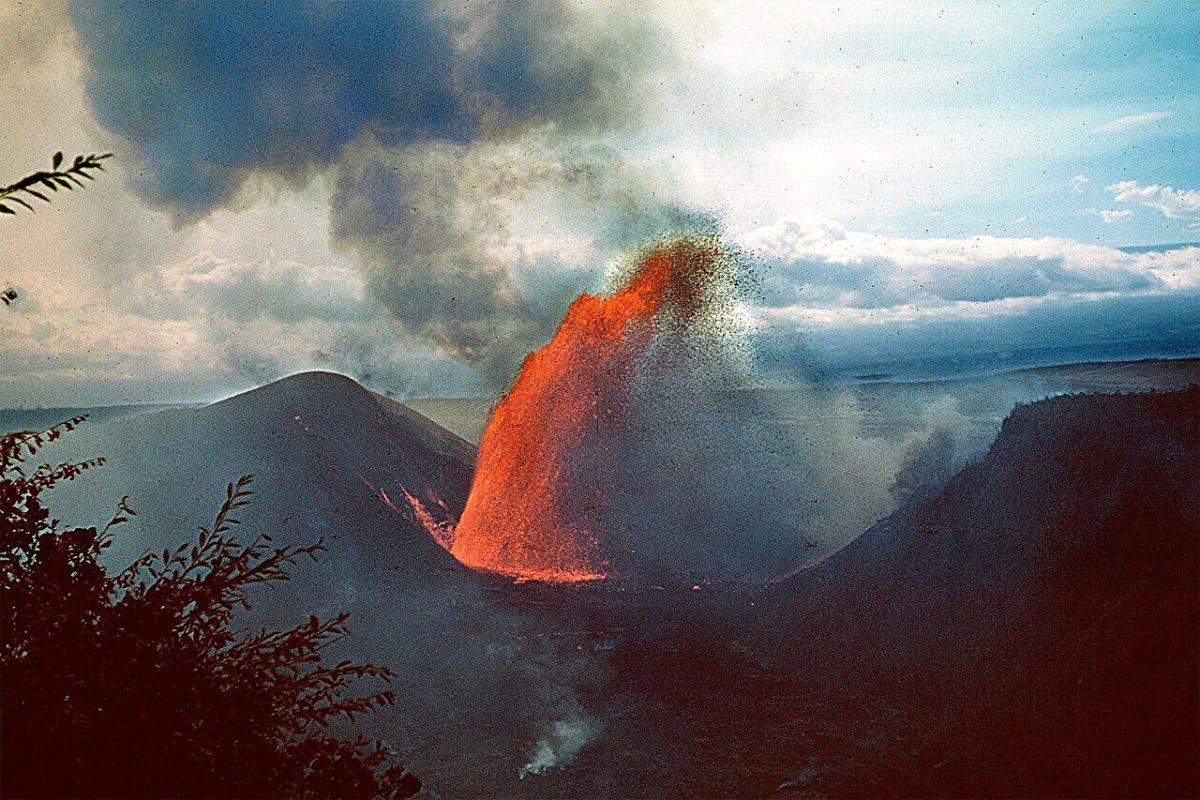
A “Message in a Bottle”
As reported by phys.org, a new study suggests that most of Earth’s carbon originated in the outer Solar System and arrived here only during the later stages of the planet’s development. Led by scientists from Yale and Columbia universities, the research is based on an analysis of magma droplets known as “melt inclusions” from historical volcanic eruptions in Hawaii, including the Keanakākoʻi eruptions between 1500 and 1840 and the Kīlauea Iki eruption in 1959.
Melt inclusions are small pockets of molten rock trapped inside crystals forming in magma. Each droplet is something like a message in a bottle—a snapshot of what the magma was like when it was deep inside Earth.
“This is the first observational estimate of the carbon isotopic composition of Earth’s core,” said Damanveer Grewal, an assistant professor of Earth and planetary sciences in Yale’s Faculty of Arts and Sciences and a co-author of the study.
Observing “deep carbon” and analysing its isotopic composition were previously considered impossible. However, a team led by Yves Moussallam of Columbia University’s Lamont-Doherty Earth Observatory found a way to make these observations by studying Hawaiian lavas. The lava droplets sample different parts of the volcanic plume—a hot column of molten rock and gas expelled during a volcanic eruption.
The researchers identified a distinctive signature of the heavy isotope carbon-13 in the magma, which they believed came from portions of particular plumes associated with the boundary between Earth’s core and mantle, its rocky upper layer. The scientists interpret this as carbon leaking out of the core.
Carbon Delivered by Carbonaceous Meteorites
As for where the core’s carbon originated before becoming part of the planet, the researchers found that it was too isotopically heavy to have come from the rocky, carbon-poor material of the inner Solar System that makes up most of Earth. But the carbon in the core was an excellent match for something else: carbonaceous chondrites, carbon-rich meteorites from the outer Solar System that contain organic compounds and water.
Grewal, who led this stage of the research, also noted that there was only one window of opportunity for carbonaceous chondrites from the outer Solar System to become a permanent part of the core: the final stage of Earth’s main formation process. He said that if the carbon had arrived earlier in Earth’s formation, much of it would have been sent back into space during subsequent collisions; if it had arrived later, Earth’s core would already have been sealed off.
In addition to helping resolve a long-standing debate about the origin of Earth’s carbon, the study may also have implications for the role of carbon in the core during periods of intense volcanic activity.
