

Far out on the fringes of our planetary system, astronomers have spotted an unusual body moving against the prevailing direction of orbital motion. The object, provisionally designated R631, crosses the plane of the Solar System at an exceptionally steep angle. Scientists are now trying to determine its origin: it may have been gravitationally scattered by Neptune, or it could be an interstellar visitor from an entirely different star system.
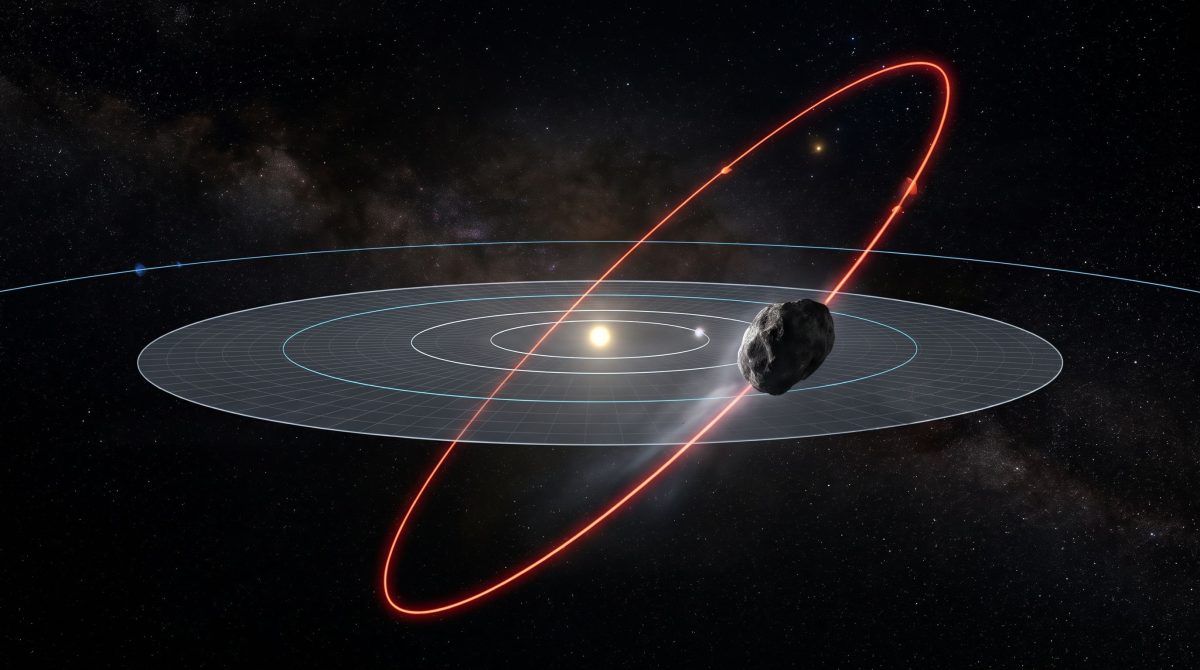
The object was first detected in Chile by the Vera C. Rubin Observatory during observations conducted between December 2025 and March 2026. Researchers and citizen scientists noticed this trans-Neptunian object while analysing the observatory’s public alerts. It is currently at a distance of approximately 32 astronomical units.
The Orbital Plane Paradox
To understand what makes R631 unusual, it is worth recalling how our system formed 4.6 billion years ago. It all began with a giant cloud of gas and dust that collapsed under its own gravity into a flat disc rotating around the young Sun. Over time, planets, asteroids and comets formed from the material in this disc. This is why the vast majority of bodies in our system orbit in the same direction and almost in the same plane.
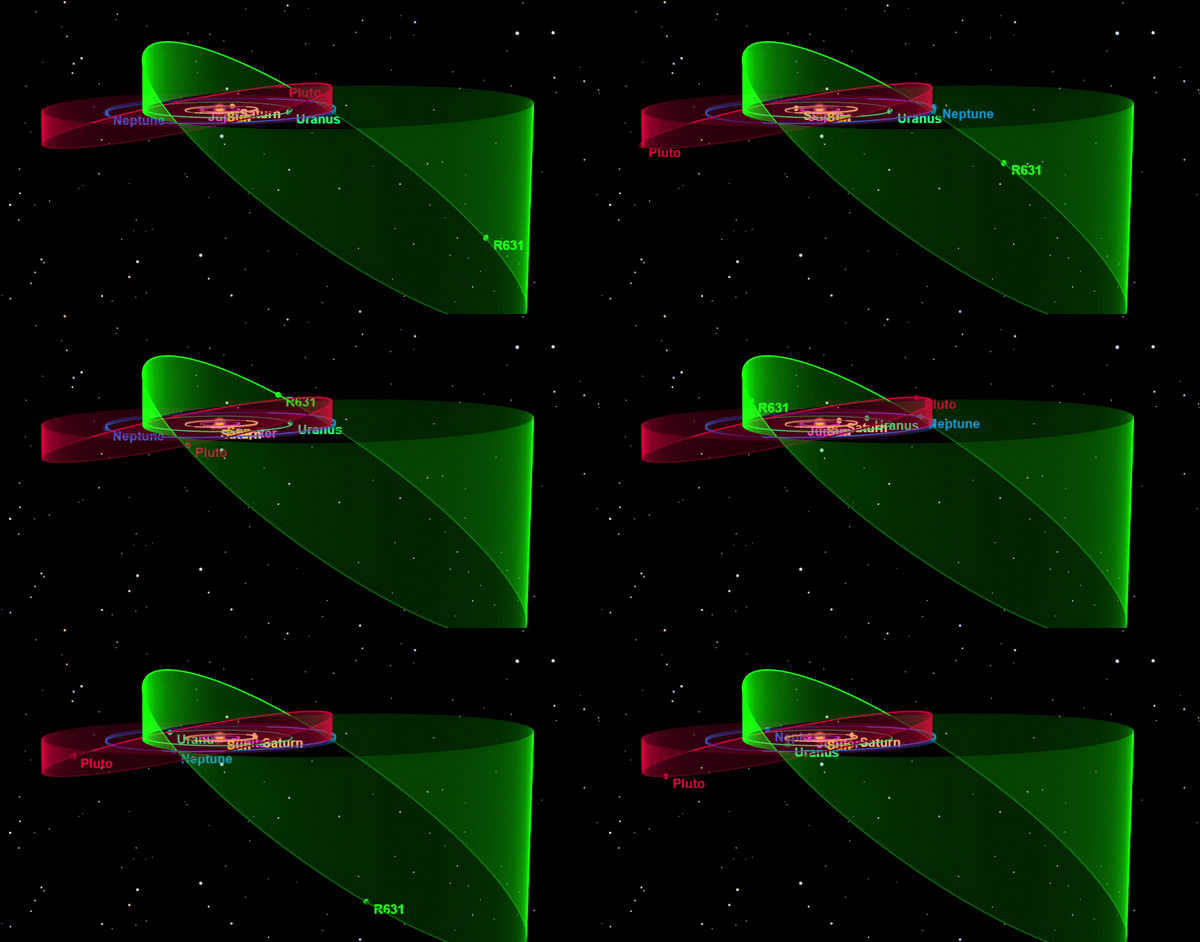
R631, however, breaks this rule. Astronomical observations indicate that its orbit is inclined at 142° to the plane of the Solar System. In astronomy, any orbital inclination greater than 90° indicates retrograde motion. While the other planets and asteroids move anticlockwise, R631 cuts across the orbital plane at a sharp angle in the opposite direction.
A Visitor from Another World?
Scientists suggest that R631 may be a comet approximately 100 km in diameter. If this assumption is correct, the object will begin to develop a tail as it approaches the Sun. R631 has an orbital period of approximately 547.84 years and will reach perihelion—its closest point to the Sun, at a distance of 24 astronomical units—on 31 October 2047.
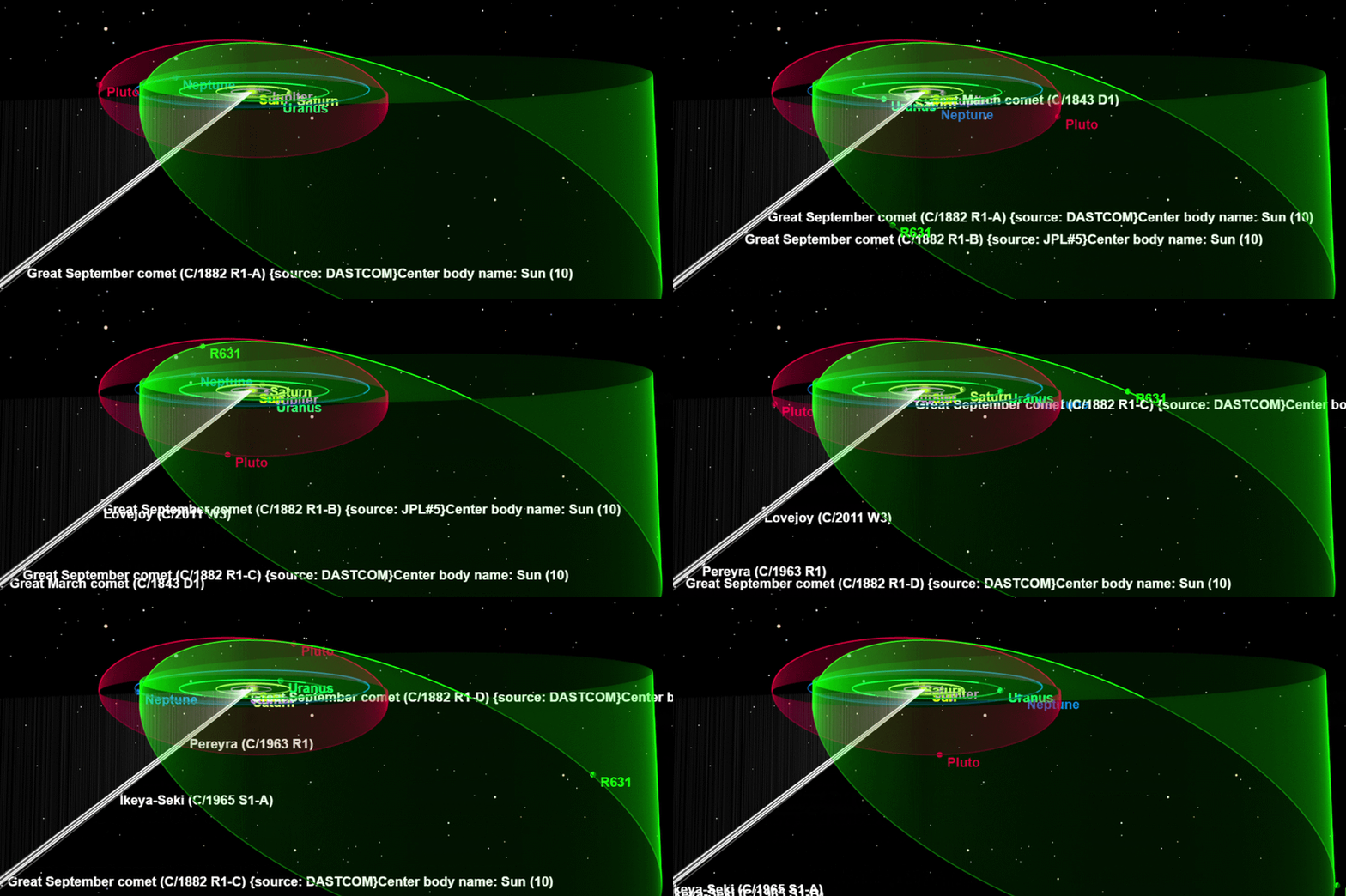
Two main theories currently compete to explain the origin of the object’s retrograde orbit:
- Interstellar origin. R631 may have formed in another star system that once passed too close to our own. The object was ejected from its original environment and captured by the Sun’s gravitational field. This would place it alongside interstellar objects such as ‘Oumuamua and 3I/ATLAS, but with one significant difference: R631 remained in a stable orbit around our star.
- An exile from within. The object formed in the Solar System but was flung into this extreme retrograde orbit by a close gravitational encounter with a giant planet—Jupiter or Neptune.
The Minor Planet Center will soon assign the object an official designation, while astronomers will continue to monitor its approach to the Sun to unravel the mystery of this cosmic rebel.
We previously explained whether the retrograde motion of planets is something to fear.
Based on reporting by earthsky.org.
