

Imagine taking off from London in the morning, spending three hours over the Atlantic Ocean and landing in New York earlier than you departed. This is not the plot of a science-fiction film, but a real possibility offered for almost three decades by the supersonic passenger aircraft Concorde. It flew twice as fast as modern airliners, employed revolutionary engineering solutions and set records that remain unbroken. So why did humanity abandon a technology that saved its most precious resource – time?
1977: New York moves closer
On 22 November 1977, an event in aviation history forever changed perceptions of what passenger aircraft could achieve. British Airways and France’s Air France inaugurated scheduled supersonic services to New York from London and Paris. Their first routes had been London – Bahrain and Paris – Rio de Janeiro via Dakar. Transatlantic services to Washington had begun in May of the same year. Yet New York was the project’s principal commercial objective.
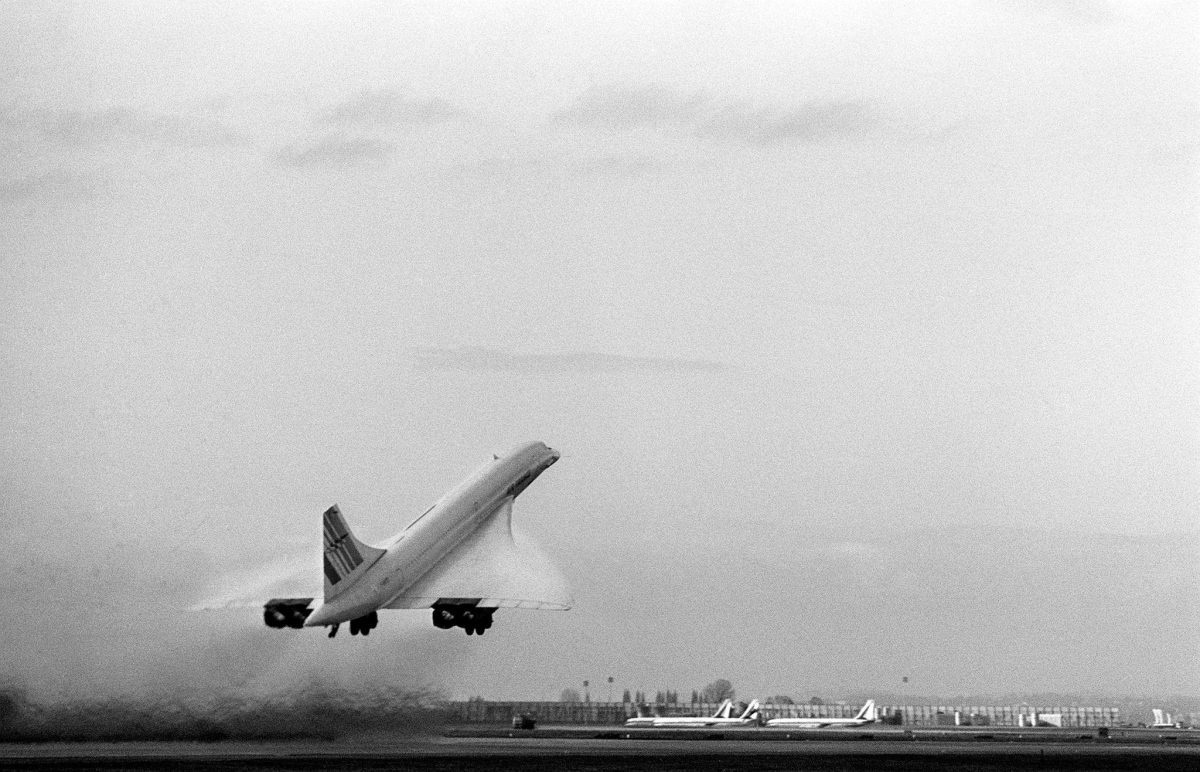
Getting there proved difficult. US regulators and residents living near airports feared excessive noise. Legal disputes delayed the route’s opening by almost two years. When permission was finally granted, Concorde demonstrated its greatest advantage.
A conventional passenger aircraft takes approximately 7–8 hours to fly between London and New York. Concorde covered the route in less than three and a half hours. Thanks to the five-hour time difference, passengers could indeed find that the clocks in New York showed an earlier time than when they had departed London.
This was more than simply a fast means of transport. The aircraft effectively transformed people’s daily schedules: a business traveller could cross the ocean, attend a meeting and, under certain circumstances, return home the same day.
An aircraft designed around speed
Concorde was a joint British–French project. Its first prototype took to the air on 2 March 1969 – the same year that humans first landed on the Moon. Engineers set themselves an extraordinarily ambitious task: to build a passenger aircraft capable of flying faster than sound for hours without sacrificing controllability or reliability.
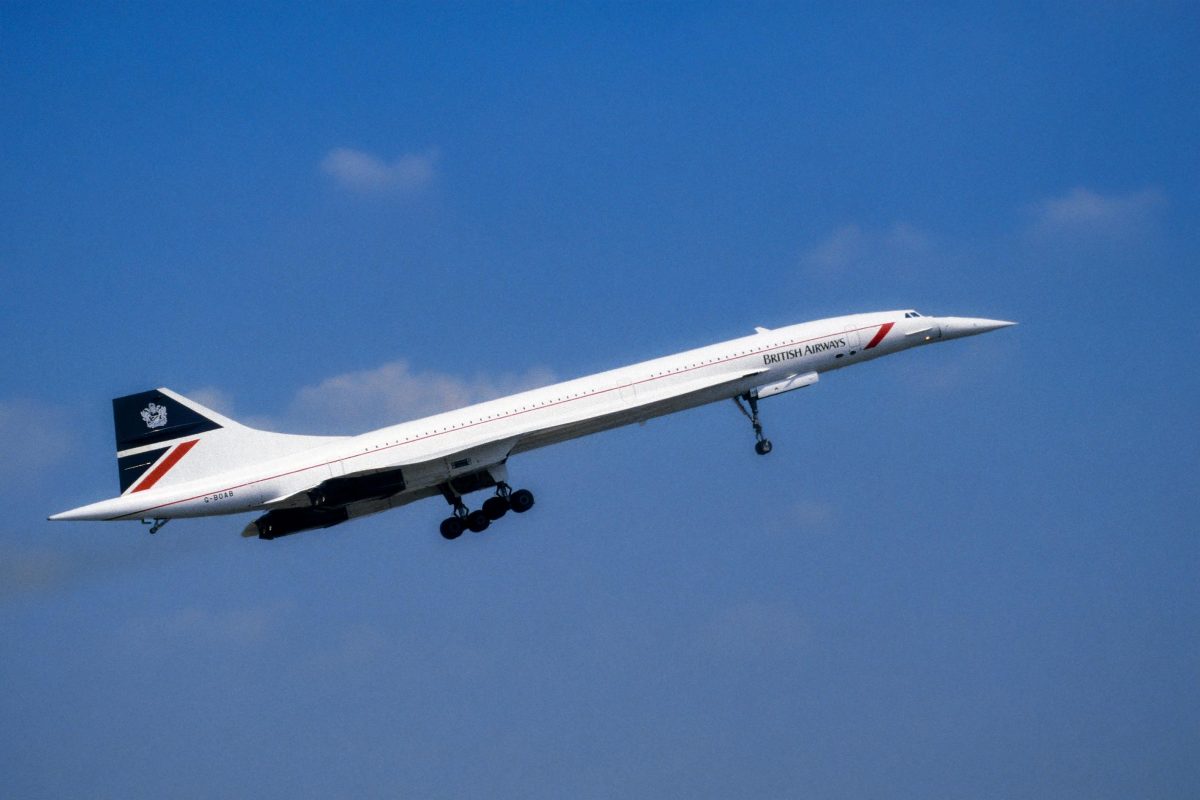
Concorde’s cruising speed was approximately 2,160 km/h (1,342 mph), or Mach 2. In a single minute, it travelled around 36 km (22 miles) – a distance that would take a car on a motorway approximately 20 minutes to cover. Meanwhile, the aircraft climbed to altitudes of up to 18,300 m (60,000 ft), roughly 7 km (4.3 miles) higher than a conventional passenger airliner.
But flying at such speeds created entirely different aerodynamic conditions. The air ahead of the aircraft was compressed sharply, shock waves formed, and drag increased considerably. To overcome these challenges, Concorde was given a long, pointed fuselage and a distinctive delta wing with a complex, smoothly curved shape. This geometry reduced drag during supersonic flight.
At low speeds, however, the wing required a high angle of attack. During landing, this raised the aircraft’s nose and obstructed the pilots’ view of the runway. The solution was unusual: Concorde was fitted with a movable nose. It was lowered by 5° for take-off and by 12.5° for landing. In flight, it returned to its horizontal position, restoring the aircraft’s streamlined profile.
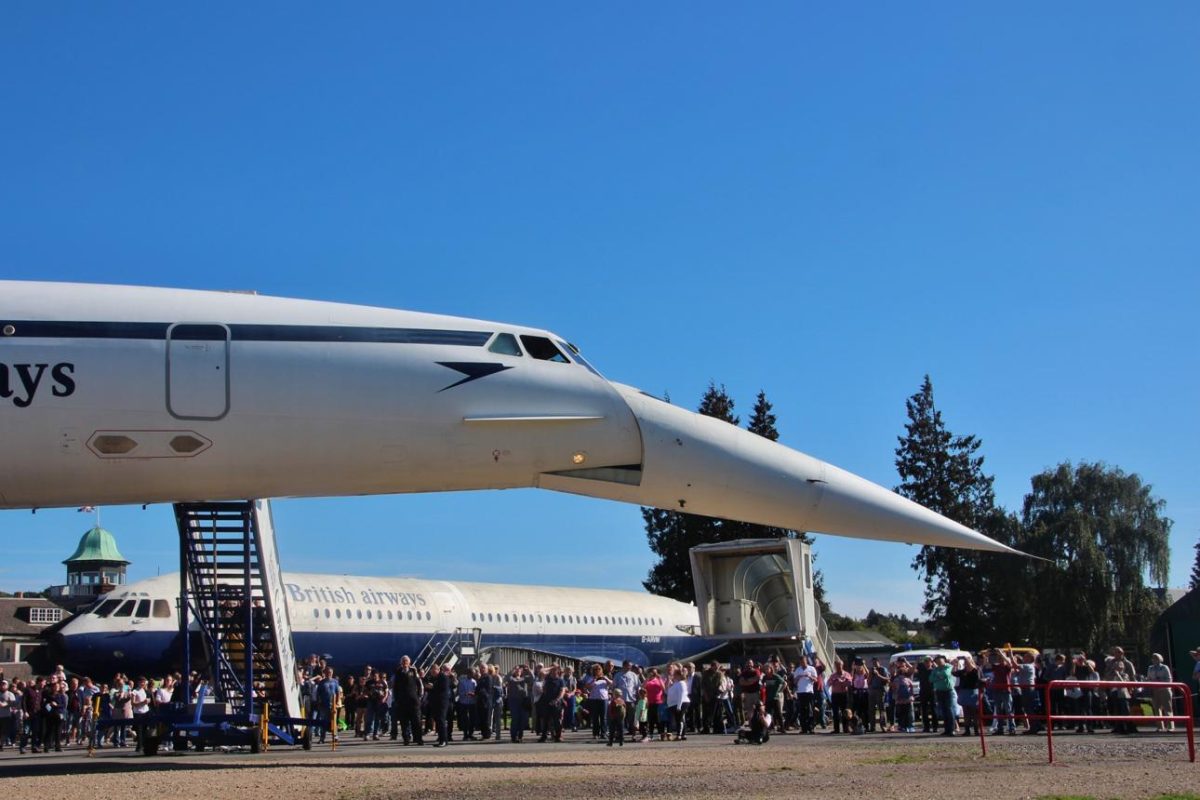
This was an early example of how even familiar design features had to be rethought in the pursuit of supersonic speed.
Engineering solutions ahead of their time
The most fascinating aspects of Concorde lay not in the shape of its fuselage, but inside it. Some systems developed for the aircraft in the 1960s were decades ahead of technologies widely adopted in commercial aviation. The aircraft was already controlled by electrical signals.
Concorde became the first civilian airliner equipped with an analogue fly-by-wire flight control system.
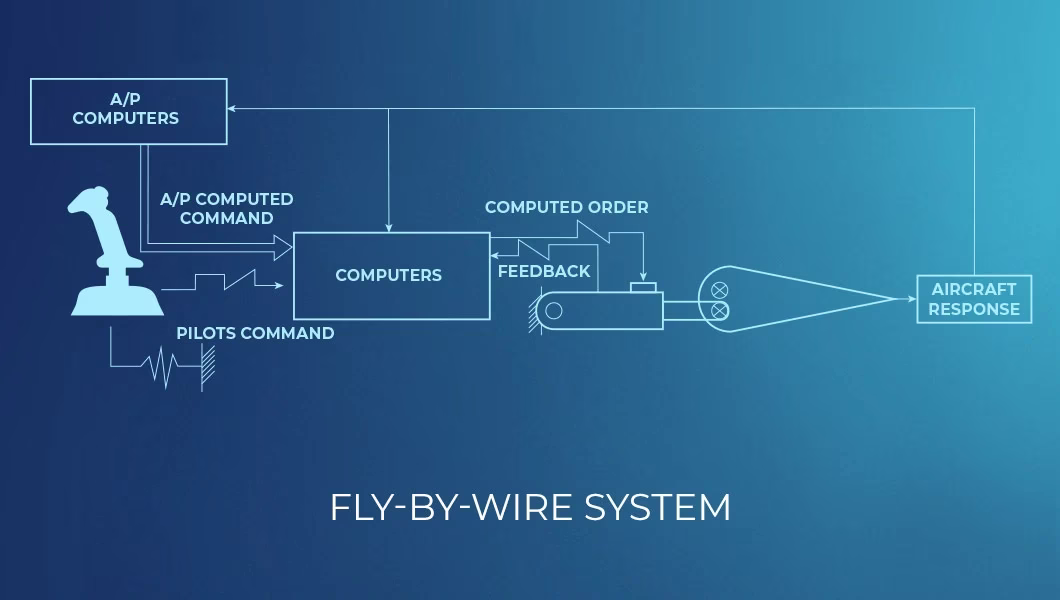
In conventional aircraft of that era, movements of the control column were transmitted to the control surfaces primarily through mechanical linkages. In Concorde, the pilot’s commands were conveyed as electrical signals to hydraulic actuators. Electronics also helped stabilize the aircraft and counter unwanted movements. For reliability, engineers provided redundant electrical channels and a mechanical backup system in case of failure. A similar principle later became the basis of flight control in many modern airliners, although these use digital computers.
Air intakes that controlled shock waves
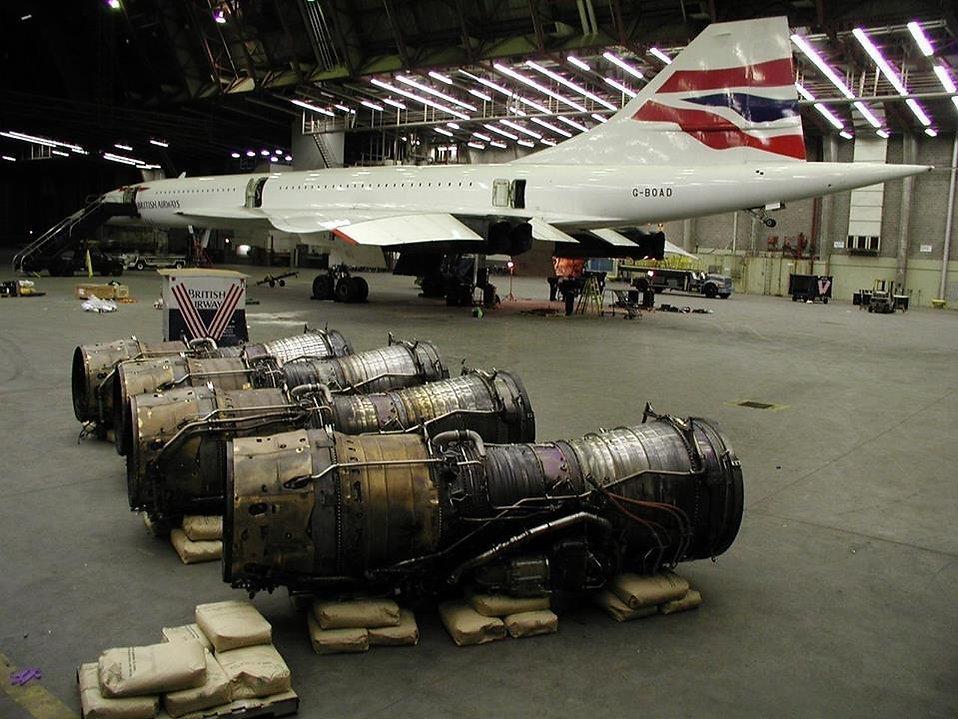
Keeping the engines operating was an even more complex challenge. Concorde had four Rolls-Royce/Snecma Olympus 593 turbojet engines. The problem was that their compressors could not function properly if air entered them at supersonic speed.
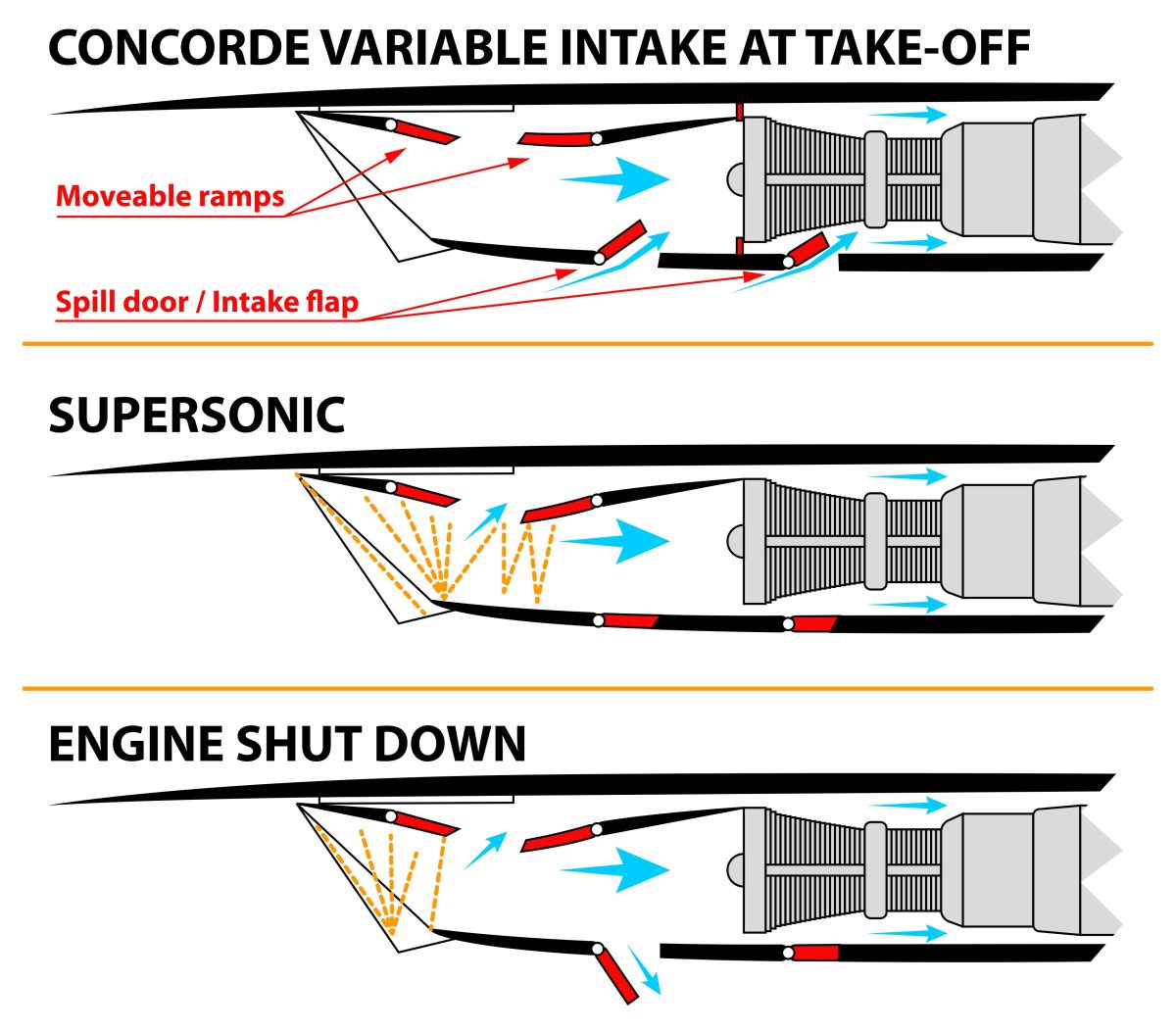
Special variable-geometry air intakes were therefore installed ahead of the engines. Movable ramps created a controlled series of shock waves that slowed the airflow to approximately half the speed of sound before it reached the compressor. Imagine a car racing along a motorway, but with the air entering its engine first having to be slowed, compressed and directed in precisely the right way. This was the complex task performed by Concorde’s air intakes.
Source: Burbank / MacMoreno, Wikimedia
Their geometry adjusted automatically to the flight regime. Particularly interestingly, the intake control system on production aircraft was digital, even though the main flight control system remained analogue. Thanks to its efficient air intakes, Concorde could sustain speeds of around Mach 2 for hours without continuously using afterburners. The afterburners were needed mainly during take-off and acceleration to supersonic speed.
Fuel as a balancing mechanism
At supersonic speeds, the pressure distribution over the wing changes and the centre of aerodynamic lift shifts backwards. This causes the aircraft to pitch nose-down. In a conventional aircraft, the problem can be compensated for by adjusting the horizontal tailplane. For Concorde, however, doing so would have meant additional drag and excessive fuel consumption.
Engineers found a far more elegant solution: using the fuel itself to balance the aircraft. During acceleration, special pumps transferred fuel between tanks, including those in the rear fuselage. This shifted the centre of gravity backwards and maintained the necessary balance with virtually no additional aerodynamic drag.
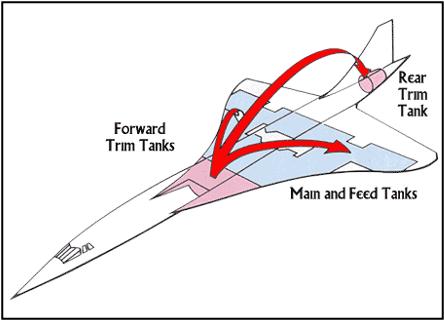
Before deceleration, the fuel was transferred back in the opposite direction. Fuel thus served simultaneously as an energy source, a means of balancing the aircraft, and part of the cooling system for onboard equipment.
Why did Concorde heat up and grow longer?
Sustained supersonic flight created another, less obvious problem – structural heating. When an aircraft travels faster than sound, the air ahead of its surfaces is compressed and heats up. Temperatures in Concorde’s hottest areas could reach approximately 127 °C (261 °F) – well above the boiling point of water.
As it heated up, the aluminium fuselage expanded. According to British Airways, the aircraft’s length could increase by 15–25 cm (6–10 inches) in flight. In other words, Concorde literally grew longer in the sky, gradually returning to its original dimensions after landing.
The temperature limits of its aluminium structure were one reason why engineers did not attempt to increase its speed indefinitely. Even the aircraft’s distinctive white colour was part of an engineering solution: a special coating helped reflect solar radiation and reduce surface heating.
Records that still impress
Throughout its history, Concorde repeatedly demonstrated that speed could transform the very nature of long-distance travel. Its best-known record was set on 7 February 1996, when a British Airways Concorde flew from New York to London in 2 hours, 52 minutes and 59 seconds. This remains the record for a transatlantic crossing by a passenger airliner.
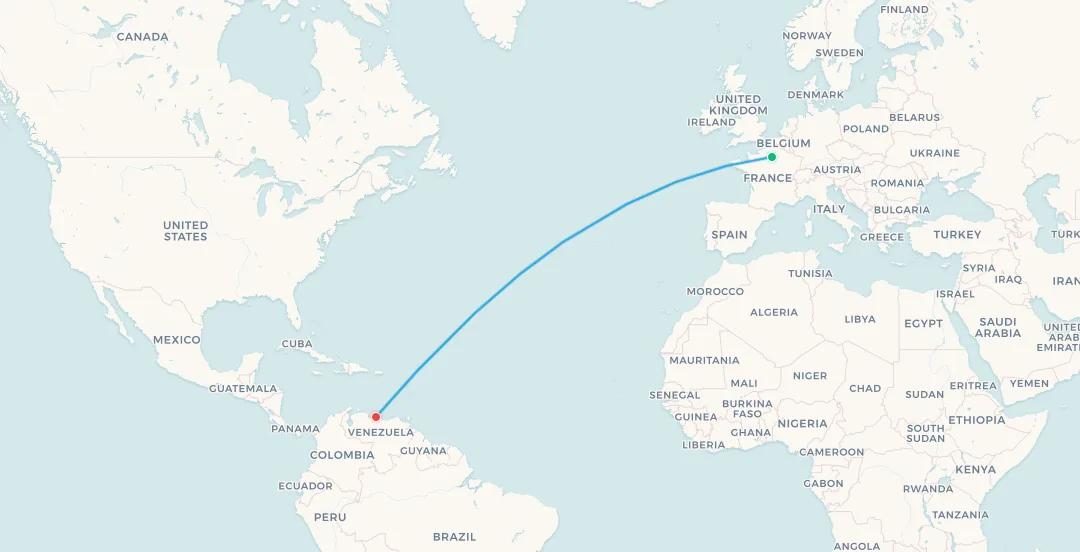
On 29 May 1976, Air France Concorde F-BTSC flew 8,015 km (4,980 miles) non-stop from Caracas to Paris in 4 hours and 19 minutes. It was Concorde’s longest non-stop flight, although it was not registered as an official record.
Yet all these achievements concealed the central problem. The aircraft was extraordinarily fast, but nowhere near efficient enough to become an everyday means of transport.
Why did supersonic aviation lose the economic battle?
At first glance, Concorde had everything it needed to succeed. It saved hours, brought prestige to airlines and attracted wealthy customers. Yet the physics of supersonic flight came at a price that could not be ignored. Above all, there was fuel consumption. According to British Airways, Concorde used approximately 25,600 litres of aviation fuel per hour (6,760 US gallons) – roughly the equivalent of 150 completely filled household bathtubs every hour.
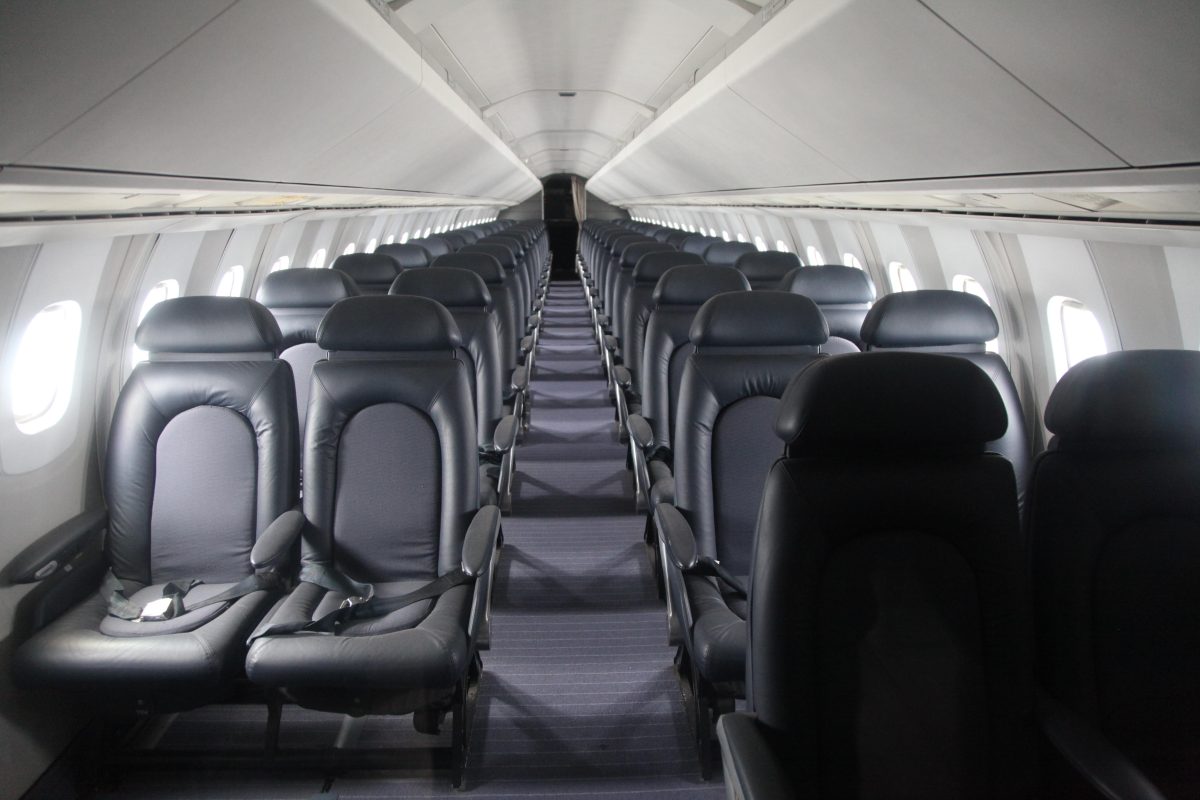
Its cabin, meanwhile, accommodated just 100 passengers. By comparison, depending on the variant and seating configuration, a wide-body Boeing 747 could carry several hundred people. Concorde’s high fuel consumption therefore had to be spread across far fewer passengers.
Source: Daniel Schwen, Museum of Flight / Wikimedia
The second problem was the sonic boom. When an aircraft travels faster than sound, the shock waves it creates propagate towards the ground and may be heard as a loud explosion. Crucially, this is not a one-off noise produced when the sound barrier is crossed: shock waves are generated throughout supersonic flight. Noise restrictions prevented Concorde from exploiting its main advantage on most routes over populated areas. It was best suited to flights over oceans, sharply limiting its potential market.
The third problem was maintenance costs. Complex engines, air intakes, hydraulics, temperature monitoring, and the small fleet made operations expensive. In 2003, a return ticket across the Atlantic could cost more than $12,000. This was transport for a very limited group of passengers.
Nevertheless, it would be wrong to claim that Concorde consistently operated at a loss. From the 1980s onwards, British Airways learned to make a profit from its supersonic services by targeting the premium market. The real paradox lay elsewhere: an individual route could make money, but the enormous public expenditure on developing the aircraft never translated into a commercially successful mass-production programme.
Only 20 Concordes were built, of which 14 entered airline service. A technology ahead of its time remained exclusive.
The disaster that hastened the end of an era
On 25 July 2000, Concorde suffered its only fatal crash. Air France Flight 4590, travelling from Paris to New York, crashed shortly after take-off. A total of 113 people died – 109 on board and four on the ground.
The investigation established that the aircraft had struck a metal strip left on the runway by another aircraft. A damaged tyre caused a fuel tank to rupture, leading to a fuel leak and fire. Flights were suspended after the disaster, and the aircraft were fitted with additional fuel-tank protection and improved tyres. Concorde returned to scheduled service in November 2001.
But the world had already changed. Following the terrorist attacks of 11 September 2001, demand for expensive transatlantic travel declined. At the same time, the ageing fleet and the high cost of keeping it airworthy increasingly affected its economics. Concorde’s final scheduled commercial flight took place on 24 October 2003.
The era of supersonic passenger travel had come to an end.
Source: Heritage Concorde
Will supersonic passenger aircraft return?
More than two decades after Concorde’s retirement, conventional passenger aircraft still cross the Atlantic more slowly than their famous predecessor. But this is not because humanity has lost the technology of supersonic flight. The challenge remains the same: combining speed with economic efficiency, acceptable noise levels, safety, and environmental requirements.
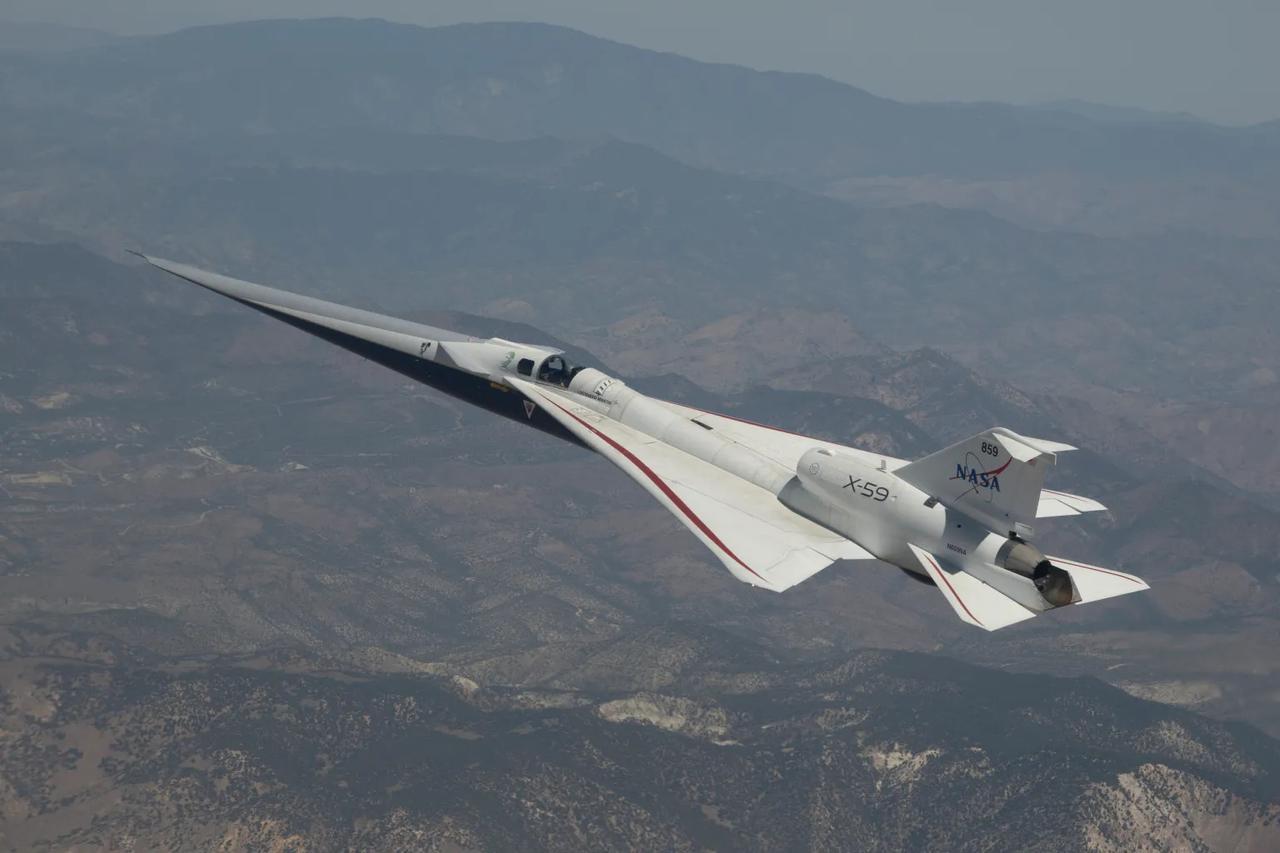
New aerospace programmes are working on precisely this challenge today. NASA’s experimental X-59 aircraft, for example, was designed to investigate ways of reducing the intensity of sonic booms. Its purpose is to help make future supersonic flights over land possible.
In other words, engineers are trying to solve the problem Concorde left to its successors.
Concorde proved that a passenger aircraft could fly at twice the speed of sound for hours. But it also showed that creating an extraordinary technology is not the same as making it accessible and economically viable.
Perhaps Concorde’s greatest achievement was not its speed, but the engineering ideas that live on in modern aviation.
Supersonic speeds pose complex challenges not only for aircraft but also for spacecraft returning through the atmosphere. Particularly fascinating is how engineers manage to deploy parachutes safely at enormous speeds and under extreme loads. To discover which physical phenomena must be taken into account and how the reliability of these systems is tested, read our article ‘How Do You Design a Parachute for a Spacecraft?’.
