

The path to major scientific discoveries often begins not in a laboratory but beside a child’s bedroom window or in a library. A child becomes fascinated by things that adults have long ceased to notice, and that sense of wonder can shape the rest of their life. Adults do not always know the answers to children’s questions, but the stories of renowned scientists suggest that something else can be even more important. Ahead of World Children’s Day, observed on 20 November, these examples remind us how much a simple ‘why?’ can matter.
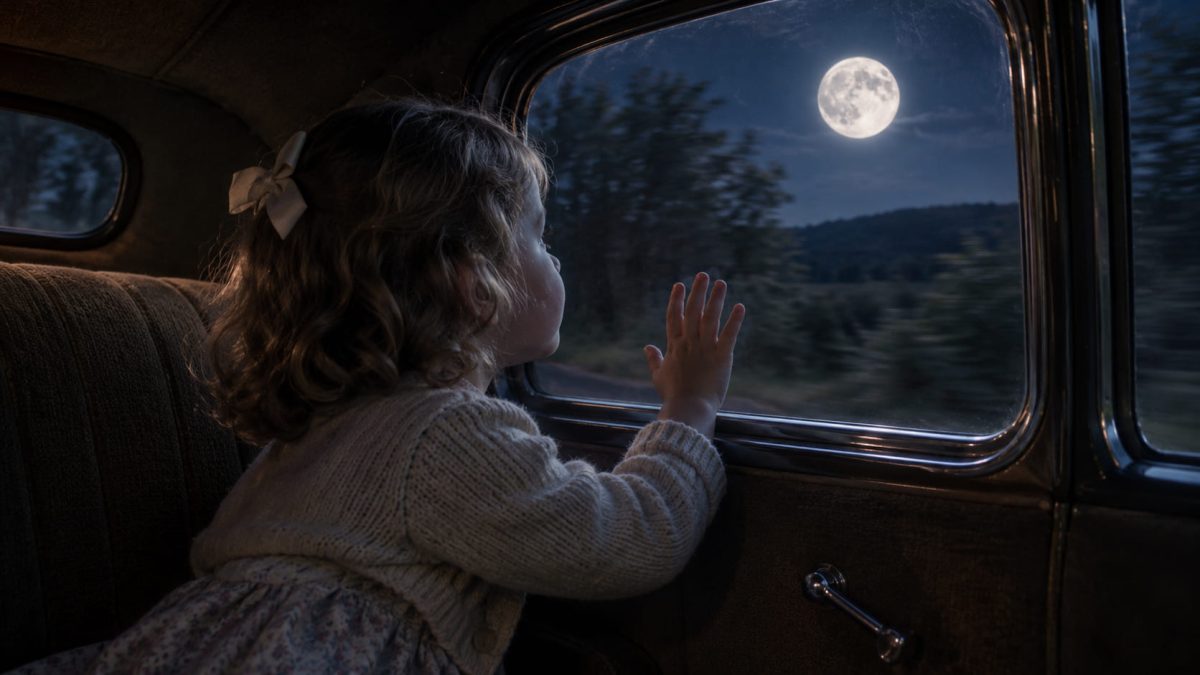
The Moon outside the car window
In the early 1930s, the Cooper family were driving home from a visit to Vera’s grandmother. Very young Vera Cooper looked out of the window in amazement. Bushes, trees and even distant hills passed by and disappeared, yet the Moon remained in the same part of the sky throughout the journey. This prompted a question she would remember for the rest of her life: ‘How did the Moon know we were going home?’
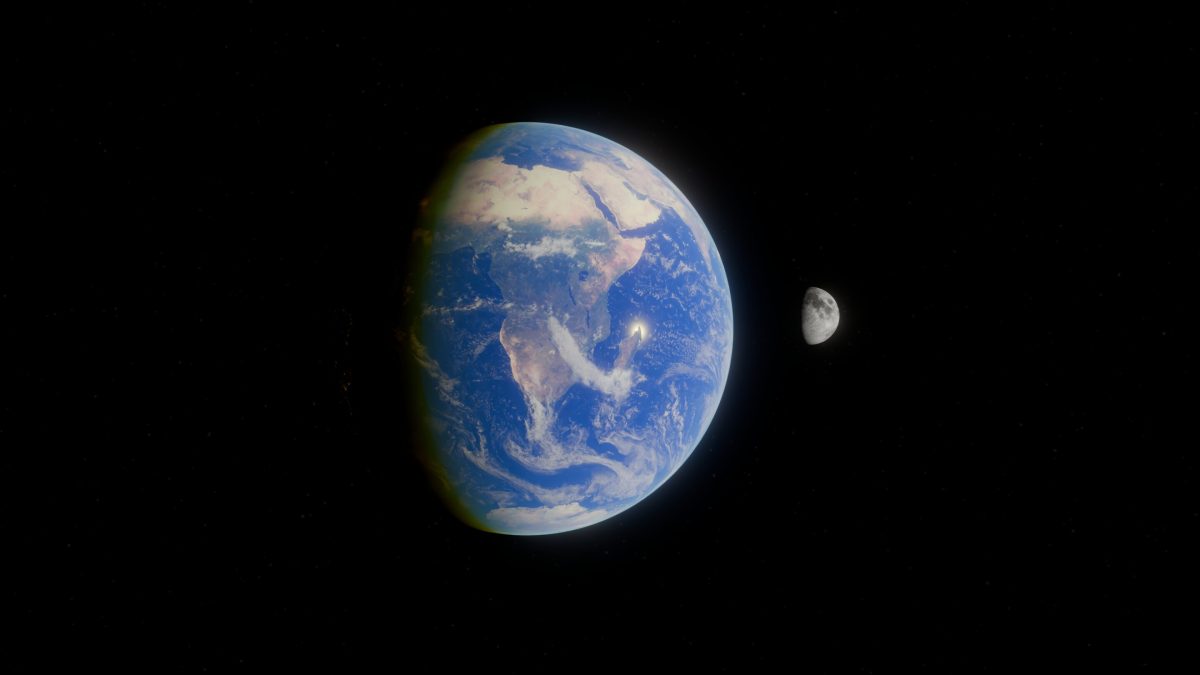
The explanation lay in the different ways nearby and distant objects appeared to move past the window. Bushes by the roadside flashed past, whilst distant hills moved much more slowly. The farther away an object is, the more slowly its position appears to change in the window. Hills on the horizon are generally only a few kilometres from the road, whereas the Moon is about 384,000 km away. Even during a long drive, therefore, the Moon remains in almost the same place in the window and appears motionless.
Vera Cooper asked other questions, too. How does a stream know which way to flow around a rock? Could someone design a street with one pavement sloping upwards and the other downwards, so that you could always walk downhill? She pondered the idea of such a street because, as she put it, she was a lazy child.
‘I suppose they gave me some answer. I probably didn’t understand it. But I still remember the excitement of the question itself.’ That was how she recalled the journey home from her grandmother’s house almost eighty years later. She added that her excitement at asking questions about nature had not diminished with age. Years later, Vera would notice something in the motion of distant stars that astronomers still cannot fully explain.
Lights in the sky
The question about the Moon was a mystery to Vera Cooper. A few years later, in New York, another young investigator was trying to solve a mystery of his own.
His name was Carl. The son of an immigrant from Kamianets-Podilskyi, he lived in Brooklyn, a borough of New York City. What interested him most was the nature of the stars. He asked his parents, friends and relatives, and heard answers along the lines of ‘They’re lights in the sky, son.’

Credit: NSF–DOE Vera C. Rubin Observatory / NOIRLab / SLAC / AURA
No one at home could offer a more precise explanation. His mother suggested that he visit a library, and at the age of five he received his first library card. The library was far from the streets he knew, and he felt as though he had entered a foreign country. He asked for something about stars, but the librarian thought he meant film stars and brought him an album of portraits of the actor Clark Gable and the actress Jean Harlow.
Eventually, he found the right book, and what he read astonished him for the rest of his life. The stars were suns, only very far away. And our Sun was a star, only much closer. Carl immediately realised that the stars must be extraordinarily distant: farther away than the familiar streets, farther than Manhattan, perhaps even farther than neighbouring New Jersey. He was right. The headlights of a nearby car can be dazzling, but on a distant road at night they look like tiny points of light, even though they shine just as brightly. Stars, too, look like pinpricks to us, although many are more luminous than the Sun, simply because they are incomparably farther away.
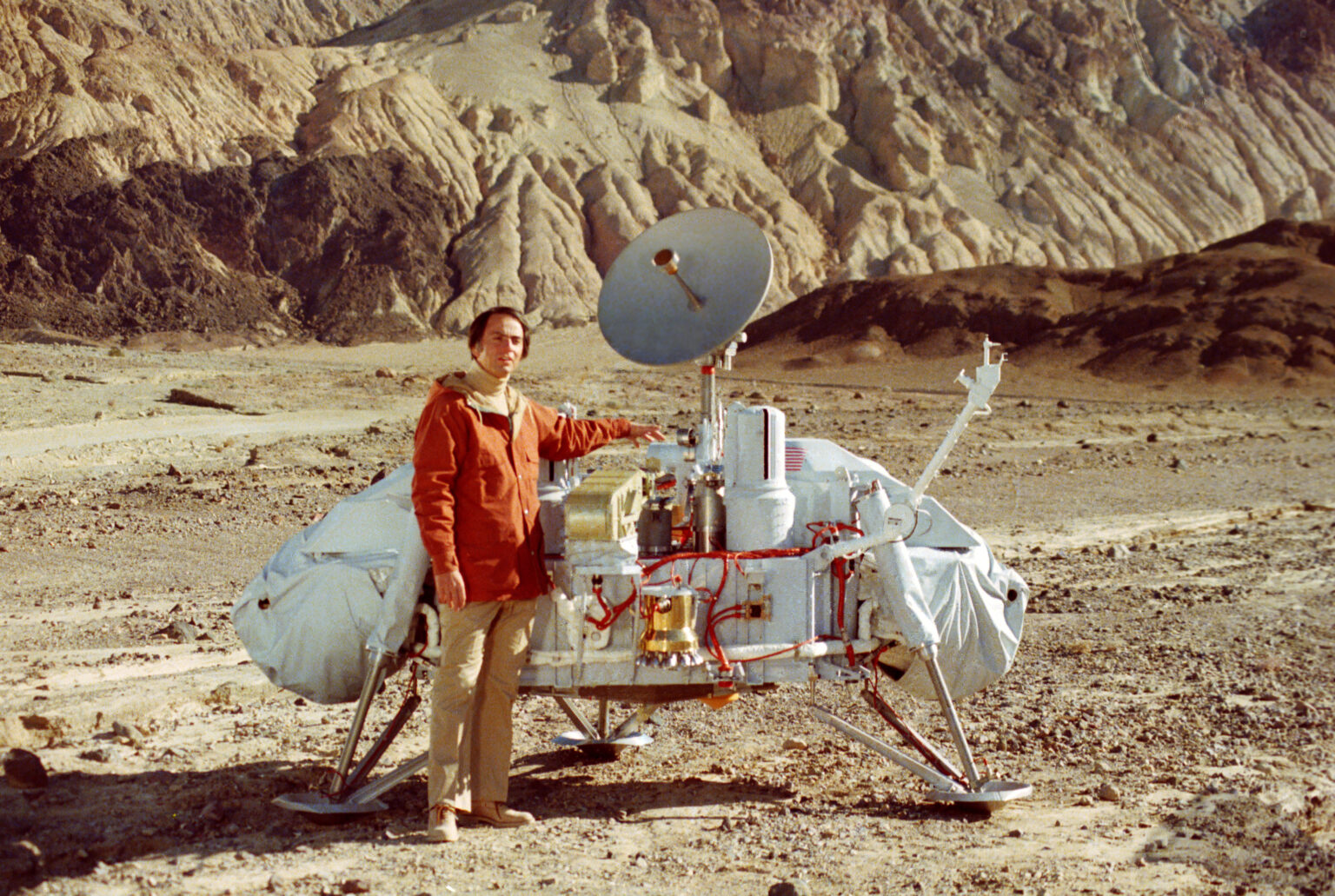
The world suddenly became much larger than it had seemed from a street in Brooklyn. The boy decided that he would study the sky and, if he ever had the chance, travel among the stars and planets. His mother had not given him a ready-made answer, but she had shown him where to find one. For a five-year-old, that proved even more valuable. Decades later, Carl Sagan became an astronomer, took part in the Voyager mission and helped create the record containing voices and music from Earth that was sent into space aboard both spacecraft.
What nobody knows
Carl Sagan found his answer in a library. Richard Feynman, who had grown up in New York some fifteen years earlier, received a response from his father that few adults would give.
The boy was playing with a wagon with raised sides and a ball inside it. When Richard pulled the wagon forwards, the ball rolled towards the back; when he stopped suddenly, it rolled forwards. He asked his father why. ‘Nobody knows,’ Melville Feynman replied. He explained that anything moving tends to keep moving, whilst anything at rest remains at rest until something pushes it. He called this inertia and added that nobody knew why the world worked that way.

His father then asked him to look at the scene from the side and explained that the ball was not actually rolling backwards. The wagon was moving forwards from underneath it, whilst the ball remained almost where it had been, even moving slightly forwards because of friction against the bottom. Richard ran off to test the explanation and found that it was true.
Richard Feynman later recalled that this was when he understood the difference between knowing the name of a phenomenon and understanding what it meant. His father could have stopped at the word ‘inertia’, and his son might have been satisfied. Instead, the candid admission that ‘nobody knows’ showed him how much remained unexplained in the world. A child’s sense of wonder can develop into a genuine scientific discovery if an adult takes it seriously, even without a ready explanation.
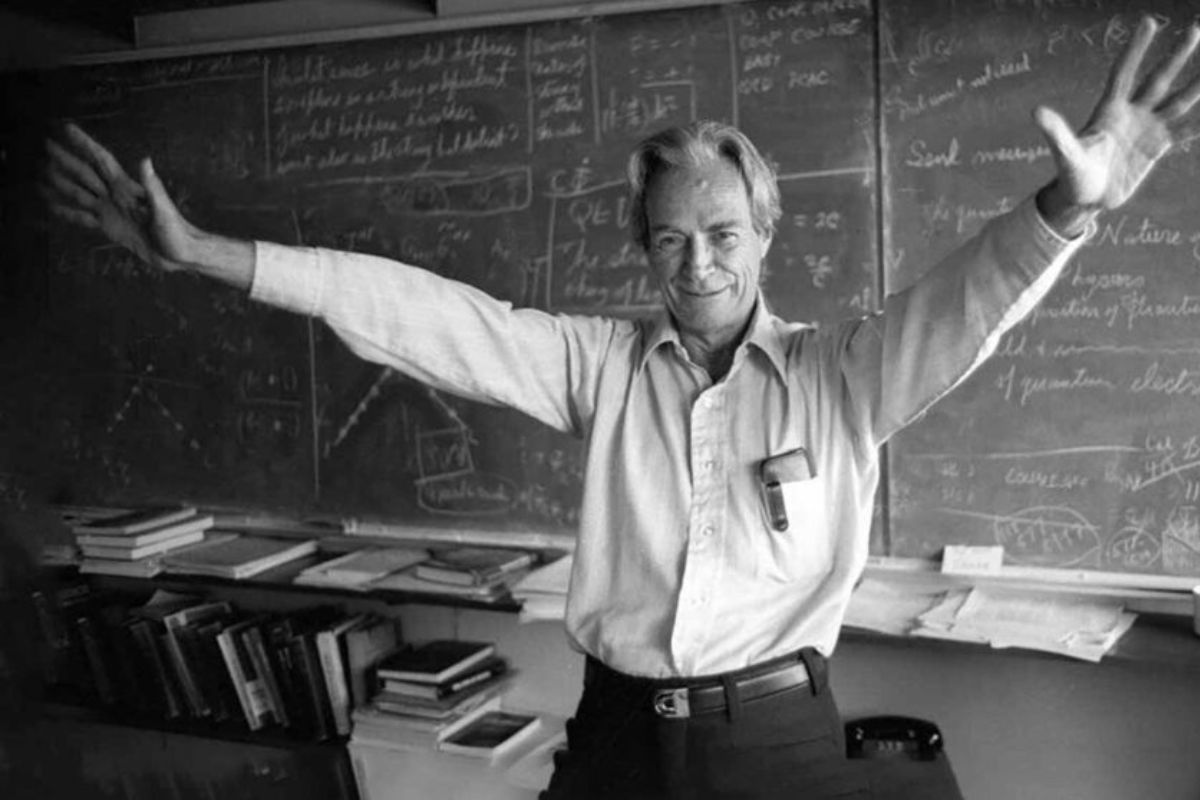
In 1965, Richard Feynman and two colleagues received the Nobel Prize in Physics for explaining how light interacts with charged particles. Among those who studied under him was Vera Cooper, the same girl who had once wondered about the Moon.
A compass and a beam of light
For Vera Cooper and Richard Feynman, it all began with a question. For Albert Einstein, it began not even with a question, but with sheer astonishment. At the age of 67, he began writing down memories of his life, and one of the first things he recalled was a compass. When he was four or five, his father showed him this remarkable object. The boy turned it this way and that, yet the needle always pointed in the same direction, even though nobody touched it. Even then, he sensed that something invisible lay behind familiar things. Six decades later, Einstein wrote that he still remembered, or at least believed he remembered, how deeply it had impressed him.
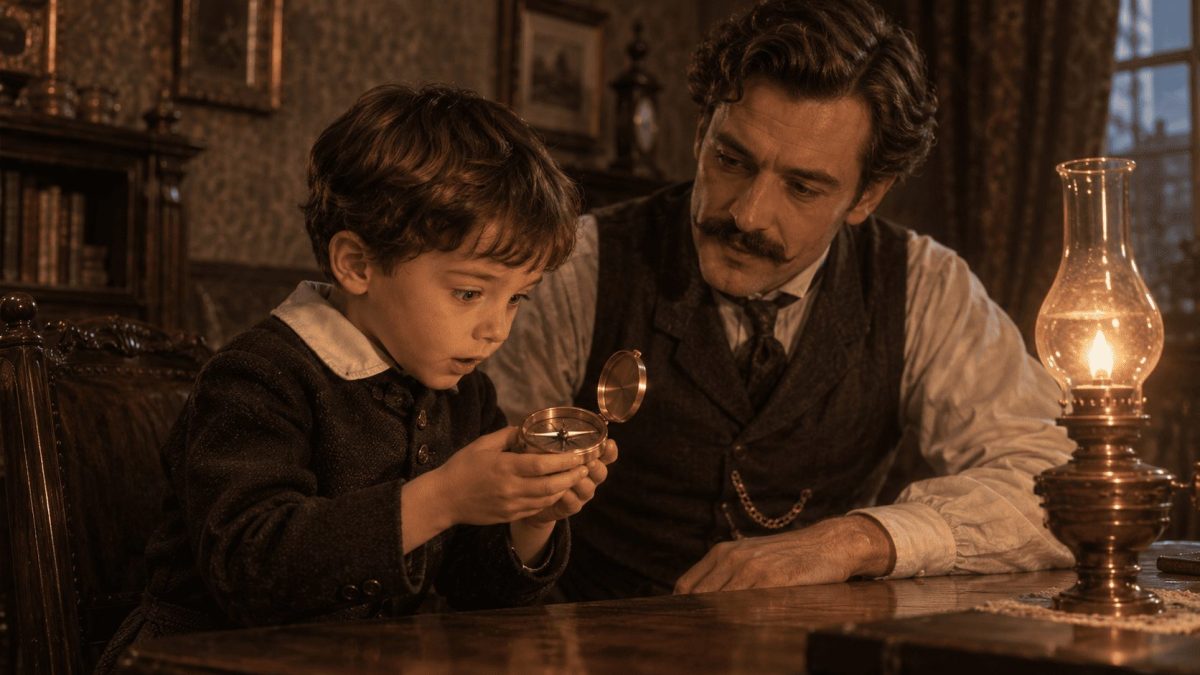
His intuition was sound. The needle is turned by Earth’s magnetic field. It cannot be seen or felt directly, yet it surrounds the entire planet.
As he grew older, Albert never lost his sense of wonder at how the world worked. At sixteen, he imagined what would happen if he caught up with a beam of light and travelled alongside it. The light ought then to appear stationary, like a wave on the water to a boat travelling at the same speed. Yet nobody had ever observed stationary light. He pondered this puzzle for ten years, and its solution became one of the foundations of special relativity. In a vacuum, light always passes us at the same speed, however fast we ourselves are moving, so it is impossible to catch up with it.

More than twenty years passed between his childhood amazement at the compass and the theory of relativity. The curiosity awakened by that needle only grew during those years.
A north-facing window
Let us return to the girl who once wondered about the Moon. When Vera Cooper was ten, her family moved to Washington, DC. Her bed stood beneath north-facing windows, and at night she watched the stars drift slowly across the sky. By the age of twelve, observing them interested her more than sleeping. As her mother left the house, she would call out to Vera, not to spend the whole night leaning out of the window. Her parents knew about their daughter’s fascination and did not discourage her; her father even helped her make a telescope from a cardboard tube and a small lens.
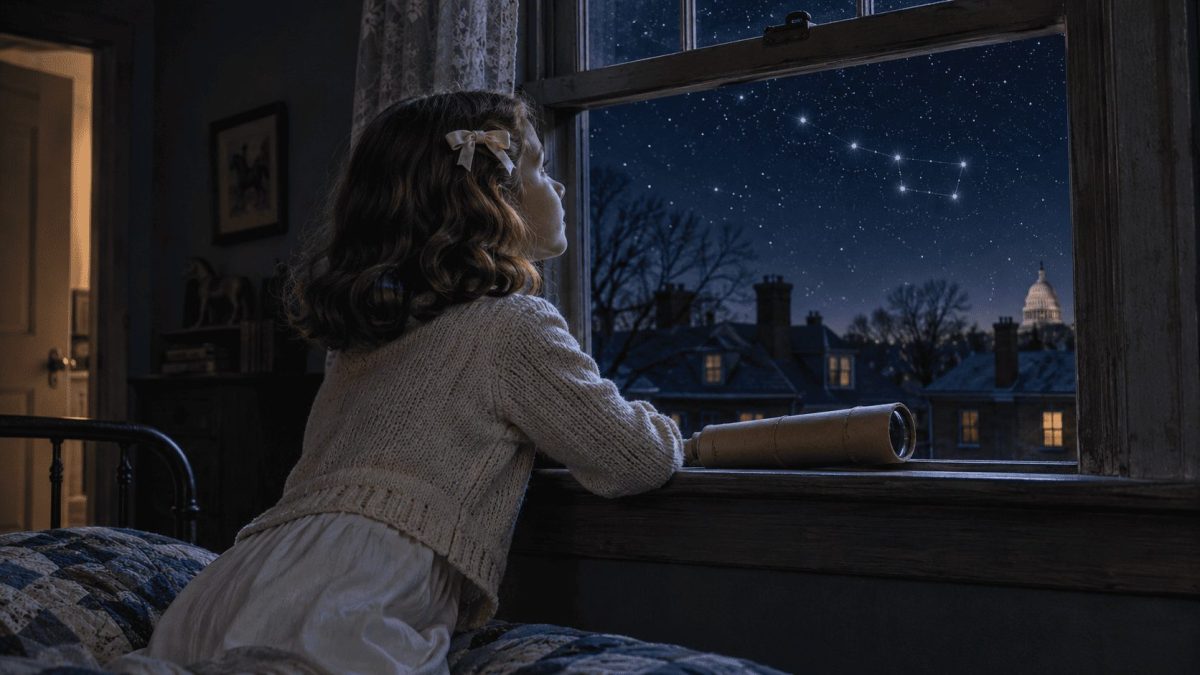
She grew up and married Robert Rubin. Today, we know her as Vera Rubin. In the 1970s, she and her colleague Kent Ford measured how galaxies rotate.
Astronomers expected galaxies to behave much like the Solar System, where distant Neptune travels along its orbit much more slowly than Earth. Similarly, stars on the outskirts of galaxies were expected to move more slowly. Instead, they were found to travel at almost the same speed as stars closer to the centre.

Credit: Andromeda, Unexpected © Marcel Drechsler, Xavier Strottner, Yann Sainty & J. Sahner, T. Kottary
At such speeds, the stars ought to fly apart unless they are held together by gravity far stronger than all the visible matter in a galaxy could produce. The simplest explanation is that galaxies contain much more matter than telescopes can reveal. It neither emits nor reflects light, so it was named dark matter, and its nature remains a mystery.
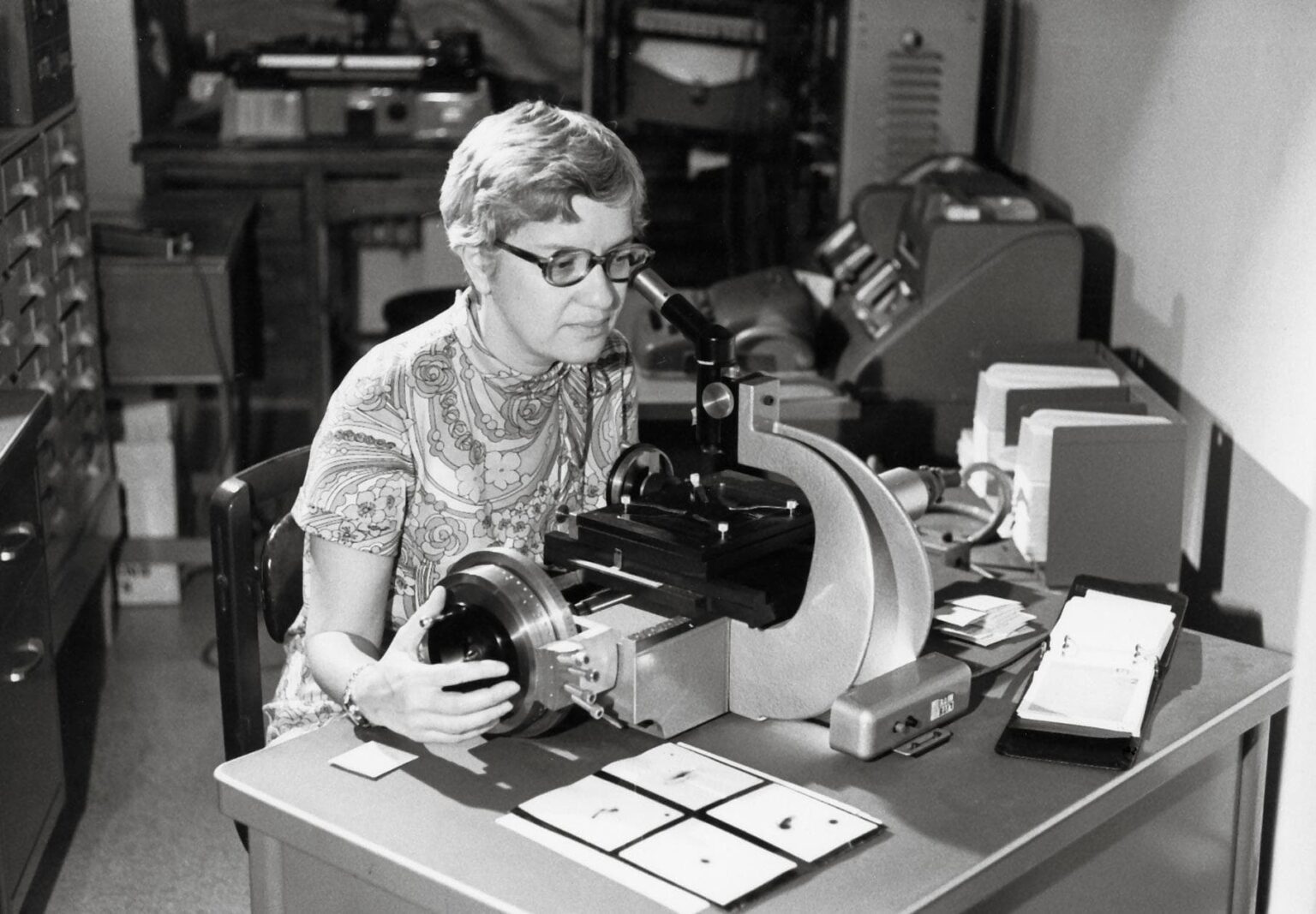
Vera Rubin died in 2016. At the end of June 2026, a new observatory on Cerro Pachón in Chile began the most extensive astronomical survey in history. Using the world’s largest digital camera, it photographs the entire southern half of the sky every few nights. Over ten years, each part of that sky will be recorded approximately 800 times.

Once, a young girl spent her nights at the window, hoping to glimpse even a small part of the starry sky. Now an observatory bears her name. Scientists hope its observations will help them better understand the nature of dark matter. Anyone interested is invited to work with the observatory’s data. A child who stays awake tonight to watch the stars through a window may one day explore those data and help answer the question Vera Rubin once asked.
