

This year’s Nobel Prize in Chemistry went to Henri Kagan and Kenso Soai. They received the award for a method of producing homochiral molecules. Homochirality describes a situation in which a substance that can exist as two mirror-image isomers consists of only one of them. Among other things, this distinguishes living matter from nonliving matter.
The 2026 Nobel Prize in Chemistry
On October 7, the Nobel Committee announced the recipients of the most prestigious scientific award in chemistry for 2026. They are French chemist Henri Boris Kagan and his Japanese colleague Kenso Soai. According to the announcement, they received the award “for the discovery of nonlinear effects and autocatalysis in asymmetric organic synthesis.”
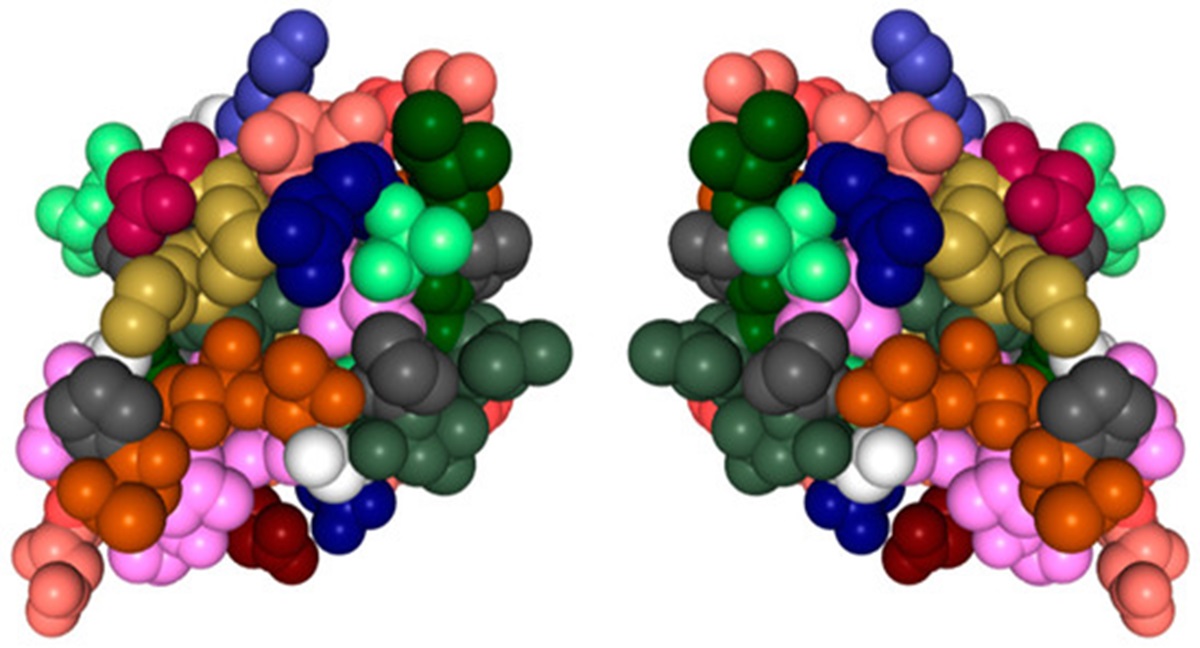
This topic concerns organic compounds and certain other classes of substances whose molecules can have sufficiently complex structures. As a result, they can have isomers with the same composition that look like mirror images of one another, just as the left hand mirrors the right.
This property is called chirality, from the Greek word for “hand.” When such a substance is synthesized from inorganic components, its “left-handed” and “right-handed” isomers occur in equal proportions. However, proteins and amino acids in living organisms are homochiral, meaning that only one isomer is present. For many decades, scientists could not understand how this was possible.
Kagan and Soai’s Research
Chemistry is the science of reactions between different substances, and discovering such reactions was precisely what this year’s laureates worked on. Back in 1986, Henri Kagan found a new way to control chemical reactions. In 1996, Kenso Soai adopted this research as the basis for his approach. In 2003, he succeeded in developing a chemical reaction capable of producing exclusively left-handed or exclusively right-handed isomers of organic compounds.
This research is particularly important for the pharmaceutical industry. The molecules used in modern medicines, especially those that act inside cells, also need to be homochiral for greater effectiveness. However, this work also matters for certain questions concerning space.
Scientists have been searching for life in space for many years. Yet they have encountered an unexpected problem: organic matter is abundant there, but they cannot be certain that it is not the product of abiotic processes. Its homochirality is what constitutes a true biomarker. Thanks to the work of Kagan and Soai, we know how it could have arisen.
